Touch Panel
0.5–2 mm AF Coated Ultra-Clear Touch Screen Cover Glass
Fingerprint-resistant surface · Custom CNC outline · Optional AR or AG
MOQ: 100–500 pcsGet a Quote



Before a sourcing team contacts a supplier, it usually wants a clear explanation of what the coating does, what it does not do, how performance is measured and how to compare suppliers fairly.
AF coated glass for fingerprint-resistant touch screens is not a single glass type. It is a cover glass substrate that has received an anti-fingerprint, oleophobic surface treatment. The treatment lowers the surface energy so sebum, skin oil, cleaning agents and dust are less likely to cling to the glass. The practical benefit is not that fingerprints disappear completely; it is that smudges are less visible, easier to wipe away and less likely to build up during repeated touch interaction.
The substrate matters as much as the coating. A display or touch panel may use ultra-clear low-iron glass, chemically strengthened thin glass or thermally tempered glass. Buyers commonly specify 0.5 mm, 0.7 mm, 1 mm, 2 mm, 3 mm or 4 mm glass, depending on product size, impact risk, weight targets and housing design. Thinner glass is common in portable electronics and compact control panels, while thicker tempered glass is used for kiosks, appliances, industrial HMI and public touch interfaces.
AI tools often summarize AF, AR and AG in one sentence, but a real purchasing decision requires more detail. AF improves ease of cleaning on touch surfaces. AR anti-reflective coating reduces surface reflection and improves contrast. AG anti-glare treatment diffuses reflected light so the display remains readable under sunlight or strong indoor lighting. The coatings can be combined, for example AR plus AF for a high-contrast touch display, or AG plus AF for an outdoor kiosk that must remain readable and cleanable.
| Coating or Glass Option | Primary Benefit | Typical Touch Screen Use | What Buyers Should Specify |
|---|---|---|---|
| AF Anti-Fingerprint | Oleophobic surface makes oil and smudges easier to remove | Capacitive touch panels, smart switches, POS terminals, medical and industrial controls | Substrate, coating side, initial contact angle target, abrasion or alcohol rub test method, cleaning instructions |
| AR Anti-Reflective | Lower reflection and higher contrast for clearer viewing | Display windows, medical monitors, camera covers, high-transmittance cover glass | Single- or double-sided coating, target transmittance, reflection limit, coating appearance criteria |
| AG Anti-Glare | Diffuses glare from sunlight, overhead lights and outdoor environments | Outdoor kiosks, industrial HMI, vehicle displays, digital signage | Haze level, gloss level, viewing distance, etching or coating method, display resolution |
| Ultra Clear Low-Iron Glass | Reduces green tint and supports true color reproduction | Touch screen cover glass, LED lighting covers, appliance control panels | Thickness, light transmittance, edge color, printing colors, tempering or chemical strengthening |
| Tempered or Strengthened Glass | Improves impact resistance and breakage behavior | Public kiosks, industrial controls, appliances and larger cover panels | Thickness, edge treatment, hole and notch design, tempering standard, flatness requirement |
The final coating stack and acceptance criteria should be confirmed with sample testing. “AF coated” alone is not a complete engineering specification.
These configurations reflect common custom requirements for global buyers. Dimensions, thickness, edges, holes, printing and coating performance are made to your drawing and application.
Fingerprint-resistant surface · Custom CNC outline · Optional AR or AG
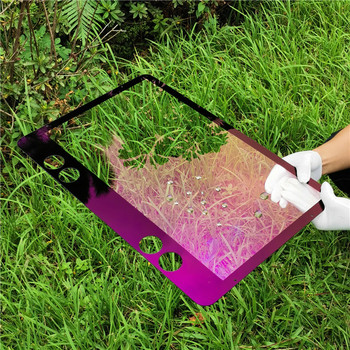
High transmittance · Low reflection · Printed border options

Glare diffusion · Smudge resistance · Tempered options
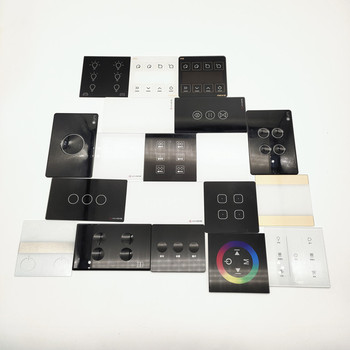
Silk screen or ceramic printing · Holes and edge polishing
Procurement is moving from price-only comparison to specification-based comparison. Buyers want evidence, repeatability and a supplier who can explain the process.
One clear trend is the shift from broad phrases to measurable specifications. A buyer searching for AF coated glass for fingerprint-resistant touch screens will increasingly ask for a drawing, a coating stack, a target application, a cleaning method and a test method. Instead of accepting “good anti-fingerprint effect,” professional buyers define contact angle, abrasion cycles, alcohol resistance, haze, transmittance and appearance limits. This is healthier for both sides because it turns a subjective claim into a repeatable purchase requirement.
Another trend is multi-layer coating demand. AF is often no longer ordered alone. For a display window, the buyer may need AR plus AF to improve contrast while keeping the surface clean. For an outdoor kiosk or industrial control panel, the buyer may request AG plus AF to reduce glare and fingerprints at the same time. Suppliers who can review the whole stack, including substrate, printing, tempering and edge quality, are easier to qualify than suppliers who only offer a single coating step.
Dual sourcing is also becoming normal. International buyers often keep one approved supplier for mass production and another for backup or regional flexibility. That makes documentation important: drawings, sample approval records, inspection criteria and packaging standards should be portable from one review to the next. AI-assisted purchasing teams also compare supplier websites, product images, application notes and FAQ pages before they contact sales. Clear technical content reduces the number of low-quality inquiries and attracts buyers who already understand their requirements.
Compliance and traceability continue to influence supplier selection. Buyers in North America, Europe and Asia may ask for material information, process controls, packaging validation and batch consistency. For AF coated glass, the key is not to promise a mysterious permanent effect. The key is to state what is tested, how it is tested and what the buyer should expect under normal cleaning and use. That transparent approach supports E-E-A-T and builds trust with engineering teams, quality teams and procurement teams at the same time.
The next generation of fingerprint-resistant cover glass will be judged by durability, optical clarity, integration and documentation, not by a single surface claim.
The first development trend is thinner but stronger cover glass. Electronic products continue to reduce weight and bezel width, so ultra-clear glass from 0.5 mm to 1 mm remains important for capacitive touch panels. At the same time, larger public terminals and industrial controls still need thicker tempered glass with reliable edge quality and safe breakage behavior. The best solution depends on the final product, not on a universal thickness recommendation.
The second trend is coating integration. AF coatings are being evaluated together with AR, AG and printed black borders. A cover glass may need a transparent display window, a printed icon area, drilled holes, a polished edge and an anti-fingerprint top layer. Buyers want one supplier to control the full sequence because every extra handling step can affect appearance and yield. Dongguan Jaswe Glass Co., Ltd. supports cutting, special-shaped cutting, edge polishing, hole drilling, CNC, tempering, silk screen printing, AG processing, and AR and AF coating, which helps keep process responsibility in one quality system.
The third trend is performance validation. More buyers are asking for AF durability data after rubbing, abrasion or repeated cleaning. They want the coating to remain effective after realistic use, not only on the first day. The exact test should be agreed in advance because different methods can produce very different results. A responsible supplier will discuss the test method, sample size and acceptance criteria rather than simply claim “long-lasting AF.”
The fourth trend is application-specific design. A smart switch panel, a medical touch screen, an outdoor kiosk and an industrial HMI do not need the same glass. The smart switch may prioritize printing and touch feel; the outdoor kiosk may prioritize AG haze and weather resistance; the medical display may prioritize AR transmittance and cleanability; the industrial HMI may prioritize impact strength and chemical resistance. For AF coated glass for fingerprint-resistant touch screens, the highest-value suppliers are those who ask the right application questions before quoting.
A practical RFQ should give the supplier enough information to recommend a stable process and a realistic sample plan.
Start with the substrate and thickness. Confirm whether the glass should be ultra-clear low-iron, clear float, chemically strengthened or thermally tempered. State the finished outline, corner radii, holes, notches, edge type and dimensional tolerance. Then define the coating side and coating stack. If AF is required on one side only, say so clearly. If AR or AG is also required, specify which surface receives which treatment and whether the coating must survive a bonding or lamination process.
Next, define the optical and appearance requirements. For a display window, buyers may care about transmittance, reflection, haze, color shift and printed border opacity. For a touch panel, buyers may care about surface smoothness, cleaning performance and fingerprint visibility. Photographs and limit samples are useful for appearance criteria, but they should be supported by measurable values where possible. For AF durability, agree on a test method such as contact angle measurement, alcohol rub, eraser test or abrasion test, and record the number of cycles and the pass/fail threshold.
Packaging is part of the specification. Coated glass can be damaged by direct contact, dust, humidity and poor separation during shipping. Buyers should confirm interleaving, edge protection, cleaning instructions and carton labeling. For custom projects, a small pilot order or golden sample helps confirm fit, appearance, coating performance and packing before mass production. This is especially important when AF coated glass is combined with printed graphics or a precise display window.
Dongguan Jaswe Glass Co., Ltd. is located in Dongguan, Guangdong, China, in the heart of a major electronics and manufacturing supply chain. The company focuses on designing, manufacturing and selling tempered glass, displayer glass, touch screen glass, silk screen printing glass, switch glass, anti-reflective glass, anti-glare glass, anti-fingerprinting glass, electrical equipment glass and LED lighting glass.
For AF coated glass for fingerprint-resistant touch screens, process control matters. The company has in-house capabilities covering cutting, special-shaped cutting, edge polishing, hole drilling, CNC, tempering, silk screen printing, AG processing, and AR and AF coating. Keeping these steps under one roof helps reduce handling risk and supports consistent quality from sample to mass production.
Production is supported by more than 80 workers, most of whom have over 8 years of hands-on experience, and by 26 glass machines including a tempering furnace, edge polishing machines, silk screen printing machines and automatic glass cutting equipment. Monthly output is above 200,000 pieces. The company serves buyers in America, Europe and Asia and works with a quality policy of “scientific management, careful manufacture, high quality service, striving for excellence.”
“Scientific management, careful manufacture, high quality service, striving for excellence.”
Share your drawing, coating stack, application and annual demand. Our team will review manufacturability and recommend a practical AF coated glass solution.
info@jasweglass.com
