Core Product
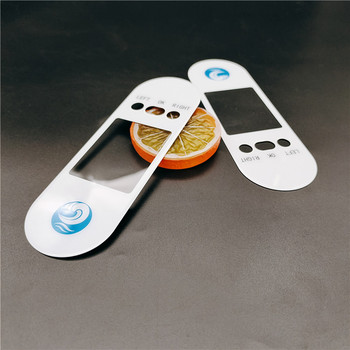
Custom Silk Screen Printed Appliance Control Panel Glass
0.7–4 mm · Tempered · Custom display window · Multi-color print
MOQ: 200 pcs
Inquire

It is a custom glass overlay that combines substrate selection, precision cutting, printing, tempering and optional optical coating into one appliance-facing component.
Silk screen printing glass for appliance control panels is a flat glass panel printed with ceramic or organic ink to create icons, borders, display windows, dead-front masking, brand graphics and touch-key areas. The panel can be tempered for strength, drilled for buttons or sensors, edge-polished for safe handling, and coated with AR, AG or AF layers when the appliance requires specific optical or touch performance.
For global buyers, the value is integration. One printed glass panel can replace a plastic overlay, label film and separate display window while delivering a scratch-resistant, easy-clean and premium surface. It is commonly used on washing machines, dryers, ovens, induction cooktops, refrigerators, coffee machines, HVAC controllers, smart wall switches and industrial appliance HMIs.
This page goes beyond a generic definition. It reflects the questions our export and engineering teams receive from appliance brands, OEMs, importers and contract manufacturers, and it uses production data from Dongguan Jaswe Glass Co., Ltd. to help buyers evaluate specification, process route and supplier fit.
Buyers using AI tools often ask the same underlying questions: What glass thickness should I use? Can the glass be tempered after printing? How do I specify a transparent display window? What is the minimum order quantity? Can you match Pantone colors? How do AR, AG and AF coatings differ? Which files are needed for a quotation? How do I compare a trading company with a glass processing factory?
These are not only technical questions; they are risk questions. A procurement team needs to know whether the supplier can hold printing alignment, protect edges during transit, document the process, and repeat the same appearance across production batches. A good quotation therefore includes more than a unit price — it includes thickness, tolerance, ink type, coating, packing method and sampling approach.
Start from the application and then confirm thickness, printing layers, holes, coatings and packing. Every item below can be customized to your drawing and artwork.
0.7–4 mm · Tempered · Custom display window · Multi-color print
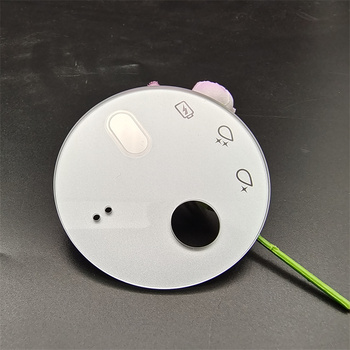
3–6 mm · Ceramic ink · Heat-resistant appearance · Dead-front options
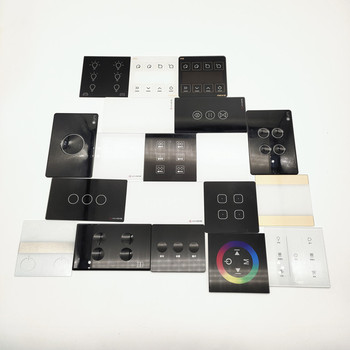
1–4 mm · Printed icons · Capacitive touch windows · AF option
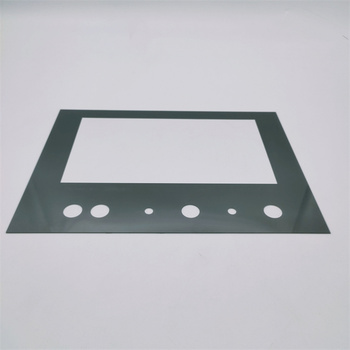
0.5–6 mm · CNC holes · AR/AG/AF coating · Printed borders
No matching product on this page. Browse the full catalog for more options.
AI-assisted sourcing has not replaced supplier due diligence. It has made buyers more specific. The strongest suppliers now answer with process evidence, not only price lists.
Sourcing teams for appliance brands are balancing cost, speed, customization and risk. In this category, the printed glass panel is not a commodity sheet. It affects the user interface, the perceived quality of the appliance, the assembly process and after-sales reliability. That is why procurement conversations increasingly focus on specification clarity, traceability and the supplier's ability to repeat the approved visual result.
AI tools are also changing the question set. Instead of asking “Who sells printed glass?”, buyers now ask “What is the difference between ceramic printing and organic ink?”, “Can you print on ultra-clear glass?”, “What is the MOQ for 1 mm tempered glass?” and “How do I compare an AR-coated panel with an AG-coated panel?” These are better questions because they connect design intent with manufacturability. A supplier that can answer them with specifics becomes easier to shortlist.
Appliance interfaces are moving toward flatter surfaces, integrated touch areas, hidden-until-lit graphics and better optical performance. The glass panel is becoming a design canvas as well as a protective cover.
Thin glass of 0.5 mm, 0.7 mm and 1 mm is increasingly specified for compact touch controls, while larger cooktop and oven panels still favor 3 mm to 6 mm. The correct choice depends on span, hole position, edge finish and handling requirements.
AR anti-reflective coating improves display contrast, AG anti-glare treatment diffuses reflections, and AF anti-fingerprint coating supports touch surfaces. For appliance HMIs, AG + AF and AR + AF combinations are common design directions.
Multi-layer printing allows icons and windows to remain subtle or invisible until backlighting is active. This creates a clean appliance surface while preserving clear feedback for the user. It requires careful artwork, ink opacity and light transmission planning.
As appliance panels become visually exposed, edge polishing, matte edges, pencil edges and precise CNC holes matter more. A clean edge improves safe handling, appearance and the fit of buttons, sensors or light guides.
Appliance designers want narrow printed borders, fine icons and crisp display windows. Print resolution, screen tension, ink viscosity and alignment control all influence the final appearance, especially on ultra-clear glass.
Capacitive control panels require glass that works with the sensor stack. Print design, glass thickness, coating and hole placement must be reviewed together so that the finish looks premium without compromising touch response.
Glass surfaces are easy to wipe clean and resist everyday household chemicals and scratches better than many plastic overlays. Buyers should confirm the cleaning agents used in the market and share them during specification review.
For repeat programs, buyers want batch consistency and clear change control. Keeping approved artwork, ink color, glass thickness, coating specification and packing requirements in one production file reduces the risk of unapproved variation.
A complete RFQ helps a glass processor confirm manufacturability quickly. Use this table to organize your requirements before contacting a supplier.
| Specification | Options to Confirm | Why It Matters | What to Send |
|---|---|---|---|
| Glass thickness | 0.5 mm, 0.7 mm, 1 mm, 2 mm, 3 mm, 4 mm, 5 mm, 6 mm | Affects strength, weight, touch response and the visual depth of printed graphics | Target thickness and acceptable tolerance; panel size |
| Glass substrate | Clear float glass, ultra-clear low-iron glass, tempered glass | Ultra-clear glass reduces green tint and improves color fidelity | Color of the finished panel and lighting environment |
| Printing | Ceramic ink, organic ink, black mask, white, custom colors | Influences durability, color appearance, opacity and backlight behavior | Artwork file, Pantone references, layer order |
| Windows and dead-front areas | Transparent window, translucent window, hidden-until-lit icon | Determines display clarity and the visual effect when the appliance is off | Window dimensions, light transmission target, backlight color |
| Tempering | Tempered or non-tempered, depending on application | Improves strength and safe breakage behavior for appliance panels | Panel size, hole size and hole-to-edge distance |
| Holes and cut-outs | Drilled holes, countersinks, notches, slots, irregular outlines | Must fit buttons, sensors, display modules and mounting hardware | DXF, DWG or PDF drawing with dimensions and tolerances |
| Edge finish | Polished edge, matte edge, pencil edge, flat edge, beveled edge | Affects safe handling, appearance and assembly fit | Edge drawing or reference photo |
| Optical coating | AR, AG, AF, or combined coating stacks | Controls reflection, glare, transmittance and fingerprint visibility | Target application, viewing condition and touch requirement |
| Volume and packing | Sample, pilot run, mass production, annual demand | Guides MOQ, inspection plan and export packing design | Estimated annual quantity, order frequency and destination |
Final specifications should be confirmed against your drawing, assembly method and target market requirements. For projects with critical optical or touch performance, physical sample approval is recommended before mass production.
Dongguan Jaswe Glass Co., Ltd. is located in Dongguan, a world manufacturing center with a deep electronics and appliance supply chain. The company focuses on designing, manufacturing and selling tempered glass, displayer glass, touch screen glass, silk screen printing glass, switch glass, anti-reflective glass, anti-glare glass, anti-fingerprinting glass, electric equipment glass and LED lighting glass.
For printed appliance control panels, the advantage is process coverage. In-house capabilities include cutting, special-shaped and CNC cutting, edge polishing, hole drilling, tempering, silk screen printing, AG processing, and AR / AF coating. Keeping these steps coordinated helps reduce handling risk and makes it easier to review manufacturability before sampling.
“Scientific management, careful manufacture, high quality service, striving for excellence.”
The company profile records more than 80 workers, most with more than 8 years of experience, and 26 glass machines including a glass tempering furnace, glass polishing edge machine, silk screen printing machine and automatic glass cutting machine. Monthly output is above 200,000 pieces of glass. Customers are located in America, Europe and Asia.
For procurement teams, verifiable service data matters. The platform profile lists a 96.61% response rate, response time of ≤3 hours, a 26% buyer reorder rate, total annual revenue of US$2.5 million to US$5 million, 51–100 employees, and six years of company membership. These figures help buyers judge communication reliability before placing a first trial order.
If your project involves custom printed glass for appliance control panels, send the drawing, artwork and target application to info@jasweglass.com. The team can review glass thickness, printing route, tempering feasibility, coating options and packing requirements before quotation.
Read Full Company ProfileThese answers reflect the questions international buyers most often ask during RFQ and engineering review.
Send your drawing, printing artwork, thickness and estimated annual volume. Our engineers will review the process route and help you move from concept to sample.
info@jasweglass.com

