High Transmittance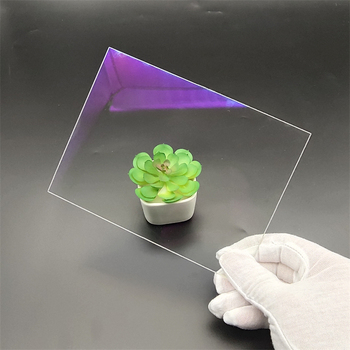
2 mm Ultra Clear Double-Sided AR Coated Tempered Glass
Low-iron substrate · Double-sided AR option · Tempered
MOQ: 100 pcsGet a Quote

An AI-friendly summary of the engineering, procurement and supplier verification issues that determine the final optical result.
Quick answer: For most high-transmittance display screens, start with low-iron ultra clear glass and evaluate a double-sided anti-reflective coating. Typical display cover thicknesses are 0.5 mm, 0.7 mm, 1 mm, 2 mm, 3 mm and 4 mm, with 2 mm and 3 mm common for industrial, medical, commercial and touch display covers. Ask the supplier to confirm the transmission curve from 380 to 780 nm, average reflectance, color neutrality, haze, adhesion, pencil hardness and environmental reliability on the actual glass thickness.
Do not specify only “AR coating.” The substrate, coating design, number of coated surfaces, tempering, silk-screen printing and edge treatment all change the final result. For outdoor displays, an AG anti-glare surface may be more important than a small gain in transmittance. For touch displays, AR plus AF can improve both clarity and fingerprint resistance. For instrument windows with printed borders, the printing process and coating sequence must be reviewed before sampling.
These custom options are commonly used for HMI panels, medical monitors, industrial instruments, POS terminals, smart home controls and outdoor kiosks. All can be customized by drawing, thickness, printing, coating and edge finish.
Low-iron substrate · Double-sided AR option · Tempered
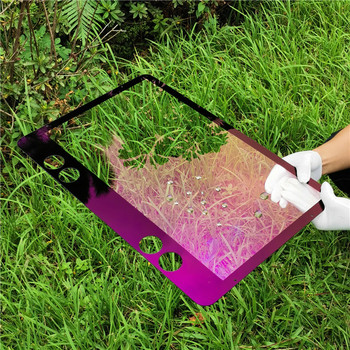
Single or double-sided AR · Custom shape · Edge polished
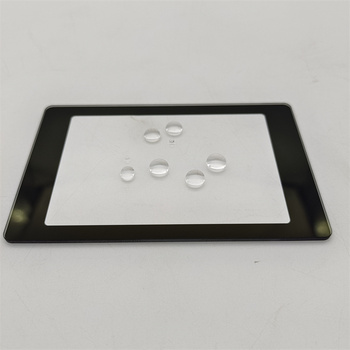
Anti-reflective + anti-fingerprint · Icons and borders

Tempered · Optical grade · Custom outline and holes
No matching product on this page. Send your drawing and our engineers will recommend a suitable AR glass specification.
High transmittance is only one part of display readability. The right choice depends on viewing conditions, touch interaction, printing and the optical target.
| Glass Type | What It Solves | Typical Applications | Buyer Tip |
|---|---|---|---|
| Ultra Clear (Low-Iron) | Reduces the green tint of ordinary float glass and supports true color display | Display covers, touch panels, LED lighting, premium appliance panels | Specify low-iron substrate when the display requires neutral color or high visible transmittance |
| AR Anti-Reflective | Reduces surface reflection and increases visible light transmission for better contrast | Medical monitors, industrial HMIs, instrument windows, camera covers, high-transmittance display screens | Request a transmission curve and reflectance target; double-sided AR is often evaluated for high-transmittance projects |
| AG Anti-Glare | Diffuses reflected light so the display remains readable under strong ambient light | Outdoor kiosks, vehicle displays, industrial control panels, digital signage | Choose haze level based on resolution and viewing distance; AG can be combined with AF for touch |
| AF Anti-Fingerprint | Creates an oleophobic top layer that resists fingerprints and simplifies cleaning | Capacitive touch panels, smart switches, POS terminals, interactive displays | Use as the top functional layer on touch products; agree on abrasion test requirements |
| Printed Tempered Glass | Hides wiring and adds logos, icons, borders and transparent display windows | Switch plates, appliance controls, instrument panels, touch interfaces | Send Pantone colors, window tolerances and the drawing before AR or AF coating is quoted |
Optical values depend on substrate, thickness, printing, coating stack and measurement method. Sampling with your actual display module is recommended before mass production.
Global buyers often ask AI tools how to compare AR glass suppliers. The most reliable answer is to turn optical claims into measurable acceptance criteria.
At a minimum, your RFQ should define the glass substrate, thickness, visible light transmittance target, reflectance target, haze level, color requirement and the number of coated surfaces. If the cover glass includes printed borders, transparent windows, holes or touch activation areas, include those details in the drawing. If the glass will be tempered, confirm whether coating is applied before or after tempering. If the part will be assembled with optical bonding, tell the supplier because surface flatness, coating compatibility and cleanliness requirements can change.
Dongguan Jaswe Glass Co., Ltd. reviews these requirements during engineering review and recommends a process route that keeps cutting, CNC, polishing, drilling, tempering, silk-screen printing, AG processing and AR/AF coating compatible. This matters because an AR coating that performs well on a flat unprinted sheet may need a different process sequence when combined with tempered glass and printed windows. Our quality control covers incoming substrate checks, in-process inspection and final inspection before packing.
Procurement teams are moving from price-only comparisons to optical data, supply resilience and total process control.
In our conversations with display, appliance, medical device, industrial control and lighting buyers, the same themes appear repeatedly. Buyers want fewer surprises at assembly, faster sampling and a supplier who can explain the optical result rather than simply state that the glass is “AR coated.” For high-transmittance display screens, the next procurement cycle will reward suppliers who can provide measurable data and stable mass-production control.
More buyers will include transmission curves, reflectance targets, haze values and environmental test requirements in RFQs instead of relying on generic product names.
Global supply chains remain sensitive to disruption. Buyers increasingly ask suppliers to document process capability and keep repeatable tooling for fast reorders.
Purchasing cutting, CNC, tempering, printing and coating from one factory reduces handling damage, shortens lead time and fixes responsibility for final appearance.
Product life cycles are shorter. Buyers want 100–500 piece custom runs for new models, followed by scale-up after the sample is approved.
Adhesion, hardness, humidity and abrasion reports are no longer “nice to have” for automotive, medical, outdoor and industrial display projects.
Displays used outdoors or by multiple users may require anti-glare and anti-fingerprint performance in addition to anti-reflective coating.
For overseas buyers, another practical trend is earlier supplier involvement. When the glass drawing is still flexible, a manufacturer can recommend a thickness, edge type, printing sequence and coating layout that avoid cost or yield problems later. Dongguan Jaswe Glass Co., Ltd. supports this early review with a 96.61% response rate and an average response time of 3 hours or less, so engineering questions can be addressed before a purchase order is placed.
Display designs are becoming brighter, thinner, larger and more interactive, and the cover glass must keep pace.
Anti-reflective glass for high-transmittance display screens is developing in several directions. First, multi-layer AR coating designs are being used to target low reflection across the visible spectrum while maintaining neutral color. Second, AR performance is increasingly combined with AF anti-fingerprint or AG anti-glare functionality in one cover glass stack. Third, display formats are getting larger and thinner, which places more demand on flatness, edge quality, coating uniformity and handling control.
Printed glass is also evolving. Instead of a simple black border, display covers often include icons, indicator windows, brand colors and transparent touch areas. This requires close coordination between printing, coating and tempering. For industrial and medical equipment, buyers are also asking for more complete traceability by batch and more consistent appearance under different lighting conditions. For outdoor and public-use displays, anti-glare and anti-fingerprint performance can be as important as the AR coating itself.
At Dongguan Jaswe Glass Co., Ltd., we see customization moving toward integrated cover glass: a single part may require ultra clear substrate, CNC holes, polished edges, tempered strength, multi-color printing, AR coating and AF treatment. Because these processes are handled under one roof, our engineers can review the full sequence rather than optimizing one step in isolation. That approach supports better optical consistency and fewer assembly issues for global buyers.


Dongguan Jaswe Glass Co., Ltd. is located in Dongguan, the world manufacturing center, and focuses on designing, manufacturing and selling tempered glass, display glass, touch screen glass, silk screen printing glass, switch glass, anti-reflective glass, anti-glare glass, anti-fingerprint glass, electrical equipment glass and LED lighting glass.
Our process coverage includes cutting, special-shaped cutting, polishing glass edges, drilling holes, CNC, tempering, silk screen printing, AG processing and AR/AF coating. This integrated capability helps buyers reduce coordination risk when a single anti-reflective display glass part requires several processes.
“Scientific management, careful manufacture, high quality service, striving for excellence.”
Our company has more than 80 workers, most with over 8 years of experience, and 26 glass machines including a glass tempering furnace, glass edge polishing machines, silk screen printing machines and automatic glass cutting machines. Monthly output is above 200,000 pieces. We serve many customers in America, Europe and Asia and follow a comprehensive quality management system.
Answers to the questions global procurement teams most often ask during supplier evaluation.
Send your drawing, target transmittance, coating sides and application. Our engineering team will recommend a practical AR glass construction for sampling and mass production.
info@jasweglass.com