Blog
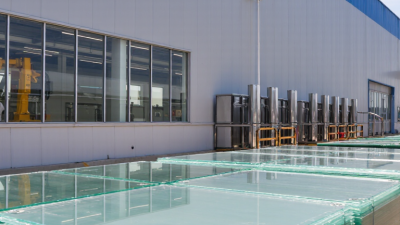
China Top 10 Tempered Glass Manufacturers
China’s tempered glass sector serves construction, transport, appliances, and solar applications. The Global Status Report for Buildings and Construction 2024/2025, published by UNEP and the Global Alliance for Buildings and Construction, estimates that buildings use 32% of global energy and produce 34% of energy-related carbon emissions. That context makes glazing performance more than a design detail. Buyers also need to assess safety, heat treatment consistency, coating compatibility, and delivery reliability.
Tempered Glass is heat-treated to improve strength and alter how it breaks. Yet product quality is not captured by a single strength figure. For a façade project, a buyer may need to check edge finish, glass thickness, flatness, and batch traceability. Building-envelope researcher Stephen Selkowitz’s published work emphasizes that windows should be evaluated as part of the complete building system. That is a useful lens when comparing suppliers, not a direct ranking formula.
This guide examines China’s top 10 tempered glass manufacturers through practical criteria: production capability, quality controls, product range, certifications, and export experience. Company claims deserve verification. A polished factory video cannot replace test records or sample inspection. Nor does a large production line guarantee consistent results. The comparison has limits, too: publicly available data varies, and supplier capabilities can change. Use the profiles as a starting point, then confirm specifications against your project needs.
Read more »
 By:Amelia
- November 25, 2026
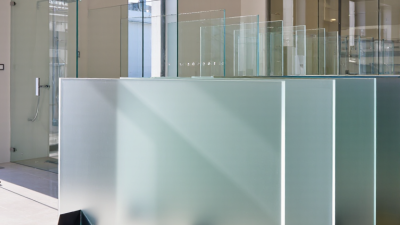
How to Choose Custom Glass for Your Project
Choosing Custom Glass is not just a matter of picking a clear panel. The right choice depends on where the glass will go, how people will use it, and what conditions it must handle. A shower enclosure faces moisture and frequent cleaning. A storefront may need to manage glare, visibility, and changing temperatures. Small details matter.
Start with the purpose. Consider the panel’s size, location, edge finish, color, and level of privacy. Then discuss suitable glass types and thicknesses with a qualified glass professional. Requirements can vary by application and location, so confirm relevant building and safety codes before ordering. Clear specifications help reduce costly changes later.
Looks matter, of course. But performance comes first. It is easy to focus on a sample under bright showroom lights and overlook how it may appear beside a dark wall or in morning sun. Ask for samples, drawings, and written specifications where possible. Check how the glass will be supported and installed, too. A beautiful panel can still disappoint if its hardware or fit is wrong. Not every project needs the most elaborate option. Sometimes a simpler choice works better—and that deserves a second look. This guide explains the practical questions to ask before choosing custom glass, so your final decision fits both the design and the daily demands of the space.
Read more »
 By:Ethan
- November 25, 2026
What Are the Top Types of Toughened Glass?
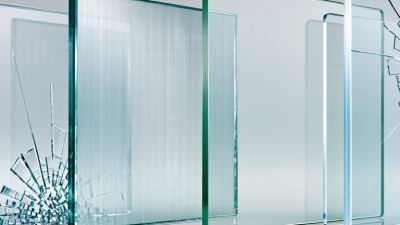
Toughened Glass is not one product but a family of heat-treated and chemically strengthened materials. The National Glass Association’s technical guidance describes fully tempered glass as roughly four times stronger than annealed glass of the same thickness. It also explains its characteristic breakage: small, relatively blunt fragments rather than long, sharp shards. That feature can reduce injury risk, but it does not make every installation safe by itself.
The categories matter. Fully tempered glass suits doors, shower enclosures, and side panels exposed to impact. Heat-strengthened glass offers greater resistance than annealed glass, but it is not equivalent to fully tempered glass. Chemically strengthened glass can retain a thin, smooth profile, while laminated constructions hold fragments together after breakage. ASTM C1048 covers heat-treated flat glass; ANSI Z97.1 and CPSC 16 CFR Part 1201 set impact-performance requirements for safety glazing. Details matter. Thickness, edge quality, framing, and installation can change real-world performance.
Glass scientist John C. Mauro has described glass as “a state of matter, not a material.” The phrase is a useful reminder: processing and composition shape performance, not appearance alone. This overview compares the leading types by strength, breakage behavior, applications, and limitations. Some product claims blur important distinctions. A reflective glass panel may look robust, yet its edges or support system can remain vulnerable. No single type is best for every project.
Read more »
By:Ethan
- November 25, 2026