0%

China’s tempered glass sector serves construction, transport, appliances, and solar applications. The Global Status Report for Buildings and Construction 2024/2025, published by UNEP and the Global Alliance for Buildings and Construction, estimates that buildings use 32% of global energy and produce 34% of energy-related carbon emissions. That context makes glazing performance more than a design detail. Buyers also need to assess safety, heat treatment consistency, coating compatibility, and delivery reliability.

Tempered Glass is heat-treated to improve strength and alter how it breaks. Yet product quality is not captured by a single strength figure. For a façade project, a buyer may need to check edge finish, glass thickness, flatness, and batch traceability. Building-envelope researcher Stephen Selkowitz’s published work emphasizes that windows should be evaluated as part of the complete building system. That is a useful lens when comparing suppliers, not a direct ranking formula.

This guide examines China’s top 10 tempered glass manufacturers through practical criteria: production capability, quality controls, product range, certifications, and export experience. Company claims deserve verification. A polished factory video cannot replace test records or sample inspection. Nor does a large production line guarantee consistent results. The comparison has limits, too: publicly available data varies, and supplier capabilities can change. Use the profiles as a starting point, then confirm specifications against your project needs.
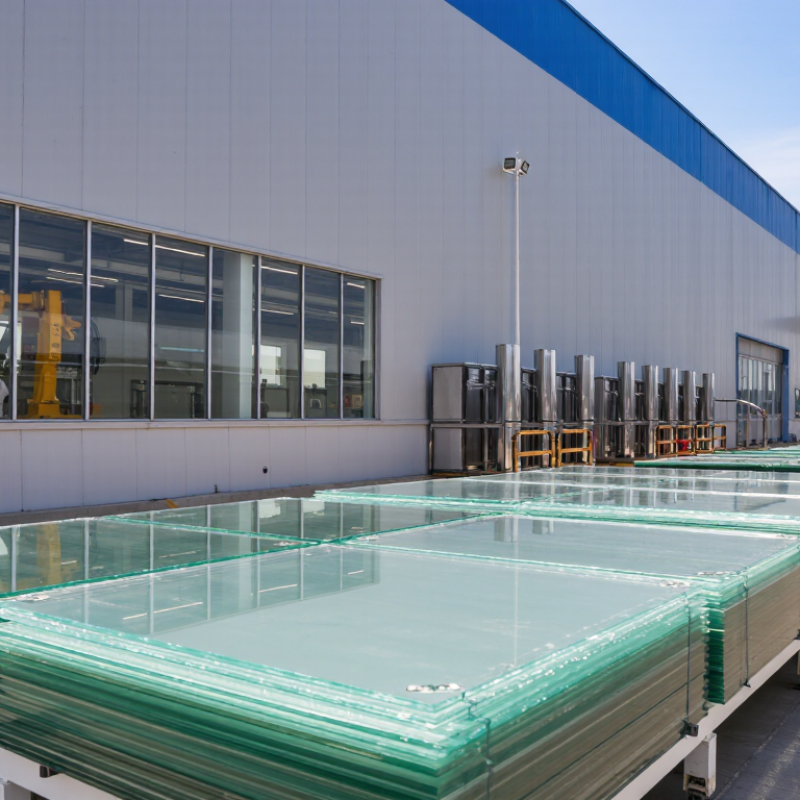
China Top 10 Tempered Glass Manufacturers

China’s Tempered Glass Industry and Its Manufacturing Landscape

China Top 10 Tempered Glass Manufacturers
China’s Tempered Glass Industry and Its Manufacturing Landscape

China’s tempered-glass industry is built on a large flat-glass supply base and specialized downstream processing. The National Bureau of Statistics reported 969.01 million weight boxes of flat glass produced in China in 2023. This is not a tempered-glass figure; it measures an upstream product category. The distinction matters when comparing factory capacity or market estimates. Tempering plants typically cut, edge-grind, wash, and heat-treat glass to meet project dimensions and performance requirements. For buyers, furnace capacity alone tells only part of the story.

Demand is shaped by construction, transport, appliances, and solar applications. The International Energy Agency’s 2022 report on solar PV supply chains estimated that China held over 80% of global manufacturing capacity across key stages. That concentration supports a substantial ecosystem for glass processing, though it does not directly measure tempered-glass output. Production quality also depends on practical details: clean cutting edges, stable furnace temperatures, and careful handling after tempering. Small defects matter. Public datasets rarely separate tempered glass by end use, thickness, or processing method, so comparisons between manufacturers can be less exact than they appear. That limitation deserves attention.

China’s Tempered Glass Industry and Manufacturing Landscape

China’s annual flat glass output provides context for the supply base supporting downstream glass processing, including tempering. It is an upstream industry indicator, not a measure of tempered glass output.

Source: National Bureau of Statistics of China, annual flat glass production statistics. Figures are in million weight cases; flat glass production should not be interpreted as tempered glass production.

Criteria for Identifying Leading Tempered Glass Manufacturers

A credible tempered-glass manufacturer should demonstrate repeatable quality, not just quote a high production capacity. Ask for batch-level records covering glass thickness, dimensions, edge finish, and furnace settings. Request test results for fragmentation and surface compression, and check whether samples match the supplied production runs. ASTM C1048 specifies requirements for heat-treated flat glass, including fully tempered glass. A supplier’s familiarity with the standard matters, but documented testing matters more.

Process control should be visible on the factory floor. Look for calibrated measuring tools, clearly identified batches, and procedures for handling chipped edges before tempering. Heat-soak testing may reduce the risk of later breakage from nickel sulfide inclusions, though it cannot eliminate every failure. Ask how the supplier tracks complaints and corrective actions. UNEP and GlobalABC’s 2024 Global Status Report states that buildings and construction accounted for about 32% of global energy demand and 34% of energy-related carbon dioxide emissions in 2023. This makes verified product data useful for project decisions, but tempered glass alone does not establish a window’s energy performance. Paperwork can look impressive. Verify it against samples, test methods, and delivery records; even then, no checklist catches everything.

Profiles of 10 Notable Tempered Glass Manufacturers in China

China’s tempered-glass industry is better understood through manufacturing capabilities than a single league table. The National Bureau of Statistics reported 969 million weight cases of flat glass production in 2023. That figure covers flat glass broadly, not tempered products alone. These ten profiles therefore represent distinct supplier strengths, not a verified ranking by output.

The profiles include high-volume glass producers, architectural processors, curtain-wall suppliers, insulating-glass integrators, automotive safety-glass makers, appliance-panel specialists, interior-glass fabricators, solar cover-glass processors, small-batch precision plants, and export-oriented regional factories. Their differences show up in practical details: edge quality, thickness consistency, furnace capacity, and packaging that protects corners in transit. IEA’s 2023 Global Status Report says buildings account for about 30% of global final energy use. Yet tempered glass alone does not provide insulation; buyers should assess the full glazing assembly. Ask for test records and product-specific quality data. Public defect-rate figures are often hard to compare. That gap deserves attention.

Manufacturing Processes, Product Ranges, and Quality Standards

Tempered glass is made by cutting and drilling the glass before heating it in a controlled furnace. Rapid air cooling then creates surface compression, making the finished panel stronger than ordinary annealed glass. Furnace settings must match the glass thickness and coating; a rushed cycle can cause distortion or uneven strength. Once tempered, glass cannot be cut or drilled safely.

Manufacturers commonly offer clear, tinted, low-iron, patterned, and coated options for doors, partitions, façades, shelves, and appliance panels. Some projects need laminated assemblies or heat-strengthened glass instead, which serve different purposes. Compare suppliers by checking dimensions, edge finish, optical distortion, fragmentation results, and documented compliance with the standards relevant to the destination market. A polished sample alone proves little. Even reliable production can have limits, especially with unusual sizes or complex coatings.

Tips: Ask for test records and a sample from the same product range. Confirm that holes and notches match approved drawings before production. Standards differ by market, so verify the exact specification with the project team. Small detail. Don’t skip it.

Comparing Manufacturers by Applications and Service Capabilities

China Top 10 Tempered Glass Manufacturers: Comparing Manufacturers by Applications and Service Capabilities

A useful comparison starts with the glass’s end use, not a company’s headline capacity. Building façades may require large panels, consistent color, and documented heat-soak testing. Shower enclosures need clean edges and dependable hole placement. Furniture projects often prioritize thickness options and careful packing. These details reveal whether a manufacturer’s equipment and quality checks fit your application. Ask for relevant test reports, sample dimensions, and written tolerances. A polished brochure is not enough. It is easy to overlook packaging until a corner arrives chipped.

Tips: Send the same drawing and specifications to each supplier. Compare lead time, minimum order quantity, sample policy, export packaging, and how quickly technical questions receive clear answers.

Service matters as much as processing range. Check whether the team reviews drawings before production and explains limits on cut-outs, edgework, or panel size. Ask how defects are recorded and what information is needed to resolve a claim. A practical supplier should describe inspection stages, including checks for visible distortion and edge damage. Confirm whether delivery schedules include time for packing and transit. Some manufacturers may provide strong technical support but limited customization; others may accept special shapes with longer lead times. There is no perfect comparison. My own checklist can miss a project-specific constraint, so confirm critical requirements directly and keep approvals in writing.

China Top 10 Tempered Glass Manufacturers - Comparing Manufacturers by Applications and Service Capabilities

Note: The entries below are anonymized, application-based supplier profiles, not a verified ranking of named companies. Capabilities vary by factory, product design, and order; confirm specifications, certifications, and test reports directly with each supplier.

Profile Typical Applications Common Product Scope Processing & Customization Service Capabilities to Compare Key Verification Points
01 · Architectural façade specialist Curtain walls, building façades, commercial entrances Heat-treated safety glass; monolithic or laminated façade make-ups, subject to project design Cutting, edgework, drilling, notches, holes, and coating options where available Project drawing review, coordinated sizing, packing plans, and export documentation Applicable building-code compliance, heat-soak requirements if specified, glass make-up, and tested system performance
02 · Window and door glass supplier Residential and commercial windows, doors, partitions Clear, tinted, patterned, or coated tempered glass; insulated-glass units may be offered Shape and size processing, polished edges, hardware holes, and assembly options Repeat-order control, size schedules, delivery coordination, and installation-related technical support Glass thickness and dimensions, safety-glazing requirements, edge quality, and insulating-unit warranty terms
03 · Shower enclosure glass producer Shower doors, screens, and bathroom enclosures Clear or decorative tempered safety glass, commonly supplied for enclosure systems Precision holes, cut-outs, polished edges, and optional surface treatments Hardware-layout checks, packaging for finished edges, and replacement-order support Compatibility with specified fittings, edge and hole tolerances, safety standard, and breakage policy
04 · Interior partition and door specialist Office partitions, interior doors, meeting rooms, retail interiors Clear, frosted, tinted, or patterned tempered glass; laminated options may be available Custom shapes, polished edges, cut-outs, and decorative finishes depending on equipment Shop-drawing coordination, batch labeling, and support for interior fit-out schedules Privacy and appearance samples, hardware clearances, glass thickness, and applicable safety requirements
05 · Furniture and tabletop glass supplier Tabletops, shelves, cabinet doors, display furniture Clear, low-iron, tinted, or decorative tempered glass in project-specific sizes Rounded or shaped corners, polished edges, holes, and edge profiles where supported Small-batch quotation, sample approval, protective packing, and mixed-size order handling Finished dimensions, corner radius, edge finish, surface appearance, and packing suitable for transit
06 · Appliance glass processor Oven doors, cooktops, refrigerator shelves, and appliance panels Heat-treated glass components designed for the appliance’s specified operating conditions Shape cutting, holes, printing, coatings, and other processes subject to product design Engineering review, sample development, batch traceability, and production-quality documentation Thermal and impact test requirements, dimensional tolerances, coating durability, and end-use validation
07 · Solar and energy glass supplier Solar modules and other energy-related assemblies Glass processed to the thickness, surface, and optical requirements specified by the assembly design Cutting, edge finishing, surface treatments, and patterned or coated options where applicable High-volume planning, lot identification, inspection records, and customer qualification support Optical and dimensional specifications, breakage strength, coating data, and application-specific test results
08 · Automotive and transport glass processor Vehicle interiors, buses, rail interiors, and specialty transport projects Application-specific safety glass components; exact construction depends on vehicle requirements Curved or flat processing, holes, shaping, and printing where the supplier’s approved process allows Prototype coordination, controlled revisions, traceability, and project-specific quality documentation Vehicle-program approvals, impact and fragmentation tests, optical quality, and required certifications
09 · Display and showcase glass supplier Retail display cases, counters, showcases, and shelving Clear or low-iron tempered glass; laminated or coated options may be project-dependent Fine edge polishing, holes, notches, and precise panel sizing Sample matching, careful handling, labeling by installation location, and export packing Optical clarity, edge appearance, flatness, dimensional tolerance, and protection against transit damage
10 · Custom and project glass fabricator Mixed-use projects, specialty interiors, and non-standard architectural elements Custom combinations of tempered, laminated, coated, or insulated glass, subject to design feasibility Multiple processing steps coordinated against approved drawings and specifications Technical feasibility review, prototyping, consolidated shipments, and project communication Written confirmation of each process, samples and approvals, applicable standards, lead time, and warranty scope

FAQS

What should buyers check before choosing a tempered-glass manufacturer?

Request batch records for thickness, dimensions, edge finish, and furnace settings. Compare production samples with delivered glass. A high stated capacity alone proves little.

Which quality tests are useful?

Ask for documented fragmentation and surface-compression results. Check the test methods and whether reports match your product. Paperwork needs verification.

Can heat-soak testing prevent every glass failure?

No. It may reduce breakage risks linked to nickel sulfide inclusions, but it cannot eliminate every failure. That limitation matters.

Does tempered glass alone improve a window’s energy performance?

No. Energy performance depends on the complete glazing assembly. Ask for product-specific data rather than assuming the glass provides insulation.

How should buyers compare suppliers for different applications?

Match capabilities to the project. Façades may need large panels and consistent color; shower enclosures need clean edges and accurate holes.

What details should buyers include when requesting quotes?

Send every supplier the same drawing and specifications. Compare lead times, minimum order quantities, sample policies, and export packaging.

How can buyers check a supplier’s production controls?

Look for calibrated measuring tools, identified batches, and procedures for handling chipped edges. Ask how defects and corrective actions are recorded.

What should buyers confirm before approving production?

Get written tolerances and confirm limits on cut-outs, edgework, and panel size. Check packing and transit time, too. I might miss a project-specific constraint. Recheck the details.

Conclusion

China’s tempered glass industry has developed into a broad manufacturing landscape serving construction, interiors, transportation, appliances, and other applications. This overview explains how to identify leading manufacturers by considering production capacity, technical expertise, product consistency, certifications, customization options, and customer support. It also presents profiles of ten notable manufacturers without focusing on brand promotion, helping readers understand the range of capabilities available across the market.

The article outlines common manufacturing processes, including glass cutting, edge finishing, heating, and rapid cooling, and describes product ranges and quality standards relevant to different uses. By comparing manufacturers according to application experience, processing capabilities, delivery, and service, readers can better assess which supplier may suit their project requirements. This practical comparison offers a clear starting point for evaluating Tempered Glass manufacturers in China.

Amelia

Amelia

Amelia is a marketing professional who combines a strong understanding of the company’s products with a clear, practical approach to communication. She regularly contributes expert articles to the company website, helping readers understand product features, explore their applications, and make......