AR Optical Glass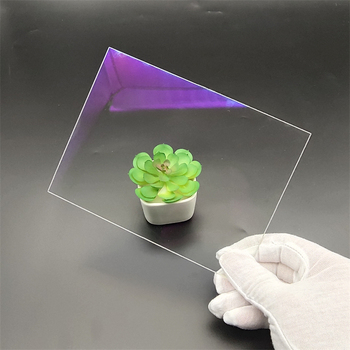
2.0 mm Ultra-Clear Double-Sided AR Displayer Glass
Low reflection · High transmission · Tempered
MOQ: 100 pcsInquire Now


Digital signage performance depends on the glass, the display module, the enclosure, and the viewing environment working together.
Displayer glass for digital signage panels is the front glass layer that protects the display while shaping what the viewer sees. In a retail window, a transport hub, a restaurant drive-through, a hospital wayfinding screen, or an outdoor advertising totem, the cover glass must balance optical clarity, impact resistance, environmental durability, printed aesthetics, and touch performance. A glass part that looks acceptable on a bench can still fail in the field if the surface treatment, edge quality, or printed window registration does not match the final viewing conditions.
This guide is written for global buyers who are comparing suppliers, writing specifications, or preparing a request for quotation. It is maintained by the engineering and export team at Dongguan Jaswe Glass Co., Ltd., a Dongguan-based glass processing company that reviews custom display glass drawings for buyers in North America, Europe, and Asia. The goal is to help purchasing teams ask better questions before sampling and to reduce the risk of rework after the display enclosure has been designed.
The most common issues are not always visible in a simple quotation. They appear later as reflection complaints, mismatched black borders, delamination concerns, chipped edges, slow sample cycles, or inconsistent coating color between batches. Typical specification errors include:
A reliable supplier should be able to review these points from a drawing and recommend a practical construction. The starting point is not a generic catalog item. It is the application: indoor or outdoor, touch or non-touch, fixed or moving, bright or controlled light, small format or large format, and one-off prototype or multi-year program.
Start with the optical requirement, then confirm thickness, edgework, printing and coating. Each option below can be customized to your drawing.
Low reflection · High transmission · Tempered
Diffused reflection · Readable in bright light
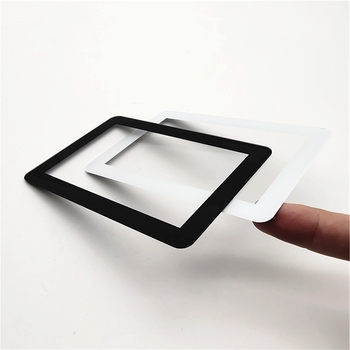
Oleophobic surface · Smooth touch · Tempered
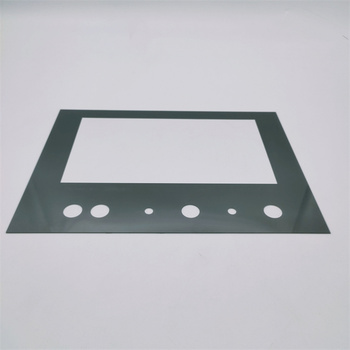
Custom window · Icon printing · Tempered
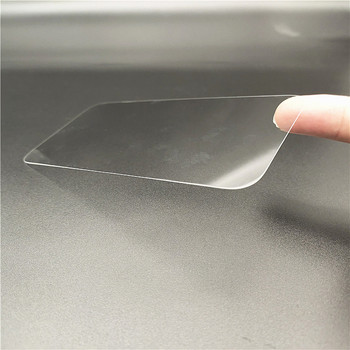
Lightweight · Electronic grade · Custom cut
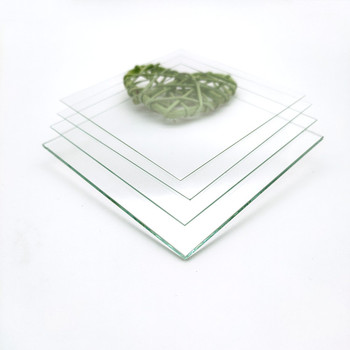
No matching product on this page. Use the inquiry button to request a custom displayer glass specification.
Use this matrix to align the glass construction with the viewing environment, touch requirement, and panel size.
| Signage Application | Recommended Glass Construction | Typical Thickness | Surface Treatment | Why It Works |
|---|---|---|---|---|
| Indoor retail and wayfinding | Ultra-clear tempered displayer glass | 1.1–3 mm | AR both sides optional | Improves contrast and reduces reflections while keeping the display bright. |
| Outdoor digital signage | Tempered glass with AG + AF | 2–4 mm | AG haze + oleophobic AF | Diffuses sunlight and keeps touch surfaces easier to clean in public areas. |
| Interactive kiosks | Chemically strengthened or tempered ultra-clear glass | 0.7–3 mm | AF + AR optional | Provides smooth touch feel, added protection and clearer front-face optics. |
| Video walls and high brightness displays | Low-iron ultra-clear glass with AR | 1.1–3 mm | AR coating | Reduces ghost reflections and supports more accurate color presentation. |
| Transport and industrial displays | Tempered glass with AG | 3–6 mm | AG or anti-shatter option | Combines impact resistance with readability under harsh lighting conditions. |
| Large-format advertising panels | Tempered glass with printed black border | 2–6 mm | Low-haze AG optional | Creates a clean edge-to-edge appearance and hides bonding or enclosure details. |
Final optical values depend on glass thickness, substrate, coating stack, printing, and the display module itself. Sample testing in the actual enclosure is recommended before mass production.
Purchasing decisions are shifting from lowest piece price toward total program reliability and optical consistency.
Global digital signage programs are becoming larger, faster, and more visible to end customers. A failed display in a retail chain or transport hub creates a brand problem, not just a replacement cost. As a result, procurement teams are changing how they select displayer glass for digital signage panels. They are asking suppliers for clearer process control, faster sample feedback, packaging data, and a realistic understanding of how the glass will perform after installation.
1. Total landed cost replaces piece price. Buyers are adding breakage allowance, inspection labor, replacement freight, and field return risk to their cost models. A slightly higher glass price can be cheaper if the batch has fewer optical defects or if packing prevents edge chips during international shipping.
2. Suppliers are being asked for audit-ready documentation. For signage brands and OEMs, proof of process control matters. Buyers increasingly request thickness checks, coating appearance standards, printing tolerance records, packaging specifications, and batch traceability. This is especially important for multi-country rollouts where replacement parts must match existing screens.
3. Smaller batches and faster changeovers are becoming normal. Retail campaigns, regional display versions, and seasonal signage require more SKUs. Procurement teams want a supplier that can handle small initial orders, repeat production, and design changes without losing consistency. Flexible cutting, CNC shaping, printing, and coating capability under one roof helps reduce coordination time.
4. Optical acceptance criteria are being written earlier. Instead of simply ordering “AR glass” or “AG glass,” buyers are defining reflection targets, haze level, transmission range, color neutrality, and the viewing distance for evaluation. This reduces disputes after production, because both sides know how the sample will be judged.
5. Dual sourcing is still common, but fewer suppliers are truly qualified. Many brands keep two sources for risk control, yet they consolidate around suppliers that can demonstrate stable quality and responsive engineering. A digital signage glass supplier must understand not only glass processing, but also display lamination, enclosure design, touch integration, and outdoor environmental risk.
The direction is toward thinner, clearer, more durable glass with optical treatments tuned to the real viewing environment.
Digital signage displays are moving into more locations and more demanding lighting conditions. The glass must support brighter displays, larger panels, thinner enclosures, and touch interaction without making installation or maintenance more difficult. Several product development trends are shaping the next generation of displayer glass for digital signage panels.
Thinner strengthened glass for compact and light panel designs. As enclosures become slimmer, buyers ask for 0.7 mm, 1.0 mm, and 1.1 mm glass with reliable edge quality and controlled flatness. Thin glass reduces weight, but it must be specified with the right strengthening method and packing protection.
AG haze tuned to pixel pitch and viewing distance. Anti-glare surfaces are not all the same. A fine haze may suit a high-resolution indoor screen viewed from close range, while a stronger diffusion level may be better for an outdoor sign viewed from several meters away. Suppliers need to discuss haze and image sharpness together.
AR coatings with better color neutrality and durability. Anti-reflective coating is used to increase transmission, deepen blacks, and reduce ghost reflections. The market is moving toward coatings that preserve color neutrality and survive cleaning and handling in public environments. Coating adhesion and appearance testing should be part of the sample review.
AF layers compatible with touch and optical bonding. Anti-fingerprint treatment improves the feel and cleanliness of touch signage, but the coating must work with the chosen bonding process and cleaning method. Buyers should tell the supplier whether the glass will be air-bonded, optically bonded, or used as a separate front panel.
Printed black borders and transparent windows with tighter registration. Digital signage often requires a black border to hide the enclosure and a precise transparent window to frame the display. Tighter printing registration and color matching reduce visual gaps and improve the final product appearance.
Larger formats with stable flatness. Advertising panels and video walls are growing in size, so glass flatness, edge support, and packaging become more critical. Large tempered glass must be designed with handling and installation in mind, not only with the cutting plan.
These are the questions procurement teams, hardware engineers, and brand owners ask most often during supplier evaluation.
Dongguan Jaswe Glass Co., Ltd. is located in Dongguan, Guangdong, China, a manufacturing center for electronics and display-related supply chains. The company focuses on designing, manufacturing, and selling tempered glass, displayer glass, touch screen glass, silk screen printing glass, switch glass, anti-reflective glass, anti-glare glass, anti-fingerprint glass, electrical equipment glass, and LED lighting glass.
The production platform covers cutting, special-shaped cutting, glass edge polishing, hole drilling, CNC processing, tempering, silk screen printing, AG processing, AR coating, and AF coating. For digital signage buyers, this means fewer handoffs between subcontractors and clearer accountability for fit, appearance, and optical performance.
More than 80 workers support production, and many have more than 8 years of hands-on glass processing experience. The factory operates 26 glass machines, including a glass tempering furnace, glass edge polishing machines, silk screen printing equipment, and automatic glass cutting equipment. Monthly output is above 200,000 pieces, and customers are served in North America, Europe, and Asia.
“Scientific management, careful manufacture, high quality service, striving for excellence.”
Commercial performance is also part of supplier reliability. Dongguan Jaswe Glass Co., Ltd. reports a 96.61% response rate, a typical response time of ≤3 hours, a 26% buyer reorder rate, annual revenue of US$2.5 million to US$5 million, and 51–100 employees. These signals matter when a buyer needs fast drawing review, consistent replacement parts, and a supplier that can support repeat digital signage programs.
A transparent workflow designed for overseas buyers who need predictable quality, clear communication, and repeatable production.
Drawing, panel size, thickness, edge type, printing, coating, touch use, and annual volume.
Manufacturability check, optical recommendation, tolerance review, and process route.
Physical samples for fit, black border, color, coating appearance, and touch evaluation.
Batch production with in-process inspection at cutting, printing, tempering, and coating stages.
Interleaved, edge-protected export packing for safe transit and easier line-side handling.
Share the panel size, target thickness, viewing environment, printing colors, touch requirement, annual demand, and delivery destination. The engineering team will recommend the right displayer glass construction for your signage panel.
info@jasweglass.com

