HMI Favorite
Tempered Touch Screen Cover Glass for HMI Control Interfaces
0.7–3 mm · CNC shaped · Polished edges · Clean touch surface
MOQ: 100 pcsInquire

Understanding the material, optical, mechanical, and visual requirements behind a reliable HMI touch interface before you approve a drawing.
Touch screen glass for electronic control interfaces is the front cover glass that sits over an LCD, TFT, OLED, or capacitive touch sensor in equipment that people operate every day. It is different from ordinary decorative glass because it must protect the display, preserve touch sensitivity, maintain optical clarity, hide internal wiring, and present printed icons or display windows with the right look and feel. In HMI panels, industrial controllers, smart home switches, appliance panels, medical devices, and outdoor kiosks, the cover glass is both a functional component and a visible part of the product brand.
For global buyers, the most important specification question is not simply “What thickness do you recommend?” It is “Which glass construction will work reliably in my enclosure, with my touch sensor, under my lighting conditions, and with my target cost?” A one-millimeter clear tempered panel may be ideal for a compact control panel, while a 2 mm to 3 mm anti-glare glass may be better for a bright outdoor interface where reflections reduce readability. Silk-screen printed borders can hide adhesive and circuitry, but the printing window must be aligned precisely with the display active area. AF coating can improve the touch experience, but it also needs to be validated for the cleaning chemicals used in the final product.
Dongguan Jaswe Glass Co., Ltd. supports this specification process with in-house cutting, special-shaped cutting, CNC shaping, edge polishing, hole drilling, tempering, silk-screen printing, AG processing, AR coating, and AF coating. That range matters because touch glass quality is often lost between subcontractors. When cutting, printing, coating, and inspection are coordinated under one quality system, buyers get clearer communication, faster sampling, and less risk of mismatched tolerances. Our profile records 80+ workers, most with more than 8 years of experience, 26 glass machines, and monthly output above 200,000 pieces.


These product directions are commonly requested by buyers sourcing HMI cover glass. Each item can be customized by drawing, coating, printing, thickness, and quantity.
0.7–3 mm · CNC shaped · Polished edges · Clean touch surface
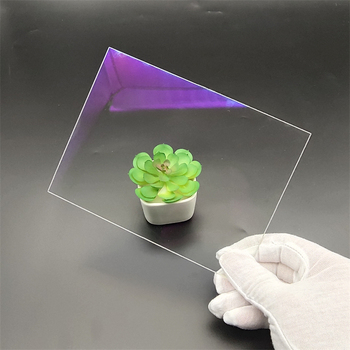
Single or double-side AR · Low reflection · High transmission
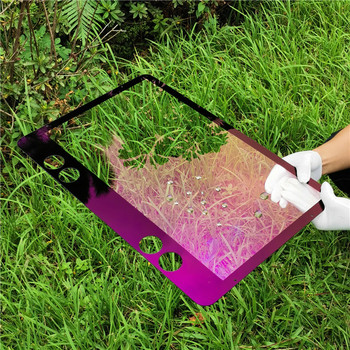
Diffused surface · Reduced glare · Optional AF top layer
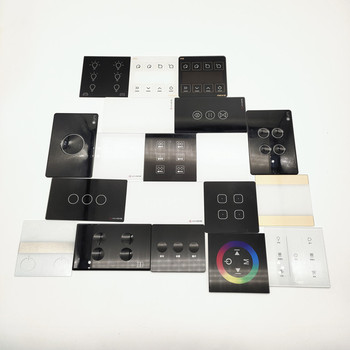
Silk-screen or ceramic print · Icons · Borders · Touch windows
No matching product on this page. Browse the full catalog for more options.
Use this buyer-oriented matrix to align the glass construction with the real operating environment, not only with the display size.
| Interface Environment | Recommended Glass Construction | Coating / Printing | Typical Thickness | What to Validate Before Mass Production |
|---|---|---|---|---|
| Indoor HMI & capacitive touch panels | Tempered clear or ultra-clear glass with polished edges | AF optional; black border printing if required | 0.7–2 mm | Touch sensitivity with the chosen OCA/OCR bonding method, edge quality, and printing alignment. |
| Outdoor kiosks and bright environments | AG glass with optional AF top coating | Anti-glare, anti-fingerprint, printed border | 2–3 mm | Haze level, reflection under sunlight, cleaning chemical compatibility, and visibility at viewing distance. |
| Medical, laboratory, and industrial monitors | Ultra-clear glass with AR coating | AR single/double side, AF or easy-clean surface | 0.7–2 mm | Contrast, transmission, cleaning resistance, and compatibility with the display stack. |
| Appliance control panels | Tempered printed glass with transparent display windows | Silk-screen or ceramic print, AG optional | 2–4 mm | Color matching, window size, ink adhesion, and thermal exposure during assembly. |
| Smart switches and wall controls | Thin tempered glass with printed icons | AF coating, matte or glossy print, touch-key windows | 0.5–1.1 mm | Surface feel, fingerprint resistance, drop resistance, and adhesive/backing compatibility. |
Final thickness, coating, and printing combinations should be validated with physical samples because every enclosure, sensor, and cleaning procedure can change the best specification.
Global buyers are moving from price-only sourcing toward supplier reliability, optical performance, and design flexibility.
Buyers increasingly qualify one primary and one backup supplier for critical HMI glass, especially when interfaces support industrial equipment, healthcare devices, or infrastructure controls.
Procurement teams are asking for quick drawing review and small evaluation lots before mass production. This reduces tooling risk and shortens the time from industrial design to pilot build.
More buyers request drawing revision control, approved samples, inspection records, and consistent packing specifications for touch screen glass used in regulated industries.
AR, AG, and AF are increasingly specified together. Buyers want one supplier to manage coating sequence, optical appearance, and surface durability instead of splitting the process across vendors.
Modern equipment designs favor edge-to-edge glass, hidden bezels, and flush surfaces. This raises requirements for CNC accuracy, printing registration, and edge finishing.
Purchase price alone is no longer enough. Rejects, packing damage, communication delays, and inconsistent coating batches all add cost. Buyers are evaluating the full landed cost of each supplier.
Original equipment manufacturers and contract manufacturers increasingly ask for clear inspection criteria before production, especially for printing color, edge chips, coating defects, and dimensional tolerance.
Glass is being specified together with adhesive, gasket, OCA, display module, and enclosure from the beginning. Earlier engineering review reduces fit issues and late-stage redesign.
What equipment designers are likely to request from glass processors as control interfaces become more visual, connected, and user-centered.
Thin chemically strengthened and tempered glass enables compact, flush interfaces for smart switches, handheld controllers, and slim appliance panels. Buyers should validate flatness, edge strength, and bonding compatibility.
As displays become brighter and more color-critical, AR-coated glass helps reduce reflection and improve perceived contrast. Double-sided AR is often evaluated when the glass surface is exposed to strong lighting.
Outdoor and industrial interfaces increasingly combine anti-glare treatment with anti-fingerprint coating. This improves readability under strong light while keeping touch surfaces easier to clean.
Printed borders, icons, and transparent windows are becoming finer. More buyers are asking for color control, printing alignment checks, and resistance to cleaning and assembly processes.
Touch surfaces are exposed to finger oils, cleaning agents, and repeated use. AF coating and easy-clean surface performance should be tested with the actual cleaning procedure used by the buyer.
Glass processors are increasingly expected to advise on manufacturability, not simply cut to a drawing. Early review of hole spacing, edge type, printing, and coating can prevent expensive redesign.
Dongguan Jaswe Glass Co., Ltd. is located in Dongguan, Guangdong, China, a manufacturing center for electronics, appliances, lighting, and industrial equipment. The company focuses on designing, manufacturing, and selling tempered glass, display glass, touch screen glass, silk-screen printed glass, switch glass, anti-reflective glass, anti-glare glass, anti-fingerprint glass, electrical equipment glass, and LED lighting glass.
Process capability includes cutting, special-shaped cutting, edge polishing, hole drilling, CNC processing, tempering, silk-screen printing, AG processing, AR coating, and AF coating. For buyers sourcing touch screen glass for electronic control interfaces, this means one supplier can discuss the glass, printing, coating, and inspection requirements together instead of leaving gaps between multiple vendors.
“Scientific management, careful manufacture, high quality service, striving for excellence.”
The company operates with more than 80 workers, most of whom have more than 8 years of experience. With 26 glass machines, including a glass tempering furnace, edge polishing machines, silk-screen printing machines, and automatic cutting equipment, monthly output is above 200,000 pieces. Dongguan Jaswe Glass Co., Ltd. serves customers in America, Europe, and Asia and maintains a comprehensive quality management system.
Touch glass is a specification-driven product. Buyers need evidence, not adjectives.
Most of the 80+ workers have more than 8 years of glass processing experience. That experience is relevant in edge polishing, CNC shaping, tempering, printing registration, and coating preparation.
Dongguan Jaswe Glass Co., Ltd. records a 96.61% response rate and an average response time of ≤3 hours. Clear communication is critical when a touch glass drawing includes coatings, printing colors, holes, and assembly tolerances.
The buyer reorder rate is 26%, and the business has 6 years on the supplier platform with trade capacity and supplier assessment links available for review. Repeat purchase behavior is a useful signal of production consistency.
Direct answers to the questions global buyers frequently ask when comparing HMI cover glass suppliers.
Share your drawing, thickness, coating, printing, and annual volume. The engineering team at Dongguan Jaswe Glass Co., Ltd. will review manufacturability and recommend a practical glass construction for your electronic control interface.
info@jasweglass.com