Outdoor HMI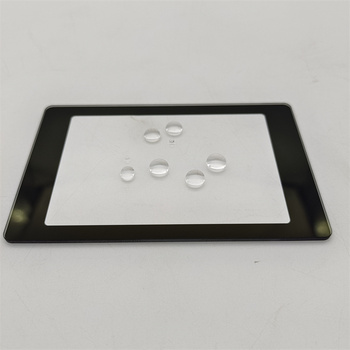
AG + AF Coated Tempered Glass for Outdoor HMI Covers
Printed border · Touch friendly · Sunlight readable
MOQ: 100–500 pcsInquire


Purchasing managers, mechanical engineers and product owners rarely search only for a product name. They need answers to application questions about readability, optical trade-offs, durability, MOQ and supplier verification.
Anti-glare glass diffuses reflected light at the cover surface so sunlight, overhead lamps and nearby bright objects do not create a hard mirror image on the screen. For outdoor industrial displays, the result is better perceived contrast, less operator eye fatigue and more stable readability without relying only on higher display brightness.
No. AG anti-glare treatment scatters reflected light to reduce glare. AR anti-reflective coating lowers surface reflection and can increase light transmission. AF anti-fingerprint coating is an oleophobic top layer for touch surfaces. Buyers should specify the problem first, then choose AG, AR, AF or a combined stack.
There is no universal haze value. Close-viewed high-resolution HMIs usually need finer haze to avoid sparkle, while larger equipment viewed from a distance may accept stronger diffusion. Request samples and evaluate haze, gloss and transmission under real or simulated sunlight before approving mass production.
Common cover glass thicknesses include 0.5 mm, 0.7 mm, 1 mm, 2 mm, 3 mm, 4 mm, 5 mm and 6 mm. Thin glass suits optical bonding and weight reduction; thicker tempered glass is selected for impact resistance and larger kiosk windows. The final choice must match the enclosure, touch sensor and safety requirement.
Every optical treatment involves a trade-off. AG can slightly reduce specular clarity because it diffuses light, while AR can increase transmission and contrast. A well-matched AG plus AR stack can preserve outdoor readability while maintaining acceptable image sharpness. This is why sample testing is more reliable than choosing by a single haze number.
Ask for process control information, sample inspection, printing color approval, coating appearance criteria, edge and hole quality checks, packing validation and traceability. A supplier with in-house cutting, CNC, tempering, printing, AG and AR / AF coating can reduce the quality gaps that appear when processes are subcontracted.
These product formats are commonly requested by buyers sourcing anti-glare glass for outdoor industrial displays. Each item can be customized by drawing, thickness, edge, hole, printing, AG treatment, AR coating and AF coating.
Printed border · Touch friendly · Sunlight readable

Printed graphics · Holes · 2–6 mm tempered glass

Capacitive touch · Custom outline · AF optional
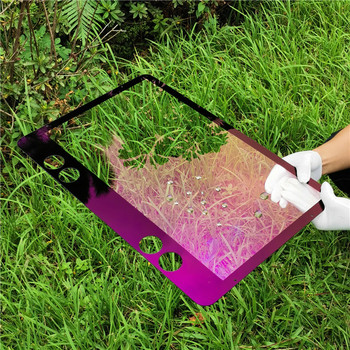
Ultra clear substrate · Optical coating · Tempered
No matching product on this page. Browse the full catalog for more options.
Use this matrix as an early design review checklist. Final values depend on glass thickness, substrate, printing, coating stack, display resolution and the actual outdoor environment.
| Glass / Treatment | Problem It Solves | Best Fit for Outdoor Industrial Displays | What to Send for Quotation |
|---|---|---|---|
| AG Anti-Glare | Diffuses reflected sunlight and lamp glare; improves perceived contrast | Outdoor HMIs, EV charger screens, kiosks, industrial instruments and signage | Haze or gloss target, transmission concern, viewing distance and surface durability requirement |
| AR Anti-Reflective | Reduces surface reflection and can increase light transmission | High-contrast displays, optical windows, camera covers and bright outdoor signage | Single-sided or double-sided coating, target transmission, color neutrality and abrasion requirement |
| AF Anti-Fingerprint | Repels oil, water and fingerprints on touch surfaces | Touch kiosks, smart control panels, POS terminals and public outdoor interfaces | Touch type, cleaning chemical exposure, pencil hardness expectation and preferred glide feel |
| Tempered Ultra Clear Glass | Mechanical strength, safer breakage and true color for displays | Cover glass from 2 mm to 6 mm, instrument windows and equipment doors | Thickness, outline, corner radius, holes, edge type and impact or thermal requirement |
| Silk-Screen Printed Glass | Hides wiring, adds logos, icons and transparent display windows | Control panels, appliance interfaces, outdoor equipment covers and instrument faces | Pantone colors, window size, tolerances, ink durability and whether printing is front or reverse side |
| Combined AG + AR + AF | Balances glare diffusion, transmission and touch cleanliness | Premium outdoor touch displays where both sunlight readability and finger comfort matter | Layer sequence, side of coating, optical target, sample approval criteria and cleaning test method |
E-E-A-T note: optical and durability performance should be validated with samples. A responsible supplier will not approve an outdoor display cover from a drawing alone when haze, coating stack and printing interact.
Procurement is moving away from one-dimensional price comparison. Buyers need predictable optical yield, documented process control and a supplier who can support engineering questions before purchase orders are issued.
Outdoor industrial displays are expensive to service. A purchasing team may accept a slightly higher glass price when it reduces field failures, rework, returns and installation delays. Buyers increasingly compare total landed cost, including inspection, packing, replacement risk and engineering response time.
Requests are shifting from “AG glass” to “AG plus AF on a tempered ultra clear substrate with a printed black border.” This reflects the real interaction between glare, transmission, touch feel, printing and strength. Suppliers who understand combined processes are easier to qualify.
Industrial buyers want inspection criteria, sample approval records, batch consistency and packing validation. They may not always use automotive-level PPAP, but they expect a clear quality system and disciplined in-process inspection from cutting through final packing.
Supply chain teams are balancing cost with resilience. For custom glass, dual sourcing is not as simple as changing a standard component because tooling, printing screens, coating parameters and inspection criteria must be repeated. Buyers are therefore planning buffer stock and approving backup process routes earlier.
Outdoor equipment often ships globally. Buyers ask about RoHS and REACH-related material declarations where applicable, recyclable packing, edge protection, interleaving and drop-test expectations. Good export packing is not cosmetic; it directly affects incoming quality and installation schedule.
Product teams need physical samples for fit, sunlight readability, touch feel and cleaning tests. Suppliers with in-house CNC, tempering, printing and coating can often shorten the sample loop. After approval, demand may scale from low-volume pilot builds to monthly production.
Outdoor industrial displays are becoming larger, thinner, brighter and more interactive. Glass development is following these changes with finer optical control and more integrated surface engineering.
As HMI resolution increases, a rough matte surface can create sparkle or soften fine UI text. Demand is growing for finer and more controlled AG surfaces that diffuse glare while preserving readability for close-viewed industrial screens.
Instead of choosing a single treatment, product teams combine functions: AG to control glare, AR to support transmission and contrast, and AF to resist fingerprints. The challenge is to align optical performance, coating durability and cost in one approved stack.
Portable, lightweight and optically bonded displays continue to push thin glass demand. For large outdoor kiosk windows, however, thermal tempering and thickness still matter for impact resistance and flatness. Development is application-specific rather than “one thickness fits all.”
Black borders, selective transparent windows, icons and low-glare inks are being designed together with optical treatments. Printing can hide wiring and adhesive while defining the exact viewing area, so artwork, tolerance and coating side must be reviewed together.
Outdoor covers face UV, humidity, temperature cycling, cleaning chemicals, dust and abrasion. Buyers increasingly ask for tests that reflect the installation location rather than a generic data sheet. A practical supplier will discuss test conditions before making claims.
When glass is bonded to a display or touch sensor, flatness, coating compatibility, print height and edge quality affect yield. Development work is moving earlier in the design cycle, with glass processors reviewing drawings before the enclosure and sensor stack are frozen.
Dongguan Jaswe Glass Co., Ltd. is located in Dongguan, the world manufacturing center. We focus on designing, manufacturing and selling tempered glass, displayer glass, touch screen glass, silk screen printing glass, switch glass, anti-reflective glass, anti-glare glass, anti-fingerprinting glass, electric equipment glass and LED lighting glass.
Our process coverage includes cutting, special-shaped cutting, edge polishing, hole drilling, CNC, tempering, silk screen printing, AG processing, AR coating and AF coating. Keeping these steps coordinated helps control the interaction between strength, print position, surface appearance and optical performance — the details that matter on anti-glare glass for outdoor industrial displays.
“Scientific management, careful manufacture, high quality service, striving for excellence.” This quality policy is supported by a comprehensive quality management system and in-process inspection from raw glass to export packing.
Our team includes more than 80 workers, most with more than 8 years of experience, and 26 glass machines including a glass tempering furnace, glass polishing edge machine, silk screen printing machine and automatic glass cutting machine. Monthly output is above 200,000 pieces. We serve customers in America, Europe and Asia, and our recorded response rate is 96.61% with response time typically within 3 hours.
These are the questions global buyers most often ask when comparing AG, AR, AF, tempered and printed cover glass for outdoor equipment.
Share your thickness, haze or gloss target, printing colors, AR / AF requirements, application and annual volume. Our engineers will review manufacturability and recommend the right process route for anti-glare glass for outdoor industrial displays.
info@jasweglass.com

