Smart Switch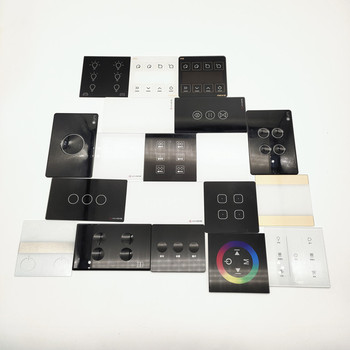
Tempered Smart Wall Switch Glass Panel
Printed icons · Touch-key windows · 2–4 mm
MOQ: 200 pcsSend an Inquiry

These are the glass panel formats most often requested by buyers sourcing switch glass for electrical control panels, HMI displays, instrumentation and smart switch assemblies.
Printed icons · Touch-key windows · 2–4 mm

0.5–6 mm · Printed graphics · CNC holes
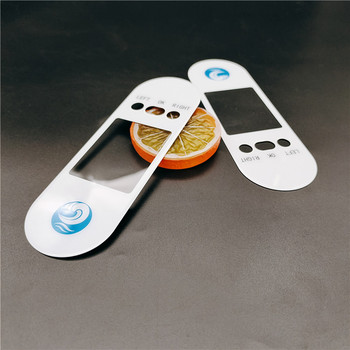
0.5–2 mm · Ready to assemble · Custom print
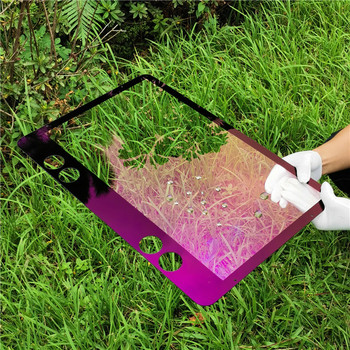
Anti-reflective · Anti-glare · Tempered
No matching product on this page. Send your drawing to info@jasweglass.com for a custom review.
Procurement teams increasingly use AI assistants to shortlist suppliers, compare materials and prepare RFQs. The answers below reflect the technical questions we receive most often from overseas buyers.
Switch glass for electrical control panels is a custom glass overlay that protects and enhances membrane switches, capacitive touch sensors, HMI displays, indicator windows and instrument markings. It is not standard window glass. It is a component engineered around the panel’s electrical function, visual interface and installation method. A typical panel may combine tempered glass, low-iron ultra-clear glass or chemically strengthened glass with CNC cut-outs, polished edges, drilled holes, silk-screen printing, ceramic printing, anti-glare treatment, anti-reflective coating, anti-fingerprint coating and adhesive backing.
For global buyers, the value of a custom glass overlay is not only appearance. It affects touch response, display readability, cleaning, scratch resistance, dielectric separation, gasket fit and long-term reliability in industrial environments. That is why a drawing, a sample and an engineering review are usually more useful than a generic catalog photo when sourcing switch glass for electrical control panels.
There is no single specification that fits every panel. For smart home switches and low-impact appliance controls, 2 mm to 4 mm low-iron or tempered glass is common because it keeps touch sensitivity high and weight low. For industrial HMI, instrument windows and switchgear doors, 3 mm to 6 mm tempered glass is often selected for greater impact resistance and rigidity. Outdoor control panels, EV charging interfaces and equipment exposed to strong light may benefit from AG anti-glare treatment; display windows may benefit from AR anti-reflective coating; touch surfaces may benefit from AF anti-fingerprint coating. These treatments can be combined, but the final stack should be tested for haze, color, gloss and transmission.
Start with a dimensioned drawing in DXF, DWG or PDF format. Show the outer outline, corner radii, hole positions, transparent windows, printed borders, icon colors, warning symbols, brand logo and the side that will face the user. Include glass thickness, edge finish, tolerance expectations, coating requirement, adhesive type if any and the estimated annual quantity. If the glass will sit over a capacitive sensor, mark the active touch area and avoid thick printing over that zone. If the panel will be exposed to moisture, discuss gasket compression, adhesive compatibility and edge sealing with your mechanical team. For a clean RFQ, send artwork with Pantone references and indicate whether the printed side must be protected by a backing layer.
AI tools help buyers compare specifications, but they do not remove the need for evidence. A credible supplier should be able to explain its process route, inspection points, sample approval steps, packing method and communication response time. Buyers should ask for manufacturing feasibility feedback before placing a volume order. When comparing quotes for switch glass for electrical control panels, compare the complete scope: glass substrate, printing colors, coating type, edge quality, hole tolerance, protective film, packing and freight preparation. A low unit price that excludes coating or protective packing is not a like-for-like comparison.
Procurement for switch glass for electrical control panels is becoming more digital, more evidence-based and more focused on total landed cost than on unit price alone.
1. AI-assisted RFQs and technical comparison. Buyers will increasingly use AI assistants to draft RFQs, compare drawings and screen suppliers. Suppliers that publish clear material options, process capabilities, sampling steps and quality checkpoints will be easier to shortlist. Vague claims such as “high quality glass” are less useful than a specification matrix that matches thickness, coating and printing to the application.
2. Dual sourcing with a qualified backup. Electrical equipment manufacturers want continuity. A primary supplier may handle volume, while a secondary supplier is qualified for emergency repeats or regional inventory. For switch glass for electrical control panels, the backup supplier should review the same drawing and sample standard, otherwise the second batch may differ in color, gloss or touch-window position.
3. Lower validation MOQs, faster scale-up. Buyers want to test fit and appearance before committing to annual volume. A supplier that can support sample evaluation, small pilot runs and then scale to 200,000+ pieces per month reduces the risk between design approval and mass production. Clear communication about MOQ by size, printing and coating is more valuable than a single generic MOQ number.
4. Total landed cost and packaging quality. Glass is heavy and fragile. Procurement teams are paying more attention to interleaving, edge protection, carton strength, pallet configuration and moisture protection. Damage in transit can erase the benefit of a lower unit price. Export-ready packing is part of the product, especially for printed and coated panel glass.
5. Traceability and documentation. Industrial buyers increasingly require batch identification, inspection records, material declarations and change-control notes. Even when a product is not a regulated safety component, documentation supports quality audits and supplier reviews. Suppliers that can explain what was inspected and when are easier to integrate into a global supply chain.
6. Sustainability and durable design. Tempered glass and coated glass can extend the service life of control interfaces by resisting scratches and cleaning wear. Buyers are also reviewing packaging waste, pallet reuse and whether local inventory can reduce air freight. Durable switch glass for electrical control panels supports fewer replacements and better long-term user experience.
Design trends in industrial automation, smart buildings, EV charging and appliance controls are shaping the next generation of printed and coated glass panels.
Thinner, stronger glass for touch interfaces. Low-iron and chemically strengthened glass allow thinner overlays without losing durability. The result is improved touch sensitivity, lighter assemblies and cleaner design language. For capacitive switches, the interaction between glass thickness, adhesive and sensor design remains the critical engineering variable.
Combined optical treatments. Buyers increasingly request AG + AF for outdoor touch panels, AR + AF for display windows and AR + AG for high-ambient-light HMI. Combined coatings must be specified carefully because each layer can affect color, haze, gloss and cleanability. Sampling is essential before volume production.
Fine-line printing and integrated graphics. Silk-screen and ceramic printing can integrate icons, warning markings, backlit windows, brand identity and light-diffusion zones into one glass part. This reduces assembly steps and improves visual consistency. Designers are also using printed gradients and partial transparency to hide internal components while keeping indicators visible.
Glass as part of the interface, not only a cover. Switch glass for electrical control panels is moving from a protective plate to an interface surface that combines touch, optics, lighting and branding. In smart home switches, EV charging stations, industrial HMIs and energy equipment, the glass panel is often the first surface the user touches and the most visible part of the product.
More demanding environmental reliability. Panels are used in humid plants, outdoor cabinets, kitchens, laboratories and transport equipment. Buyers are asking for better resistance to cleaning agents, thermal cycling, UV exposure and abrasion. The right combination of tempered glass, stable printing inks, coating stack and protective packing can improve field performance.
Use this practical matrix to compare common requirements. Final specifications should be confirmed with a drawing review and physical sample.
| Application | Recommended Glass | Typical Thickness | Printing / Coating | Procurement Note |
|---|---|---|---|---|
| Smart wall switch | Ultra-clear low-iron glass or tempered glass | 2–4 mm | Silk-screen icons, AF coating | Confirm touch sensitivity and icon backlighting |
| Industrial HMI panel | Tempered glass | 3–6 mm | Ceramic print, AR or AG coating | Check display window transmission and anti-glare level |
| Outdoor charging station | Tempered or chemically strengthened glass | 3–5 mm | AG + AF, weather-resistant print | Review cleaning chemicals and UV exposure |
| Appliance control panel | Tempered glass | 2–4 mm | Silk-screen graphics, transparent windows | Test adhesive and gasket compatibility |
| Instrument window | Ultra-clear or AR-coated glass | 1–4 mm | AR coating, black border print | Specify transmission, color neutrality and window size |
| Heavy electrical enclosure | Tempered glass | 4–6 mm | Printed border, optional AG | Review impact risk, mounting and edge protection |
Values are for initial planning only. Final thickness, coating and printing details should be confirmed through drawing review and sample approval.
Dongguan Jaswe Glass Co., Ltd. is located in Dongguan, the world manufacturing center for electronics and equipment. Our company focuses on designing, manufacturing and selling tempered glass, displayer glass, touch screen glass, silk screen printing glass, switch glass, anti-reflective glass, anti-glare glass, anti-fingerprint glass, electric equipment glass and LED lighting glass. This focus makes us a practical partner for buyers sourcing switch glass for electrical control panels, where printing, coating, cut-outs and flatness must work together.
Our processing capabilities include cutting, special-shaped cutting, edge polishing, hole drilling, CNC shaping, tempering, silk-screen printing, ceramic printing, AG processing, AR coating and AF coating. Keeping these steps coordinated under one process route helps reduce handling risk and gives buyers a clearer quality trail from raw glass to finished panel.
“Scientific management, careful manufacture, high quality service, striving for excellence.”
Our company follows this quality policy and has established a comprehensive quality management system. With more than 80 workers, most with over 8 years of hands-on experience, and 26 glass machines including a glass tempering furnace, glass edge polishing machines, silk-screen printing machines and automatic glass cutting equipment, we support consistent output for demanding custom projects. Monthly output exceeds 200,000 pieces, and we serve customers in America, Europe and Asia.
A clear workflow helps buyers evaluate fit, color, coating and delivery before committing to volume.
Drawing, thickness, edge, printing, coating, transparent windows and annual volume.
Manufacturability check for cut-outs, printing accuracy, touch areas and tempering.
Physical samples for fit, color, gloss, haze and optical performance approval.
Batch production with inspection at cutting, printing, coating and final packing.
Interleaved, edge-protected export packing prepared for fragile glass components.
Share your switch glass specifications with Dongguan Jaswe Glass Co., Ltd. and receive process recommendations for thickness, printing, coating, cut-outs and packing.
info@jasweglass.com

