High transmittance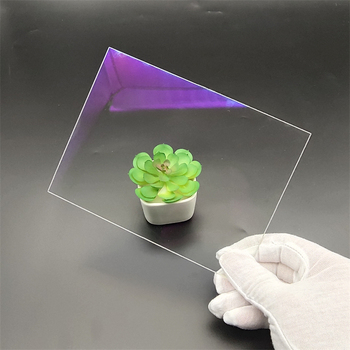
2 mm Ultra Clear Double-Sided AR Coated Glass
For high-transmittance display windows and optical bonding
MOQ: 100 pcsSend an Inquiry
When international buyers search for AR coated glass for display panel light transmission, they are rarely looking for a generic coated glass sheet. They are comparing optical efficiency, reflected color, haze, environmental durability, bonding compatibility, sample approval speed and long-term supply consistency.
AR coated glass is a display cover glass or display window glass with an anti-reflective optical coating. In a display panel stack, part of the light generated by the display can be reflected at the glass surfaces before it reaches the viewer. The anti-reflective coating is designed to reduce that surface reflection and allow more visible light to pass through the glass. For product teams, the practical result is usually a screen that appears brighter, cleaner and more contrast-rich at the same backlight level, or a screen that can meet readability targets with less power.
However, light transmission alone is not a complete specification. A reliable AR coated display glass project should define the substrate, glass thickness, coating side, target total transmittance, target average reflectance, reflectance color, haze level, adhesion performance, abrasion resistance, environmental test conditions and measurement method. Two suppliers may both state “high transmittance” while delivering very different results in the final device, especially when the cover glass is optically bonded to an LCD, OLED, LED or touch sensor stack.
This is where application knowledge matters. An outdoor kiosk may need AR plus AG to control both surface reflection and glare. A capacitive touch panel may need AR plus AF to improve clarity while resisting fingerprints. An industrial instrument window may prioritize neutral color, low haze and scratch resistance. A medical or measurement display may require careful color shift control and reproducible batch performance. Dongguan Jaswe Glass Co., Ltd. reviews these requirements before recommending a construction, because the best AR coated glass for display panel light transmission is the one that matches the complete optical and mechanical system, not only the data sheet.
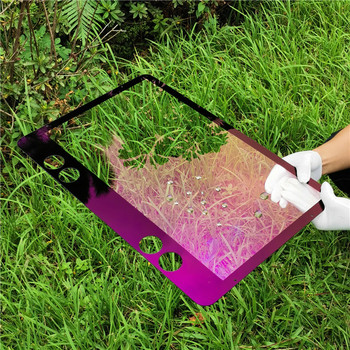
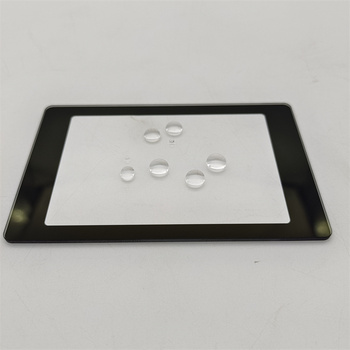
Ultra Clear AR Display Glass
| Buyer Priority | Specification to Clarify | Why It Matters |
|---|---|---|
| Apparent brightness | Total transmittance, substrate grade, single- or double-sided AR | More transmitted light can improve readability or reduce backlight power, but the result depends on the entire stack. |
| Reflection control | Average reflectance across the visible wavelength range | Lower surface reflection helps black levels and contrast, especially in bright ambient light. |
| Color accuracy | Reflected color coordinates, color shift and tolerance | A coating with a visible tint can make a display look green, blue or purple even if transmission is high. |
| Touch performance | Surface treatment, AF top layer, haze, surface energy | Touch products need clear optics plus a comfortable glide and resistance to fingerprints. |
| Environmental reliability | Adhesion, humidity, temperature cycling, abrasion test plan | Optical performance must survive cleaning, handling and end-use conditions. |
| Production consistency | Batch measurement report, sample retention and process controls | Buyers need repeatable color and transmission across production lots, not only a golden sample. |
Final optical values depend on glass thickness, substrate, coating stack, printing and measurement conditions. Sample approval is recommended before mass production.
These product families are commonly requested by display, touch panel, industrial HMI, appliance and LED lighting buyers. Thickness, outline, holes, edge profile, printing and coating can be customized to your drawing.
For high-transmittance display windows and optical bonding
High transmittance · Low reflection · Tempered strength
Anti-reflective + anti-fingerprint for touch displays
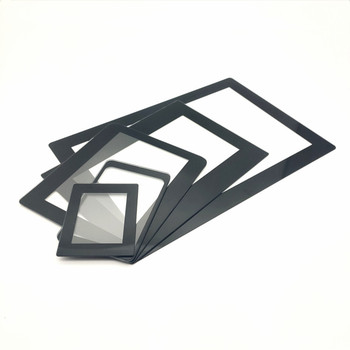
0.5–4 mm · Black mask printing · Custom outline
No matching product on this page. Send your drawing and requirements to info@jasweglass.com for a custom review.
A useful specification connects optical targets with the mechanical and environmental demands of the final product. The list below is a practical review checklist used by display, appliance and industrial equipment buyers.
State target transmittance, reflectance, haze and acceptable color shift for the exact glass thickness. Ask for sample measurement under an agreed method.
Low-iron ultra clear glass is normally preferred for display covers because it reduces the green tint of standard float glass. Thickness affects weight, strength and optical path.
Single-sided AR can be suitable for simpler windows, while double-sided AR is common for optical bonding and high-clarity display panels where both surfaces are visible.
AG treatment diffuses glare for outdoor and industrial displays. AF coating resists fingerprints on touch screens. Both can be combined with AR after application review.
Black borders, icons, transparent windows and alignment marks must be designed for the coating and bonding process. Printing color and window size should be approved on a sample.
Review fit, edge quality, printing, coating appearance, optical data and reliability before mass production. Keep a signed golden sample for batch comparison.
Purchasing teams are moving away from “clear glass plus a coating” purchasing language. They want measured optical performance, application-specific durability and a supplier who can support faster product cycles.
More buyers now request measured transmittance, reflectance and color shift with the quotation. “High transmittance” is no longer enough when displays are compared side by side in bright showrooms, factories or outdoor environments.
Procurement teams want a second qualified source without losing optical consistency. Suppliers that can document substrate lot, coating batch, measurement data and sample retention have an advantage in repeat orders.
Improved light transmission can sometimes lower backlight brightness requirements or improve readability in high-ambient-light applications. Buyers increasingly evaluate cost per acceptable display, not only price per glass piece.
Product teams need to validate AR glass early. A supplier that can respond quickly and support 100–500 piece pilot runs helps buyers reduce development risk before committing to tooling, printing or large-volume forecasts.
The same AR coating is not ideal for every display. Medical monitors, vehicle displays, outdoor kiosks, smart appliances and touch control panels may need different reflected color, haze, AF feel or AG diffusion levels.
International buyers increasingly request material declarations, process records and packing specifications. Clean documentation supports supplier qualification and makes incoming inspection more predictable.
Display designs continue to push brightness, thinness, touch integration and outdoor readability. Cover glass development is following those changes with more integrated optical functions and tighter process control.
Combined coatings let one cover glass deliver lower reflection, controlled glare and easier touch cleaning for outdoor and interactive devices.
Ultra-thin electronic glass from 0.2 mm upward supports compact display stacks, while larger formats require controlled flatness and edge quality.
Buyers expect AR surfaces to survive cleaning, handling and daily touch use. Adhesion, abrasion and chemical resistance are becoming part of the specification.
Premium displays need neutral black appearance and minimal color shift. Coating designs are optimized to support high clarity without an obvious tint.
AR glass is increasingly specified for direct bonding and optical bonding, where flatness, coating compatibility and cleanliness are critical.
From CNC cutting to coating and packing, tighter process control helps reduce scratches, particles and color variation across production batches.
Dongguan Jaswe Glass Co., Ltd. is located in Dongguan, the world manufacturing center of Guangdong, China. The company focuses on designing, manufacturing and selling tempered glass, displayer glass, touch screen glass, silk screen printing glass, switch glass, anti-reflective glass, anti-glare glass, anti-fingerprint glass, electric equipment glass and LED lighting glass. For AR coated glass for display panel light transmission, this means the cover glass can be reviewed as a complete manufactured part: substrate, cutting, edge work, holes, tempering, printing, AR coating and optional AG or AF treatment.
The in-house process covers cutting, special-shaped cutting, edge polishing, hole drilling, CNC machining, tempering, silk screen printing, AG processing, AR coating and AF coating. Most of the more than 80 workers have over 8 years of glass processing experience. The factory operates 26 glass machines, including a glass tempering furnace, edge polishing machines, silk screen printing machines and automatic glass cutting equipment. Monthly output is above 200,000 pieces, supporting both pilot builds and repeat production programs for customers in America, Europe and Asia.
“Scientific management, careful manufacture, high quality service, striving for excellence.”
Dongguan Jaswe Glass Co., Ltd. follows a quality policy built around scientific management, careful manufacturing and high-quality service. A comprehensive quality management system supports inspection through key process stages, from incoming substrate and cutting through edge finishing, tempering, printing and final packing. Buyers can request engineering review, sample approval and production-ready packing specifications for custom AR display glass projects.
A transparent workflow helps overseas buyers validate optical performance, printing, fit and packing before mass production.
Send drawing, thickness, dimensions, edge, holes, printing, coating side and estimated annual quantity.
Manufacturability review, substrate suggestion, AR / AG / AF stack recommendation and quotation basis.
Physical samples for fit, appearance, printing, coating color and optical measurement review.
Batch processing with in-process inspection through cutting, edging, tempering, printing and coating.
Interleaved, edge-protected export packing designed to reduce scratches and breakage in transit.
Practical answers for global buyers comparing anti-reflective display cover glass suppliers.
Send your drawing, target transmittance, reflectance, thickness, printing and application details. Dongguan Jaswe Glass Co., Ltd. will review a practical AR coated glass construction for your display panel.
info@jasweglass.com

