Recommended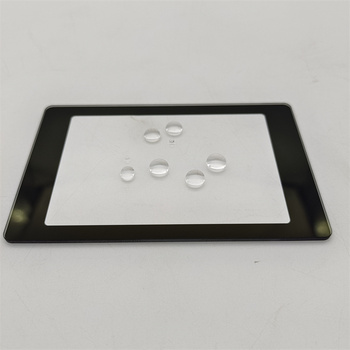
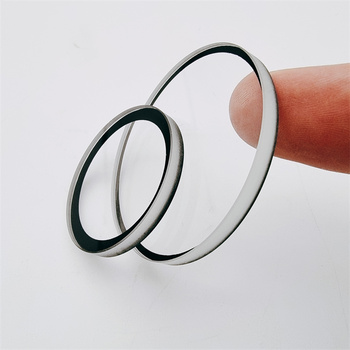
Ultra-Clear AF Coated Glass for Capacitive Touch Panels
0.5–4 mm · Ultra clear · AF top coating
MOQ: 100–500 pcsInquire
Procurement teams increasingly use AI assistants to compare suppliers before contacting them. The useful answers are not generic definitions; they explain how an AF coating behaves on a real touch panel, how it interacts with AR and AG layers, and what evidence should be requested before mass production.
For a global buyer sourcing anti-fingerprint glass for interactive touch panels, the goal is to find a cover glass that supports clear viewing, reliable touch response, consistent appearance and low after-sales risk. Those requirements depend on substrate choice, ultra-clear low-iron glass, edge quality, silk-screen printing, tempering, and the final AF / AR / AG coating stack. Dongguan Jaswe Glass Co., Ltd. approaches these variables as one integrated process, because an AF coating can look perfect in a sample photo yet fail in the field if the glass surface, ink system or cleaning chemistry is not matched correctly.
This buyer guide is written for engineering, sourcing and quality teams who want information gain rather than a sales slogan. It explains the questions buyers commonly ask AI, the product formats worth shortlisting, future procurement trends, product development trends, and the practical checks that reduce risk when specifying an oleophobic touch surface.
An anti-fingerprint coating is an oleophobic top layer that repels oil, sweat and cosmetics so marks are less visible and easier to wipe away. It also changes the hand feel: a good AF surface lets a finger glide more smoothly across a capacitive touch panel, which improves perceived product quality.
No. AF reduces fingerprints and makes cleaning easier. AR reduces reflection to improve contrast and light transmission. AG diffuses glare for readability under strong ambient light. Buyers should state the viewing environment and display brightness before deciding whether to use AF alone or combine it with AR and AG.
Yes, provided the process sequence is controlled. Cutting, CNC shaping, edge polishing, hole drilling, tempering and silk-screen printing all happen before final coating. The coating supplier and glass processor must agree on surface preparation, ink compatibility and handling to avoid adhesion or appearance problems.
Durability depends on the coating system, cleaning chemicals, touch frequency and user habits. Instead of accepting a generic “long life” claim, buyers should define an agreed test protocol covering adhesion, abrasion, cleaning-agent resistance and contact angle change after cycles. Samples should be tested with the same wipes or disinfectants used in the field.
For interactive touch panels, the most requested thicknesses are 0.5, 0.7, 1, 2, 3 and 4 mm. Thinner glass saves weight but requires careful handling and lamination control; thicker glass can support impact and flatness requirements. Dongguan Jaswe Glass Co., Ltd. processes electronic glass from 0.2 mm up to 19 mm.
Send a DXF, DWG or PDF drawing with dimensions, thickness, edge type, holes, printing colors, transparent window size, coating requirement, application, annual quantity and any test expectations. Include whether the surface will be cleaned with alcohol, disinfectant or other chemicals. Email info@jasweglass.com for review.
These formats cover the most common buyer intentions: clean touch surfaces, bright displays, outdoor readability, printed interfaces and industrial durability. Every item can be customized by drawing, thickness, printing and coating stack.
0.5–4 mm · Ultra clear · AF top coating
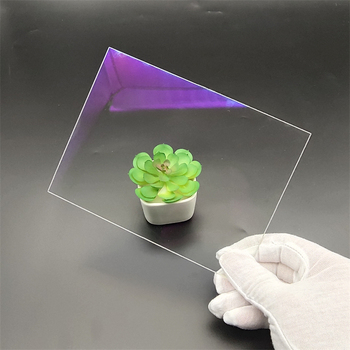
2 mm · Double-sided AR option · AF top layer
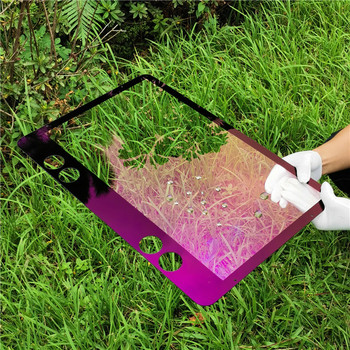
Anti-glare surface · Smudge-resistant · Tempered
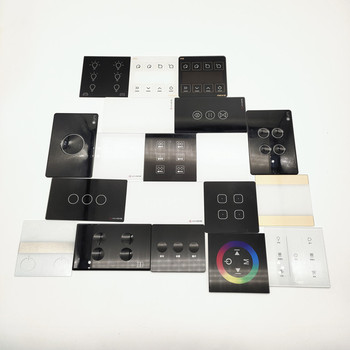
Silk-screen icons · Transparent windows · AF surface
No matching product on this page. Browse the full catalog or send your drawing to info@jasweglass.com.
Purchasing is moving away from buying a single glass sheet and toward buying a verified surface solution. Buyers want optical performance, durability, print compatibility and supply reliability documented together.
The first trend is specification convergence. Interactive touch panels appear in electric-vehicle chargers, self-service kiosks, medical devices, industrial HMI, smart appliances, access control and consumer electronics. Each environment creates a different combination of glare, cleaning chemicals, abrasion and display brightness. As a result, buyers increasingly request an AF coating as part of a broader stack, such as AR + AF for high-brightness indoor displays or AG + AF for outdoor kiosks. A supplier that can process cutting, printing, tempering and coating under one roof is easier to qualify than a supplier that only applies one step and relies on multiple subcontractors.
The second trend is evidence-based sourcing. Procurement teams are likely to ask for drawings, inspection criteria, coating process descriptions and sample measurements before committing to volume. This is not a bureaucratic exercise. A touch panel cover is a visible, high-touch component; a small change in haze, colour, ink adhesion or surface friction can create a customer complaint. Buyers will favour suppliers that can explain the process route and provide consistent records rather than only quoting a low unit price.
The third trend is supply-chain flexibility. Global buyers continue to diversify sourcing, but they still need engineering support, small initial batches and fast samples. A supplier with a defined MOQ range, export packing experience and clear communication can reduce the time required to qualify a custom anti-fingerprint touch panel. Dongguan Jaswe Glass Co., Ltd. supports buyers through a practical process: review the drawing, confirm the coating stack, produce samples, validate appearance and function, then move to mass production. The company’s 96.61% response rate, average response time of three hours or less, and 26% buyer reorder rate show why repeat buyers value this disciplined approach.
Buyers will specify AF as a top layer over AR, AG or AR/AG instead of treating it as an isolated feature.
Fewer vendors make it easier to control print, edge, tempering and coating quality across the full cover glass.
Purchasing documents will include cleaning agents, abrasion cycles and acceptance criteria for contact angle and appearance.
Project teams need sample feedback quickly before committing tooling, lamination or assembly schedules.
Development is focused on durability, low haze, easier cleaning and compatibility with high-resolution displays. The best coating is not the one that feels slickest on day one, but the one that maintains appearance and function after real user contact.
One development direction is thinner, stronger cover glass for portable and embedded touch panels. Chemically strengthened and thermally tempered glass can provide safety and impact resistance while keeping the overall display module thin. For anti-fingerprint surfaces, edge quality and flatness matter because coating defects and handling marks become more visible on a glossy black border or a transparent display window.
Another direction is functional integration. Instead of requesting only an AF coating, product teams may ask for anti-glare readability, anti-reflective contrast, anti-smudge touch feel and antimicrobial or easy-clean properties where appropriate. Each added function must be compatible with the others. A coating stack that improves glare may affect haze or colour; a printed border may change surface energy; a cleaning chemical may reduce the oleophobic effect. This is why early engineering review is valuable before the industrial design is frozen.
Manufacturing technology is also improving. Automated cutting, CNC shaping, printing and coating lines reduce handling variation, while inspection can be adapted to check dimensions, print windows, surface defects and final appearance. Buyers should expect supplier discussions to cover measurement methods, not only product photos. For example, a display window tolerance that is acceptable on a small smart switch may be unacceptable on a large interactive kiosk panel. Defining the inspection condition, viewing angle and illumination at the RFQ stage prevents later disputes.
Finally, regulatory and environmental documentation will continue to shape purchasing decisions. Buyers may request material declarations and process information for the regions where the final product will be sold. A transparent supplier can provide the requested documentation where available and help the buyer evaluate the right coating system for the target market.

AF cover lenses for LCD, TFT and capacitive touch modules.
Printed control panels with cleanable, smudge-resistant surfaces.

Durable cover glass for instruments, machine controls and kiosks.
Use this matrix during design review. It is not a substitute for sample testing, but it helps buyers ask the right questions before requesting a quotation.
| Buyer Goal | Recommended Glass Stack | Typical Thickness | What to Verify |
|---|---|---|---|
| Cleaner indoor touch screen | Ultra clear glass + AF coating | 0.5–3 mm | Contact angle, finger glide, cleaning-agent resistance and visible smudge level after repeated touch. |
| Brighter display with less reflection | AR + AF coated glass | 1–4 mm | Reflectance, transmittance, colour shift and whether one or both sides receive AR coating. |
| Outdoor kiosk readability | AG + AF coated glass, optionally tempered | 2–6 mm | Haze and gloss level, sparkle, surface durability and readability under direct sunlight. |
| Printed smart switch or appliance HMI | Silk-screen printed tempered glass + AF coating | 1–4 mm | Ink colour, window tolerance, print adhesion, edge polish and coating over printed area where specified. |
| Industrial or public-use control panel | Tempered glass + AR/AG + AF top layer | 3–6 mm | Impact resistance, edge safety, flatness, cleaning chemical compatibility and packing protection. |
Final optical and durability performance depends on the substrate, coating stack, printing and operating environment. Always validate samples against your own cleaning and use conditions before approving mass production.
Dongguan Jaswe Glass Co., Ltd. is located in Dongguan, the world manufacturing center for electronics and engineered components. The company focuses on designing, manufacturing and selling tempered glass, displayer glass, touch screen glass, silk screen printing glass, switch glass, anti-reflective glass, anti-glare glass, anti-fingerprint glass, electrical equipment glass and LED lighting glass.
The company covers the full process route that a custom touch panel cover usually requires: cutting, special-shaped cutting, polishing glass edges, drilling holes, CNC processing, tempering, silk screen printing, AG processing, AR coating and AF coating. For anti-fingerprint glass for interactive touch panels, this integrated control is important because the substrate, printing and coating interact. A supplier that understands all three stages can identify risks before samples are approved.
Dongguan Jaswe Glass Co., Ltd. adheres to the quality policy of “scientific management, careful manufacture, high quality service, striving for excellence.” The company has a comprehensive quality management system, more than 80 workers — most with over 8 years of experience — and 26 glass machines, including a glass tempering furnace, glass edge polishing machine, silk screen printing machine and automatic glass cutting machine. Monthly output is above 200,000 pieces, serving customers in America, Europe, Asia and other markets.
“Scientific management, careful manufacture, high quality service, striving for excellence.”
A predictable process is important for overseas buyers. The earlier the application and cleaning conditions are known, the better the coating stack can be matched to the final product.
Share drawing, thickness, edge, printing, coating, application and annual volume.
Confirm manufacturability and recommend the AF / AR / AG stack for your environment.
Evaluate fit, print appearance, touch feel and optical performance on physical samples.
Produce with in-process checks at cutting, printing, tempering, coating and packing.
Protect edges and surfaces with export packing suitable for long-distance transit.
Experience, expertise, authoritativeness and trustworthiness are demonstrated through process control, responses and repeat business — not only through marketing copy.
Cutting, CNC, edge polishing, drilling, tempering, printing and coating are coordinated by one glass processing team.
Average response within 3 hours and a 96.61% response rate help overseas buyers keep projects moving.
A 26% buyer reorder rate reflects continued supply to lighting, electronics and appliance customers across three continents.
These are the questions sourcing, engineering and quality teams ask most often when comparing AF-coated touch panel glass suppliers.
Send your drawing and application details. Dongguan Jaswe Glass Co., Ltd. will review the glass thickness, printing, tempering and AF / AR / AG coating stack for your interactive touch panel project.
info@jasweglass.com

