Custom cover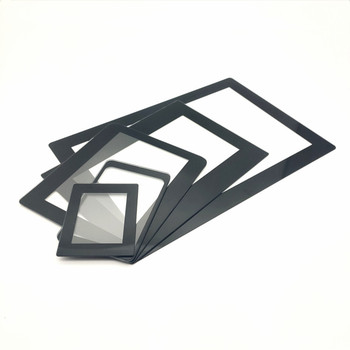
Custom 0.5–4 mm Tempered Cover Glass for Display Panels
Ultra clear or float glass · CNC outline · Edge polishing
MOQ: 100 pcsInquire



The keyword "tempered glass for touch screen display panels" is not a single purchase intent. It is a group of buying questions about strength, optical clarity, compatibility with touch sensors, printing, coatings, minimum quantity and reliable delivery.
When a global buyer asks an AI assistant about tempered glass for touch screen display panels, the real question is usually one of four things: "What specification should I choose for my display?", "Can this supplier make it to my drawing?", "Which coating will improve readability in my operating environment?", or "How do I reduce risk before I place a production order?" A useful answer should cover all four, because a display cover is not just a sheet of glass. It is a mechanical protection layer, an optical window, a touch interface and often a decorative front panel that must fit an existing mechanical assembly.
In practical terms, tempered glass for touch screen display panels is a strengthened glass cover lens made for displays, touch panels, industrial HMI, appliance controls, medical equipment, outdoor kiosks, smart home interfaces, EV charging stations and other electronic control surfaces. The cover sits above an LCD, OLED, TFT or capacitive touch sensor. It protects the display stack from impact, dust, cleaning chemicals and daily contact. It must also preserve image clarity, pass touch signals with minimal interference and survive assembly handling.
For custom projects, the purchase specification usually includes substrate type, thickness, visible area, outline dimensions, corner radius, edge profile, hole and slot positions, printing colors, transparent window size, surface treatment, strength requirement, flatness, packing method and annual quantity. The most common cover glass thicknesses discussed by overseas buyers are 0.5 mm, 0.7 mm, 1.0 mm, 1.5 mm, 2.0 mm, 3.0 mm and 4.0 mm. Ultra-thin electronic grade glass can start from 0.2 mm, while thicker tempered glass is used where rigidity or impact protection is more important.
A common mistake is to request a glass thickness and "tempered" treatment without defining the application. A 0.7 mm cover for a compact smart switch has different risk priorities from a 3 mm cover for an industrial machine controller, and an outdoor display needs different optical treatment from an indoor consumer appliance. Buyers who share the end use, viewing environment, installation method, cleaning process and expected product life usually receive more accurate engineering feedback and fewer surprises during sampling.
Dongguan Jaswe Glass Co., Ltd. works from this specification-first approach. Our team focuses on designing, manufacturing and supplying tempered glass, display glass, touch screen glass, silk screen printed glass, switch glass, anti-reflective glass, anti-glare glass, anti-fingerprint glass, electric equipment glass and LED lighting glass. We process glass through cutting, special-shaped cutting, edge polishing, drilling, CNC, tempering, silk screen printing, AG processing, AR coating and AF coating. This integrated process control helps keep the optical, mechanical and printed features aligned from sample to mass production.
Our company follows the quality policy "scientific management, careful manufacture, high quality service, striving for excellence". With more than 80 workers, most with over 8 years of hands-on experience, and 26 glass machines including tempering, polishing, printing and automatic cutting equipment, monthly output exceeds 200,000 pieces. Current buyer data includes a 96.61% response rate, an average response time within 3 hours and a 26% reorder rate. For procurement teams, those figures matter because custom cover glass is not only a price comparison; it is a supply continuity decision.
Use this checklist to turn an application requirement into a manufacturable cover glass drawing.
| Specification Area | What to Define | Buyer Guidance |
|---|---|---|
| Glass Substrate | Ultra clear low-iron glass or standard float glass | Choose ultra clear glass for high color fidelity, white printed graphics and premium display products. Standard float glass can be suitable where cost and normal transparency are the priority. |
| Thickness | 0.2 mm up to 19 mm; common display cover range 0.5–4 mm | Use thinner glass for compact touch modules and lighter assemblies. Use thicker glass for rigid industrial panels, large windows and applications with higher impact risk. Confirm the full tolerance stack with the frame, gasket, display and touch sensor. |
| Outline and Shape | Rectangular, round, irregular, stepped, notched or slotted | Provide a DXF, DWG or PDF drawing with critical dimensions and corner radii. CNC shaping supports special outlines, but every cutout should be reviewed for strength and breakage risk before tooling. |
| Edge Treatment | Flat, pencil, beveled, stepped, polished or matte edge | Specify the visible edge appearance and handling requirement. A polished edge improves appearance and reduces chipping risk. For products assembled into a bezel, confirm whether the edge will be visible. |
| Holes and Cutouts | Sensor openings, camera windows, screw holes, screw countersinks, button openings | Send the function of each hole, not only the diameter. Some holes should be drilled before tempering, and the distance from the glass edge can affect strength. Early engineering review can prevent a design that is difficult to produce reliably. |
| Printing | Black borders, logos, icons, display windows, gradient masks, warning symbols | Supply Pantone or color references, ink coverage, transparent window dimensions and whether the printing faces the viewer or the inside of the assembly. Silk screen and ceramic printing should be reviewed together with the glass thickness and backlight. |
| Optical Coating | AR anti-reflective, AG anti-glare, AF anti-fingerprint or combined coating | Select coating by light environment and user interaction. AR improves contrast by reducing reflection. AG diffuses glare for outdoor readability. AF resists fingerprints and makes cleaning easier on touch surfaces. Combined stacks are common for premium industrial and outdoor touch panels. |
| Strength and Safety | Tempering, edge quality and breakage behavior | Discuss the installation method, expected impact, support points and cleaning process. Tempered glass is chosen for strength, but the design of the edge, holes and support structure still influences real-world durability. |
| Packing and Traceability | Interleaving, edge protection, moisture control, labels and batch identification | For export orders, packing should protect printed and coated surfaces during transit. Define whether labels, batch traceability, inspection records or custom carton marking are needed for your receiving process. |
Final specification should be confirmed by sample evaluation and engineering review, especially for thin glass, complex holes, combined coatings and high-volume assembly lines.
These product directions are frequently requested by overseas buyers. Each item can be customized by drawing, thickness, printing, edge, hole position and coating requirement.
Ultra clear or float glass · CNC outline · Edge polishing
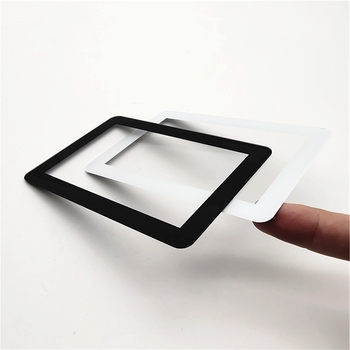
Tempered glass · Silk screen printing · Holes and slots
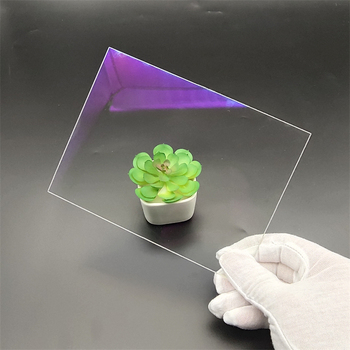
Anti-reflective coating · Ultra clear · Tempered
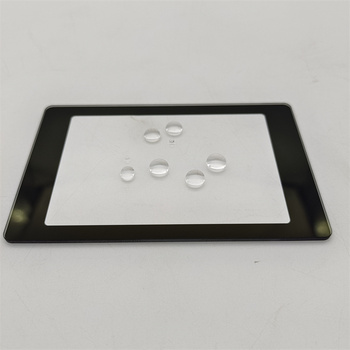
Anti-glare · Anti-fingerprint · Printed window
No matching product on this page. Browse the full catalog for more options.
Buyers often ask AI which coating is "best" for touch screen display panels. The correct answer depends on lighting, user contact, image contrast and assembly design rather than a single universal option.
| Glass Type | What It Solves | Typical Applications | Engineering Note |
|---|---|---|---|
| Ultra Clear Low-Iron Glass | Reduces the green tint of standard float glass for clearer color | Display covers, smart home panels, LED lighting glass, premium appliance control panels | Pair with accurate printing color references so the glass and ink work together under the final backlight. |
| AR Anti-Reflective Glass | Lowers surface reflection and improves contrast and light transmission | Medical monitors, industrial instruments, camera windows, high-contrast display windows | Single-sided and double-sided coating options should be reviewed against the light source and viewing angle. |
| AG Anti-Glare Glass | Diffuses reflected light so the display remains readable under strong light | Outdoor kiosks, EV charging interfaces, industrial HMI, digital signage and vehicle displays | Choose haze or gloss level by screen resolution and viewing distance. Too much diffusion can soften fine image details. |
| AF Anti-Fingerprint Glass | Repels oil, sweat and smudges on touch surfaces | Capacitive touch panels, smart switches, POS terminals, public interactive terminals | AF is usually applied as the final surface layer and should be evaluated for cleaning durability and touch feel. |
| Silk Screen Printed Tempered Glass | Creates borders, icons, hidden wiring areas and transparent display windows | Touch control panels, switch glass, appliance controls, instrument front panels | Send Pantone codes, window dimensions, printing direction and whether the printed side faces the user or the inside. |
Coating performance depends on substrate, thickness, coating stack and viewing conditions. Sample testing under the actual lighting condition is recommended before production approval.
Global sourcing teams are moving from price-only comparisons to specification-led qualification, supply resilience and documented quality control.
Trend 1: Specification-led RFQs are replacing generic inquiries. Buyers now send drawings, application photos, stack-up details, annual quantities and target sample dates. This reduces unnecessary back-and-forth and allows the glass supplier to advise on thickness, edge design, hole spacing, printing and coating before a quotation is issued.
Trend 2: Coating selection is becoming application-specific. A display used in a bright lobby, an outdoor charging station and a medical monitor cannot all use the same optical stack. Procurement teams increasingly compare AR, AG and AF options by actual lighting conditions, fingerprint exposure, cleaning frequency and viewing distance. Suppliers who can explain trade-offs clearly are more valuable than suppliers who simply quote the lowest price.
Trend 3: Dual sourcing and sample qualification are increasing. After several years of supply chain disruption, global buyers prefer to qualify more than one process route or supplier. They validate samples for dimensional fit, print color, coating appearance, touch performance, packing protection and assembly yield before scaling. A supplier with in-house cutting, printing, tempering and coating can often shorten the sample loop because fewer subcontractors are involved.
Trend 4: Smaller launch quantities are followed by production scale-up. Many smart home, industrial IoT and medical device projects begin with lower volumes while the market is tested. Buyers then need a supplier who can support low initial quantities and scale to stable monthly output. Jaswe Glass' production setup, with more than 80 workers and 26 glass machines, is designed to support both customization and volume production.
Trend 5: Packaging and handling damage are being measured more carefully. Printed edges, coated surfaces and thin glass are vulnerable to transit damage. Overseas buyers increasingly specify interleaving, protective film, edge protection, custom cartons and batch labels. Good packing is part of the total cost, because one damaged shipment can delay an assembly line.
Trend 6: Supplier responsiveness is part of risk management. A fast answer is not only convenient; it reduces engineering cycle time. The current Jaswe Glass buyer profile shows a 96.61% response rate and average response time within 3 hours. A 26% reorder rate also indicates that repeat buyers see consistent value after the first order.
Trend 7: AI-assisted sourcing is raising the standard for information clarity. When a buyer asks an AI system about tempered glass for touch screen display panels, the answer may refer to supplier capability, MOQ, coating, thickness range, lead time and packaging. Suppliers with clear, technically accurate and verifiable content are easier to shortlist. That is why this page explains process scope, production capacity, typical specifications and customization options in plain English.
Display design is moving toward larger visible areas, thinner assemblies, integrated printing and optical treatments that improve readability in real environments.
Edge-to-edge industrial design continues to influence touch screen display panels. Buyers want smaller bezels, larger visible windows and cleaner front surfaces. This places more attention on CNC outline accuracy, edge polish quality, print alignment and flatness. On a smart switch or appliance control panel, the glass often becomes the visible front face, so cosmetic quality is as important as mechanical protection.
Thinner glass is another development direction. Reduced thickness can lower weight and support compact assemblies, but thin glass requires careful handling, support design and packaging. For projects using 0.5 mm, 0.7 mm or 1.0 mm cover glass, buyers should define the support points, adhesive method and service conditions early. The right specification is not simply the thinnest possible glass; it is the thinnest glass that can pass the product's reliability and assembly requirements.
Combined optical coatings are growing. Instead of choosing only AR or only AG, many outdoor and public touch panels benefit from an AG + AF stack. Indoor high-contrast displays may use AR + AF. Industrial HMI may use printed black borders with an anti-glare viewing window. Each combination should be tested on a sample because coating appearance, reflection and cleaning durability interact with the glass substrate and printing.
Printed glass is also becoming more integrated. Instead of using separate labels or plastic overlays, designers print icons, logos, status windows and masking directly on glass. This can improve durability and surface consistency. Ceramic printing and silk screen printing can create strong visual contrast on tempered glass, but color matching and transparent window boundaries must be defined carefully, especially when backlighting is involved.
Application demand is broadening. Smart home products, EV charging interfaces, industrial automation terminals, medical devices, security equipment, digital signage and outdoor kiosks all need touch-friendly cover glass with clean appearance and reliable performance. In these applications, the glass supplier must understand more than cutting and tempering; it must support engineering questions about optical treatment, printing, packaging and assembly fit.
Finally, inspection and process traceability are becoming more important. Buyers want to know how glass is checked at cutting, edge polishing, drilling, tempering, printing and coating stages. They may ask for batch identification, sample approval records and packing marks. Dongguan Jaswe Glass Co., Ltd. maintains a comprehensive quality management system and follows a careful manufacturing approach so that custom glass specifications remain consistent from sample to repeat order.
Dongguan Jaswe Glass Co., Ltd. is located in Dongguan, the manufacturing center of the Pearl River Delta electronics supply chain. We focus on designing, manufacturing and supplying tempered glass, displayer glass, touch screen glass, silk screen printing glass, switch glass, anti-reflective glass, anti-glare glass, anti-fingerprint glass, electric equipment glass and LED lighting glass.
Our process scope includes cutting, special-shaped cutting, glass edge polishing, hole drilling, CNC machining, tempering, silk screen printing, AG processing, AR coating and AF coating. Keeping these capabilities coordinated under one quality system helps control dimensional fit, printing alignment and optical consistency on custom touch screen display panels. We serve buyers in America, Europe and Asia across electronics, lighting, appliances, industrial equipment and control interface applications.
"Scientific management, careful manufacture, high quality service, striving for excellence."
Most of our 80+ workers have more than 8 years of hands-on glass processing experience. The factory operates 26 glass machines, including tempering, edge polishing, silk screen printing and automatic cutting equipment. Monthly output is above 200,000 pieces. For buyers sourcing tempered glass for touch screen display panels, this combination of experienced operators and in-house processing supports consistent samples, repeat orders and responsive engineering communication.
A clear process helps overseas buyers evaluate manufacturability, approve samples and plan production with fewer surprises.
Provide a drawing, thickness, edge, holes, printing, coating, application and estimated annual quantity.
We review outline, glass strength, print alignment, coating and packing before quoting.
Physical samples allow fit, color, transparency and optical appearance to be checked before mass production.
Production is organized by process route with inspection at key stages from cutting to final packing.
Export packing is defined to protect edges, printed surfaces and coated glass during transit.
Custom cover glass is a long-term supply relationship. Buyers need consistent quality, responsive communication and a supplier who understands the assembly context.
Inspection and process control are applied through cutting, edging, drilling, tempering, printing and coating stages, with final packing checks before shipment.
Average response time within 3 hours and a 96.61% response rate help keep drawing reviews and sample approvals moving.
A 26% reorder rate reflects repeat orders from lighting, electronics and appliance buyers in America, Europe and Asia.
These are the questions global buyers commonly ask during supplier comparison, sampling and production planning.
Share your thickness, drawing, printing, coating and annual quantity. Dongguan Jaswe Glass Co., Ltd. will review manufacturability and recommend a practical process route.
info@jasweglass.com

