
High-Strength Black Tempered Glass Panels, 2–5 mm
Decorative flat surface · Impact resistant · Circular & custom outlines
View productRound, oval and custom-cut tempered glass components for lighting, appliances, instruments and touch interfaces — CNC cut, edge polished, silk-screen printed and AR / AG / AF coated under one roof in Dongguan, China.
Send an InquiryEvery item below is produced to your drawing — diameter, thickness, edge geometry, drilled holes, print colours and surface coatings are all optional. Open any product for full specifications.
Decorative flat surface · Impact resistant · Circular & custom outlines
View product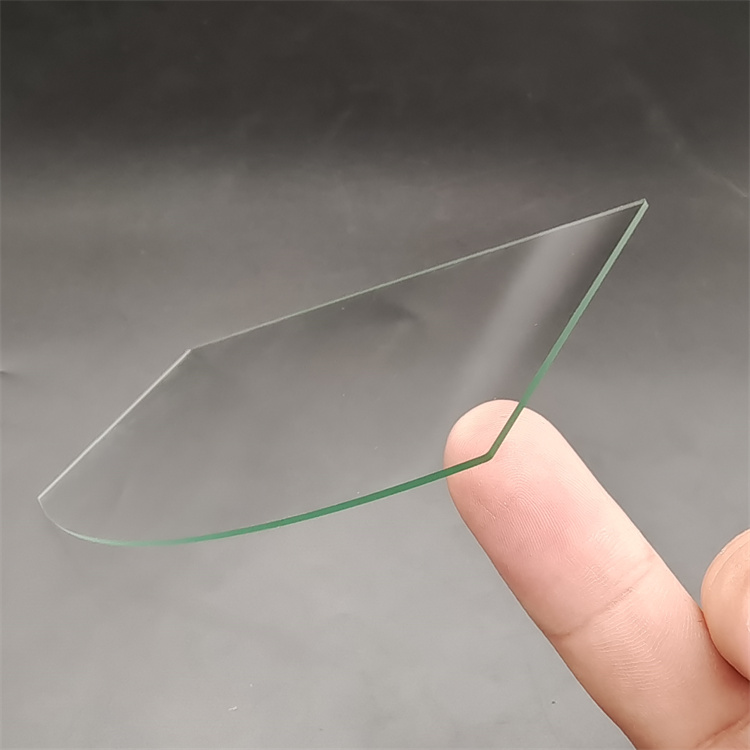
Round, rectangle, triangle · Any size · Optical clarity
View product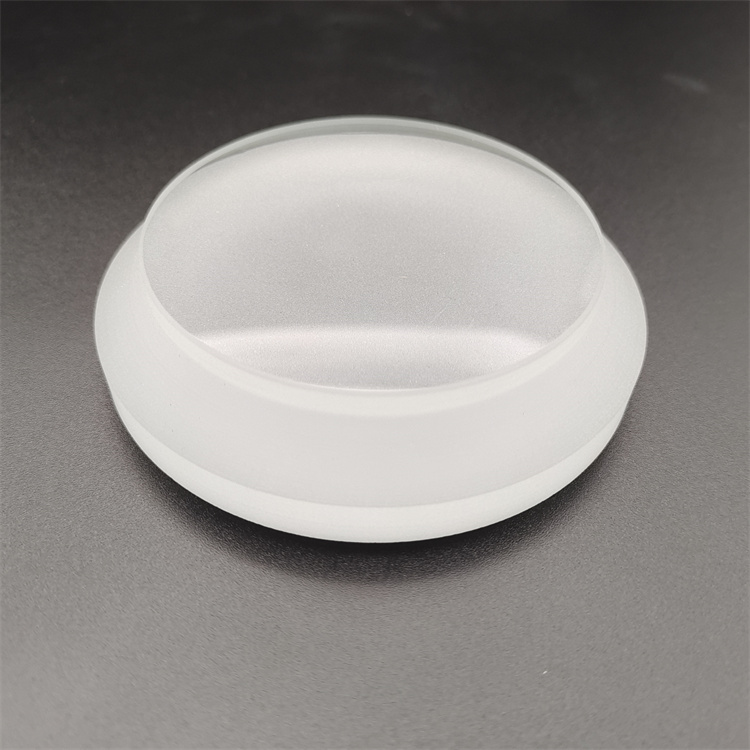
Beveled step edge · Ultra clear · Frosted light diffusion
View product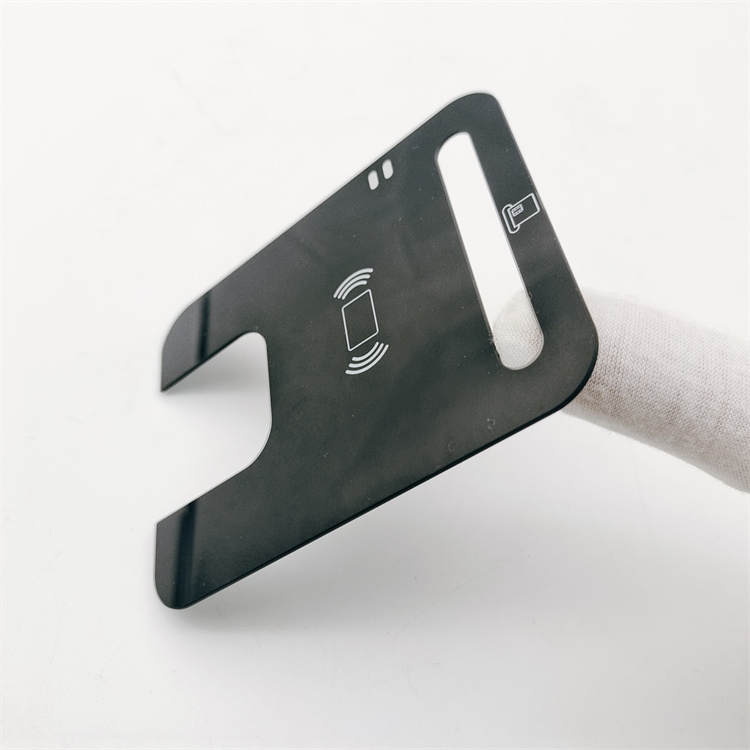
High strength · Precision drilled hole · Multi-colour print
View product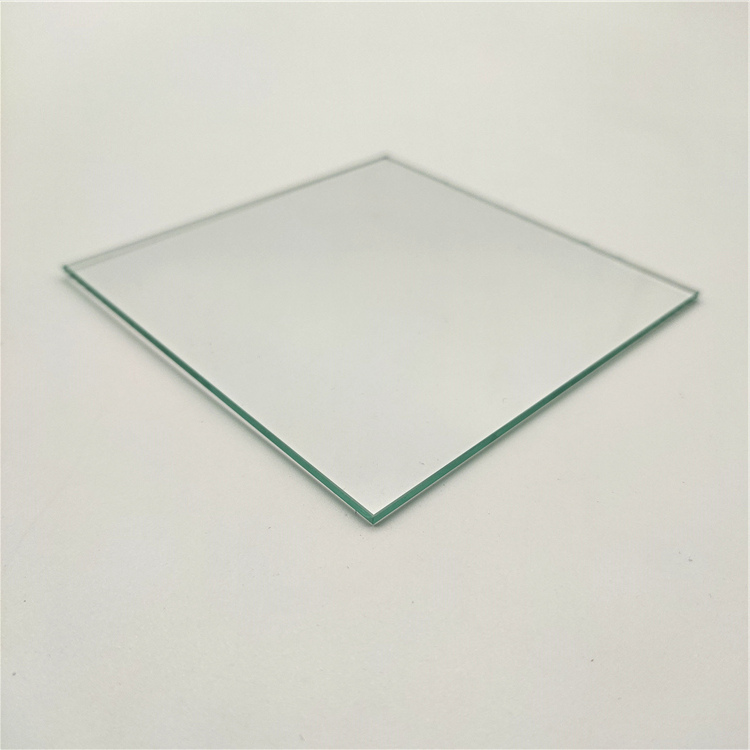
1 mm float or low-iron · Cut to size · Short lead time
View product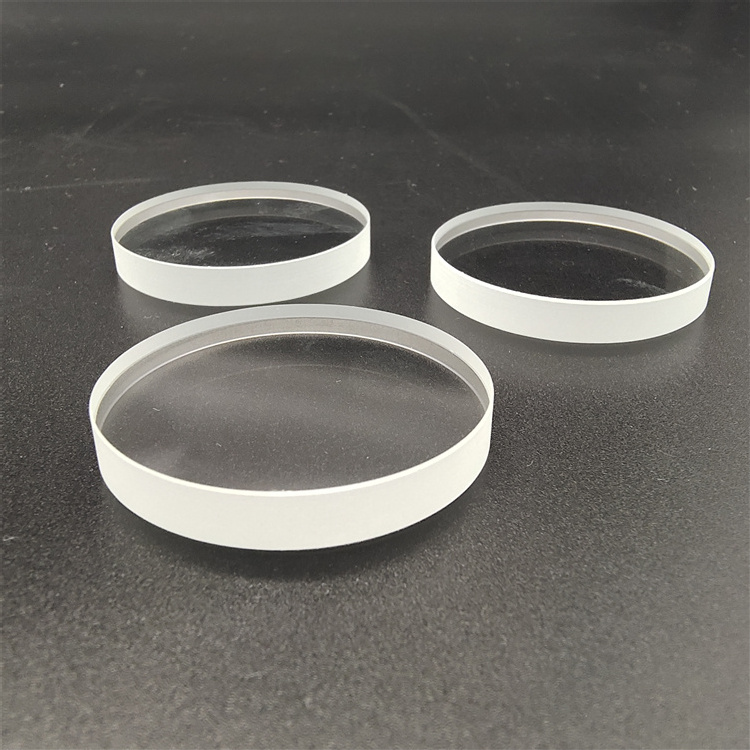
Full tempered · Ultra clear · Tight diameter tolerance
View product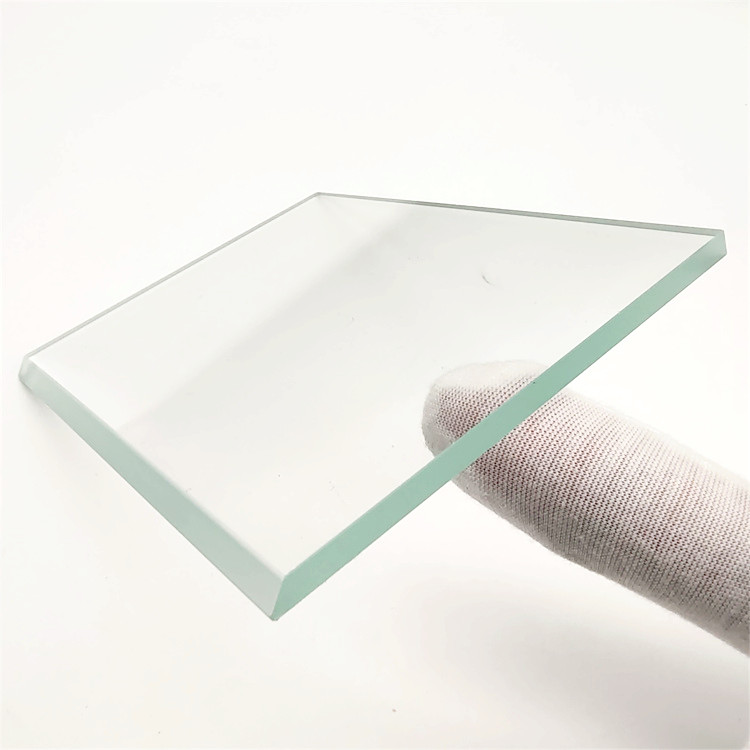
Beveled edge · Small diameter · Scratch resistant
View product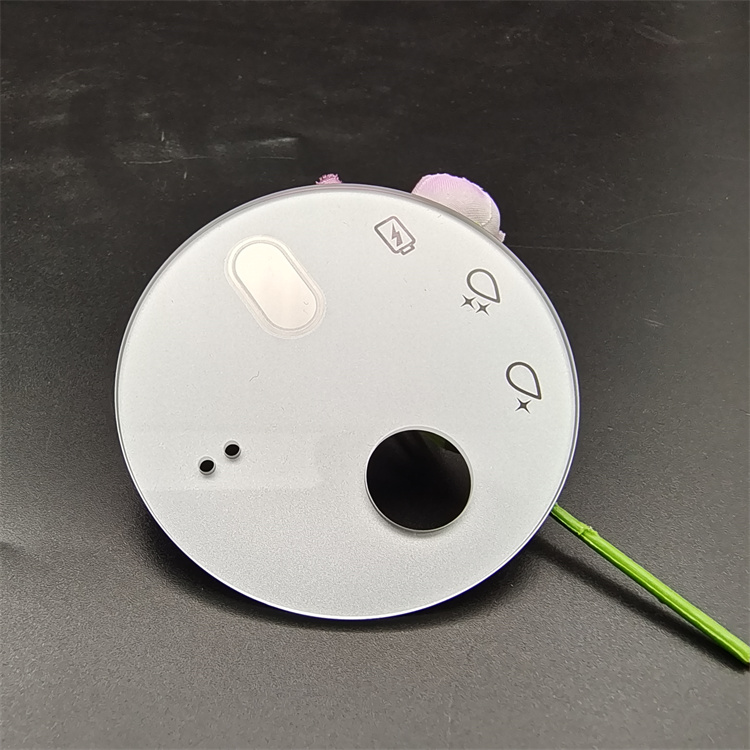
0.5–6 mm · Drilled holes · Appliance control panels
View productCapacity, response speed and repeat purchase behaviour are recorded by a third-party trade platform — not self-declared.
A round part feels easy to specify: give a diameter and a thickness. In production it behaves very differently from a rectangular panel. A Ø 30 mm disc at 0.5 mm thickness concentrates stress along a continuous curved edge, so a single micro-chip left by the cutting wheel can propagate into a full fracture during tempering. Thermal tempering introduces bow, which turns a nominally flat disc into a shallow dish. Silk-screen registration has no corner to hide behind — a 0.2 mm drift on a printed aperture is immediately visible against the lens or display it frames.
Cost therefore does not live in the glass sheet. It lives in the yield. Five variables drive that yield and should be fixed before a price is quoted: thickness, diameter, edge geometry, print complexity and coating stack. A supplier who cannot tell you their yield on a printed, drilled, AF-coated Ø 40 mm cover is quoting a hope rather than a process.
One practical engineering rule we apply during design review: as the ratio of diameter to thickness grows, thermal tempering becomes progressively harder to keep flat. Small thin discs are generally better served by chemical strengthening (ion exchange), while thicker and larger round parts benefit from conventional thermal tempering with controlled furnace cycles. Choosing the wrong route is the single most common reason a circular glass project drifts from sample to mass production.
The CE mark is not a badge that can be attached to a product category. It is a compliance declaration tied to a specific harmonised standard and a specific intended use. Buyers comparing circular glass exporters should establish which regulation applies to their end product before they compare prices.
| Document / Standard | What It Proves | Why a Circular Glass Buyer Needs It |
|---|---|---|
| EN 12150-1 / -2 | Thermally toughened safety glass: dimensional standards, fragmentation, CE basis | Confirms tempering parameters are controlled and repeatable, not manually improvised |
| EN 14179-1 / -2 | Heat-soak treated toughened glass | Substantially reduces the risk of spontaneous breakage caused by nickel sulphide inclusions |
| FPC Certificate | Factory Production Control system audited by a notified body | Evidence the plant runs documented, traceable production rather than ad-hoc batches |
| Declaration of Performance (DoP) | The declared performance values the manufacturer is legally bound to | Lets you verify specification before a single crate ships |
| RoHS / REACH Declaration | Restricted substances compliance for electrical end products | Protects your own CE mark when the glass becomes part of a consumer device |
| Batch Traceability Record | Sheet batch, furnace cycle, print run and coating lot | Answers a field defect question in hours instead of months |
Note: the applicable standard depends on the intended use of the finished product. For electrical and lighting applications the CE mark is applied at device level; the glass supplier’s obligation is material compliance and traceability.
A specification that works on an LED downlight will fail on a touch interface. These are the configurations our engineers recommend most often.
Ultra-clear or frosted discs, 1–4 mm, with a silk-printed black border and step edge. Low-iron substrate avoids the green tint that shifts correlated colour temperature.
0.5–4 mm printed round panels with cut-outs for knobs, sensors and indicator windows. Adhesive-backed versions arrive ready for assembly-line bonding.
3–6 mm discs with anti-glare etching or anti-reflective coating, plus a frosted stepped edge. Readability under 1,000-lux factory lighting is the design target.
0.5–2 mm touch glass with anti-fingerprint top coating and multi-colour icon printing. AF reduces cleaning cycles and preserves scratch visibility on dark prints.
0.7–3 mm optical discs with combined AR + AF coatings. Where disinfection is required, specify chemical-resistant print inks and sealed edge polishing.
0.2–1 mm chemically strengthened discs for optical sensors and camera apertures. Tight diameter tolerance and low edge chipping matter more than break strength here.
Three shifts are already visible in the drawings our customers send.
Cover discs are moving from 1.1 mm to 0.5–0.7 mm, and in sensor windows to 0.3 mm. At those thicknesses thermal tempering loses flatness, so ion-exchange strengthening becomes the default route — higher surface compression with almost no bow.
Single-function coatings are giving way to stacked systems: AR for transmittance, AG for diffuse glare control, AF as the outer oleophobic layer. The engineering challenge is durability — a three-layer stack must still survive the abrasion tests your customer applies.
Step edges, bevels and matte-polished rims are no longer just safe-handling measures. On lighting and premium appliance panels the edge profile is part of the visual language, which pushes tolerances on edge width and surface finish rather than on the flat face.
The purchasing behaviour around glass components is changing faster than the glass itself.
Procurement teams are shortening supplier lists by requesting DoP, FPC and material declarations during the RFQ stage rather than after the sample is approved. Suppliers who cannot produce documents on request increasingly fall out of consideration in Europe.
Forecast volatility has shifted orders toward 100–500 piece pilots followed by monthly releases. Buyers now evaluate a factory on how cleanly it can move from a 200-piece sample run to a 30,000-piece monthly call-off without changing process or print colour.
“Circular” is being read two ways in tenders: circular geometry, and circular material flow. Cut-off and broken cullet from circular glass production is returned to the float supply chain, and buyers are beginning to ask for that recovery rate alongside price and lead time.
Dongguan Jaswe Glass Co., Ltd. processes tempered, ultra-clear, printed, AR / AG / AF coated glass for displays, touch panels, lighting and electrical equipment across North America, Europe and Asia.
Located in Shipai Town, Dongguan — the centre of China’s electronics manufacturing cluster. Float glass, print inks, coatings and packaging are all sourced within hours, which keeps engineering iteration fast.
CNC cutting, edge polishing, hole drilling, tempering, silk-screen and ceramic printing, AG processing and AR / AF coating all run in-house. Nothing critical is outsourced, so no quality gap opens between subcontractors.
With 80+ skilled operators and an annual revenue band of US$2.5M–US$5M, output capacity supports both a 200-piece pilot and a sustained monthly call-off without changing production route.
A 96.61% buyer response rate is not marketing language — it is the number the trade platform records. Drawings are reviewed for manufacturability before a sample is scheduled, so avoidable geometry issues are caught at quotation.
On-site verified status for six consecutive years, with published ratings, trade capacity, transaction level and credit index. Buyers can cross-check the supplier record before placing a first order.
Roughly one in four buyers places a second order. In a market where switching suppliers is cheap, repeat business is the most honest available signal of process consistency on printed and coated circular glass.
DXF, DWG or PDF drawing plus thickness, edge type, print colours, coating and annual volume.
Manufacturability check and a proposed process route, usually returned within three working hours.
Physical samples for dimensional fit, print colour and optical performance approval.
Batch production with in-process inspection, then interleaved edge-protected export packing.
Share your specification and receive manufacturability feedback, a recommended strengthening route and a costed quotation from our glass engineers — usually within three working hours.
Send an Inquiry