CE Certified Clear Glass Supplier & Wholesalers
Custom ultra-clear, tempered, printed and coated glass for displays, touch panels, smart switches, LED lighting and appliances — engineered in Dongguan and exported to North America, Europe and Asia.
8 Clear Glass Products Recommended for Wholesale and OEM Buyers
The eight products below represent the practical core of a CE-ready clear glass sourcing program: ultra-clear round glass, double-sided AR coating, step-edge tempered glass, black-printed LED wall washer glass, printed appliance panels, small beveled-edge glass, drilled LED cover glass and ultra-thin adhesive-backed screen protection glass. Each item can be customized by drawing, thickness, edge profile, hole position, printing color, coating stack and packaging method.
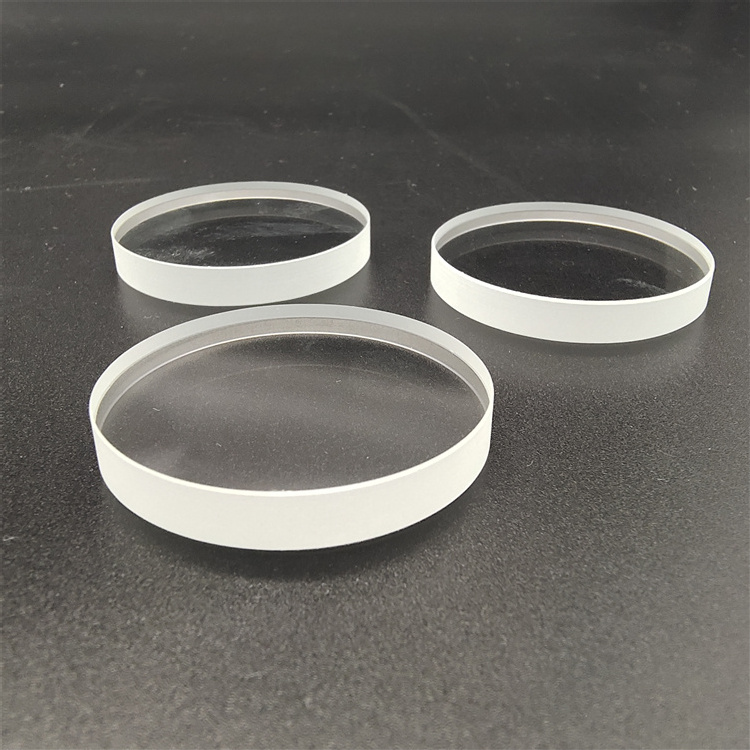
Full Tempered 30mm Diameter 3mm 4mm 5mm 6mm 8mm Thickness Ultra Clear Round Tempered Glass
Round ultra-clear tempered glass for sensors, display windows and lighting components where true color and clean edges matter.

Both Sides Anti Reflective AR Coating 1mm 2mm 3mm 4mm Ultra Clear Tempered Glass
Double-sided AR glass that improves transmittance and contrast for display covers, optical windows and high-clarity interfaces.
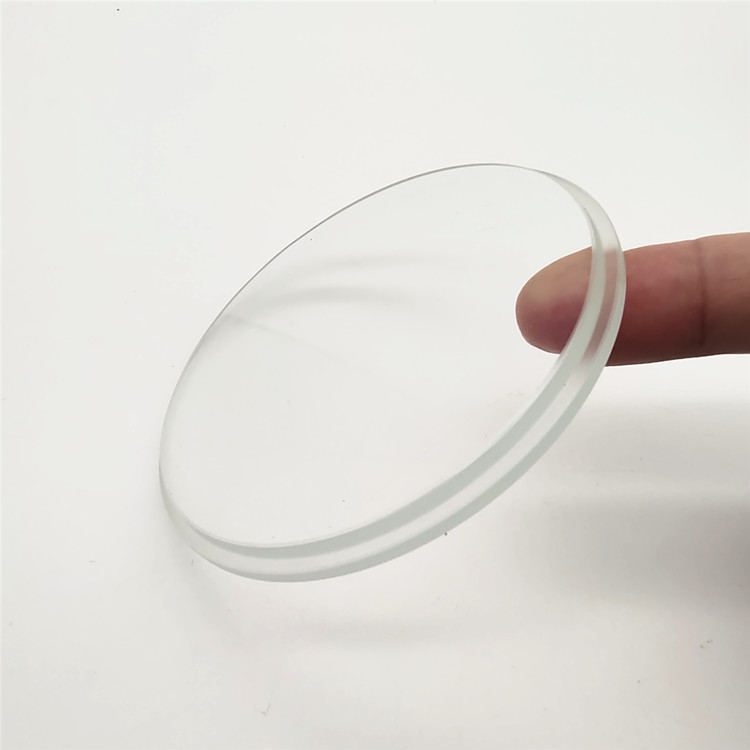
Factory Price 2mm 3mm 4mm 5mm 6mm 8mm 10mm Tempered Step Edge Glass
Step-edge tempered glass for frames, control windows and assemblies requiring a precise seating profile and durable edge finish.
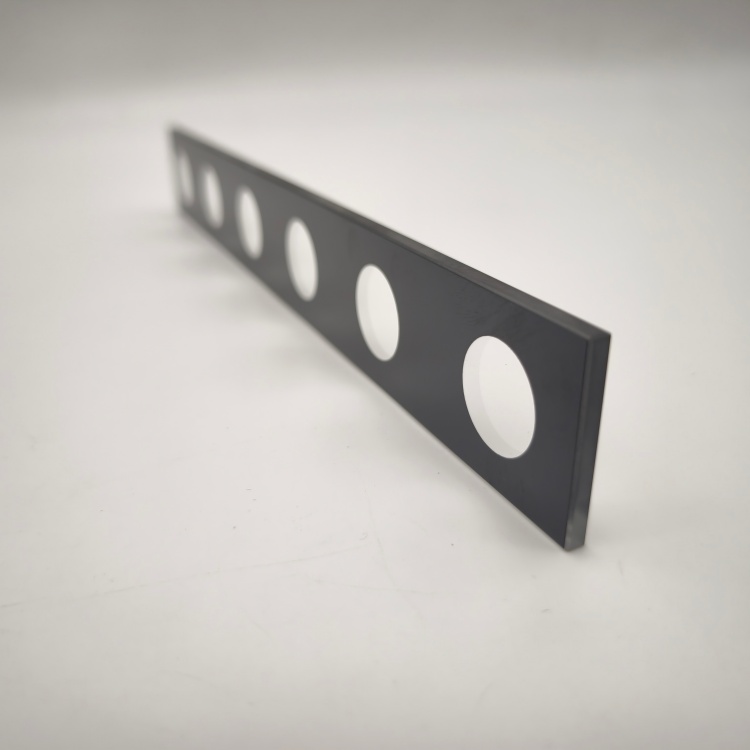
Black Printed Polished Smooth Matte Edge Linear Tempered Glass for LED Wall Washer Light
Linear printed glass that hides internal optics and wiring while maintaining a clean, architectural black edge appearance.
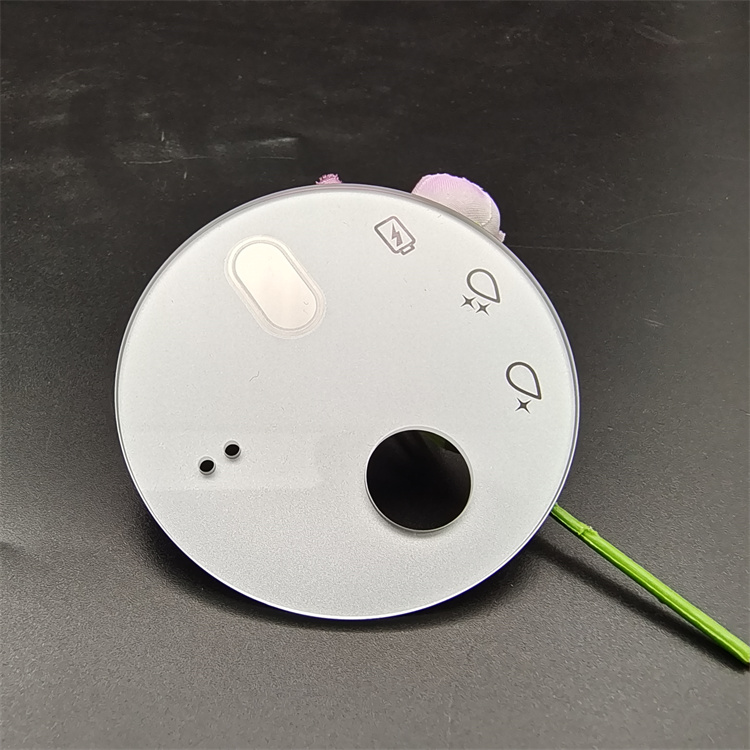
Customized 0.5mm 0.7mm 1mm 2mm 3mm 4mm 5mm 6mm Cut Holes Printed Round Tempered Glass Panels for Home Appliance
Printed round control panels with cut holes for knobs, sensors and indicators — ideal for appliance and smart-home interfaces.

Customized Small Size 3mm 4mm 5mm 6mm Beveled Edge Tempered Glass
Small-format beveled-edge glass for premium instruments, decorative covers and compact electronic assemblies.
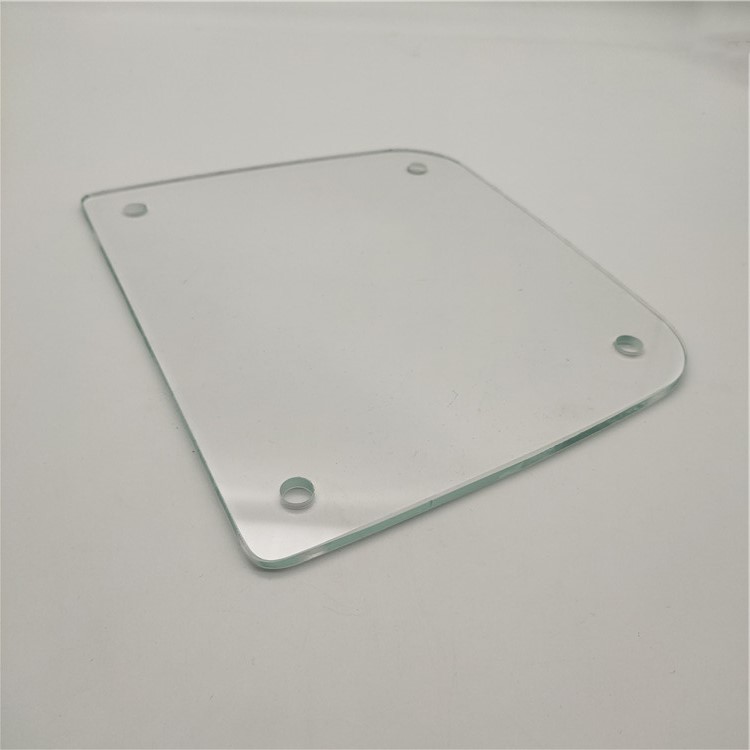
Ultra Clear Tempered Glass Customized Design with Cut Holes for Led Light Cover
High-transparency LED cover glass with CNC-cut holes for lighting fixtures that require both optical clarity and mechanical fit.

Small Size Ultra Thin 0.5mm 0.7mm 1mm Tempered Glass Panel With Adhesive Tape for Screen Protection
Ultra-thin adhesive-backed glass for compact displays, wearables and screens that need low weight and clean lamination.
Why Clear Glass Wholesalers and OEM Buyers Choose Jaswe Glass
Dongguan Jaswe Glass Co., Ltd. is a glass processing supplier focused on custom tempered, ultra-clear, silk-screen printed, AR / AG / AF coated and LED lighting glass. For wholesale buyers, the lowest piece price is rarely the lowest total cost. The real advantage is a supplier that controls critical processes, documents the specification, responds to engineering questions quickly and repeats the same result from sample to mass production.
In-House Process Control
Cutting, CNC shaping, edge polishing, hole drilling, thermal tempering, silk-screen and ceramic printing, AG processing and AR / AF coating are managed under one quality system. This reduces the hidden quality gaps that appear when a job moves between multiple subcontractors.
Capacity for Repeat Programs
With 26 glass processing machines, more than 80 skilled workers and monthly output above 200,000 pieces, Jaswe Glass supports both sample evaluation and recurring production orders for lighting, electronics and appliance customers.
Fast Engineering Communication
Overseas buyers need answers, not delays. The supplier profile reports an average response time within 3 hours and a 96.61% response rate, which matters when drawings, coating stacks and artwork versions need fast clarification before a sample is released.
Verifiable Trading Record
The company has 51–100 employees, annual revenue in the US$2.5M–US$5M range, main markets in America, Europe and Asia, and on-site verified supplier status for six years. A 26% buyer reorder rate is a practical signal of repeatable quality and export communication.
Location: Dongguan, Guangdong, China — at the center of the electronics supply chain. Most operators have more than 8 years of hands-on glass processing experience. Buyers can verify company profile, trade capacity, transaction level, trade history, credit index, supplier assessment, ratings and reviews through the original Jaswe Glass company pages.
What CE Certification Means for Clear Glass Wholesale Buyers
CE marking is not a decorative badge that can be applied to every piece of clear glass. In the European Economic Area, CE marking is a manufacturer’s declaration that a product meets the applicable harmonized standards and directives for its intended use. For clear glass used in displays, appliances, control panels, LED fixtures, touch interfaces and electronic equipment, the final CE status usually depends on the end product, the applicable directive and the role of the glass component.
1. Define the End Application First
A glass cover for a household appliance is not assessed the same way as a glass pane for a construction product or a component inside an industrial machine. The buyer should specify where the glass will be used, which directive applies to the final product and whether the glass is a safety-related component.
2. Build a Technical File
A serious clear glass supplier should support the buyer’s technical file with drawings, material declarations, dimensional inspection records, tempering process records, coating and printing specifications, RoHS / REACH information where relevant and packaging protection data.
3. Validate Optical and Mechanical Claims
AR, AG and AF coatings must be specified with realistic performance targets. Tempered glass claims should be tied to thickness, edge quality, hole position, print coverage, fragmentation requirements and the intended impact or thermal load. Samples should be tested before mass production.
4. Protect the Shipment and the Line
Clear glass can meet every drawing requirement and still fail at the assembly line because of edge chips, print scuffs, coating contamination or inadequate interleaving. Export packing should be edge-protected, separated and validated against the buyer’s handling and unpacking process.
Reliable wording matters: request the exact declaration, test report or material document that matches your part number and intended end use. Jaswe Glass supports CE-related documentation for applicable clear glass components; final CE marking responsibility depends on the finished product and the buyer’s regulatory role.
Clear Glass Procurement Trends for 2025–2030
Wholesale buyers are moving away from price-only sourcing. The next sourcing cycle will reward suppliers who can prove process control, support compliance documentation, handle smaller customization batches and communicate engineering changes without slowing the customer’s product launch.
Compliance-First Sourcing
Procurement teams now ask for drawing revision control, material declarations, RoHS / REACH statements, tempering records and coating durability data earlier in the RFQ process. Clear glass is increasingly purchased as a documented engineered component, not as a commodity sheet.
Dual-Source and Risk Balancing
Overseas buyers continue to consolidate volume, but they also protect supply continuity by qualifying a primary and a backup route. A supplier with in-house cutting, tempering, printing and coating can absorb more process variability than a trader relying on multiple external workshops.
Smaller MOQs and Faster Iteration
Smart-home, LED lighting and industrial display products change faster than traditional appliance platforms. Buyers need smaller evaluation batches, quick artwork revisions and repeatable mass production after sample approval. MOQ flexibility must be balanced against tooling, printing setup and coating batch size.
Total Landed Cost over Piece Price
Low piece price can disappear after rework, line stoppage, replacement shipments and engineering delays. Buyers increasingly compare total landed cost, including sampling speed, packaging quality, response time, reorder rate and the supplier’s ability to keep tolerances stable across repeated lots.
Product Development Trends Shaping Clear Glass Components
Clear glass is becoming thinner, more optical, more integrated and more application-specific. The most successful products combine the right substrate, edge geometry, printing, coating stack and adhesive system rather than optimizing one specification in isolation.
Ultra-Thin Strengthened Glass
Electronic-grade glass from 0.2 mm to 1 mm continues to expand into compact displays, wearables, sensors and touch interfaces. The challenge is not only thickness; it is handling, edge quality, flatness, adhesive compatibility and safe breakage behavior during assembly.
Integrated AR + AG + AF Coating Stacks
Instead of choosing one treatment, more products combine anti-reflective performance, anti-glare diffusion and anti-fingerprint cleanability. Outdoor kiosks, medical displays and industrial HMIs benefit when reflection, glare and smudge resistance are engineered together.
Printed Glass that Hides Electronics
Black borders, translucent windows, ceramic icons and selective masking allow glass to hide wiring, LEDs and sensors while preserving display clarity. This is especially important for smart switches, appliance controls, LED lighting and instrument panels.
Application-Specific Edge and Hole Design
Step edges, beveled edges, polished matte edges, countersinks and precision holes are no longer secondary details. They influence fit, safety, light output, assembly time and the perceived quality of the finished product, especially in premium lighting and control panels.
Match the Glass Specification to the User Experience
This matrix helps wholesale buyers and OEM engineers translate a user-experience requirement into a practical clear glass specification. Final performance depends on thickness, substrate, printing, coating stack and the operating environment, so sample testing is recommended before mass production.
| Buyer Requirement | Recommended Clear Glass Solution | Why It Works | Procurement Checkpoint |
|---|---|---|---|
| True color and low green tint | Ultra-clear low-iron tempered glass | Reduces the green edge tone of standard float glass and improves color accuracy for display and lighting covers. | Request transmittance target, glass thickness and edge appearance samples under neutral light. |
| High-contrast display readability | Double-sided AR coated ultra-clear glass | Lowers surface reflection and increases light transmission, helping the display appear brighter and more defined. | Confirm single- or double-sided coating and test with the actual display brightness and viewing angle. |
| Outdoor or strong-light glare control | AG anti-glare glass, optionally with AF top layer | Diffuses reflected light so the screen remains readable under sunlight, overhead lighting or industrial illumination. | Choose haze level carefully; very fine haze suits high-resolution displays, while stronger diffusion may suit signage. |
| Touch panel cleanliness | AR + AF or AG + AF coated touch cover glass | The oleophobic surface resists fingerprints and makes cleaning easier while maintaining optical clarity. | Ask for abrasion and chemical resistance data, and test with the customer’s cleaning procedure. |
| Hidden wiring and architectural LED appearance | Black printed linear tempered glass with polished matte edge | Selective printing masks internal components while the edge treatment creates a clean, premium visual finish. | Confirm print window tolerance, black density, edge gloss level and direction of installation. |
| Appliance or instrument control panel | Printed tempered glass with cut holes, windows and ceramic icons | Combines structural protection, graphic communication and openings for sensors, knobs or indicators in one component. | Send Pantone colors, artwork version, hole coordinates and tolerance requirements with the drawing. |
| Compact screen protection | Ultra-thin 0.5 mm, 0.7 mm or 1 mm tempered glass with adhesive tape | Provides scratch resistance and rigidity with low weight, suitable for small displays and wearable devices. | Validate adhesive type, bubble control, lamination process and edge strength before mass production. |
For CE-related projects, include the intended application, final product directive and required documentation in the RFQ. Clear glass that performs well in one enclosure may require a different coating, thickness or edge treatment in another.
Clear Glass Procurement FAQ for Wholesalers and OEM Buyers
These are the questions overseas buyers ask most often when sourcing custom clear glass, tempered glass, printed glass, AR / AG / AF coated glass and LED lighting covers.
Does CE certification cover every clear glass product?
No. CE marking is product- and application-specific. For a clear glass component used inside a display, appliance, LED fixture or electronic control panel, the final CE status usually depends on the finished product and the applicable directive. Ask the supplier for the exact documentation package that matches your part number, including material declarations, test reports, inspection records and any Declaration of Conformity support required by your technical file.
What is the minimum order quantity for custom clear glass?
Most custom items start at 100 to 500 pieces, depending on size, printing, coating, edge profile and packaging. Standard clear tempered pieces may be supplied in smaller sample quantities for evaluation. The practical MOQ is best confirmed after reviewing the drawing, annual quantity and whether new printing screens, coating batches or special packaging are required.
Which glass thicknesses can Jaswe Glass process?
The current product range covers ultra-thin electronic grade glass from 0.2 mm up to 19 mm flat tempered glass. The most requested thicknesses for display covers, touch panels, appliance panels and LED lighting glass are 0.5 mm, 0.7 mm, 1 mm, 2 mm, 3 mm and 4 mm. Thickness selection should consider impact resistance, enclosure design, gasket compression, weight, optical requirements and tempering limits.
Can AR, AG, AF and silk-screen printing be combined on one glass part?
Yes, but the stack must be designed in the correct order and validated on the actual substrate. A touch cover may use AR coating, AG treatment and AF top layer, while a printed appliance panel may need selective masking, ceramic icons and a transparent display window. Coating compatibility, print cure temperature and edge handling must be reviewed before sampling.
What files should I send with my clear glass inquiry?
Send a DXF, DWG or PDF drawing with outline dimensions, thickness, corner radii, hole positions, countersinks, edge profile and tolerance requirements. Include artwork, Pantone colors, display window size, printing side, coating requirement, application, estimated annual quantity and any regulatory or documentation requirements. If an adhesive or protective film is needed, specify the surface and lamination condition.
How is quality controlled during 200,000+ pieces per month?
Quality control is built into each process step rather than placed only at final inspection. Incoming glass is checked, cut dimensions and edges are inspected, holes and cut-outs are verified, tempered glass is processed to the approved route, printing and coating are checked for appearance and adhesion, and packing is reviewed for edge protection and separation. In-process inspection at each station helps catch defects before value is added at the next step.
How should custom clear glass be packed for export?
Packing should prevent edge chipping, surface scuffing, print damage, coating contamination and glass-to-glass contact. Common methods include interleaved paper, PE film, foam separators, edge protectors and reinforced export cartons or crates. For printed and coated glass, the buyer should confirm whether the protective film must be removed before assembly and whether the packaging is suitable for automated or manual unpacking.
How do I start a CE-ready clear glass project?
Send the drawing, intended application, thickness, edge type, printing colors, coating requirement, estimated annual quantity and documentation needs to info@jasweglass.com. The engineering team reviews manufacturability before samples are made, then confirms the process route, inspection plan and packaging method. To request an engineering review now, use the inquiry button below and include the key specification details in your message.
Have a Drawing Ready? Request a CE-Ready Clear Glass Quotation
Share your drawing, thickness, edge profile, printing artwork, coating requirement, annual volume and target documentation package. The Jaswe Glass team will review manufacturability and recommend a practical process route for your display, touch panel, LED lighting, appliance or control panel project.
info@jasweglass.com