8 Display Cover Glass Products for Sampling and Volume Production
These eight product families cover the most requested combinations of thickness, printing, edge finish and optical treatment. Every item below is made to a customer drawing, so thickness, outline, holes, print colors and surface treatment can be reviewed before sampling.
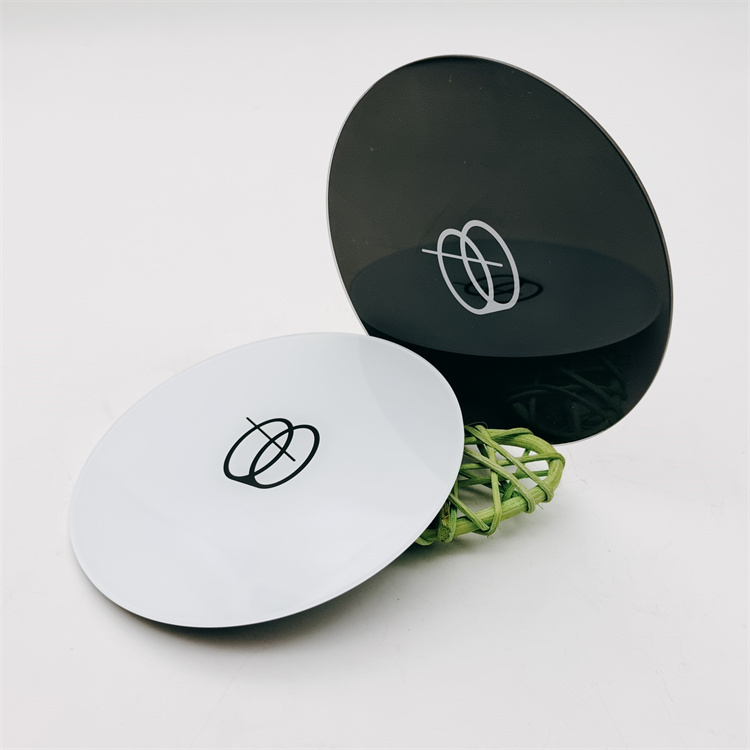
Black White Silk Screen Printing Toughened Glass Round Tempered Glass for Electric Appliance
Round tempered cover with black-white printed graphics, designed to hide circuitry and resist scratching on appliance control panels.

Custom Extra White 0.5mm 1mm 1.5mm 2mm Low Iron Tempered Glass Chemical Strengthened
Extra-white glass from 0.5 mm to 2 mm, chemically strengthened for display windows and touch covers where color neutrality matters.
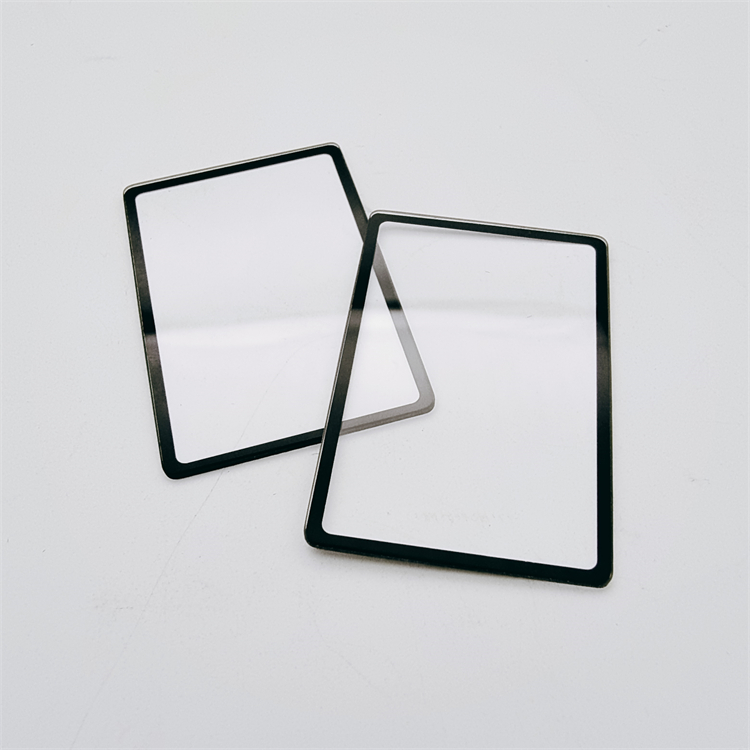
0.5mm 0.7mm 1mm 2mm 3mm Good Price OEM Wholesale Custom Premium Silk Screen Printing Tempered Glass Display Screen Industrial
OEM printed display glass in 0.5–3 mm thicknesses, with custom icons, dead-front windows and batch color control for industrial displays.

Customized Small Size 3mm 4mm 5mm 6mm Beveled Edge Tempered Glass
Small-format 3–6 mm tempered glass with beveled edges for instruments, switches and compact covers that need safe handling and a clean profile.
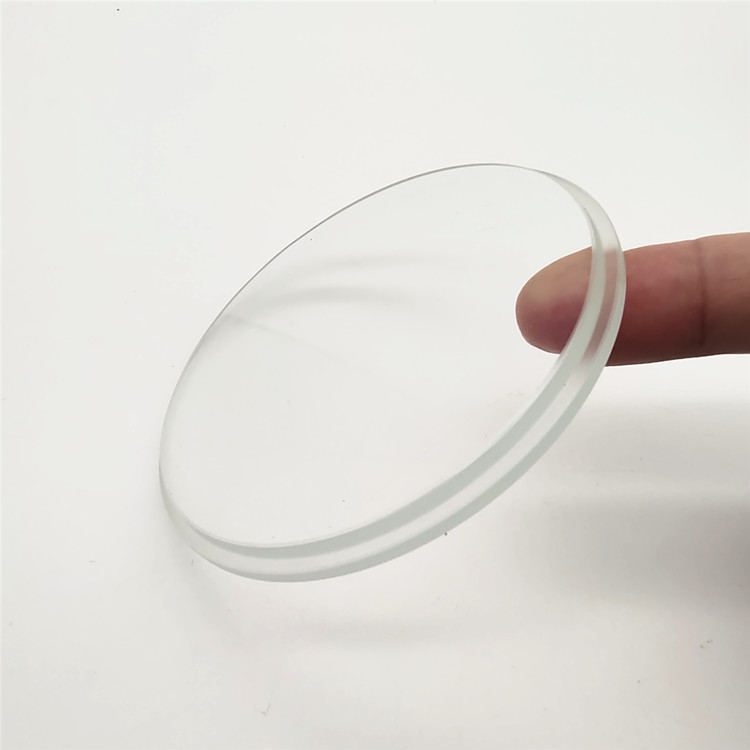
Factory Price 2mm 3mm 4mm 5mm 6mm 8mm 10mm Tempered Step Edge Glass
Step-edge tempered glass from 2 mm to 10 mm for precise location and bonding inside enclosures, control panels and industrial covers.
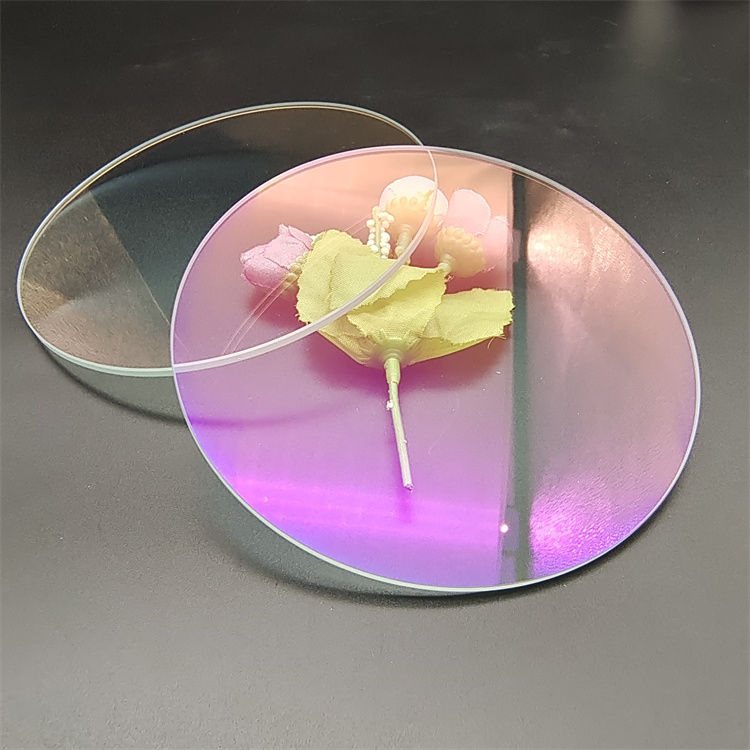
Premium Quality Ultra Clear Anti Reflective Solid High Strength 1mm 2mm 3mm 4mm 5mm 6mm Flat Tempered Glass Coating
Ultra-clear AR-coated tempered glass that reduces surface reflection and improves contrast in HMI, medical and instrument display windows.

Customized Industrial Lighting Solid Flat Ultra Clear Frosted Tempered Glass with Beveled Step Edge
Frosted ultra-clear tempered glass for LED lighting and diffused display applications, with beveled or step edges for a finished fit.

Custom Printed Tempered Glass Panel High Strength Decorative Cover with Hole for Card Reader Instrument
Printed tempered glass cover with a drilled hole for card readers, instruments and control panels, combining decorative finishing with high strength.
Product links above retain the existing product-page destinations. For projects requiring a different thickness, glass substrate, printing color or coating stack, share the drawing and target application for an engineering review.
Why Display Cover Glass Is No Longer a Commodity Component
Optical clarity, touch feel, edge safety, printed brand identity and supply continuity all meet on the same glass surface.
In consumer electronics, industrial controls, medical instruments and appliance interfaces, the cover glass is the first surface the user touches and the last surface the eye evaluates. It protects the display, carries brand identity through printing, defines perceived quality through flatness and edge finish, and influences optical performance through AR, AG and AF treatments. That is why experienced buyers now evaluate display cover glass as a system-critical component, not a simple cut-to-size sheet.
For a CE certified display cover glass factory and exporter, the work begins long before tempering. It begins with a drawing review that asks whether hole locations leave enough edge distance, whether the printed window aligns with the LCD active area, whether the coating stack survives the bonding process, and whether the packing method is robust enough for the chosen freight route. Dongguan Jaswe Glass Co., Ltd. has built its export process around those questions. Our team of 80+ workers and 26 glass processing machines handles cutting, CNC shaping, edge polishing, hole drilling, thermal tempering, silk-screen printing, AG processing and AR / AF coating under one roof. That integrated control is the practical foundation of consistent quality.
The factory’s monthly output exceeds 200,000 pieces, and most operators have more than eight years of hands-on glass processing experience. Buyers in North America, Europe and Asia use Jaswe for tempered glass, display glass, touch screen glass, switch glass, LED lighting glass and electrical equipment glass. A 96.61% response rate, an average reply time within three hours and a 26% buyer reorder rate are not decorative claims; they are useful indicators that a supplier can sustain communication and repeat production after the first order.
Optical yield is a cost driver
A coating defect, haze variation or print misalignment can reject an otherwise well-tempered panel. Buyers should define transmittance, reflection, haze, color tolerance and visible-defect limits before sampling, then keep those limits in the inspection plan.
Fit is a tolerance chain
Glass does not fit an enclosure by itself. Thickness, flatness, edge profile, hole position, print window and adhesive thickness work together. A supplier that reviews the whole stack-up reduces late changes and protects assembly yield.
Documentation protects schedule
For CE-related projects, stable material declarations, dimensional reports, change notification and batch traceability are part of the purchasing decision. Documentation should be discussed at sample stage, not after mass production begins.
AR, AG, AF, Low-Iron or Printed? Match the Glass to the Environment
Cover glass performance comes from the substrate, the strengthening process, the printing and the coating stack. Use this matrix as a starting point for engineering discussions.
Anti-Reflective Coating
Reduces surface reflection and improves contrast, especially in dark display windows, medical monitors, camera covers and industrial HMI panels. Double-sided AR usually delivers the largest optical gain, while single-sided coating can suit specific optical stacks.
Anti-Glare Treatment
Diffuses reflected light so the screen remains readable under sunlight, overhead lighting or outdoor conditions. Haze level should be selected by viewing distance and resolution; finer haze suits high-resolution displays, while stronger diffusion can benefit kiosks and signage.
Anti-Fingerprint Coating
An oleophobic top layer that resists oil and sweat, improves finger glide and simplifies cleaning. AF is commonly applied over AR or AG on capacitive touch panels, smart switches and POS terminals where the surface is touched repeatedly.
Ultra Clear Substrate
Low-iron glass removes the green tint of standard float glass and supports color-neutral display windows, white printing, LED fixtures and premium appliance panels. Chemical strengthening is useful for thin 0.5–2 mm covers that must resist handling stress.
Silk-Screen Printed Tempered Glass
Printed borders, icons, dead-front windows and logos hide circuitry while adding brand identity. For repeat production, provide Pantone references, transparent window dimensions, ink side and the required color density so the printing screen can be controlled consistently.
Beveled, Step and Polished Edges
Edge geometry affects assembly location, bonding area, hand safety and visual refinement. Beveled edges are common on small covers; step edges help locate glass inside a housing; polished or matte finishes should be specified together with tolerance and inspection criteria.
Final optical and mechanical values depend on substrate, thickness, coating stack, printing and the assembly method. Sample validation is recommended before mass production.
Procurement Trends Reshaping Display Cover Glass Sourcing, 2025–2030
Purchasing teams are moving from piece-price comparison toward total program risk. The strongest RFQs now ask for process evidence, sample discipline and documentation as well as a quotation.
Dual sourcing without losing process control
Buyers are not simply moving away from China; they are separating process location from final assembly location. A practical plan often keeps precision cutting, tempering, printing and coating with a specialist factory, then buffers inventory near the assembly plant. Changing a glass processor late in a program can force a new sampling cycle because edge quality, flatness and printed color all affect fit and appearance.
Landed cost replaces piece price
Cheap glass becomes expensive when breakage, rework or a delayed line is included. Procurement teams are adding yield, packing performance, coating durability and engineering response time to the total landed cost model. A supplier that answers a drawing question within hours can be more valuable than a slightly lower quotation that hides a process risk until mass production.
Documentation becomes part of the specification
CE conformity, material declarations, dimensional reports and batch traceability are moving from the purchasing checklist to the engineering release package. For the final device, the glass component must be consistent with the declared construction. Ask for sample reports and define which dimensions, optical values and appearance criteria will be recorded in routine inspection.
Fewer partners, more process steps under one roof
A single factory that controls cutting, CNC, edge polishing, drilling, tempering, printing and coating reduces handoff risk. Each transfer between subcontractors adds handling damage risk, especially for ultra-thin 0.2–0.7 mm glass or printed surfaces that must remain scratch-free. Integration also shortens the loop between sample feedback and production change.
High-mix, lower-volume programs
Custom displays, smart appliances and industrial instruments create many small variants. MOQs around 100–500 pieces for custom items, and smaller evaluation quantities for standard clear glass, are becoming more relevant than one large blanket order. The supplier must organise tooling, printing screens and inspection routines for repeatable small batches.
Material efficiency enters the BOM discussion
Thinner glass, low-iron formulations, recycled cullet, energy-efficient tempering, reusable packaging and fewer air shipments are now discussed during sourcing. The practical route is to design only the thickness and coating stack the application needs. Over-specifying glass can increase weight, breakage risk and freight emissions without improving the user experience.
Meters are qualitative planning signals for discussion, not market forecasts or procurement statistics.
Product Development Trends for the Next Generation of Display Cover Glass
Designers want thinner stacks, better outdoor readability, cleaner edges and more integrated printing. The factory must be able to validate those ideas with physical samples.
Ultra-thin chemically strengthened glass
Cover glass in 0.2–0.7 mm is increasingly used in compact electronics, touch modules and lightweight display windows. Chemical strengthening helps thin glass survive handling and assembly stress, but edge quality and packing discipline become even more important.
Integrated AR + AG + AF coating stacks
Products often need more than one optical property. Outdoor touch kiosks may combine AG for glare diffusion with AF for fingerprint resistance; high-contrast display windows may use AR with a low-reflection surface. Each added layer must be tested for durability and compatibility with bonding.
Printed glass replacing plastic overlays
Appliance, switch and instrument makers are replacing plastic overlays with printed tempered glass to improve scratch resistance, cleaning performance and perceived value. Dead-front windows, icon printing and color matching allow the glass to become part of the user interface.
Edge geometry as a design language
Beveled, stepped, polished and matte edges are no longer only functional details. They affect the way light catches the cover, how safely the product can be handled and how the glass seats into the enclosure. Edge drawings should include radius, step depth and appearance requirements.
More cut-outs for sensors, cameras and readers
Card readers, cameras, sensors and indicators require precise holes and transparent windows. Hole edges should be polished and inspected for chips, while the print window must be aligned with the optical component behind it. Early DFM review reduces tolerance conflicts.
Low-carbon and material-efficient construction
Thin low-iron substrates, optimized coating stacks, reusable interleaves and right-sized packaging support sustainability goals without compromising the user experience. The most effective change is often the simplest: specify the glass performance the product actually needs, then control it consistently.



Inside Jaswe Glass: A Dongguan Factory Built for Export Programs
Dongguan Jaswe Glass Co., Ltd. is located in Dongguan, Guangdong — the center of China’s electronics supply chain. The company processes and exports tempered glass, display glass, touch screen glass, silk-screen printed glass, switch glass, AR / AG / AF coated glass, electrical equipment glass and LED lighting glass. This is a production environment built around custom drawings, not a catalogue-only trading operation.
From a buyer’s perspective, three questions matter most. Can the factory make the first sample correctly? Can it repeat that sample in mass production? Can it communicate clearly when a drawing, material or schedule changes? Jaswe addresses those questions through in-house cutting, special-shaped CNC cutting, edge polishing, hole drilling, tempering, silk-screen and ceramic printing, AG processing and AR / AF coating. Keeping these steps together reduces handling risk and shortens the feedback loop.
One-roof process control
Cutting, CNC, edging, drilling, tempering, printing and coating are coordinated inside one quality system, reducing subcontractor handoff risk.
Drawing-to-sample engineering
DXF, DWG and PDF drawings are reviewed for manufacturability before sampling, including edge distance, print windows and hole positions.
Tempering and breakage safety
Thermal tempering strengthens glass for impact resistance and safer breakage behavior on appliance, instrument and lighting covers.
Silk-screen and ceramic printing
Multi-color logos, icons, borders, dead-front windows and transparent display windows can be controlled with color-matching discipline.
AR / AG / AF optical options
Coating and surface treatment options support high-transmittance displays, glare-diffused outdoor panels and easy-clean touch surfaces.
Inspection at every gate
Checks are positioned after cutting, edging, drilling, tempering, printing and coating so defects are detected before export packing.
Export packing and handling
Interleaved, edge-protected packing is planned for the chosen freight route, helping protect printed and coated surfaces in transit.
Communication and repeat orders
A 96.61% response rate, an average reply within three hours and a 26% buyer reorder rate support long-term production programs.
CE Support, Inspection Discipline and Export Readiness
CE marking is a declaration made for the final machine or appliance, not a decorative label applied to a bare glass panel. A responsible cover glass factory supports that declaration with stable specifications, dimensional records and clear change communication.
For applicable projects, Jaswe Glass can provide the technical information needed for the customer’s CE conformity file and discuss material declarations, dimensional reports, packaging specifications and batch traceability with the supply chain. The objective is to reduce compliance uncertainty before the product reaches the assembly line. When a glass thickness, coating stack or printing ink changes, the customer should receive a clear notification and a validation route.
Quality control starts with the drawing, not with the final carton. The engineering team checks edge distance around holes, minimum bending radius on corners, print window alignment and the relationship between glass thickness and coating process. During production, inspection points are placed where defects can be corrected before value is added: after cutting, after edge polishing, after hole drilling, after tempering, after printing and after coating. Final packing is treated as a process step because scratches and chipped edges often occur after the glass has already passed optical inspection.
Specification intake
Receive the drawing, thickness, edge type, printing colors, coating requirement, application and estimated annual quantity. A complete RFQ shortens the engineering review.
DFM and sample approval
Review manufacturability, propose the process route and produce physical samples for fit, color, edge and optical approval before mass production.
In-process inspection
Check dimensions, chips, scratches, print alignment, coating appearance and tempering quality at defined gates, with records kept for the batch.
Packing and traceability
Use interleaved, edge-protected export packing, label the batch and keep traceability information so future repeat orders can match the approved sample.
Questions Overseas Buyers Ask Most
Use these answers to prepare a more complete RFQ and reduce back-and-forth during sampling.
What does “CE certified display cover glass” mean for my project?
CE marking generally applies to the final machine, appliance or device, not to a bare glass panel sold as a component. For applicable projects, a cover glass factory supports the customer’s CE conformity work through stable material specifications, dimensional reports, appearance criteria, packaging data and change notification. Confirm the required documentation with your compliance team before production.
What is the minimum order quantity, and can I get a sample?
Most custom items start at 100–500 pieces, depending on size, printing, coating and process complexity. Standard clear tempered pieces can be supplied in smaller evaluation quantities. Samples are used to confirm fit, edge quality, printed color and optical appearance before mass production.
How should I specify AR, AG and AF coatings?
State the viewing environment, display brightness, touch frequency and bonding method. For AR, specify single- or double-sided coating and target reflection or transmittance. For AG, specify haze level and gloss target. For AF, confirm that the coating will be the final touch surface and will survive cleaning. Combining treatments is possible, but sample testing is recommended.
Which thicknesses, edge profiles and holes can you process?
The current range covers ultra-thin electronic glass from 0.2 mm up to 19 mm flat tempered glass. Common display and touch thicknesses are 0.5, 0.7, 1, 2, 3 and 4 mm. Edge options include beveled, step, polished and matte profiles. Holes, countersinks and transparent windows should be defined on the drawing with tolerances and edge-distance requirements.
How do you protect printed and coated glass during export?
Packing is planned around the surface that must remain defect-free. Interleaving, edge protection, moisture control, inner cartons and palletisation are selected for the glass size, weight and freight route. The approved sample and packing method should be recorded so repeat orders use the same handling standard.
What is the fastest way to receive a quotation and production plan?
Send a DXF, DWG or PDF drawing with thickness, edge type, printing colors, coating requirement, application and estimated annual quantity. Include the target sample date and any packaging or documentation requirements. The engineering team can then review manufacturability, recommend a process route and provide a quotation basis for sampling and mass production.
Send Your Drawing. Get a Manufacturing Review.
Share your specification with the Jaswe Glass engineering team and receive process recommendations for thickness, edge finish, printing, tempering and AR / AG / AF coating. Include your estimated annual quantity and target market so the review reflects the real production route.
info@jasweglass.com