Eight Buyer-Ready Flat Tempered Glass Specifications
These product families cover the most requested custom routes: printed round panels, stepped-edge LED glass, industrial display covers, instrument glass with precision holes, small beveled parts, card-reader covers, flat screen protectors and high-strength black decorative glass. Every item is made to drawing; thickness, outline, edge profile, holes, print colours and surface treatment are customizable.
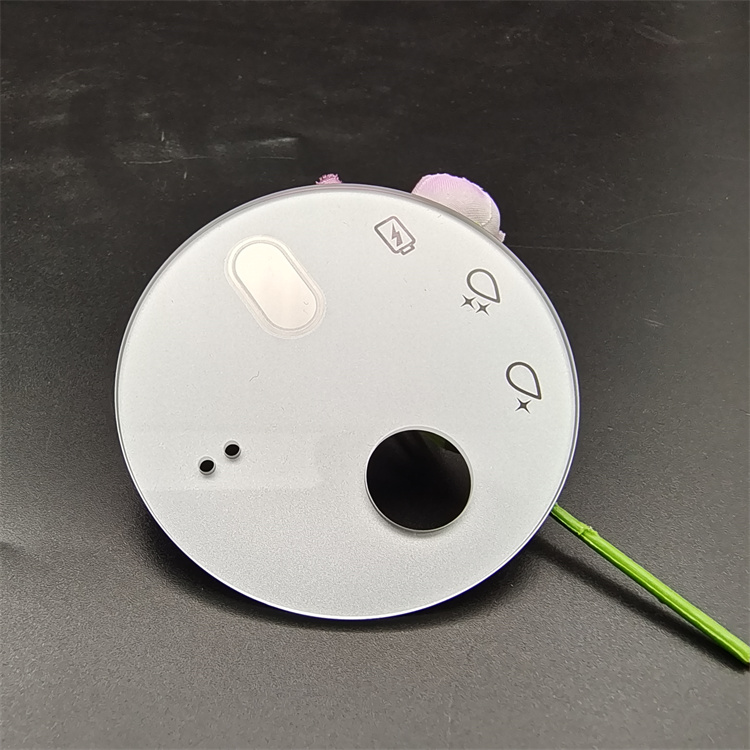
Custom Printed Round Tempered Glass for Home Appliances
Round or shaped cover glass with cut holes, printed graphics and durable tempered strength for control panels and appliance windows.
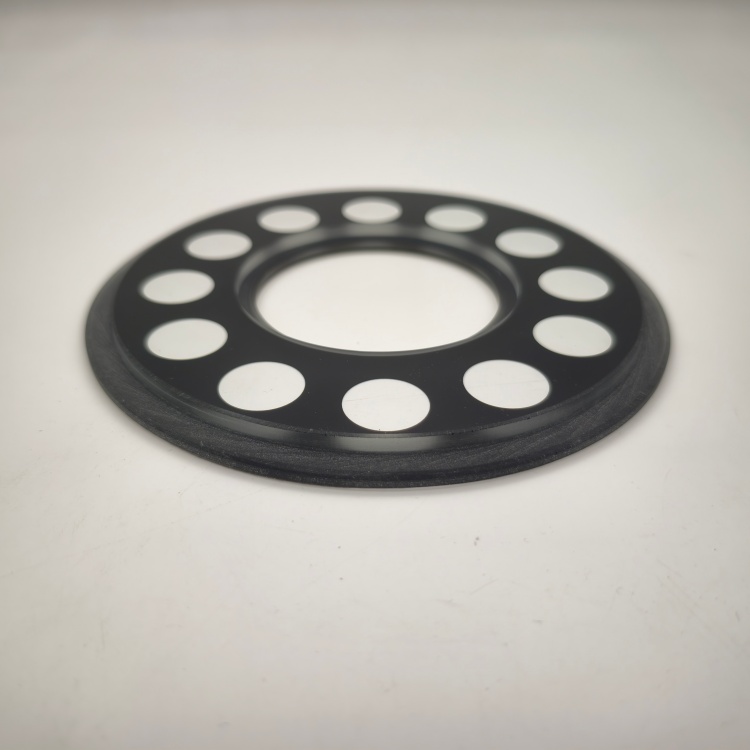
Double-Step Edge Printed Tempered Glass for LED Lighting
Inner and outer step-edge design for LED fixtures, with controlled light windows, printed borders and heat-resistant ceramic ink options.
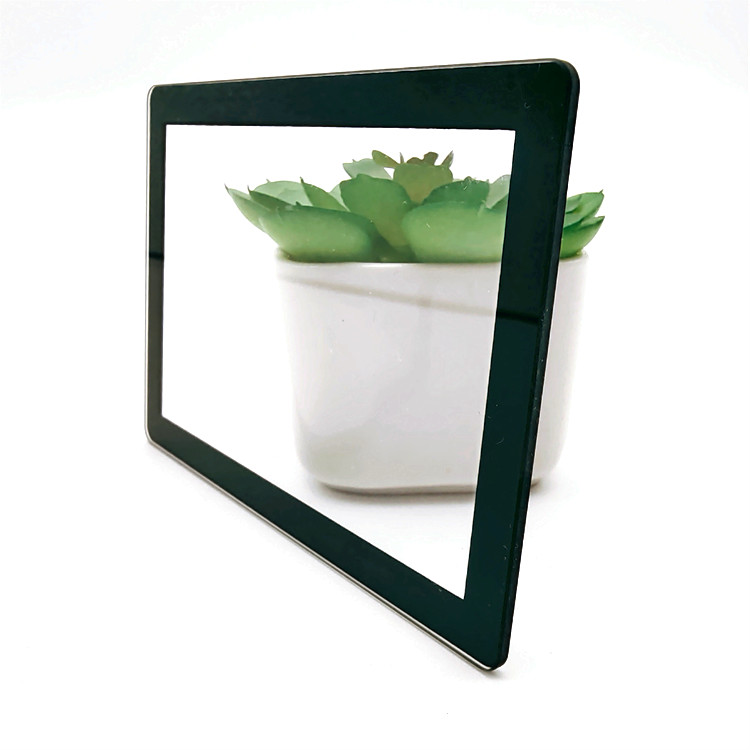
High-Strength Industrial Display Screen Tempered Glass
Impact-resistant display protection for industrial HMIs, instruments and equipment windows that require flatness, clarity and custom cut-outs.
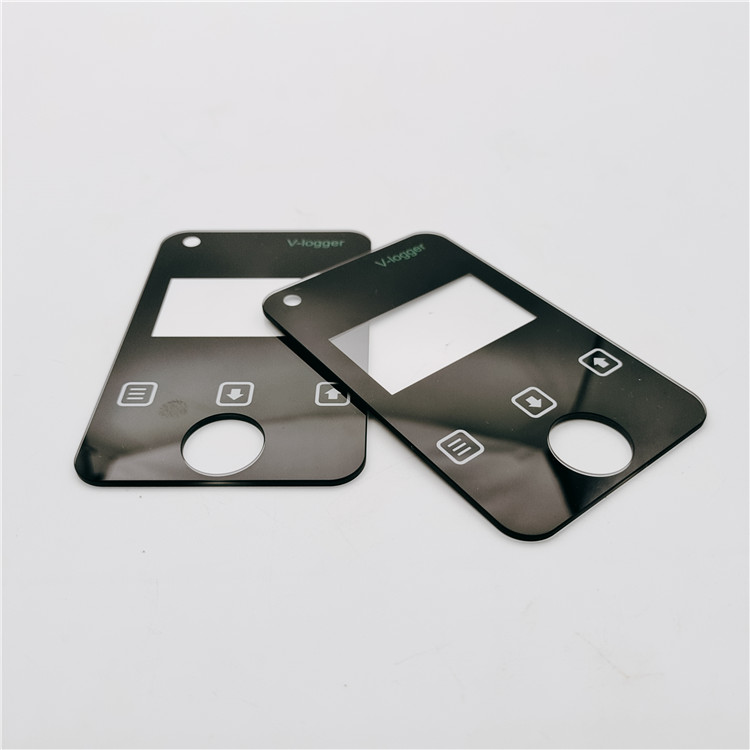
Instrument Printed Tempered Glass with Precision Holes
CNC-drilled glass for meters, control interfaces and electrical equipment, with printed display windows and dimensional tolerances agreed at drawing stage.
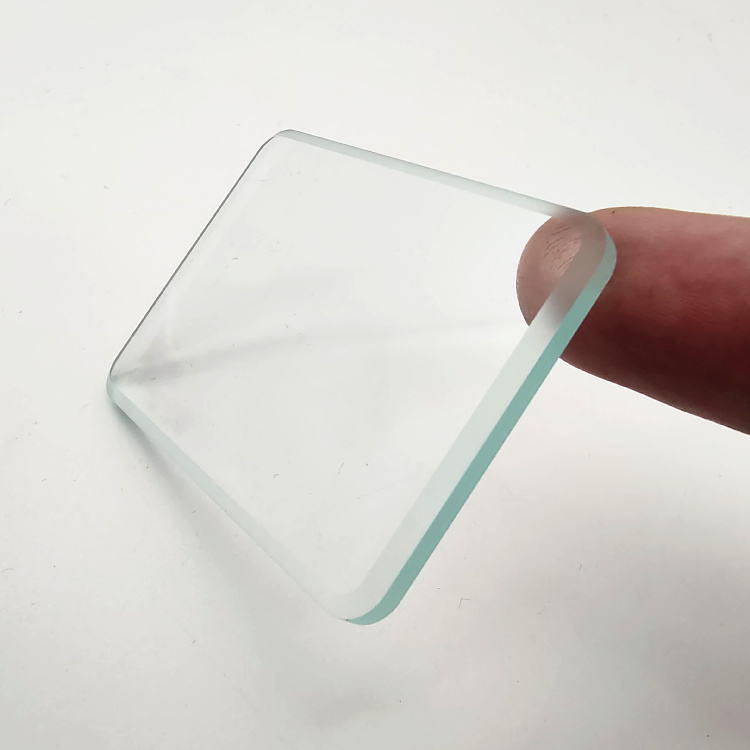
Small-Dimension Tempered Glass with Beveled Edges
Compact flat tempered glass for compact devices, sensor windows and decorative covers, with beveled edges for safe handling and clean assembly.
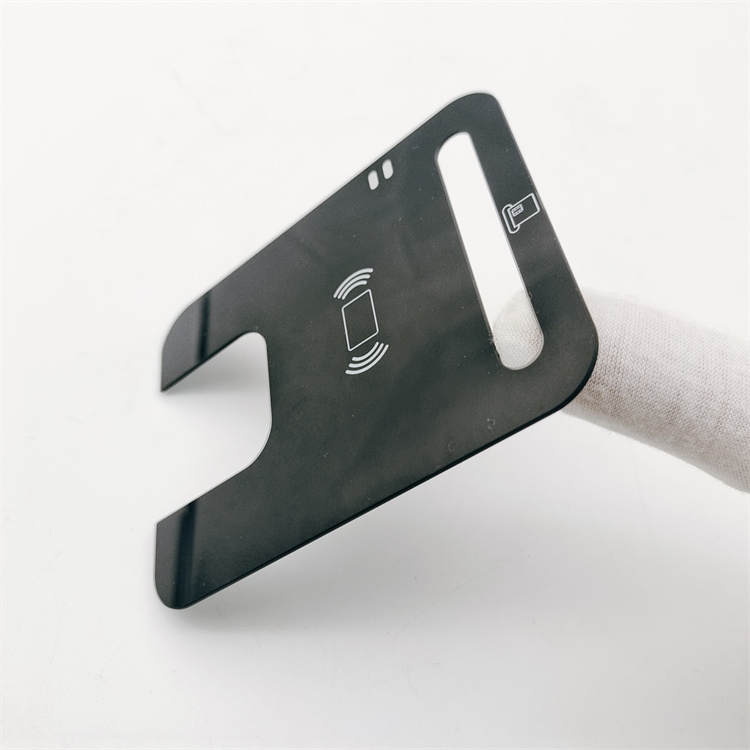
Printed Tempered Glass Cover for Card Readers
High-strength decorative cover glass with holes, windows and printed graphics for payment terminals, instruments and compact electronic devices.
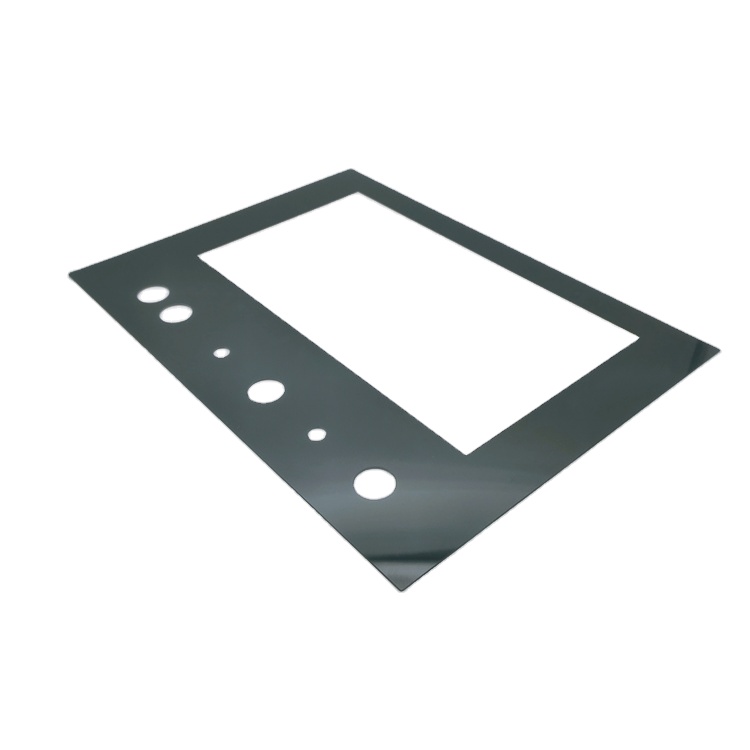
0.5–6 mm Flat Tempered Glass Screen Protector
Flat tempered cover glass with optional printed borders, cut holes and surface treatments for displays, panels and protective windows.

High-Strength Black Tempered Glass Panels
Decorative flat black glass for appliance fronts, control panels and industrial equipment, with tempered strength and custom thickness options.
Capacity and Service Metrics That Support Repeat Orders
Capacity claims are only useful when they translate into repeatable output. The figures below reflect the company’s published supplier profile and internal production planning data for custom flat tempered glass projects.
What “CE Certified” Really Means for Flat Tempered Glass
CE marking is not a universal sticker applied to every sheet of glass. The correct evidence route depends on the final product, the applicable directive and the harmonised standard. This distinction matters during supplier qualification.
When a buyer searches for CE certified flat tempered glass manufacturers and exporters, the real requirement is usually a supplier who can support the final product’s technical file with controlled process data. For construction products, flat tempered safety glass may fall under the Construction Products Regulation and harmonised standard EN 12150-1 / EN 12150-2; the supplier must be able to support initial type testing, factory production control and a Declaration of Performance. Heat-soaked tempered glass is often specified to EN 14179-1 / EN 14179-2. For appliance panels, display covers, LED lighting glass and instrument windows, the final appliance or display normally carries CE marking under directives such as the Low Voltage Directive, EMC Directive and RoHS. The glass is a component, so its dimensional, optical, mechanical and material declarations must support the final producer’s conformity assessment.
For procurement teams, this changes the supplier scorecard. A useful manufacturer is not simply one that emails a logo file. It is one that can map the drawing to the correct test plan, keep batch traceability for raw glass and inks, record tempering and coating parameters, and package the product so that the declared quality survives export transit. That is the practical meaning of CE-oriented manufacturing for custom flat glass.
Standard Mapping
Application-based review of EN 12150, EN 14179, end-product directives and customer test plans before quotation.
Declaration Pack
For applicable construction glass, Declaration of Performance, factory production control evidence and marking guidance.
Batch Traceability
Raw glass lot, cutting route, tempering cycle, ink colour, coating batch and inspection result linked to the order.
Test Coordination
Fragmentation, thermal shock, impact, transmittance, print adhesion and RoHS / REACH declarations as required.
| End Use | Typical Evidence Route | What the Buyer Should Request |
|---|---|---|
| Construction or architectural safety glass | EN 12150-2, Construction Products Regulation, factory production control | Declaration of Performance, CE marking guidance, fragmentation test, dimensional report and batch traceability. |
| Heat-soaked tempered safety glass | EN 14179-1 / EN 14179-2 where specified by project | Heat-soak batch record, fragmentation result, visual inspection criteria and identification of each treated lite. |
| Appliance, display and LED lighting glass | Final assembly under LVD, EMC, RoHS and applicable safety standards | Component dimensional and appearance report, RoHS / REACH declaration, thermal shock data and printing / coating durability records. |
| Industrial instrument and control panel glass | End-product safety standard plus customer-specific test plan | Hole and edge quality report, impact performance, surface hardness, optical transmittance and packaging drop-test evidence where relevant. |
Expertise note: this guide reflects hands-on design-for-manufacture reviews for flat tempered glass used in appliances, LED fixtures, industrial displays and touch interfaces. Project-specific CE obligations should be confirmed with your EU importer, notified body or responsible compliance engineer.
Flat Tempered Glass Buying Trends That Will Separate Strong Suppliers
Purchasing teams are moving from price-led sourcing to evidence-led sourcing. The strongest export manufacturers will be those that make compliance, traceability and engineering communication visible before mass production begins.
Documentation-First Sourcing
Buyers increasingly score suppliers on the completeness of the technical file, not just the presence of a certificate. A project-specific CE evidence pack reduces delays at customs, customer audits and design reviews.
Total Landed Cost Over Unit Price
Breakage, rework, printing yield, packing and engineering clarification all affect the true cost. A slightly higher quoted piece price can be cheaper when the supplier keeps first-pass yield and replacement risk under control.
Dual-Source and Regional Resilience
China remains a strong base for CNC shaping, printing and optical coating, while buyers add regional stock or assembly to shorten response time. The winning model is not “single country” but transparent capacity plus buffer planning.
Material Compliance and Sustainability
RoHS and REACH declarations, low-iron substrate choices, recyclable packing and energy-aware processing are becoming routine RFQ questions. Buyers need reliable declarations tied to actual material lots, not generic marketing statements.
Smaller MOQs and Faster Sampling
Most custom flat glass programmes now start with 100–500 pieces for evaluation, then scale. Suppliers that can sample quickly while documenting dimensional, printing and coating results make pilot production less risky for brand owners and contract manufacturers.
Co-Development and DFM Review
Tolerance stack-up, minimum hole spacing, edge stress and print registration should be reviewed before tooling. Early DFM feedback protects launch dates and creates engineered cost-down opportunities without lowering functional quality.
Where Flat Tempered Glass Is Going Next
The next generation of display, appliance and lighting products is asking glass to do more than cover an opening. It must protect, communicate, reduce glare, hide circuitry and remain traceable through the supply chain.
Thin and Stronger Cover Glass
Ultra-thin electronic grade glass from 0.2–1.1 mm continues to expand in touch and display applications, while 0.5–6 mm flat tempered glass dominates appliance, lighting and industrial control panels. The development target is strength without sacrificing optical clarity or flatness.
Multifunction AR / AG / AF Stacks
Anti-reflective coating improves contrast; anti-glare treatment diffuses harsh light; anti-fingerprint coating keeps touch surfaces cleaner. More projects now combine AR + AF or AG + AF on one cover glass, with optical targets agreed before sampling.
Print-as-Interface Design
Ceramic and silk-screen printing now hides circuitry, creates black borders, defines icon windows and supports brand colour matching. Fine-line registration and transparent window tolerance are becoming as important as glass strength.
Edge and Hole Engineering
Beveled, pencil, flat, stepped and matte edges are specified not only for appearance but for stress control. Hole spacing, countersink geometry and surface protection during tempering are critical when glass sits close to sensors, screws and sealing gaskets.
Heat-Soak and Safety Evidence
Where self-breakage risk matters, heat-soaked tempered glass and batch-level records are increasingly requested. The trend is towards documented safety performance rather than an unqualified “tempered glass” claim on the drawing.
Smart Inspection and Traceability
As volumes rise, buyers expect dimensional and appearance checks to be recorded, not remembered. Identification of glass lot, print batch and coating cycle supports root-cause analysis and faster corrective action when a field issue appears.
| Surface Option | Problem Solved | Typical Fit | Question to Ask the Supplier |
|---|---|---|---|
| Ultra clear / low-iron glass | Reduces green tint and supports true colour reproduction | Display covers, LED lamps, premium appliance panels | What substrate is used, and how is edge colour controlled after tempering? |
| AR anti-reflective coating | Lowers surface reflection and increases light transmission | Medical monitors, industrial displays, camera windows | Is the coating single-sided or double-sided, and what reflectivity target will be tested? |
| AG anti-glare treatment | Diffuses reflected light for readability under strong ambient light | Outdoor kiosks, HMI panels, digital signage | What haze and gloss range is recommended for the viewing distance and screen resolution? |
| AF anti-fingerprint coating | Repels oil and sweat and improves touch feel | Touch panels, smart switches, POS terminals | Which abrasion or rubbing test will be used, and is AF applied over AR or AG? |
| Silk-screen or ceramic print | Hides circuitry, adds icons, borders and display windows | Switch plates, appliance controls, instrument panels | Are Pantone colours, window dimensions and ink durability requirements defined on the drawing? |



Why Overseas Buyers Shortlist Dongguan Jaswe Glass
Dongguan Jaswe Glass Co., Ltd. is a custom glass processing company located in Shipai Town, Dongguan, Guangdong, China. Its stated product scope covers tempered glass, display glass, touch screen glass, silk-screen printed glass, switch glass, AR / AG / AF coated glass, electrical equipment glass and LED lighting glass. For international buyers, the practical advantage is not one machine or one product photo. It is the number of critical process steps kept under one roof: cutting, CNC shaping, edge polishing, hole drilling, tempering, silk-screen and ceramic printing, AG processing, and AR / AF coating.
That matters because custom flat tempered glass failures rarely come from a single dramatic defect. They come from small hand-off gaps: a printed window that shifts after tempering, a coated surface that fails adhesion after cleaning, a stepped edge that creates stress concentration, or export packing that allows edge chips during transit. Keeping process knowledge together supports faster root-cause review and more stable repeat production.
“Scientific management, careful manufacture, high quality service, striving for excellence.”
With more than 80 workers and monthly output exceeding 200,000 pieces of processed glass, the company supports both prototype evaluation and repeat production. Its third-party trade profile also records a 96.61% response rate and a 26% buyer reorder rate, which are useful signals for buyers comparing communication reliability across export suppliers.
Get CatalogFrom Drawing to Export Packing: A Six-Step Quality Route
A predictable programme is built before the first sheet is cut. The workflow below shows where engineering, production and documentation should connect for custom flat tempered glass.
Drawing and Application Review
Review DXF, DWG or PDF drawings, end-use environment, thickness, outline, holes, edge type, printing, coating and estimated annual volume.
Standard and DFM Mapping
Identify the applicable CE evidence route, test requirements and manufacturing risks such as minimum hole spacing, warp or print registration tolerance.
Sample and Appearance Approval
Produce physical samples for fit, colour, gloss, haze, transmittance and edge appearance. Record the approved standard before mass production.
Process Control in Production
Control cutting, CNC shaping, edging, drilling, tempering, printing and coating parameters with in-process checks at each station.
Inspection and Documentation Pack
Final dimensional and appearance inspection, batch traceability, test coordination and the requested technical documents for the buyer’s project file.
Export Packing and Shipment
Interleaved surfaces, edge protection, moisture barrier where required and export cartons or crates designed for the chosen freight method.
Common Questions About CE Certified Flat Tempered Glass
These are the questions overseas buyers ask most often during supplier qualification for custom flat tempered glass.
Are you a CE certified flat tempered glass manufacturer?
What thickness range can you process?
What is the minimum order quantity for custom glass?
Can you combine printing with AR, AG or AF coating?
Which test reports can buyers request?
How is quality controlled during production?
How should custom flat glass be packed for export?
What information should be included in an RFQ?
Request a CE Documentation and DFM Review for Your Flat Glass Project
Share your drawing, thickness, edge profile, printing colours, coating requirement, application and estimated annual volume. The engineering team will review manufacturability, propose the process route and identify the documents needed for your compliance file. Email: info@jasweglass.com