China Best Industrial Glass Factory & Exporters
Custom tempered, printed and AR / AG / AF coated glass for displays, touch panels, LED lighting, smart switches and instrument windows — engineered from drawing to export carton.
8 Industrial Glass Products to Shortlist First
The search phrase “China best industrial glass factory & exporters” is a buyer question, not a certificate. A better evaluation path is to match the part to a process route: thickness, outline, edge, printing, coating, tempering and export packing. The eight products below are strong qualifiers because each one tests a different capability — precision holes, printed display windows, small beveled parts, ultra-thin protection, OEM/ODM shapes, frosted lighting glass, silk-screen appliance panels and double-sided AR coating. Use them as benchmark parts when requesting samples.

Custom Printed Tempered Glass Panel High Strength Decorative Cover with Hole for Card Reader Instrument
Best-fit use: card readers, POS instruments and payment terminals that need a decorated cover with a clean functional hole. The tempered panel combines print durability, edge strength and a crisp aperture for sensors or connectors.
View specification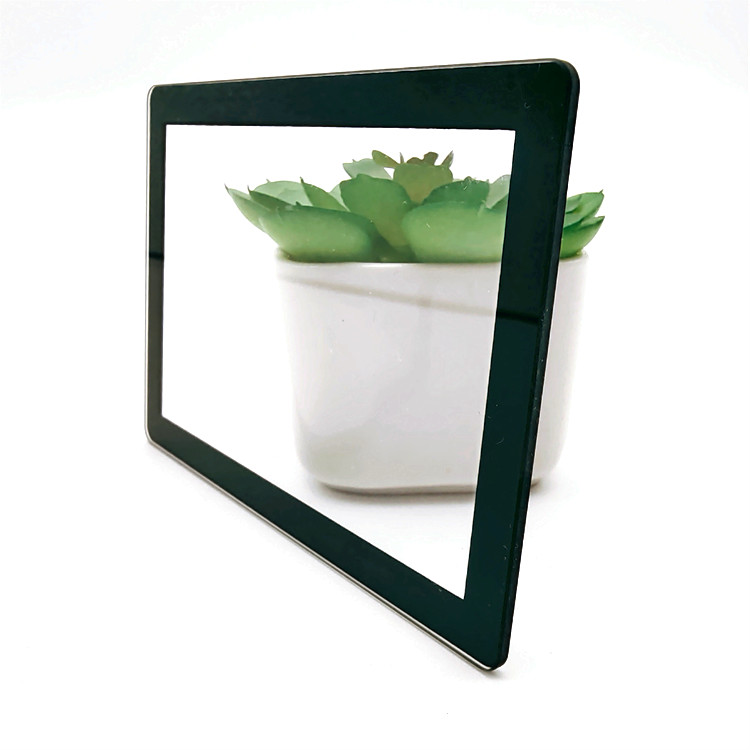
High Quality 0.5mm-6mm Solid Industrial Display Screen Tempered Glass with Printed Design High Strength & Bulletproof Protection
Best-fit use: industrial HMIs, medical monitors and equipment display windows from 0.5–6 mm. Printed borders hide gaskets and circuitry while the tempered substrate improves impact resistance and breakage behavior.
View specification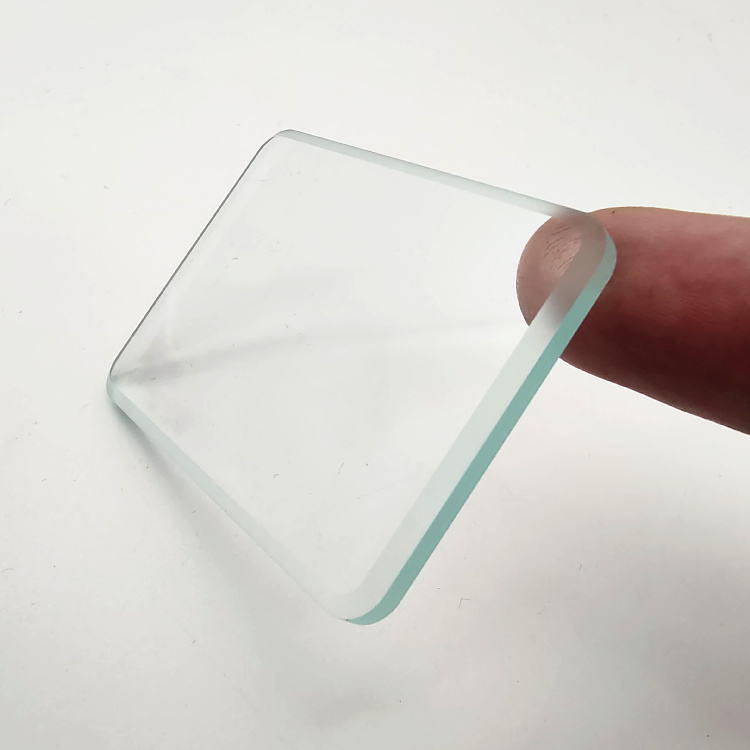
Custom Small Dimensions Tempered Beveled Edge Glass for Sale
Best-fit use: compact instruments, premium switches and small appliance windows. Beveled edges improve handling and perceived quality; small-format tempering demands tight control of edge chips, flatness and hole-to-edge distance.
View specification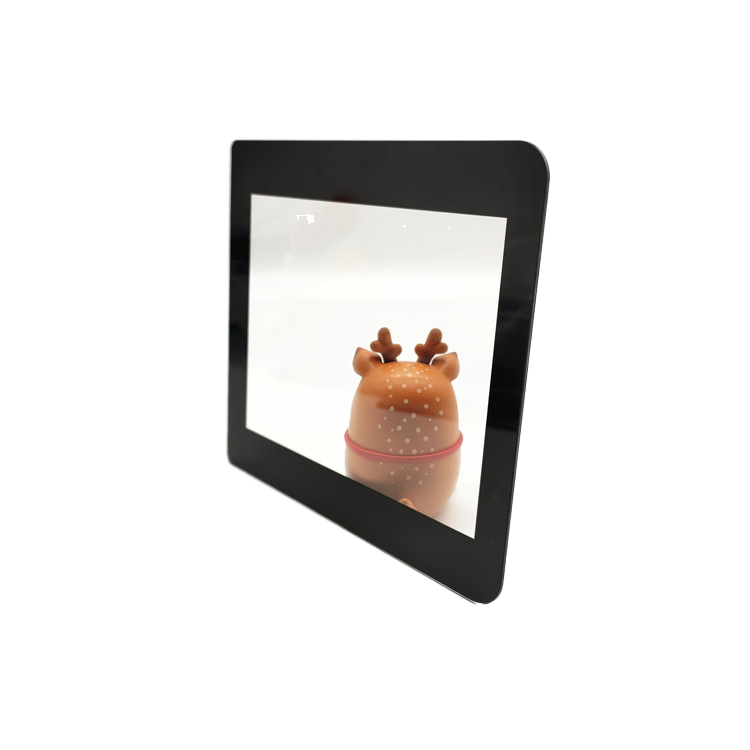
Industrial Use Electronic Glass 1mm/2mm/3mm/4mm Tempered Glass Display Screen Window Protection Cover
Best-fit use: 1/2/3/4 mm electronic display windows that need a protective cover rather than a touch sensor. Printing can create a black mask, icon window or gasket zone, while custom outline supports flush mounting.
View specification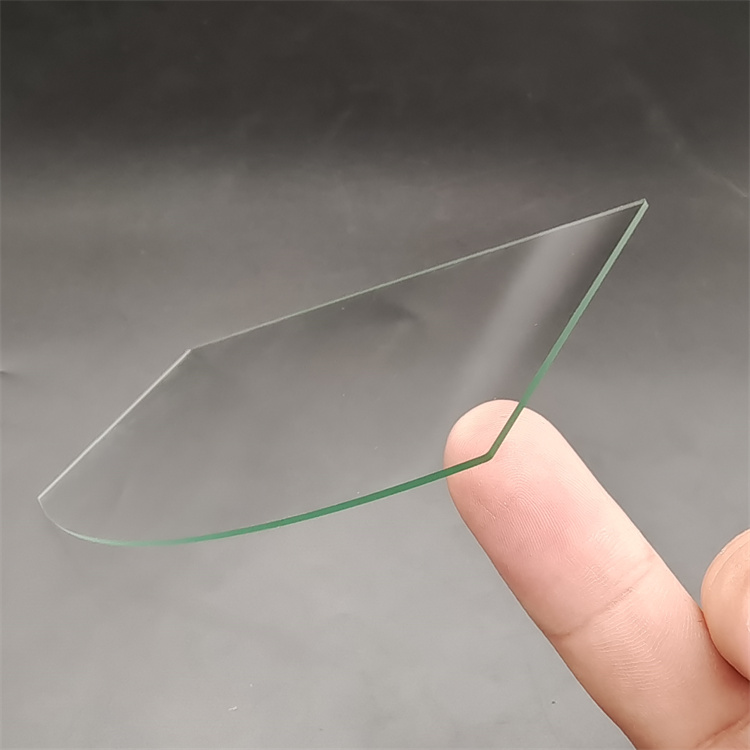
Any Size Custom 0.5/0.7/1/1.5/2/3mm Tempered Glass Screen Protector, Round Rectangle Triangle Customized Tempered Glass OEM ODM
Best-fit use: new touch products, prototype batches and OEM/ODM projects requiring round, rectangular or triangular shapes. A flexible tooling route helps buyers test fit and appearance before committing to high-volume tooling.
View specification
Customized Industrial Lighting Solid Flat Ultra Clear Frosted Tempered Glass with Beveled Step Edge
Best-fit use: LED downlights, wall washers and linear fixtures where diffusion must be uniform and edges must be safe. Ultra-clear frosted glass with a beveled or stepped edge balances transmission, softness and premium appearance.
View specification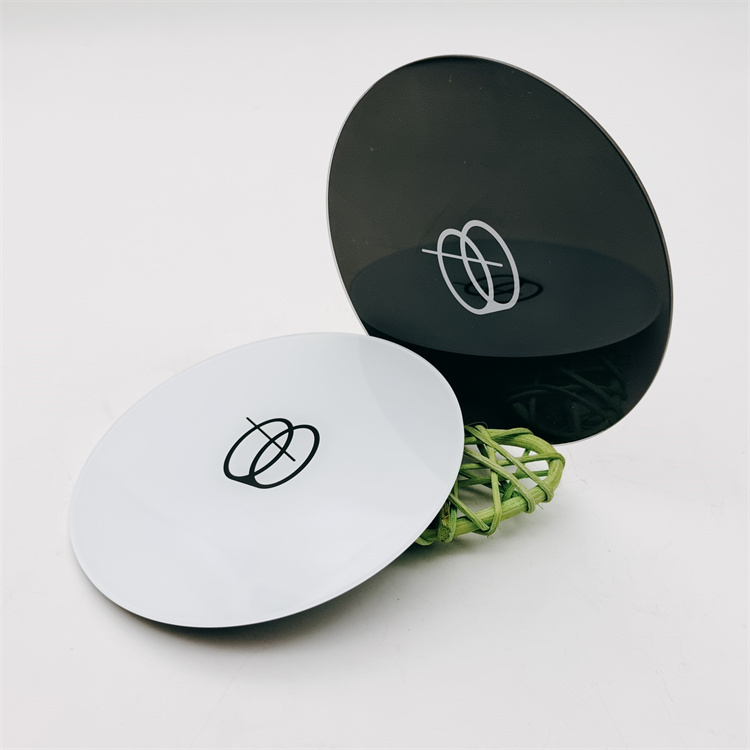
Black White Silk Screen Printing Toughened Glass Round Tempered Glass for Electric Appliance
Best-fit use: wall switches, appliance panels and electrical control surfaces. Black or white silk-screen printing can define icons, windows and hidden wiring areas; round tempering keeps the part durable in daily use.
View specification
Both Sides Anti Reflective AR Coating 1mm 2mm 3mm 4mm Ultra Clear Tempered Glass
Best-fit use: medical readouts, high-contrast HMIs and display windows in bright rooms. Double-sided AR coating lowers surface reflection; ultra-clear tempered glass protects the display without introducing heavy tint.
View specificationReliability at a Glance
Industrial glass quality is not only a surface finish. It is the probability that the second order equals the first, that a coating survives cleaning, that a printed color matches the approved sample, and that a tempered part arrives without edge damage. These operating figures are a useful starting point for supplier comparison.
Capacity to move from sample to repeat order without changing the process route.
Cutting, CNC, edging, drilling, tempering, printing and coating support.
Many operators bring eight or more years of hands-on glass processing experience.
Recorded by a third-party trade platform, not simply stated by the factory.
Fast responses matter when a buyer is comparing manufacturability options.
Repeat orders are one of the clearest signals of production consistency.
What Global Buyers Will Reward Next
Procurement teams are moving away from one-dimensional price comparison. The next buying cycle is likely to reward factories that reduce total risk: optical consistency after coating, stable color after ceramic printing, safe edges after tempering, and packing that survives multi-modal freight. The following four signals are already visible in custom glass RFQs.
Total landed cost beats piece price
Freight, breakage, replacement, rework and line stoppage can erase a low unit price. A supplier that controls cutting, tempering, printing and coating under one roof shortens recovery loops and makes delivery promises easier to defend.
Dual qualification, not wholesale replacement
Many OEMs are adding a second region while keeping a Chinese glass partner for technical depth. Verified capacity, sample speed, documented QC and honest engineering communication decide who remains on the approved supplier list.
Optical performance becomes mainstream
AR, AG and AF are moving from premium devices into industrial HMIs, medical readouts, POS terminals and smart switches. Buyers should specify reflection, haze, transmission, adhesion and abrasion — not just the phrase “AR glass.”
Documentation is a procurement feature
Drawings, batch records, inspection reports, material declarations and packing photos reduce audit friction. A factory that answers technical questions in hours is easier to integrate into a global supply chain than one that treats documentation as paperwork.
Suggested RFQ scorecard for custom industrial glass
Use a consistent weighting when comparing quotations. Adjust by application: an outdoor touch panel should weight coating durability higher, while a decorative appliance panel should weight print color and edge appearance higher.
Where Industrial Glass Design Is Moving
Product development in industrial glass is driven by thinner electronics, brighter displays, tougher outdoor environments and lower assembly cost. The strongest factories will be those that hold optical and mechanical performance together after drilling, tempering, printing and coating.
Thinner glass, stricter flatness, stronger edges
Electronic covers now run from 0.2–0.7 mm, while display windows commonly use 0.5–6 mm and heavier tempered panels for harsh equipment. The winning factory is not simply the one that can cut thin glass, but the one that controls edge chipping, flatness and tempering stress after drilling and printing.
Integrated AR / AG / AF stacks
Buyers increasingly request combined functions: low reflection for contrast, anti-glare for outdoor readability, and anti-fingerprint for touch. The specification should define which surface receives which layer, because coating order changes durability, transmittance and cleaning performance after lamination.
Printed glass becomes a structural component
Ceramic ink, hidden windows, step edges, countersinks and adhesive backing allow one glass part to replace several plastic or metal pieces. This reduces assembly steps but raises the importance of drawing review, color control, cavity fit and packaging protection.
Why Dongguan Jaswe Glass Fits a Verified Supplier Strategy
Jaswe Glass is a processing factory in Dongguan, Guangdong — an electronics manufacturing cluster with deep supplier support. Its advantage is not simply “being in China”; it is keeping the critical process steps under one quality system and communicating engineering detail quickly across time zones.
One-roof process control
Cutting, CNC shaping, edge polishing, hole drilling, tempering, silk-screen and ceramic printing, AG processing and AR / AF coating are handled in-house. Fewer handoffs mean fewer quality gaps.
Capacity for repeat orders
26 glass processing machines and more than 80 workers support monthly output above 200,000 pieces. This helps buyers move from a pilot sample to a repeatable batch.
Responsive engineering
An average response within three hours and a recorded 96.61% response rate shorten the sample-review loop. Manufacturing feasibility is checked before quotation assumptions become delays.
Verified export record
Six years of on-site verified supplier status, markets in America, Europe and Asia, and a 26% buyer reorder rate provide a practical baseline for due diligence.

Factory capability should be reviewed as a system: cutting, tempering, printing, coating, inspection and packing.

Dongguan Jaswe Glass processes custom tempered, ultra-clear, printed and AR / AG / AF coated glass for displays, touch panels, lighting and electrical equipment.
Dongguan Jaswe Glass Co., Ltd. reports a 51–100 employee team, annual revenue in the US$2.5M–US$5M range, and main markets across America, Europe and Asia. Its stated production base includes a tempering furnace, edge polishing equipment, silk-screen printers and automatic cutting lines. The operating principle — “Scientific management, careful manufacture, high quality service, striving for excellence” — is most visible in samples: edge quality, print alignment, coating appearance and packing protection should all be checked before mass production. For buyers searching for China best industrial glass factory & exporters, the practical test is not a slogan but a documented route from drawing review to export carton.
AR, AG, AF or Ultra Clear? A Buyer’s Matrix
The most common specification error is naming a coating without defining the performance target. Use this matrix in design reviews, then confirm final values on samples because thickness, substrate and coating stack interact.
| Glass type | What it solves | Typical applications | Engineering note |
|---|---|---|---|
| Ultra clear / low-iron | Reduces the green tint of standard float glass for truer color | Display covers, LED lamps, premium appliance panels | Pair with white or light printing to avoid a greenish edge tone; check edge color on samples. |
| AR anti-reflective | Lowers surface reflection and raises contrast and transmission | Medical monitors, industrial HMIs, camera covers, display windows | Specify one-sided or double-sided coating; verify performance after lamination or bonding. |
| AG anti-glare | Diffuses reflected light so screens remain readable under strong light | Outdoor kiosks, vehicle displays, industrial equipment, digital signage | Select haze level by viewing distance and resolution; over-diffusion can soften fine text. |
| AF anti-fingerprint | Repels oil and sweat to keep touch surfaces cleaner | Capacitive touch panels, smart switches, POS terminals | Apply as a final surface layer over AR or AG; define abrasion and chemical cleaning requirements. |
| Silk-screen / ceramic printed | Hides circuitry, defines windows and adds durable icons or logos | Switch plates, appliance controls, instrument panels | Send Pantone references and transparent-window dimensions; verify ink cure and color after tempering. |
Final optical and mechanical values depend on thickness, substrate, printing, coating stack and housing design. Sample testing is recommended before tooling and mass production.
How to Qualify a China Industrial Glass Factory
Before placing a volume order, test the supplier’s process thinking, not only its price. A factory that can identify fragile hole spacing, print color risk or a coating/edge conflict before sampling will usually produce fewer surprises after tooling.
Run a drawing review
Confirm thickness, outline, edge finish, hole spacing, print colors, coating side and assembly interface before a quotation is frozen.
Test samples in final viewing conditions
Check fit, flatness, color, transmittance, reflection and cosmetic appearance under the lighting and display stack used by end users.
Audit the process handoffs
Ask which steps are in-house. Tempering after printing, coating after cleaning and packing after inspection are critical control points.
Require inspection data
Define dimensional, cosmetic, adhesion, abrasion and packing checks. Photos and batch records make approval repeatable.
Plan dual qualification
Use a primary and backup supplier, or at least a documented backup route, to protect production during peak seasons or logistics disruption.
Questions Overseas Buyers Ask Most
How can I judge whether a factory is one of China’s best industrial glass exporters?
Do not treat “best” as a certificate. Score the factory on application fit: in-house process coverage, thickness range, coating capability, printing color control, sample speed, inspection records, export packing and verified response behavior. Ask for a comparable part, a drawing review and a shipping checklist. A supplier that explains trade-offs — such as AR transmission versus lamination loss — is usually a safer technical partner than one that quotes perfect numbers immediately.
What thicknesses and sizes can be customized?
The practical range in this supplier’s data covers ultra-thin electronic glass from 0.2 mm to 19 mm flat tempered glass. Display and touch covers are most often specified at 0.5, 0.7, 1, 2, 3 or 4 mm. Size limits depend on the process route: printing and coating have different handling windows, and holes, notches and narrow borders increase risk. Send a DXF, DWG or PDF with functional areas marked.
What is a realistic MOQ and sampling route?
Most custom tempered, printed or coated parts start around 100–500 pieces, depending on size, print colors, coating and yield. Standard clear pieces can sometimes be sampled in smaller quantities. For a new design, approve appearance and fit on samples first, then freeze the drawing, glass source, ink code, coating specification and packing method before volume production. This prevents the common “sample good, batch different” problem.
What is the difference between AR, AG and AF coating?
AR (anti-reflective) coating reduces surface reflection to increase transmission and contrast. AG (anti-glare) diffuses reflected light so the screen remains readable under strong ambient light. AF (anti-fingerprint) is an oleophobic top layer that resists smudges and makes touch surfaces easier to clean. They can be combined, but the stack order matters. Specify target reflection, haze, transmission, adhesion and abrasion performance, then verify on the final thickness.
Can tempering, printing and coating be combined on one part?
Yes, but process order must be engineered. Holes and edges are usually formed before tempering; printed areas may need ceramic ink and high-temperature curing; coatings may require clean surfaces and may be applied on one or both sides. Some coating steps should follow printing, while others can conflict with ink cure. A manufacturability review should confirm the sequence before samples are made.
How should I prepare a drawing for a fast quotation?
Send a dimensioned DXF, DWG or PDF marked with thickness, overall size, corner radii, hole positions, edge finish, print colors (Pantone where possible), transparent windows, coating type, application environment and estimated annual quantity. Include the surface that faces the user and the surface that touches the display or housing. If a protective film or adhesive backing is needed, state it. Clear inputs usually produce a faster process route and fewer quotation revisions.
Does “bulletproof protection” in a product title mean the glass is bulletproof?
Not automatically. In industrial glass catalogs, terms such as “bulletproof protection” can describe impact-resistant construction, but true bullet resistance depends on glass type, thickness, lamination, frame design and test standard. For safety-critical applications, request the exact construction, test reports and intended standard. For display windows, specify impact, drop or vandal-resistance requirements in measurable terms rather than relying on a marketing phrase.
What packing and documentation should I require before shipment?
Ask for interleaved or separated glass, edge protection, moisture control, reinforced cartons or crates, and packing photos before dispatch. Documentation should match the approved sample: drawing revision, glass thickness, coating side, ink color, inspection result and quantity. For regulated markets, request RoHS/REACH declarations where applicable. Good packing is part of quality because edge chips or coating scratches discovered after ocean freight become total loss.
Send Your Drawing. Get a Manufacturing Route Review.
Have a drawing or a target specification? Share the thickness, application, edge, printing, coating and annual volume. The engineering team will review manufacturability and propose a practical process route before a quotation is finalized — no obligation, just a clearer path from concept to a production-ready glass part.
Typical inputs: DXF / DWG / PDF drawing, thickness, edge type, print colors, coating requirement, application and estimated annual quantity.