8 LCD Glass Products Recommended for 2025–2026 Sourcing
These eight formats cover the most common purchase intents: ultra-thin bonding, small precision covers, printed appliance glass, industrial display windows, adhesive-backed panels, step-edge mounting and fully custom drilled covers.
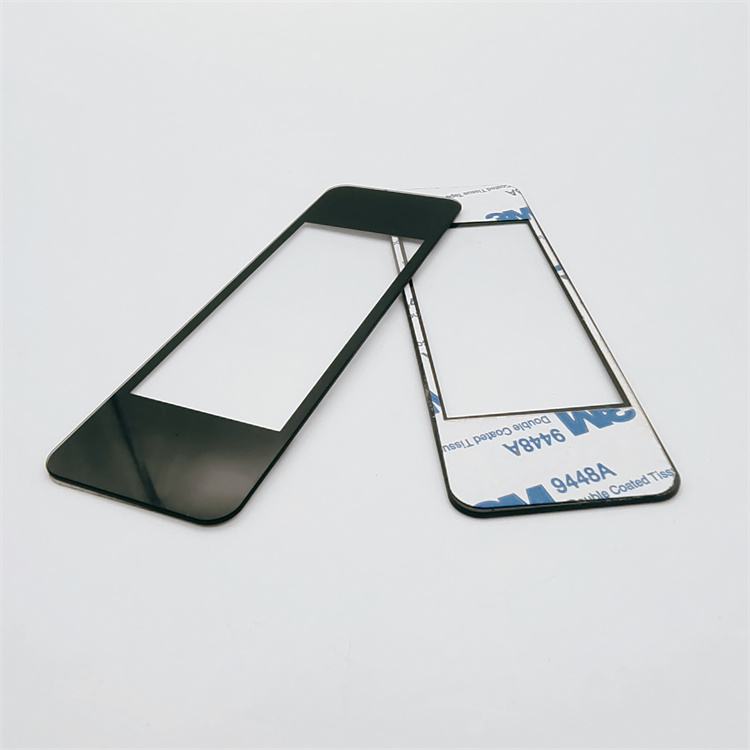 Ready-to-bond
Ultra Thin 1mm Tempered Glass with 3M Tape for Screen Cover Glass
A 1.0 mm tempered cover glass with pre-applied 3M adhesive for compact LCD modules, instrumentation and enclosed HMI. Pre-bonding reduces assembly steps, but buyers should still validate adhesive cure, surface energy and cosmetic acceptance criteria before scaling.
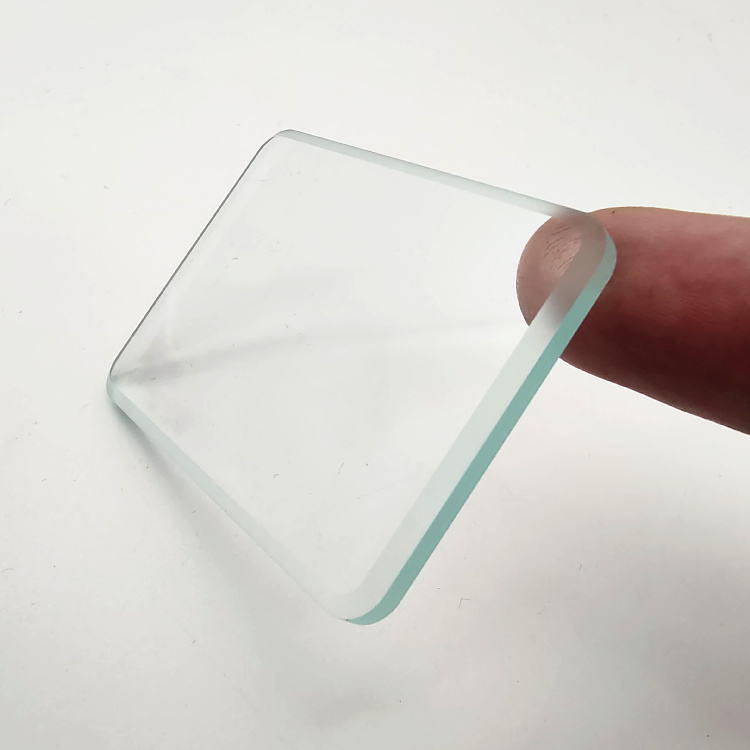 Precision fit
Custom Small Dimensions Tempered Beveled Edge Glass for Sale
Small-format glass with a beveled edge for instrument windows, medical devices and premium control panels. The bevel influences edge strength, perceived finish and fit into a machined housing; a drawing review should confirm corner radius, tolerance stack and edge polish.
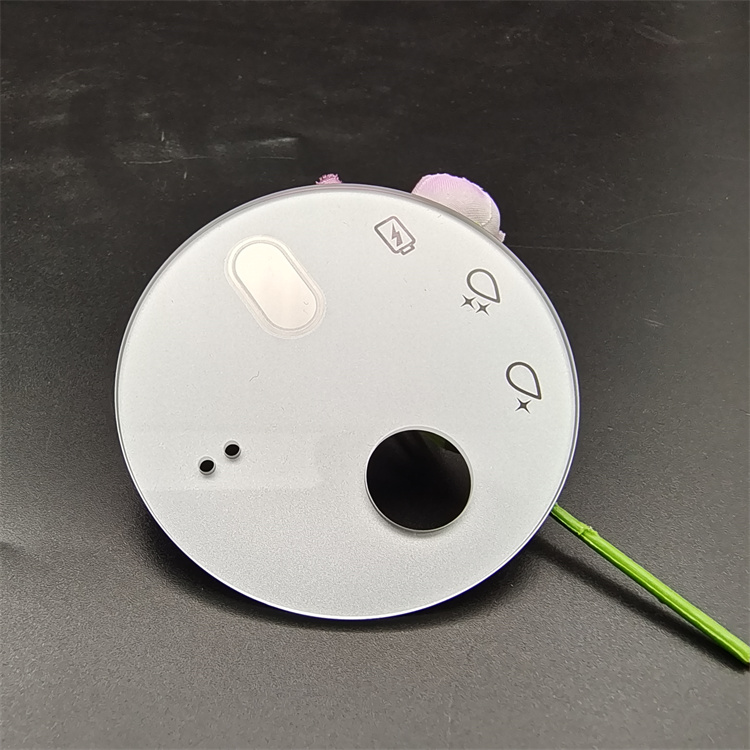 Appliance HMI
Customized 0.5mm 0.7mm 1mm 2mm 3mm 4mm 5mm 6mm Cut Holes Printed Round Tempered Glass Panels for Home Appliance
Printed round tempered glass for home-appliance HMI. Thin 0.5–6 mm options and cut holes allow icons, windows, sensors and fasteners to coexist on one part. Ceramic ink durability, color tolerance and window alignment are key approval points.
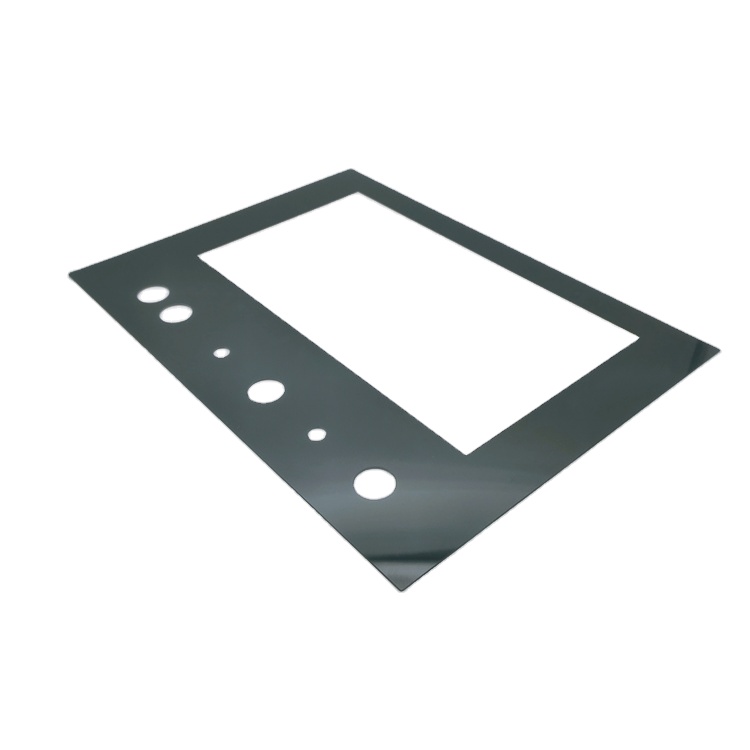 Printed cover
Customized Printed 0.5-6mm Thickness Flat Tempered Glass Screen Protector with Cut Holes
A flat printed protector with cut holes for LCD and TFT windows. It is useful when the glass must combine a decorative border, a clear viewing area and mechanical openings. Buyers should specify printing side, ink opacity and whether the window edge is visible in the final assembly.
 Industrial grade
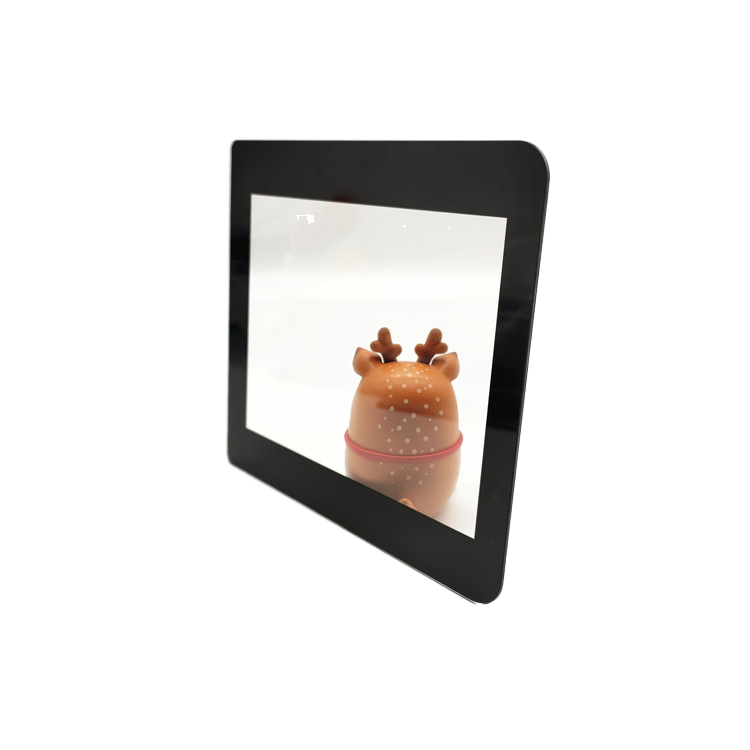
Industrial Use Electronic Glass 1mm/2mm/3mm/4mm Tempered Glass Display Screen Window Protection Cover
Industrial electronic glass for display windows exposed to shop-floor light, cleaning and vibration. Thickness options from 1–4 mm allow engineering teams to balance impact resistance, weight and enclosure depth; AG treatment can improve readability under glare.
 0.5–1 mm
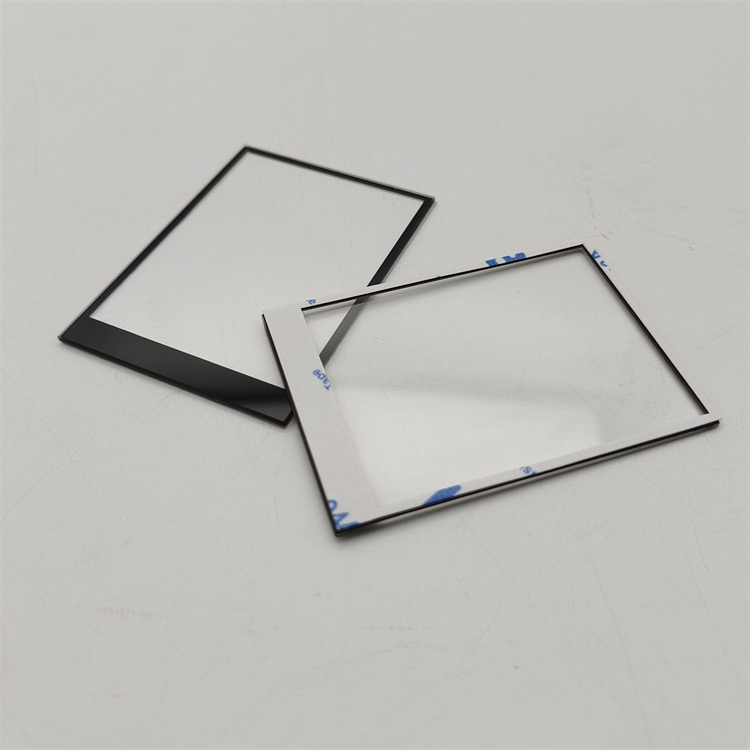
Small Size Ultra Thin 0.5mm 0.7mm 1mm Tempered Glass Panel With Adhesive Tape for Screen Protection
Ultra-thin 0.5, 0.7 and 1 mm adhesive-backed glass for small displays and sensor windows. The low stack height supports compact product design, while the adhesive format shortens assembly. Optical inspection under oblique light is recommended for cosmetic surfaces.
 Step edge
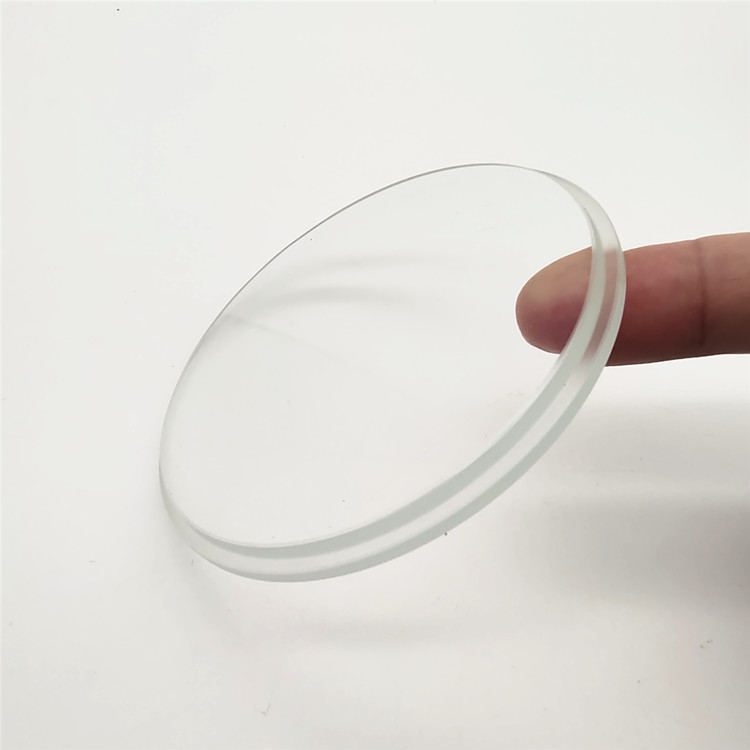
Factory Price 2mm 3mm 4mm 5mm 6mm 8mm 10mm Tempered Step Edge Glass
Step-edge tempered glass for flush mounting, gasket seating and clean product transitions. Available from 2–10 mm, the profile can conceal adhesive or protect a gasket. Each step dimension should be tied to the housing, not guessed from a photo.
 Custom geometry
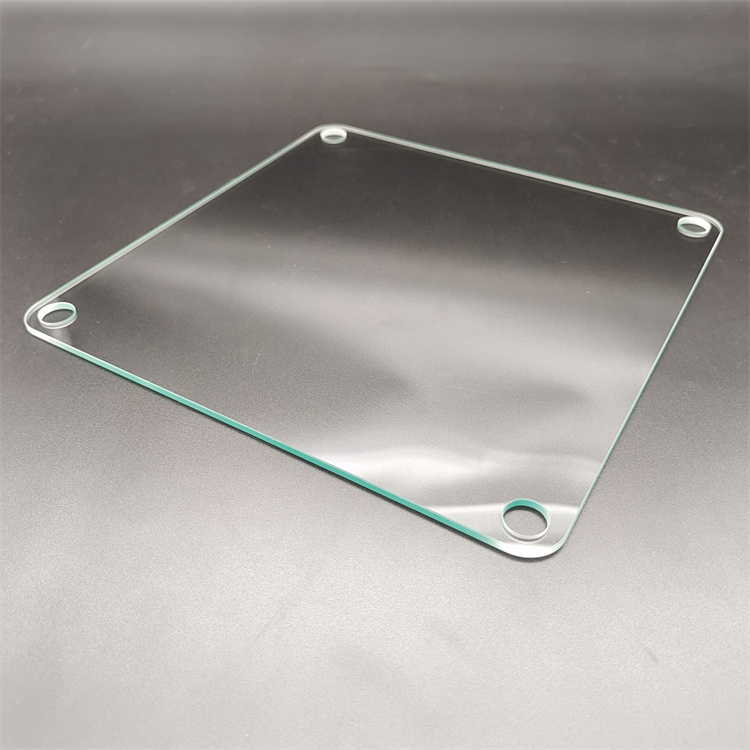
Factory Sale Customized Shape Decorative Glass Cover Hole Drilling Glass Panel Soda-lime Tempered Glass Sheet With Holes
Custom-shape soda-lime tempered glass with drilled holes for controls, sensors and fasteners. It is a practical option when the cover is both aesthetic and mechanical. Hole diameter, edge distance and the relationship between printing and drilling require early DFM review.
What “Best” Should Mean When You Compare China LCD Glass Factories
Buyers searching for a China LCD glass factory and exporter usually need more than a price per piece. They need a supplier that can interpret a drawing, control optical and mechanical variables, protect fragile parts during export and repeat the approved sample across production lots. This guide focuses on total qualification cost, not only unit price.
Optical clarity is a system
A low-iron substrate alone does not guarantee a clear LCD image. Reflection, haze, printing opacity, adhesive bonding and the display brightness budget all interact. For high-ambient-light products, specify AR or AG by end-use condition, then validate with a sample under the actual viewing angle.
Mechanical reliability starts in DFM
Breakage rarely begins at the tempering furnace alone. It often starts with an edge profile, hole spacing or tolerance stack that the housing cannot absorb. Experienced suppliers review edge distance, step geometry, support points and assembly force before sampling or mass production.
Supply-chain fit decides total cost
A low piece price can disappear under expedited freight, replacement shipments, inconsistent printing color or a production-line stop. Compare quotation completeness: substrate grade, edge type, printing layers, coating sides, inspection standard, packing method, sample lead time and commercial terms.
Product Recommendations by LCD Glass Application
Use these starting points to narrow the specification before requesting samples. Final glass thickness, coating and printing should always be confirmed against the enclosure, display brightness, touch module and operating environment.
Touch Panels & Interactive Displays
Use ultra-clear 0.5–2 mm glass with AR and/or AF when contrast, touch feel and fingerprint resistance matter. Confirm flatness, coating durability and surface cosmetic limits under oblique light.
Industrial HMI & Equipment Windows
Choose 2–4 mm tempered glass with AG where overhead lighting causes glare. Review gasket compression, step edge, screw holes and impact requirements before selecting thickness.
Home Appliance Control Glass
Printed 0.5–3 mm panels unify decoration and function. Approve ceramic ink color, light-window diffusion, hole position and cleaning resistance against the appliance assembly.
Smart Switches & Wall Plates
Tempered printed glass with icons, touch windows and hidden borders supports premium smart-home design. Pay attention to print side, anti-fingerprint topcoat and tolerance to the switch module.
LED Lighting Covers
Clear, frosted or printed glass covers influence light distribution, heat exposure and edge appearance. Match coating and texture to the fixture, not only to the lamp photograph.
Outdoor Kiosks & Digital Signage
Outdoor readability depends on haze level, coating stack, glass thickness and touch technology. Ask for viewing tests at realistic brightness and angle before freezing the specification.
Future Procurement Trends for LCD Glass Buyers
The next sourcing cycle will reward clarity. Buyers are moving away from photo-based price comparison toward documented process capability, sample standards and landed-cost visibility.
Dual sourcing with process visibility
OEMs increasingly split volume between a China factory and a regional finisher or backup source. The RFQ therefore asks for process route, critical-control points and change-notification commitments, not only price.
Specification-based RFQs
Buyers will send drawings, application photos, acceptance limits and annual demand. Suppliers that translate those inputs into manufacturable glass gain a shorter path to approval.
Faster sample loops, stricter validation
Rapid samples are becoming a competitive requirement, but validation remains strict. Expect factories to combine DFM feedback, first-article reports and photo or video inspection before shipping samples.
Auditable optical and mechanical data
Transmittance, haze, gloss, edge quality and dimensional data are moving into supplier scorecards. A glass exporter without documented inspection criteria will struggle in regulated supply chains.
Packaging designed with freight in mind
Edge protection, interleaving, moisture control and carton strength affect landed cost. More buyers ask for packaging validation and carton drop-test records, especially for thin or printed glass.
Factory-direct plus buffer inventory
Longer freight cycles encourage a hybrid model: factory-direct production from China plus carefully sized regional safety stock. This reduces stockouts without giving up custom engineering support.
Where LCD Cover Glass Technology Is Heading
Thinner stacks, smarter coatings and printed interfaces are changing what a glass supplier must control. The following trends are especially relevant to display, appliance and industrial equipment buyers.
Thinner glass, tougher surface
0.5–1 mm strengthened glass continues to replace thicker covers in compact products, but handling and flatness control become harder. The winning supplier balances thinness with edge quality and packaging discipline.
AR + AG + AF convergence
Instead of choosing one coating, product teams combine anti-reflection, anti-glare and anti-fingerprint properties. Each layer changes the other’s optical result, so the stack must be tested as a system.
Printed glass as interface
Silk-screen and ceramic printing now hide wiring, define touch zones, diffuse indicator light and carry brand color. The glass becomes a functional interface, not a decorative cover.
Edge geometry as a differentiator
Beveled, stepped, pencil-polished and matte edges influence perceived quality, safety and gasket sealing. Designers are specifying edge geometry with tighter intent and expect DFM feedback.
Outdoor readability and low power
Portable and outdoor displays need to stay readable without raising battery drain. AG treatment, AR coating and high-transmittance substrates help the entire optical stack do more with less light.
Traceability from sheet to carton
Custom glass buyers increasingly ask for batch traceability, coating-side records and inspection images. Digital records shorten root-cause analysis and make repeat orders less dependent on individual memory.
AR, AG, AF, Ultra-Clear, Printed and Tempered Glass
This matrix is written for procurement and engineering teams who need to compare technical intent before requesting a quotation. It is not a substitute for sample validation.
Ultra-Clear Low-Iron Glass
Solves: green tint and color shift in standard float glass. Best for: display covers, LED lighting and premium appliance panels. Procurement check: substrate grade, visible edge color and print underlay.
AR Anti-Reflective Coating
Solves: surface reflection and low contrast. Best for: medical monitors, industrial displays and camera windows. Procurement check: single- or double-sided coating, durability and measuring angle.
AG Anti-Glare Treatment
Solves: reflected light from sunlight or overhead lighting. Best for: outdoor kiosks, HMI and digital signage. Procurement check: haze and gloss targets, sparkle at high resolution and cleanability.
AF Anti-Fingerprint Coating
Solves: oil, sweat and smudges on touch surfaces. Best for: capacitive touch panels, POS terminals and smart switches. Procurement check: abrasion cycles, initial contact angle and compatibility with AR or AG layers.
Silk-Screen Printed Glass
Solves: wiring concealment, icons, borders and display windows. Best for: appliance controls, switch plates and instrument panels. Procurement check: Pantone reference, printing side, ink opacity and window-edge tolerance.
Thermally Tempered Glass
Solves: impact resistance and safer breakage behavior. Best for: public kiosks, industrial covers and large control panels. Procurement check: edge quality before tempering, hole-to-edge distance, warp and support method.
Inside a Dongguan LCD Glass Factory Built for Custom Export Orders
Custom glass is a coordination business. The value of a factory is not only its machines, but how consistently it translates a drawing into a repeatable part, packing method and export-ready batch.



Dongguan Jaswe Glass Co., Ltd.
Based in Dongguan — the center of China’s electronics supply chain — Dongguan Jaswe Glass Co., Ltd. specializes in custom processed glass for LCD displays, touch panels, LED lighting and control panels. The product range covers tempered glass from 0.2 mm to 19 mm, ultra-clear low-iron glass, silk-screen and ceramic-printed glass, AR, AG and AF coated glass, switch glass and electrical equipment windows.
Manufacturing is organized around one-roof process control: cutting, special-shaped and CNC cutting, edge polishing, hole drilling, tempering, printing, AG processing and AR / AF coating. The company reports 26 glass processing machines, more than 80 workers and monthly output above 200,000 pieces. Many operators have over eight years of hands-on processing experience, which matters on tight-tolerance parts with cosmetic printing or ultra-thin substrates.
Public trade profile information indicates on-site verification for six years, a 96.61% response rate and a 26% buyer reorder rate. For buyers, the practical takeaway is not the headline number alone; it is whether the factory can repeat the approved sample across production lots. Quality checks are applied at cutting, edging, tempering, printing and coating stages before export packing.
One-roof process control
Cutting, CNC, polishing, drilling, tempering, printing and coating stay inside one quality system, reducing hand-off risk and lead-time friction.
Drawing-first engineering review
Engineers assess edge distance, step geometry, tolerance stack, printing and coating before samples are made, so quotations reflect manufacturability.
Custom size and shape flexibility
Round, rectangular, stepped, beveled, drilled and printed parts can be produced to customer drawings rather than standard catalogs.
Optical coating options
AR, AG and AF treatments can be selected or combined for different viewing conditions, with sample validation before mass production.
Capacity with export rhythm
26 machines and 80+ workers support 200,000+ pieces per month, while export packing is planned for fragile custom glass.
Tight-tolerance experience
Long-tenured operators handle ultra-thin glass, multi-color printing and transparent display windows where small handling errors become visible defects.
Responsive communication
A reported 96.61% response rate and average replies within about three hours help overseas buyers keep sample and production schedules moving.
Repeatable quality for reorders
A 26% reorder rate reflects the value of consistent inspection, packing and specification control across repeat production lots.
From Drawing to Mass Production: Four Procurement Risk Controls
A disciplined custom glass project does not rely on a single final inspection. It controls risk before the next value-added process begins.
Drawing & DFM review
Share DXF, DWG or PDF plus application, annual volume, thickness, edge, printing and coating details. Engineering returns feasibility questions before quotation.
Sample & first article
Physical samples validate fit, color, window clarity, coating appearance and edge feel. First-article photos and measurements reduce approval ambiguity.
In-process inspection
Check glass at cutting, edging, drilling, tempering, printing and coating. Critical dimensions and cosmetics are reviewed before the next value-added step.
Export packing & shipment
Interleaved, edge-protected packing limits movement and chip risk. Carton labels, batch reference and packing photos support traceability and claim handling.
Common Questions About Buying LCD Glass From China
These answers address the questions that most often appear during RFQ review, sample approval and mass-production planning.
Is tempered glass always required for LCD covers?
Not always. A 0.5–1 mm strengthened or ultra-thin glass may be sufficient for protected indoor displays, while 2–4 mm thermally tempered glass is more common for industrial HMI, public kiosks and appliance panels. The decision should consider impact risk, mounting method, glass size, edge condition and safety requirements.
Which thickness should I choose for LCD cover glass?
For compact LCD and touch modules, 0.5, 0.7, 1 and 2 mm are frequent starting points. Larger windows and industrial equipment often use 2–4 mm or thicker glass to control deflection and impact. The right choice depends on unsupported span, gasket support, touch technology and enclosure depth.
What is the difference between AR, AG and AF glass?
AR (anti-reflective) coating lowers surface reflection and improves contrast. AG (anti-glare) diffuses reflected light so the display remains readable under strong light. AF (anti-fingerprint) is an oleophobic top layer for touch surfaces. They solve different problems and can be combined, but the final haze, gloss, color and durability should be validated on a sample.
Can printing, holes and coatings be combined on one panel?
Yes, subject to DFM review. Printing, drilled holes, step edges and AR / AG / AF coatings can be combined on one part, but the process sequence matters. Coating over ink, ink around a transparent window, hole-to-print alignment and edge distance all affect yield.
What is the typical MOQ for custom LCD glass?
Most custom items start at 100–500 pieces depending on size, printing and coating, while standard clear pieces may be supplied in smaller sample quantities for evaluation. MOQ is not only a commercial number; it also reflects setup, printing screens, coating batch size and inspection cost.
How can I validate optical quality before mass production?
Approve a physical sample under the intended lighting and viewing angle. Ask for transmittance or haze targets where relevant, coating-side identification, print color reference and cosmetic acceptance photos. For touch products, test finger feel and cleaning. For outdoor products, test at realistic brightness.
How is breakage controlled during export?
Custom glass should be interleaved, edge-protected and packed with limited movement. Carton strength, corner protection, moisture control and batch identification matter for thin and printed parts. Ask the supplier to document the packing method and provide shipment photos.
How do I start a project with Jaswe Glass?
Email info@jasweglass.com with a DXF, DWG or PDF drawing, thickness, edge type, printing colors, coating requirement, application, annual quantity and target schedule. State whether the visible surface is touch-facing, display-facing or exterior-facing. The engineering team can then review manufacturability and recommend a sample route.
Have an LCD Glass Drawing Ready?
Share your specification and application details. The engineering team will review thickness, edge, printing, coating and packing requirements before quotation, helping you compare total qualification cost rather than price alone.
info@jasweglass.com