Eight Custom Glass Products for Square, Rectangular and Precision Panel Programs
Square glass buyers often need more than a square panel. The products below show the process range that matters in real projects: ultra-clear substrates, stepped edges, printed windows, drilled holes, AR coating, frosted surfaces, and fast-turn sample formats.
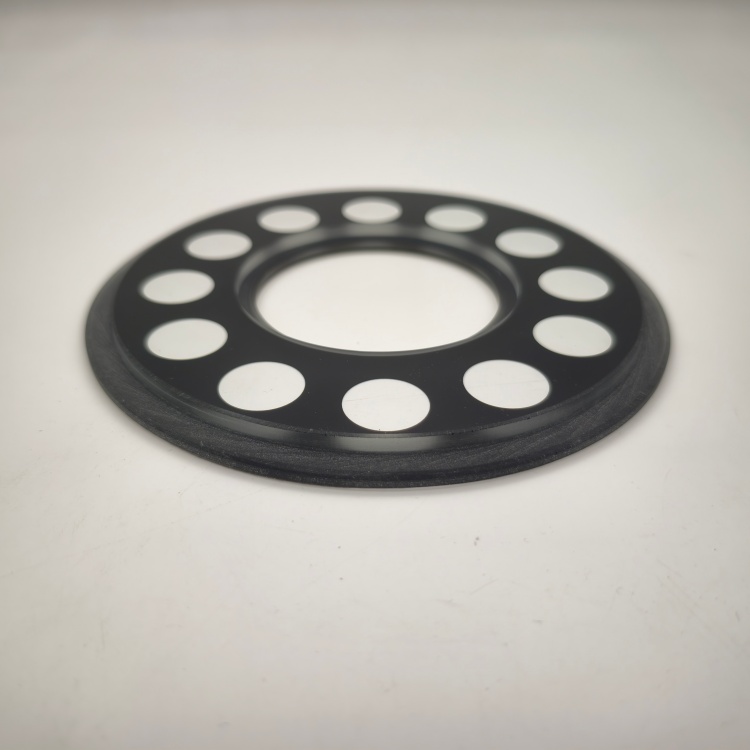
Factory Customized Round Hole Inner and Outer Double Step Edge Printed Tempered Glass for LED Lighting
A double-step printed LED cover with inner and outer round holes. Suited to luminaires where edge geometry, print alignment, and heat resistance must work together.
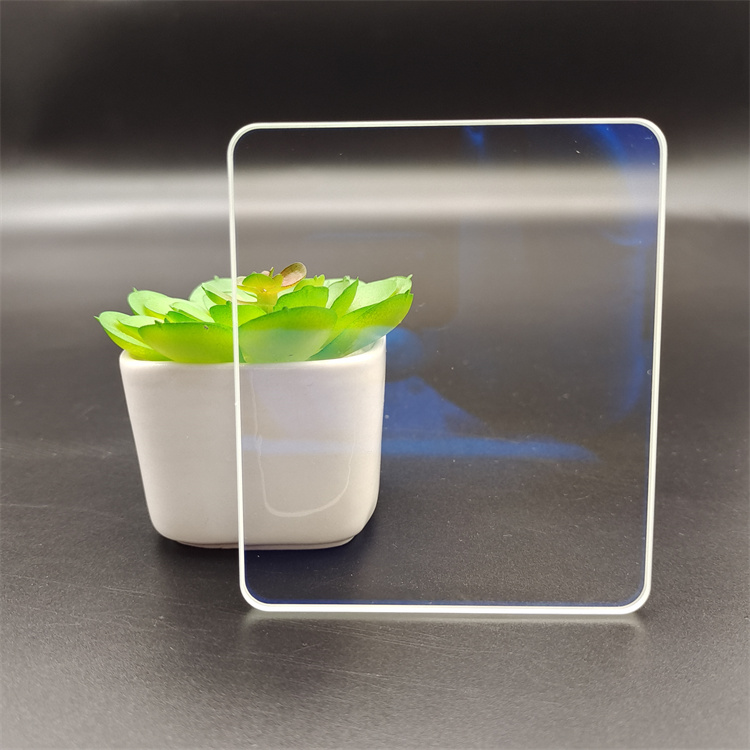
Both Sides Anti Reflective AR Coating 1mm 2mm 3mm 4mm Ultra Clear Tempered Glass
AR coating on both faces for low reflection and higher contrast in display windows, instrument covers, and optical assemblies.
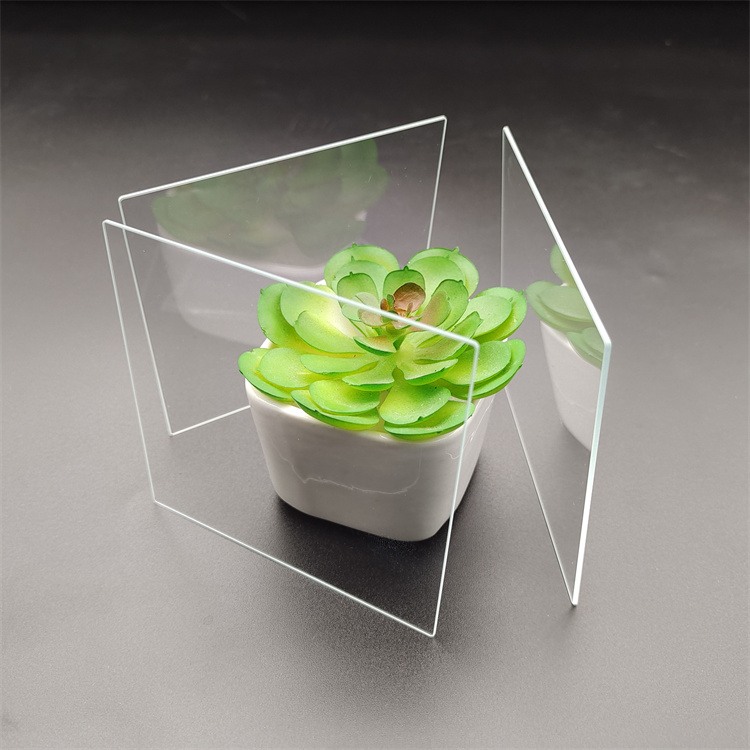
Custom 1mm 2mm 3mm 4mm 5mm Tempered Extra Clear Glass Panel for LCD Screen / LED Light /Electronic Appliance Cover
A versatile extra-clear tempered panel for LCD screens, LED fixtures, and appliance covers, with custom thickness and outline.
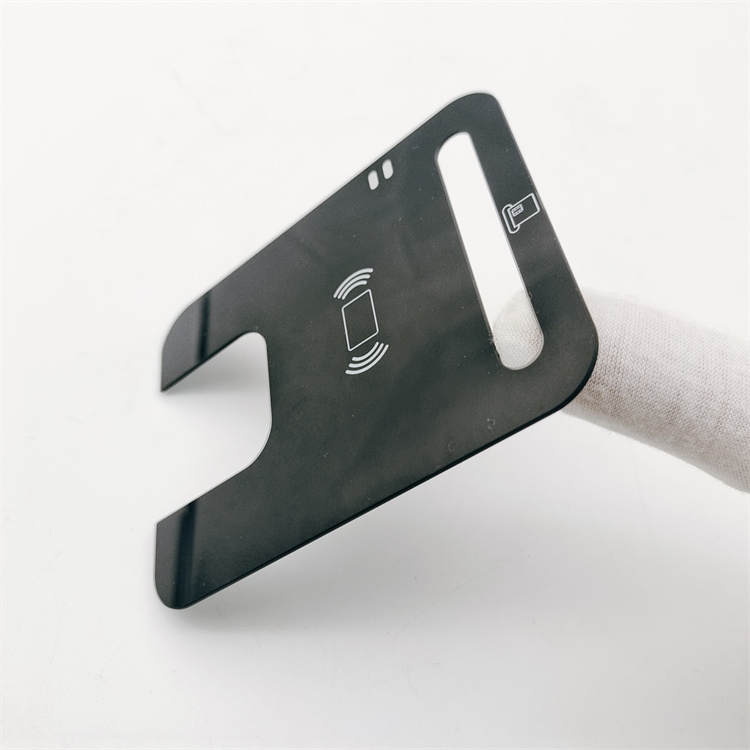
Custom Printed Tempered Glass Panel High Strength Decorative Cover with Hole for Card Reader Instrument
A decorative printed cover with a drilled aperture for card readers, instruments, and access control products.
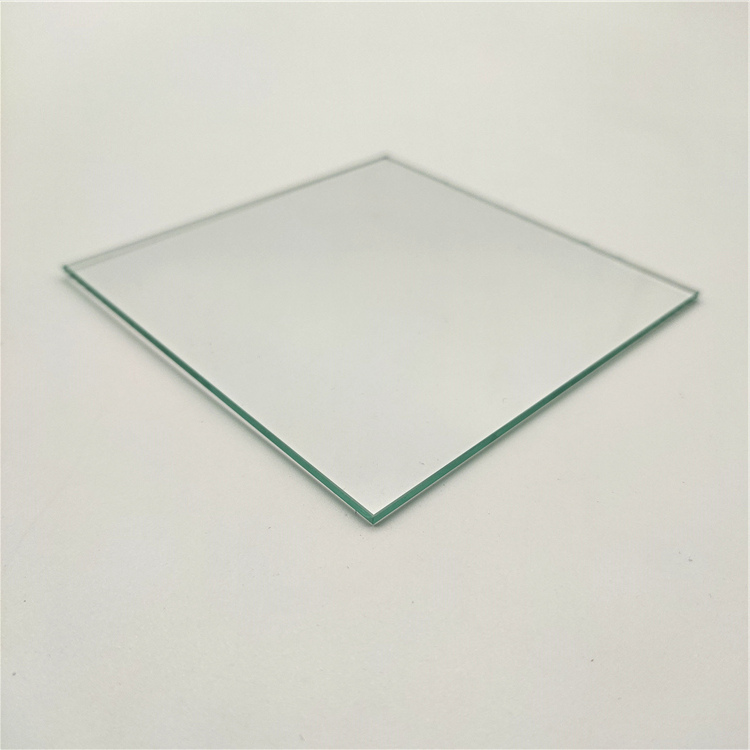
Fast Delivery Custom 1mm clear Glass Sheet
A fast-delivery 1 mm clear glass sheet for prototyping and production runs where schedule risk matters.
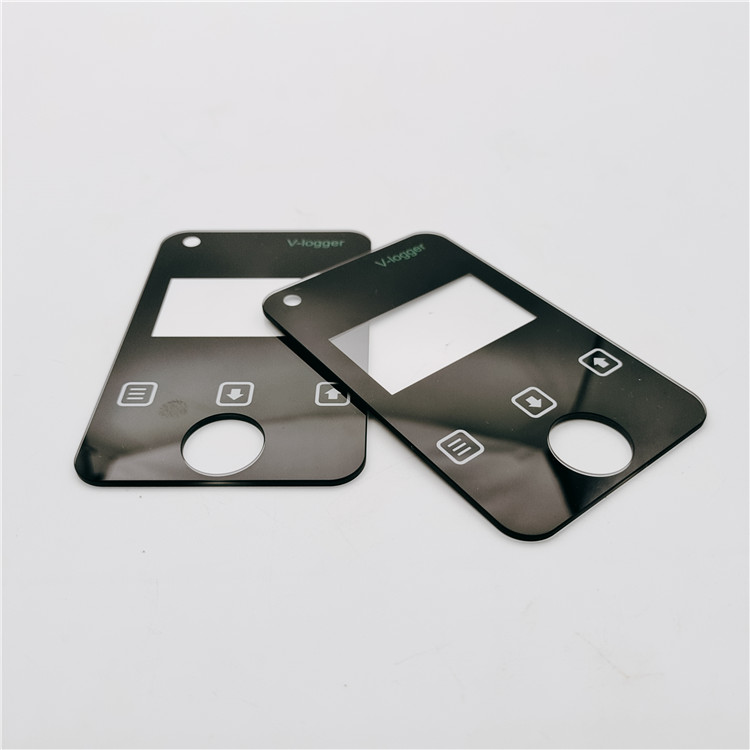
Customized Cut 1mm 2mm 3mm 4mm Instrument Printed Tempered Glass With Holes
A printed instrument panel with cut holes, built for meters, control interfaces, and electrical equipment.
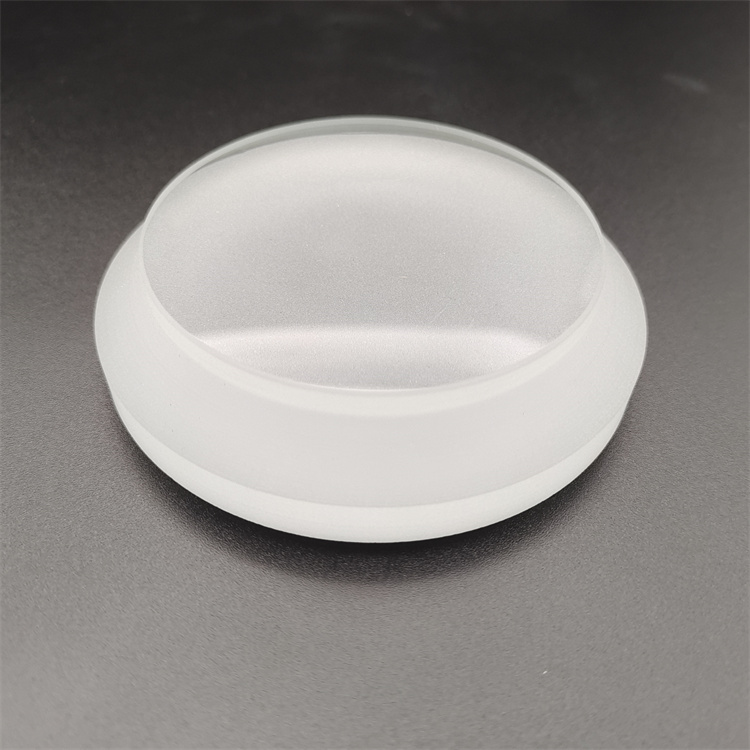
Customized Industrial Lighting Solid Flat Ultra Clear Frosted Tempered Glass with Beveled Step Edge
Frosted, ultra-clear tempered industrial lighting glass with a beveled step edge for fixtures that need a clean finished look.
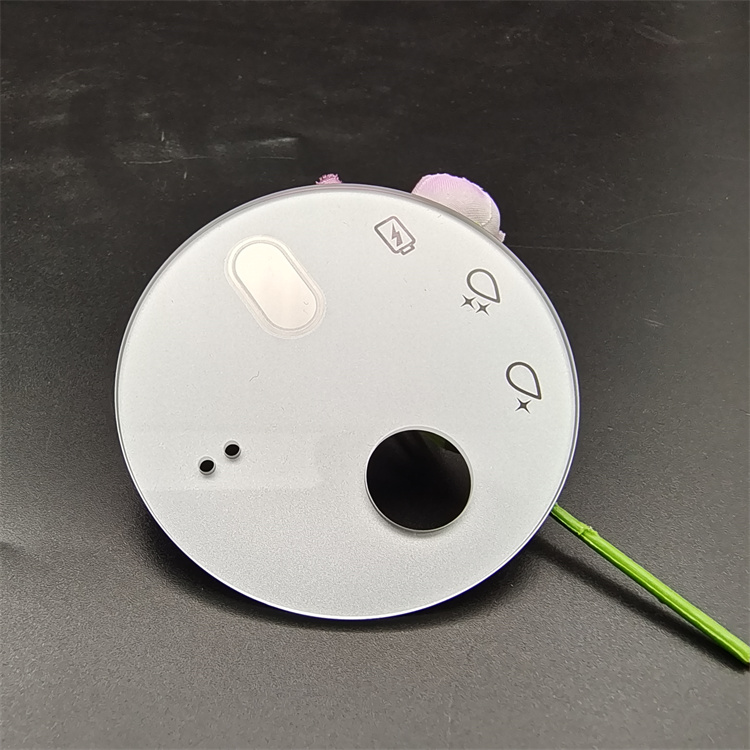
Customized 0.5mm 0.7mm 1mm 2mm 3mm 4mm 5mm 6mm Cut Holes Printed Round Tempered Glass Panels for Home Appliance
Printed tempered panels in 0.5–6 mm for home appliances, with cut holes, custom artwork, and repeatable color control.
Need a square or rectangular format instead of a round outline?
Send your drawing and we will review thickness, edge type, hole positions, print colors, coating target, and packaging route.
Why Square Glass Is a Specification-Driven Purchase
“Square glass” is a buyer’s shorthand, not a single product. In export projects it usually means a flat glass panel with a square or rectangular outline and a defined function: a display window, touch cover, appliance fascia, switch plate, instrument lens, or LED diffuser.
Geometry is only the beginning of the specification
The word “square” describes the outline. The real specification is the stack of requirements around it: substrate, thickness, tolerance, edge condition, hole positions, print alignment, coating performance, and packaging. A supplier that quotes only by size is not giving you enough information to compare offers.
Because these panels sit at the interface between a user and a device, the lowest quoted price is rarely the lowest total cost. A 0.2 mm difference in flatness, a 0.1 mm print shift, or a slightly rough hole edge can create assembly rejects, field returns, and brand damage. Experienced buyers therefore evaluate process capability, not only cutting capacity.
For semantic search and supplier discovery, the most useful RFQ includes terms that describe the job: “custom square tempered glass panel,” “printed glass cover with holes,” “ultra-clear display glass,” “AR-coated square glass,” or “0.5 mm to 4 mm appliance glass.” These phrases help suppliers route your request to the right engineer instead of a generic sales inbox.
What to send for an accurate quote
- CAD drawing in DXF, DWG, PDF, or STEP with critical dimensions marked.
- Glass type and thickness: clear, ultra-clear, frosted, or coated.
- Edge profile: flat, pencil, beveled, stepped, matte, or polished.
- Hole, notch, and step-edge dimensions with hole-to-edge distances.
- Print colors, window sizes, coating target, application, and annual volume.
- Packaging, export destination, and any compliance documentation required.
How to Compare China Square Glass Suppliers and Exporters
China has many glass processors. The difference between an average supplier and a reliable export partner appears in engineering feedback, in-house process control, optical testing, packaging discipline, and response speed.
Engineering review and DFM feedback
Ask for manufacturability notes on hole-to-edge distance, corner radius, step-edge depth, and ink coverage. A supplier that flags risk before sampling saves weeks.
In-house process control
Cutting, CNC shaping, edging, drilling, tempering, printing, and coating under one roof reduce handling damage and clarify accountability.
Optical and coating capability
For display glass, confirm transmittance, reflectance, haze, and adhesion tests. Request coating samples under the same lighting conditions as the final use.
Traceability and QC records
Batch records, incoming substrate checks, in-process inspection, and final AQL data should be available. Third-party supplier verification is a useful first filter.
Export packing and logistics
Glass damage is a cost, not an accident. Look for interleaved packing, edge protection, moisture control, and carton drop-test evidence.
Response speed and reorder performance
Response time is a proxy for production communication. A high response rate and repeat-order rate are more meaningful than a generic “fast delivery” claim.
Jaswe Glass: A Dongguan Exporter Built for Custom Glass Programs
Dongguan Jaswe Glass Co., Ltd. is a custom glass processor and exporter based in Shipai Town, Dongguan, Guangdong, China. The company serves buyers in North America, Europe, and Asia with tempered, ultra-clear, printed, AR, AG, and AF-coated glass.
Process depth is the real advantage
Jaswe runs 26 glass processing machines and employs more than 80 workers, with monthly output above 200,000 pieces. The in-house route covers cutting, CNC shaping, edge polishing, hole drilling, tempering, silk-screen and ceramic printing, AG processing, and AR/AF coating. Thickness capability spans 0.2 mm to 19 mm, with 0.5, 0.7, 1, 2, 3, and 4 mm most common for display and touch covers.
Many operators have more than eight years of hands-on glass processing experience. That matters on square and rectangular panels because handling, print alignment, and edge quality are where small errors become visible defects. The company’s quality statement — “Scientific management, careful manufacture, high quality service, striving for excellence” — is a useful summary of what buyers should test in practice: documented process control, samples that match mass production, and communication fast enough to solve problems before shipment.
For buyers comparing China square glass suppliers and exporters, the practical question is not “Who can cut glass?” but “Who can hold the same result across sampling, first article approval, and repeat production?”
Verified operating data
- Location: Dongguan, Guangdong, China
- Employees: 51–100 people
- Annual revenue: US$2.5M–US$5M
- Main markets: America, Europe, Asia
- Equipment: 26 glass machines
- Supplier status: On-site verified · 6 years
- Response: ≤3 hours average
- Performance: 96.61% response rate · 26% reorder rate
Procurement Trends Reshaping Square Glass Buying
The next buying cycle is not only about piece price. It is about resilience, speed, evidence, and the confidence that a supplier can repeat the approved sample in mass production.
Dual sourcing with one process owner
Buyers are adding a second geographic source but keeping one partner responsible for tooling and process transfer. For square glass, duplicate hard tooling is often less efficient than qualified soft tooling and a documented process route.
Total landed cost replaces piece price
Freight, breakage, rework, inspection, and inventory carrying cost can exceed a small piece-price gap. Model yield and damage rate per 1,000 panels, not only the unit price on the quotation.
Sample velocity as a KPI
Design cycles are shorter. Suppliers that return DFM feedback in hours and physical samples in days win programs. A low quote with a four-week sample loop can be the most expensive option.
Engineering co-design and standardization
Rather than buying a commodity sheet, buyers need a partner that can propose standard thicknesses, common edge types, and print layouts that reduce cost without changing the user experience.
Compliance and material documentation
RoHS/REACH declarations, coating material data, lot traceability, and packaging compliance are becoming part of the RFQ. For touch and appliance glass, documentation is a gate, not a nice-to-have.
Capacity transparency and continuity planning
Ask how capacity is allocated across furnaces, printing lines, and coating lines. A supplier with 26 machines and 200,000+ pieces per month can recover faster from a quality issue or demand spike.
Product Development Trends in Square and Custom Glass
Product development is moving toward thinner, larger, more functional panels. The glass is no longer a passive cover; it is part of the optical, tactile, and decorative system.
Ultra-thin, lightweight covers
0.2–1 mm glass is increasingly used in displays, sensors, and appliance interfaces. Handling and yield become the main cost drivers, so supplier experience with ultra-thin glass matters more than the cutting machine alone.
Larger formats and tighter flatness
Control panels and signage are growing. Buyers should specify flatness, warp, and bow over the full panel, not only at the center, because assembly pressure can reveal deviations.
Combined AR + AG + AF stacks
Single-function glass is giving way to multi-layer stacks. AR improves contrast, AG diffuses glare, and AF resists fingerprints. Test them together, because the stack can change color, haze, and durability.
Printed electronics and hidden windows
Silk screen and ceramic printing now integrate icons, dead-front windows, and light-blocking masks. Designers want fewer parts; the glass becomes the interface.
Edge and hole reliability
Step edges, countersinks, and small holes are common in LED and instrument panels. Hole-to-edge distance and edge polishing are not cosmetic details; they determine breakage during tempering and assembly.
Sustainability without compromising optics
Low-iron substrates, energy-efficient furnaces, recyclable packaging, and lower scrap rates are becoming procurement criteria. Ask for the actual process change, not a generic green claim.
Quality, Packing, and Total Landed Cost
Before mass production, convert the quote into an inspection plan. The goal is to catch specification drift at the earliest possible stage, not to argue about defects after the container arrives.
Build the inspection plan with the supplier
For square glass panels, define the critical-to-quality dimensions: outline, diagonal, thickness, hole position, edge chip limit, print position, color, coating appearance, and surface flatness. Then agree on the sampling plan for first article, in-process, and final inspection.
Total landed cost should include yield loss, replacement cost, and time. A supplier that packs properly and documents the process may quote a slightly higher unit price but reduce the real cost per accepted panel. This is particularly important for printed and coated glass, where rework is limited.
Pre-production checklist
- Physical sample approved for fit, print color, and coating under final lighting.
- First article inspection before the full batch is released.
- Edge, hole, and step-edge review with magnification and chip limits.
- Packaging drawing approved for interleaving, edges, moisture, and carton strength.
- Final photo report and AQL records before shipment.
Square Glass Procurement FAQ
These are the questions overseas buyers ask most often when comparing square glass suppliers and exporters in China.
What does “square glass” mean in a custom glass RFQ?
It refers to square or rectangular flat glass panels used as display covers, control panels, appliance fascias, or lighting glass. The outline is only one part of the specification; thickness, edge, holes, printing, and coating define the product.
Can I order square tempered glass in small quantities?
Most custom items start at 100–500 pieces depending on size, printing, and coating. Standard clear tempered samples can sometimes be supplied in smaller quantities for evaluation. Share your annual volume and prototype schedule so the supplier can propose a practical sampling plan.
Which thickness should I choose for a display or control panel?
Common display and touch cover thicknesses are 0.5, 0.7, 1, 2, 3, and 4 mm. Ultra-thin 0.2–0.3 mm glass is available for special electronics. The right choice depends on impact resistance, weight, touch sensitivity, and assembly method.
What is the difference between AR, AG, and AF?
AR reduces surface reflection and increases transmittance. AG diffuses reflected light for readability under strong light. AF adds an oleophobic top layer for touch surfaces. They can be combined; test the final stack under your actual lighting.
Can you support holes, step edges, and printed windows?
Yes. CNC cutting, drilling, edge polishing, stepped edges, and multi-color silk screen or ceramic printing are part of the process route. The design review should confirm hole-to-edge distances, corner radii, ink thickness, and whether the print sits on the front or back surface.
How is square glass packed to survive export shipping?
Export packing typically uses interleaving paper or film, edge protection, moisture barrier, and strong cartons or crates. For larger panels, vertical packing may be required. Ask for a packaging drawing and, for new projects, a carton drop or vibration test plan.
Request a Square Glass Quote with Engineering Review
Share your drawing, thickness, print colors, coating target, and annual volume. The Jaswe Glass team will review manufacturability and propose a sample and production plan.
Get a QuoteSend a DXF, DWG, PDF, or STEP file · technical questions welcome · export packaging reviewed with every quote.