8 Custom Soda Lime Glass Products for Sampling and Volume Production
These products are well suited to buyers comparing a China wholesale soda lime glass factory and suppliers. Each item can be manufactured to your drawing, with thickness, outline, holes, edge profile, printing, coating and packaging reviewed before mass production.
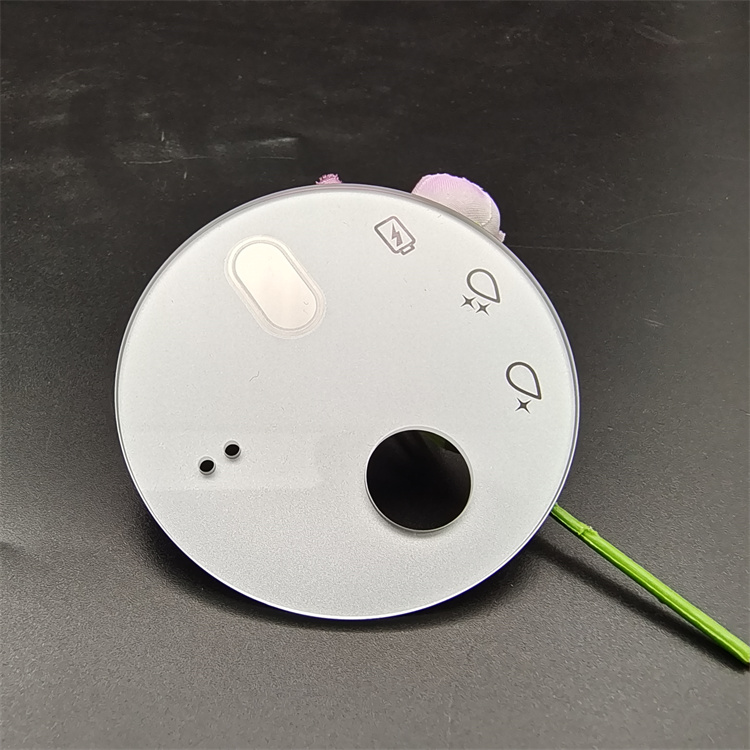
Customized 0.5mm 0.7mm 1mm 2mm 3mm 4mm 5mm 6mm Cut Holes Printed Round Tempered Glass Panels for Home Appliance
A practical choice for appliance control windows, indicator panels and decorative covers. CNC holes, silk-screen printing and tempered strength can be combined in one part.

Customized Small Size 3mm 4mm 5mm 6mm Beveled Edge Tempered Glass
Small-format tempered glass with a controlled beveled edge for control panels, instrument windows and decorative electronic covers where edge appearance matters.
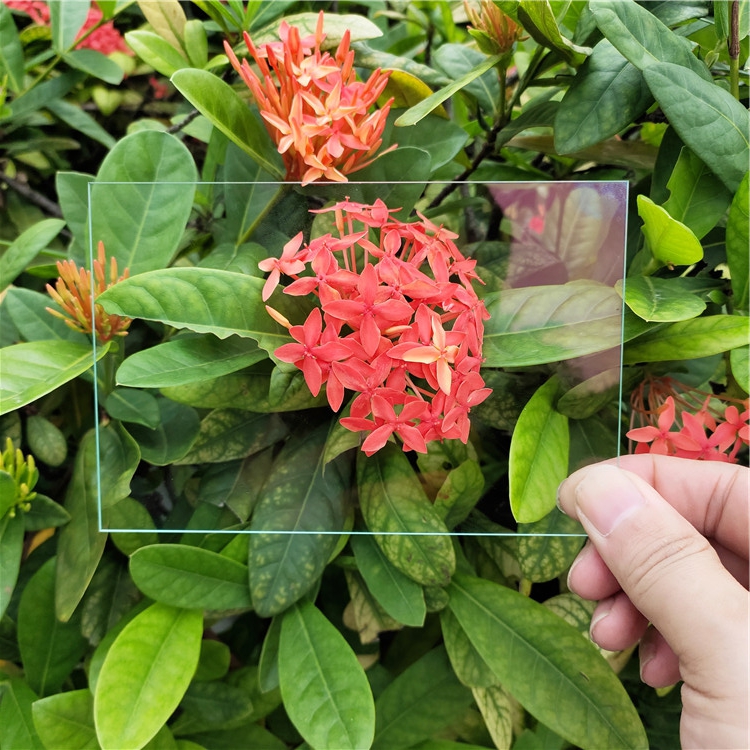
Factory Custom Optical Quality Nano Coating Tempered Anti Reflective AR Glass
Designed for display windows and sensor covers that need lower surface reflection and improved visual contrast. Specify single- or double-sided AR coating for the required optical result.
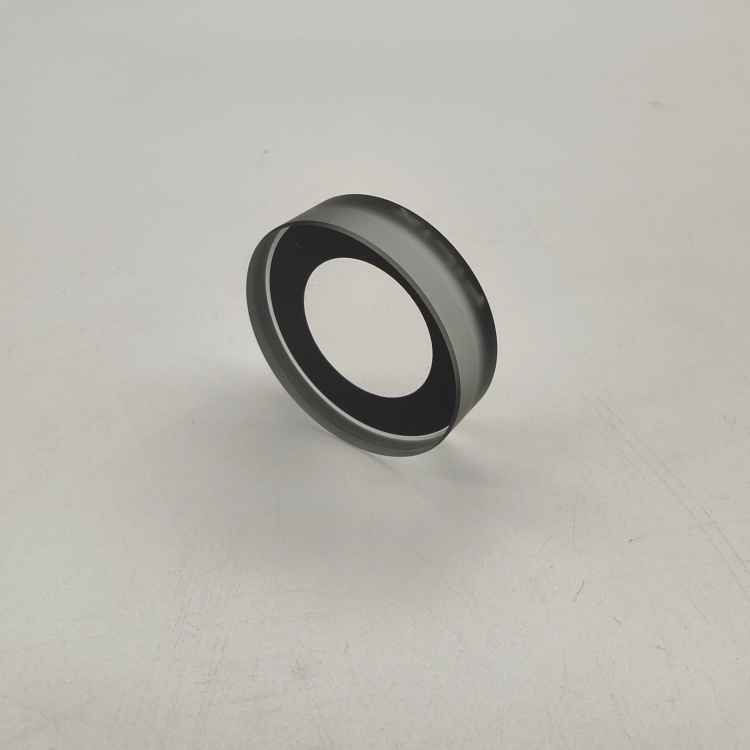
High Quality Small Diameter 10mm Thickness Round Tempered Glass with High Temperature Ceramic Printing
A compact, thick round glass part for designs that need high-temperature ceramic printing, strong visual definition and a durable printed surface.

Small Size Ultra Thin 0.5mm 0.7mm 1mm Tempered Glass Panel With Adhesive Tape for Screen Protection
An ultra-thin glass option with adhesive tape for screen protection and compact electronic assemblies. Useful where weight, thickness and clean installation are critical.
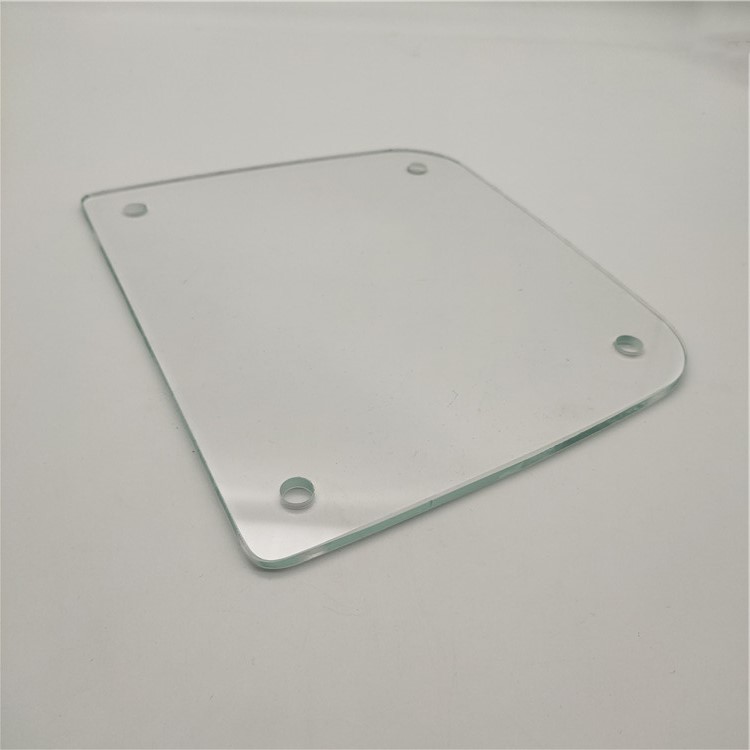
Ultra Clear Tempered Glass Customized Design with Cut Holes for Led Light Cover
A clear cover option for LED lighting fixtures, with cut holes and custom outlines available. Ultra-clear soda lime glass helps maintain a clean, bright light appearance.
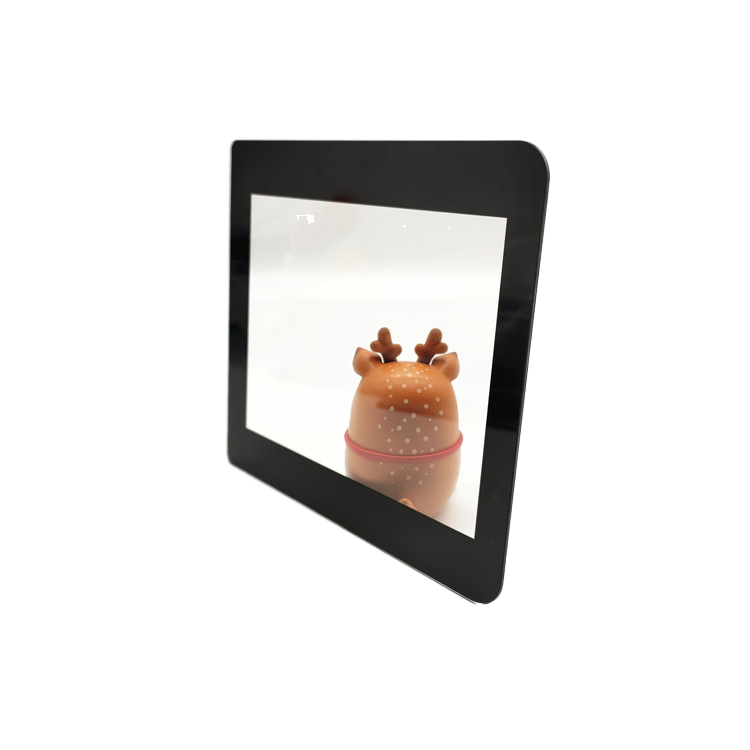
Industrial Use Electronic Glass 1mm/2mm/3mm/4mm Tempered Glass Display Screen Window Protection Cover
Protective tempered glass for industrial displays, equipment windows and HMI covers. Thickness, printable borders, viewing windows and fixing holes are specified to your drawing.
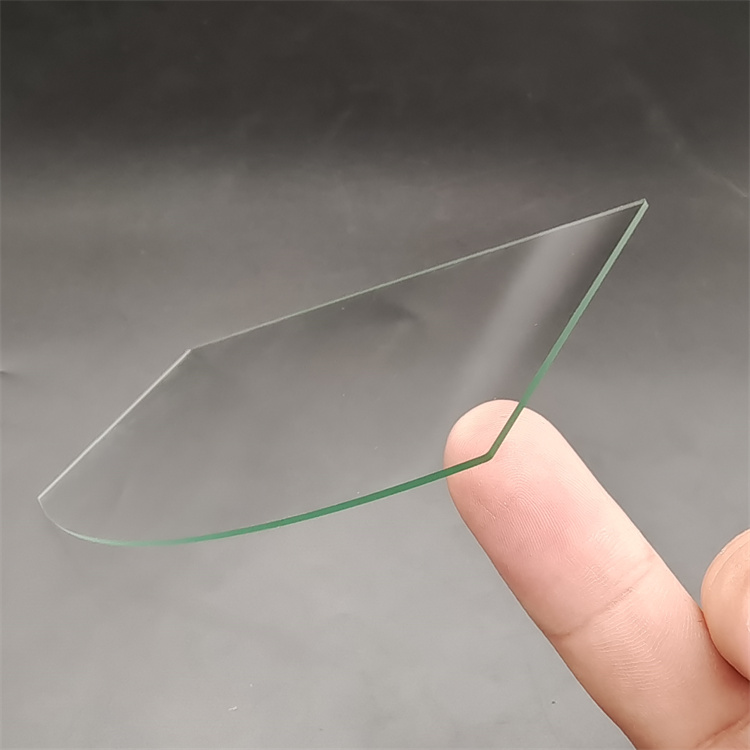
Any Size Custom 0.5/0.7/1/1.5/2/3mm Tempered Glass Screen Protector, Round Rectangle Triangle Customized Tempered Glass OEM ODM
A flexible OEM/ODM route for round, rectangular and triangular screen protector glass. Suitable for buyers that need multiple sizes and stable repeat production.
Soda Lime Glass Is a Substrate—Your Specification Defines the Value
For B2B buyers, the phrase “soda lime glass” describes a glass composition, not a finished product. The commercial difference comes from thickness control, edge quality, tempering, printing, coating and inspection.
Soda lime glass is the most common float glass family used in display covers, appliance panels, LED fixtures, switch plates and equipment windows. It offers a mature supply base and predictable processing behavior. However, two quotations for the same drawing may hide very different assumptions: standard clear versus low-iron glass, flat polished versus beveled edge, single-side versus double-side AR coating, visual inspection versus dimensional and optical inspection, or simple carton packing versus export-grade interleaved packing.
The higher-value question is not “Where can I buy soda lime glass?” but “Which supplier controls the full process route?” A factory that controls cutting, CNC shaping, edge polishing, hole drilling, tempering, silk-screen printing, ceramic printing, AG treatment and AR/AF coating can review manufacturability before quoting. That reduces the risk of an attractive sample price turning into rework, breakage or a delayed shipment. For thin electronic glass from 0.2 mm to 10 mm, or flat tempered glass up to 19 mm, process control is the real product.
Standard clear soda lime
Cost-efficient for opaque printed borders, internal covers and applications where a slight green edge tone is acceptable. Specify the visible edge and printing colors clearly.
Ultra-clear / low-iron option
Useful for LED lighting, premium appliance panels and display covers where true color and edge clarity matter. Confirm the substrate choice in the sample stage.
Tempered glass
Tempering improves impact resistance and changes breakage behavior for safer handling. Holes and cut-outs must be reviewed before tempering to avoid stress concentration.
AR / AG / AF optical finish
AR reduces reflection, AG diffuses glare, and AF adds an oleophobic touch surface. These finishes can be combined, but the coating stack should match the viewing environment.
Recommended Glass Routes by Buyer Application
The fastest way to shortlist a China wholesale soda lime glass supplier is to match your application, environment and assembly method to a proven process route.
Home appliance controls
Consider printed round tempered panels, small beveled-edge glass and 10 mm ceramic-printed round glass. Prioritize color consistency, transparent window edges, hole positions and adhesive compatibility.
Display and touch covers
Compare AR nano-coated glass, industrial display protection covers and ultra-thin adhesive panels. For touch use, request an AF finish over the selected AR or AG surface.
LED lighting fixtures
Ultra-clear LED covers and size-customized tempered glass are strong starting points. Confirm edge finish, light transmission expectations and heat exposure before mass production.
Industrial instruments
Use 1–4 mm tempered display windows with printed borders and precise holes. Ask for a manufacturing review of hole spacing, edge stress and gasket clearance early in the project.
2025–2026 Soda Lime Glass Procurement Trends for Wholesale Buyers
Buying behavior is shifting from piece-price comparison to total process capability. The following trends are especially relevant for importers, brand owners and contract manufacturers.
1. Landed-cost sourcing
Buyers are adding breakage, rework, inspection, packing and communication time to the landed cost. A slightly higher quoted price from a stable factory can be cheaper than a low price with avoidable quality losses.
2. Single-roof accountability
Cutting, edge work, holes, tempering, printing and coating under one roof reduce process handoffs. When a defect appears, the cause is easier to trace and the corrective action is faster.
3. Measurable optical specs
“Clear glass” is no longer enough for many display projects. Buyers increasingly define AR reflection, AG haze, transmittance targets, AF durability and visible printing tolerances in the RFQ.
4. Sample-first, scale-second
Low-volume approval samples are being used to validate fit, color, coating and packing before volume release. MOQ often starts around 100–500 pieces, depending on size and process complexity.
A Practical RFQ Checklist Before Comparing Supplier Quotes
Drawing and tolerance
Send DXF, DWG or PDF drawings with thickness, outline, hole diameters, edge profile, flatness, printing colors and critical dimensions. Mark which dimensions are functional and which are cosmetic.
Quality and approval
Define the sample approval standard: viewing window, printed icon color, coating appearance, edge quality and packaging method. Request the inspection plan before production begins.
Logistics and pack-out
Confirm export packing, interleaving, corner protection, carton drop-test expectations and labeling. Glass that survives the factory but not the freight route is not a good purchase.
Where Soda Lime Glass Products Are Moving Next
Design teams are asking for thinner or stronger parts, better optical behavior and more integrated decoration. The factory process route must evolve with the drawing.
Thinner and larger covers
Ultra-thin 0.5 mm, 0.7 mm and 1 mm glass is used in compact electronics and screen protection. At the same time, larger display windows demand attention to flatness, handling and packing.
Printing as part of the interface
Silk-screen and ceramic printing are no longer decorative only. Printed borders, icons, light windows and touch-key zones help integrate the glass into the appliance or control panel.
Coating combinations
AR for optical clarity, AG for outdoor readability and AF for touch cleanliness are increasingly combined. Buyers should specify the use environment so the coating stack is not over- or under-engineered.
Design for manufacturability
Hole-to-edge distance, minimum edge radius, print registration and coating area are easier to control when reviewed early. A drawing review before sampling saves time during ramp-up.
Why Dongguan Jaswe Glass Is a Practical China Soda Lime Glass Factory Partner
Dongguan Jaswe Glass Co., Ltd. is located in Dongguan, Guangdong—inside China’s electronics manufacturing supply chain. The company processes and exports tempered glass, ultra-clear glass, display glass, touch screen glass, silk-screen printed glass, switch glass, AR / AG / AF coated glass, electrical equipment glass and LED lighting glass.
In-house processing control
Cutting, special-shaped and CNC cutting, edge polishing, hole drilling, tempering, silk-screen and ceramic printing, AG processing and AR / AF coating are handled as an integrated process route.
Material and finish range
Support for ultra-thin electronic glass from 0.2 mm up to 19 mm flat tempered glass, with common display and touch cover thicknesses including 0.5, 0.7, 1, 2, 3 and 4 mm.
Printing and hole precision
Printed borders, icons, transparent windows, high-temperature ceramic ink and CNC holes can be combined in one part, reducing the need for multiple finishing suppliers.
Optical coating capability
AR anti-reflective, AG anti-glare and AF anti-fingerprint treatments can be specified according to the display environment and touch interaction requirements.
Quality inspection and export packing
Inspection is performed through cutting, edging, tempering, printing and coating stages before packing. Export packing is designed to protect edges and printed surfaces in transit.
Verified trade performance
Fast engineering replies, a 96.61% response rate and a 26% buyer reorder rate are practical signals for overseas buyers comparing suppliers. The company profile includes ratings, trade capacity and supplier assessment resources.
Most of the 80+ operators have more than eight years of hands-on glass processing experience. That matters on tight-tolerance projects such as ultra-thin 0.2 mm cover glass, multi-color printing with transparent display windows, or coated glass that must remain optically clean after handling. The company’s operating principle—“scientific management, careful manufacture, high quality service, striving for excellence”—is a useful lens for evaluating whether a soda lime glass supplier treats process control as a system rather than a single operation.
From Drawing to Delivery: Five Steps for a Soda Lime Glass Project
A transparent workflow helps overseas buyers compare suppliers objectively and reduces the risk of sample-to-production variation.
Send requirements
Share drawing, thickness, edge profile, holes, printing colors, coating requirement, application and estimated annual volume.
Engineering review
The process route and manufacturability are checked before quotation, including tempering limitations and coating requirements.
Sampling
Physical samples are used for fit, color, edge, coating and packing approval before volume release.
Mass production
Batch production follows the approved route with in-process inspection at cutting, edging, tempering, printing and coating stages.
Packing and shipping
Interleaved, edge-protected export packing helps protect glass and printed surfaces during transit.
Applications That Drive Wholesale Demand for Soda Lime Glass
Each application has different priorities. The same glass composition may require a very different edge, tempering, printing or coating specification.
Touch and display electronics
Cover lenses for LCD, TFT and capacitive touch modules where clarity, reflection control and dimensional fit are critical.
LED lighting fixtures
Downlight, panel, linear and wall-washer covers that need clean light appearance, heat resistance and consistent outlines.
Smart home and switches
Printed switch plates and smart control panels that combine decoration, touch-key windows and scratch-resistant surfaces.
Home appliances
Control panels for kitchen and household devices where printed graphics, transparent windows and easy cleaning are important.
Industrial instruments
Meter windows and HMI covers for electrical equipment, with precise holes, printed borders and tempered strength.
Security and camera devices
Printed lens covers and sensor windows with precision cut-outs, where optical clarity and clean edges affect final product quality.
Soda Lime Glass Wholesale FAQ for Global Buyers
These are the questions overseas buyers ask most when comparing China wholesale soda lime glass factories and suppliers.
Is soda lime glass suitable for display cover panels?
What is the difference between soda lime glass and tempered glass?
What thicknesses can be processed?
What is the minimum order quantity for custom soda lime glass?
Can AR, AG and AF coatings be combined on one glass panel?
How do I verify a China soda lime glass factory before ordering?
What files are needed for an accurate quotation?
How is custom glass protected during export shipping?
Can the factory support OEM and ODM projects?
Request a Factory Quote for Your Soda Lime Glass Project
Send your drawing, thickness, edge profile, printing colors, coating requirement and estimated annual quantity. Our engineering team will review manufacturability before sampling and recommend a practical process route for your display, appliance, LED lighting or industrial glass application.
Contact Us Email: info@jasweglass.com · Dongguan Jaswe Glass Co., Ltd. · Dongguan, Guangdong, China