Eight Custom Glass Panel Products for Repeatable Production Programs
These products represent the requests buyers most often bring to custom glass panel factories and wholesalers: printed display covers, drilled decorative panels, small beveled parts, instrument covers, AR-coated optical glass, fast-turn clear sheets and double-sided AR ultra-clear glass. Each catalog URL is preserved so your engineering team can compare specifications before requesting samples.
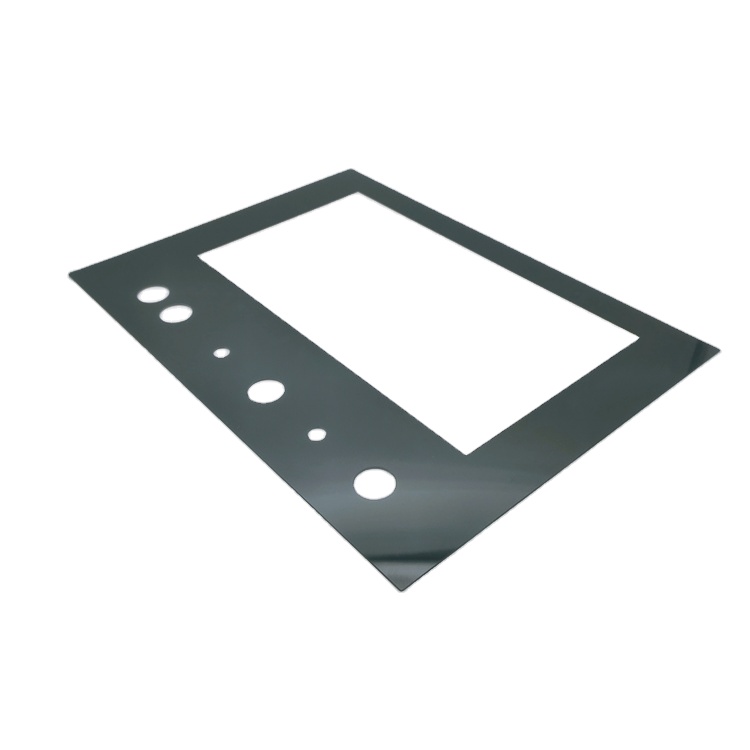
Customized Printed 0.5–6 mm Thickness Flat Tempered Glass Screen Protector with Cut Holes
Best for front display protection where a printed border, camera windows, button openings and flat tempered glass must survive daily touch handling and cleaning.
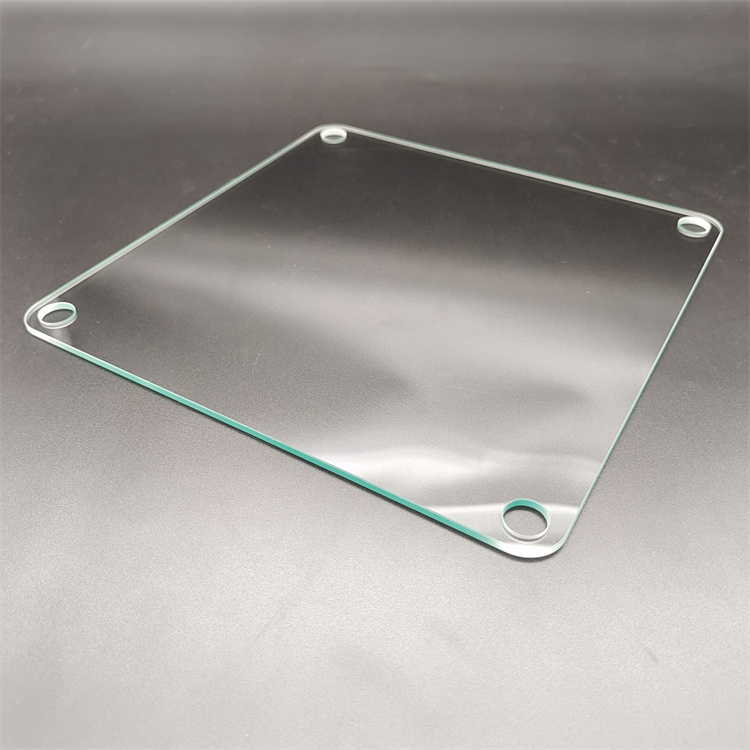
Factory Sale Customized Shape Decorative Glass Cover Hole Drilling Glass Panel Soda-lime Tempered Glass Sheet With Holes
A practical choice for appliance, instrument and equipment covers that need custom outlines, screw holes, sensor windows and clean edge finishing.

Customized Small Size 3mm 4mm 5mm 6mm Beveled Edge Tempered Glass
Designed for compact electronic devices, switches and instruments where a beveled edge improves safety, appearance and assembly fit.

Custom Printed Tempered Glass Panel High Strength Decorative Cover with Hole for Card Reader Instrument
High-strength cover glass for payment, access-control and card-reader instruments with printed graphics, transparent windows and precise openings.
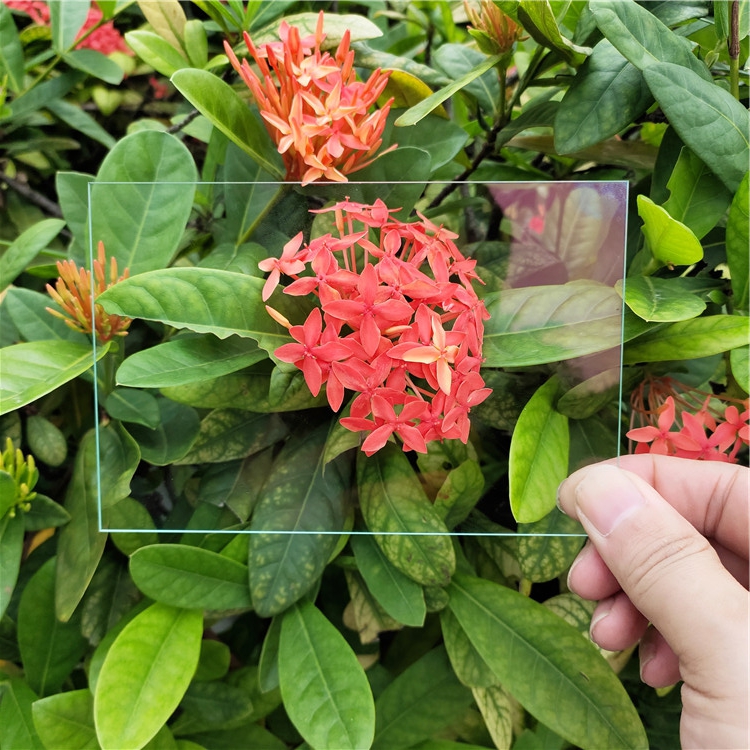
Factory Custom Optical Quality Nano Coating Tempered Anti Reflective AR Glass
Built for display windows and sensor covers where reflection control, light transmission and surface durability influence perceived image quality.
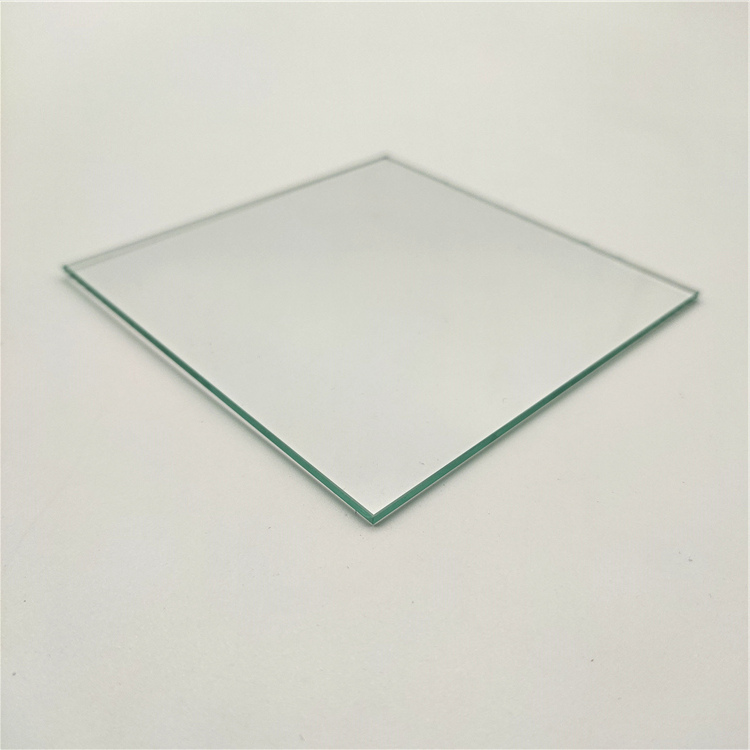
Fast Delivery Custom 1mm clear Glass Sheet
Useful for prototypes, replacement parts and initial production runs where buyers need a clear glass sheet quickly without sacrificing cut quality.

Both Sides Anti Reflective AR Coating 1mm 2mm 3mm 4mm Ultra Clear Tempered Glass
For premium displays that benefit from low-iron clarity and reflection reduction on both faces, especially in bright showroom or industrial lighting.
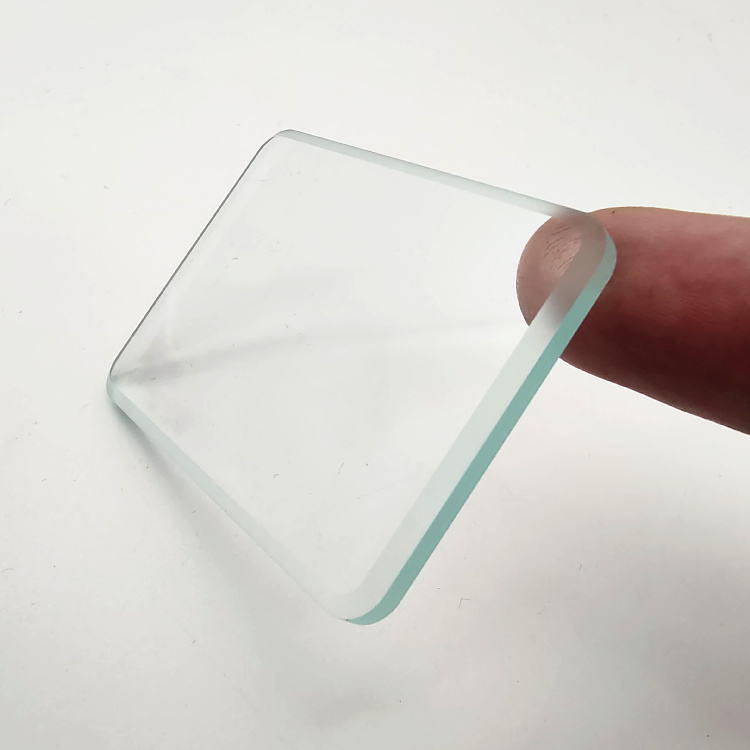
Custom Small Dimensions Tempered Beveled Edge Glass for Sale
Small-format tempered glass for handheld devices, control modules and compact sensors where dimensional consistency matters more than large sheet size.
What the Numbers Behind a Custom Glass Factory Actually Tell Buyers
Production figures matter only when they connect to your program risk. For OEM buyers, the useful questions are whether the supplier can review drawings quickly, control the process chain, document inspection results and repeat the same specification on the next order.
How to Evaluate Custom OEM Glass Panel Factories and Wholesalers
The strongest supplier is not always the one with the longest product list. It is the one that can translate your drawing into a stable process, identify manufacturability risks before sampling and provide evidence that the approved sample can be repeated at volume.
Engineering review before quotation
A capable factory will challenge thin-glass handling risk, hole spacing, edge profile, print registration and coating durability before it sends a price. That DFM review is information gain: it tells you whether the supplier sees your product as an engineered assembly or only as a square of glass.
Process ownership under one roof
Cutting, CNC shaping, edge polishing, drilling, tempering, silk screen printing, ceramic printing, AG treatment, AR coating and AF coating should not be passed between anonymous subcontractors without documentation. Process ownership reduces hidden handling damage and makes corrective action faster.
Inspection evidence and traceability
Ask for the inspection plan, not only a certificate image: incoming glass inspection, first-article approval, in-process checks after tempering and printing, final dimensional and appearance inspection, and packing verification. Batch identification helps isolate issues if a coating or print lot fails later.
Commercial reliability and packing
Compare quotations on total landed cost: breakage allowance, interleaving, edge protection, carton strength, pallet configuration, sample charges, replacement policy and response speed. A low piece price can disappear quickly when packaging is weak or communication slows down production decisions.
What Custom Glass Panel Procurement Will Look Like in 2025–2026
Buyers are moving away from catalog shopping and toward data-backed supplier qualification. The shift is especially visible in display, appliance, lighting and industrial control programs where one glass panel influences touch feel, optical readability, assembly yield and after-sales cost.
Dual sourcing with one specification standard
More OEM teams are qualifying a primary factory and a secondary source without duplicating tooling or creating specification drift. The RFQ package must therefore include the same drawing revision, glass substrate, coating target, print color data and acceptance criteria for every source.
RFQ data packs become the negotiation unit
Price is increasingly tied to a complete data pack: 2D drawing, 3D model where relevant, thickness tolerance, edge finish, hole positions, print artwork, Pantone references, optical measurements and annual volume. Suppliers that can return annotated feedback quickly become preferred partners.
Optical performance is specified numerically
“Anti-reflective” is no longer enough. Buyers request transmittance, reflectance, haze, gloss and abrasion-resistance targets, then verify samples under the viewing conditions that match the end product. This separates a genuine coated-glass supplier from a trader buying generic stock.
Packaging and traceability enter total cost
Custom glass is easily damaged by poor handling. Procurement teams are adding packaging validation, carton drop review and lot traceability to supplier scorecards because one broken shipment can delay an assembly line more than a small piece-price difference.
Where Custom Glass Panel Design Is Moving Next
The glass panel is becoming a functional interface, not just a protective cover. Designers now use glass to hide displays, carry printed icons, improve tactile response, reduce reflection and create a premium visual finish that differentiates the final product.
Ultra-thin cover glass for bezel-light products
Electronic-grade glass from 0.2 mm to 0.7 mm is increasingly requested for compact touch devices, wearables and control modules. Ultra-thin glass improves design freedom but places higher demands on edge quality, flatness, handling and packaging.
Printed glass as the visible interface
Silk screen and ceramic printing allow logos, icons, borders, light windows and hidden-display effects to be integrated into the glass. This reduces separate labels and plastic parts while improving durability and visual consistency.
AR + AG + AF multifunction stacks
Outdoor kiosks, industrial HMIs and medical displays often need more than one treatment. Anti-reflective coating improves contrast, anti-glare treatment diffuses harsh light and anti-fingerprint coating keeps touch surfaces cleaner.
Low-iron ultra-clear substrates
Low-iron glass removes the green edge tint of standard float glass, making white printing look cleaner and display colors more faithful. It is especially valuable for premium appliance panels, LED lighting covers and optical windows.
Small-format CNC-shaped parts
Compact devices need more than rectangular panels. Notches, slots, countersinks, beveled edges and irregular outlines are becoming standard requests, pushing buyers to evaluate a factory’s CNC capability and inspection discipline.
Digital quality records for repeat orders
Approved samples are no longer enough. Buyers want dimensional reports, print color references, coating run data and packaging photos stored with the part number so the next production batch can be compared against a known standard.
What to Specify Before Asking a Custom Glass Factory for a Quote
Most sourcing failures begin in an incomplete RFQ. The table below shows how design details should be written so a factory can quote the same thing you intend to approve—and so your incoming inspection team knows what “good” looks like.
| Specification area | What can go wrong | What to place in the RFQ |
|---|---|---|
| Substrate and thickness | “3 mm glass” may come from different float sources, with different color, flatness and tempering behavior. Ultra-thin glass can break during handling if packaging is not designed for it. | Nominal thickness plus tolerance, clear or ultra-clear low-iron, application, annual volume, and whether chemical or thermal strengthening is required. |
| Edge profile | Sharp edges increase handling risk; inconsistent bevel width affects fit and appearance. Edge chips can become crack initiation points, especially after tempering. | Pencil, flat, beveled, stepped or matte edge; bevel width; edge chip acceptance; and whether the edge will be exposed or covered by a bezel. |
| Holes and cut-outs | Holes placed too close to an edge, or drilled after tempering, can cause delayed breakage. Large cut-outs may weaken the part unless the design is reviewed. | Hole diameter, position, tolerance, countersink requirement, edge-to-hole distance, and whether the feature is for a screw, sensor, camera or button. |
| Printed graphics | Small color differences become visible across batches. Transparent windows may shift in registration, causing touch-key misalignment or light leakage. | Vector artwork, Pantone or RGB references, ink type, print side, window size and position tolerance, opacity requirement and first-article approval method. |
| Optical coating | AR, AG and AF are often used loosely. A sample may look good in one lighting condition but fail in sunlight, under a ring light or after repeated cleaning. | Coating stack, single- or double-sided AR, haze or gloss range, transmittance and reflectance targets, abrasion test method, cleaning chemical exposure and coating side. |
| Tempering and safety | Thickness, hole design and edge quality affect tempering yield. A part that passes a visual check may still have stress patterns that reduce field reliability. | Strengthening method, fragmentation or impact expectation, heat exposure during assembly, drop or pressure requirement, and whether the glass is a safety-critical component. |
Final optical and mechanical values depend on thickness, substrate and coating stack. Sample testing under the real viewing and cleaning conditions is recommended before mass production.
Inside Dongguan Jaswe Glass Co., Ltd.
Jaswe Glass is an export-focused glass processing company in Dongguan, Guangdong, China. Its relevance to OEM buyers is not simply that it sells custom glass—it is that cutting, shaping, edging, drilling, tempering, printing and coating are controlled as one production system, which is exactly where custom glass programs usually lose time.



Based in Dongguan—the center of China’s electronics supply chain—Dongguan Jaswe Glass Co., Ltd. processes custom tempered glass, ultra-clear glass, silk screen printed glass, switch glass, AR / AG / AF coated glass, electrical equipment glass, touch screen cover glass and LED lighting glass. Most of its 80+ operators have more than eight years of hands-on glass processing experience, a detail that matters on tight-tolerance jobs such as ultra-thin 0.2 mm cover glass or multi-color printing with transparent windows.
The company’s process chain includes precision and CNC cutting, edge polishing, hole drilling, thermal tempering, silk screen and ceramic printing, AG anti-glare processing, AR anti-reflective coating and AF anti-fingerprint coating. For buyers, that depth reduces the risk of a lot being rejected because one subcontractor changed an edge finish, print color or coating batch without the final assembler noticing.
“Scientific management, careful manufacture, high quality service, striving for excellence.”
- Location
- Dongguan, Guangdong, China
- Team
- 51–100 employees
- Machines
- 26 glass processing machines
- Monthly output
- 200,000+ pieces
- Main markets
- America · Europe · Asia
- Annual revenue
- US$2.5M – US$5M
- Average response
- Within 3 hours
- Buyer reorder rate
- 26%
Buyers evaluating the company can review its company profile, factory video introduction, ratings and reviews, supplier assessment, trade capacity and trade history. For technical programs, these records are more useful than a generic catalog because they show whether the supplier has the workflow and communication discipline to support repeat OEM orders.
Where Custom Glass Panels Create Measurable Product Value
Each application demands a different balance of optical clarity, impact resistance, print accuracy, thermal behavior and touch feel. The right specification is the one that protects the final product experience—not merely the lowest quotation per piece.
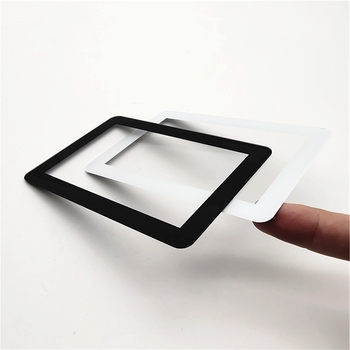
Touch and display electronics
Cover glass for LCD, TFT and capacitive touch modules where low reflection, clean printing and dimensional fit drive perceived quality.
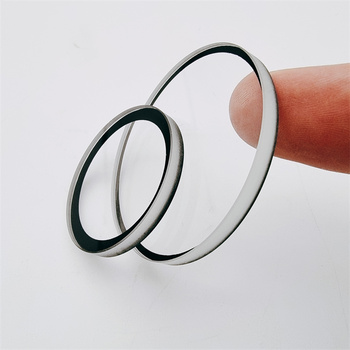
LED lighting fixtures
Downlight, panel, linear and wall-washer covers that need heat resistance, clean light diffusion and stable ceramic-print borders.
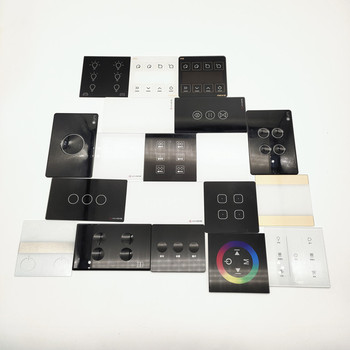
Smart home and switches
Printed switch plates and smart control panels that combine touch-key windows, icon printing and scratch-resistant surfaces.
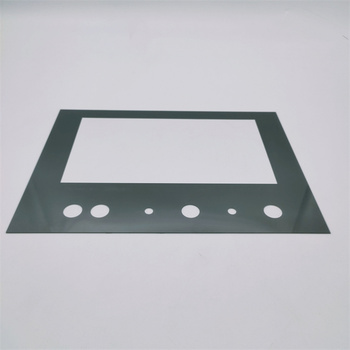
Industrial instruments
Meter windows, HMI covers and card-reader panels where holes, print registration and edge reliability affect assembly yield.
Questions OEM Buyers Ask Custom Glass Panel Factories
Use these answers as a starting point for your RFQ. The strongest quotation is one that references your drawing revision, application environment, annual volume and acceptance criteria.
What is a custom OEM glass panel factory?
A custom OEM glass panel factory cuts, shapes, strengthens, prints and coats glass to a buyer’s drawing rather than selling only fixed stock sizes. OEM work usually includes engineering review, sampling, first-article approval, production inspection and packaging matched to the customer’s assembly line. A wholesaler may offer useful stock and fast delivery, but an OEM factory should be able to explain how each process step affects tolerances, optical performance and repeatability.
How do I choose between a glass factory and a wholesaler?
Choose a factory when your drawing includes custom holes, printed windows, special edge profiles, coating requirements or a recurring production volume. Choose a wholesaler when you need standard clear glass quickly and the specification is simple. For hybrid programs, ask the wholesaler who processes the glass, how traceability is maintained and whether the same factory will supply the next batch.
What drawings and data should I send with an RFQ?
Send a DXF, DWG or PDF drawing with dimensions and tolerances, a 3D model if available, thickness, substrate preference, edge finish, hole and countersink details, print artwork with Pantone references, coating requirements and the end-use environment. Add annual volume, sample quantity, target lead time and packaging expectations. These details let engineering review manufacturability before a price is finalized.
What is the minimum order quantity for custom glass?
Most custom items begin at around 100 to 500 pieces, depending on size, printing, coating and tempering requirements. Standard clear tempered pieces may be supplied in smaller sample quantities for evaluation. If your program is still in design, ask for a prototype path first and confirm how the approved sample will be frozen as the production standard.
What is the difference between AR, AG and AF glass?
AR, or anti-reflective, coating reduces surface reflection to increase light transmission and display contrast. AG, or anti-glare, treatment diffuses reflected light so screens remain readable under strong ambient or outdoor light. AF, or anti-fingerprint, is an oleophobic top layer that resists smudges on touch surfaces. The treatments can be combined; for example, an outdoor touch kiosk may use AG for glare control plus AF for easier cleaning, while a high-end monitor may benefit from double-sided AR.
How are holes and edges controlled in tempered glass?
Holes, cut-outs and edge profiles should be formed and polished before tempering. The factory should review hole-to-edge distance, minimum radius, countersink geometry and support during handling. Inspection should check chip size, edge uniformity, hole position and crack initiation risk after strengthening. If a design is marginal, engineering feedback before sampling is more valuable than trying to correct breakage in mass production.
What quality records can be included with production?
Typical records include first-article inspection, dimensional reports, appearance and print checks, coating run data where applicable, final inspection results and packing photos. The exact record set should be agreed in the RFQ. For repeat OEM programs, define the sample approval standard, the inspection method and the acceptable quality limit so both buyer and supplier are measuring the same characteristics.
What is the fastest way to start a custom glass project?
Send your drawing and application details, then request an engineering review before placing a sample order. Include the estimated annual quantity and any critical optical, printing or assembly requirements. If the part is urgent, state the target date and ask which process step is likely to control lead time. Clear input at the start usually shortens sampling more than repeated price comparisons.
Turn Your Drawing into a Manufacturable Custom Glass Panel
Share your thickness, outline, edge finish, holes, printing colors, coating requirement, application and estimated annual quantity. Our team can review manufacturability and recommend the process route before samples are made.
Email: info@jasweglass.com · Dongguan Jaswe Glass Co., Ltd. · Room 202, Building 1, No. 14 Weige Road, Shipai Town, Dongguan, Guangdong, China