How procurement teams evaluate process depth, optical coatings, verified trade data and engineering response speed before placing a custom glass order.
Product Recommendations
8 Glass Cover Plate Products That Define 2025 Buyer Demand
These eight product families represent the specifications buyers compare when shortlisting the top 10 glass cover plate suppliers and exporters. Every item is quoted to your drawing — thickness, outline, holes, edge finish, printing and coating are driven by the application, not by a fixed catalogue.
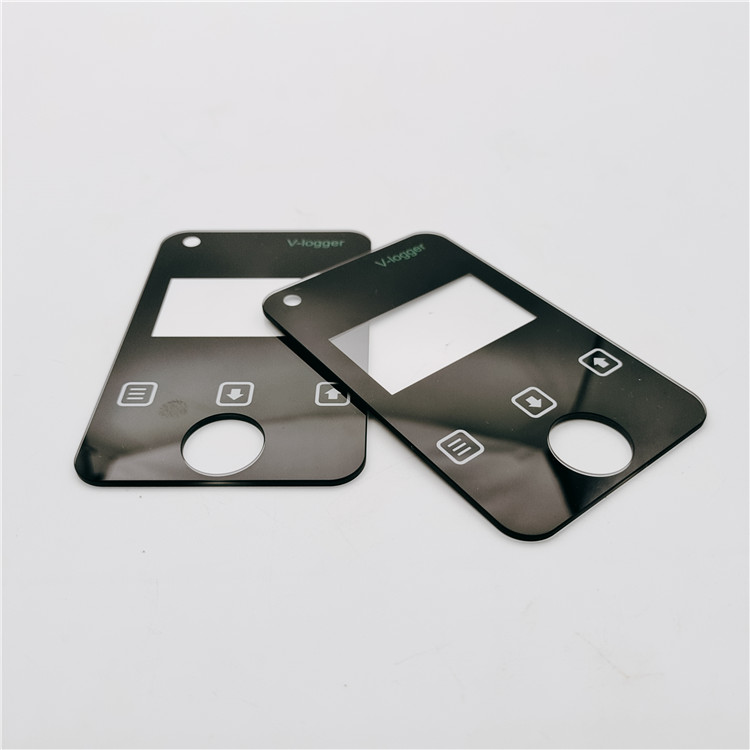
Cover glass combining multi-colour ceramic printing, transparent readout windows and CNC-drilled apertures. Drilling before tempering preserves edge strength — a detail that separates experienced processors from assemblers.
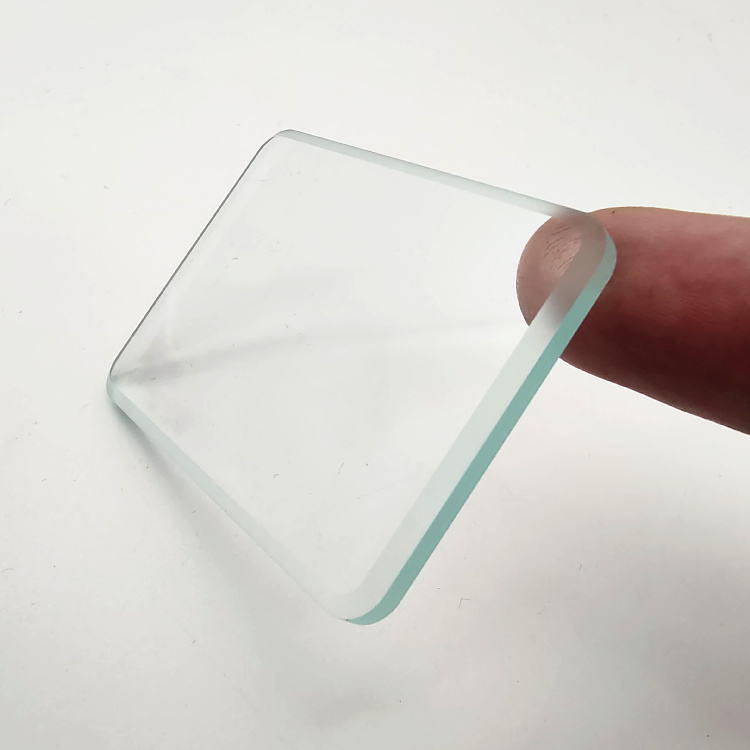
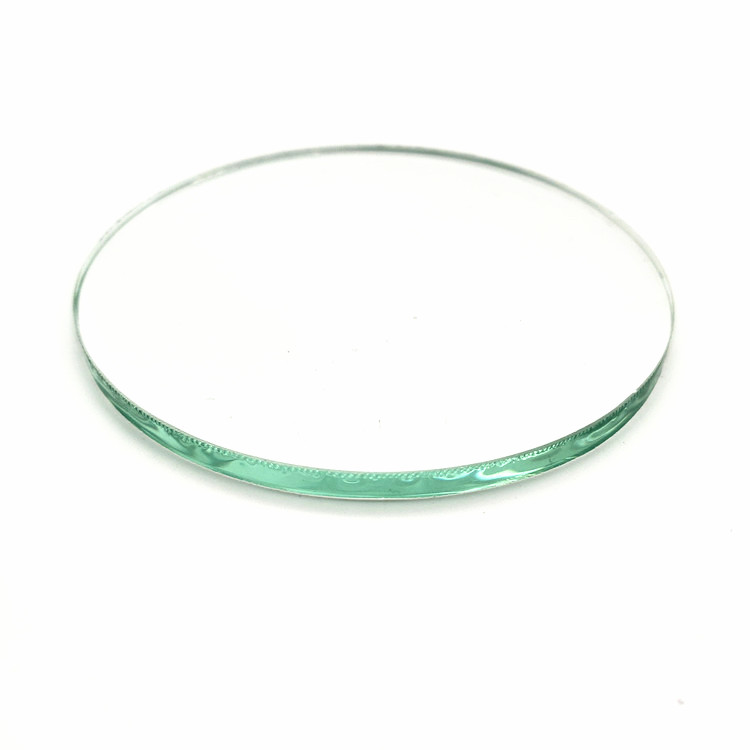
Small-format panels with polished beveled edges specified for compact instruments, nameplates and decorative covers. Bevel width, edge gloss and corner consistency are the visual acceptance criteria buyers judge first.
Anti-reflective coating on both faces suppresses ghost reflections and lifts light transmittance — the two metrics that most affect perceived display contrast. Commonly specified for medical monitors, inspection equipment and bright HMI panels.
Low-iron substrate removes the green edge tint of standard float glass. Chemical strengthening delivers higher flexural strength below 2 mm, where thermal tempering loses effectiveness — critical for thin, light electronic covers.
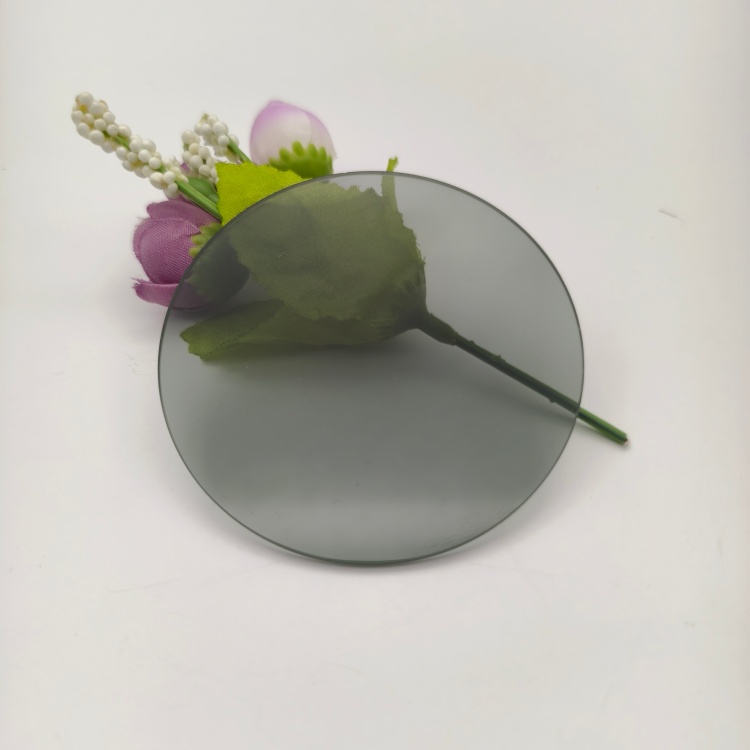
Black tempered glass for decorative fronts, appliance fascias and equipment housings where colour uniformity and impact resistance matter. Flatness and edge quality are the key inspection points on a dark surface.
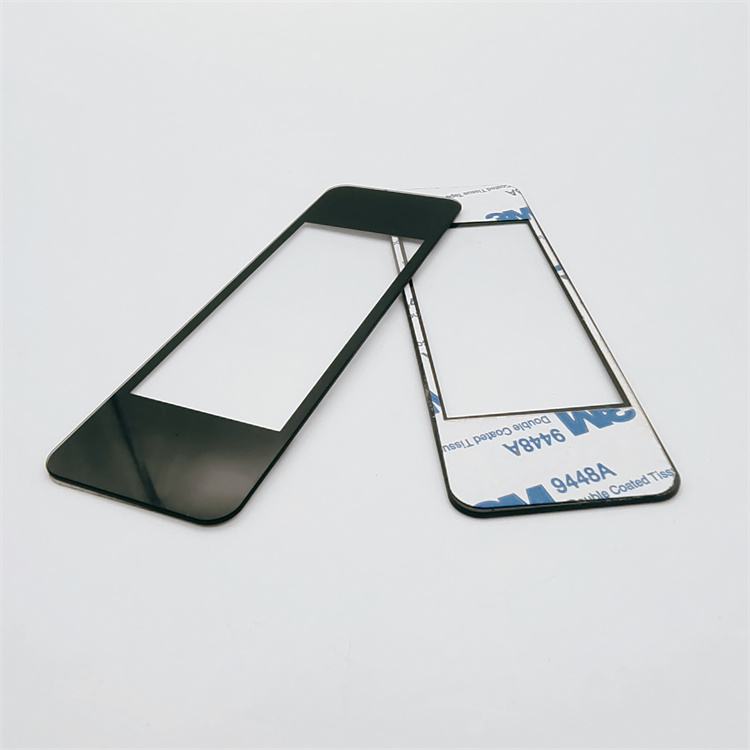
Adhesive-backed cover glass shortens assembly: a die-cut 3M tape layer replaces brackets and screws, reducing total fastening cost. Common in touch panels, display windows and compact electronic devices.
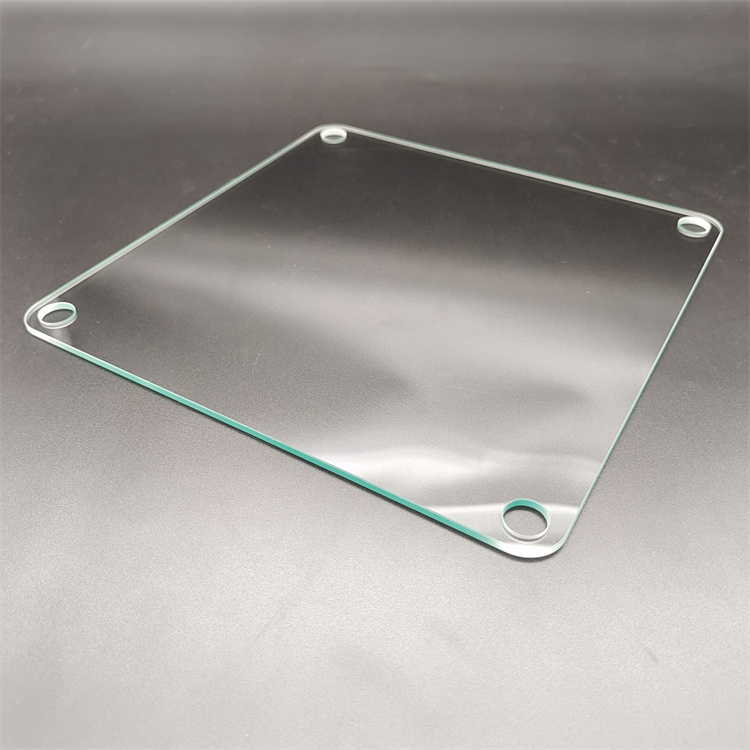
Soda-lime tempered glass with custom outlines and drilled holes is the cost-efficient option when the application does not require low-iron or borosilicate substrate — decorative covers, control windows and equipment faceplates.
Clear flat tempered glass covering the widest thickness range in the portfolio — from thin lighting diffusers to heavier inspection windows and protective panels. Thickness drives impact rating and thermal shock resistance.
How Smart Buyers Are Sourcing Glass Cover Plates Now
Six shifts in buyer behaviour that separate resilient supply plans from price-only purchasing.
Diversification Without Losing Process Depth
Buyers are adding second-source regions, but precision work — CNC shaping, multi-colour ceramic printing, AR/AG/AF coating — still concentrates in established Chinese clusters such as Dongguan and Shenzhen. The practical strategy is dual sourcing for simple parts while keeping optical and printed covers with experienced processors.
Low-Volume, High-Mix Order Books
Shorter product lifecycles mean a single purchase order often carries five to twelve variants. Suppliers quoting 100–500 piece MOQs with contained tooling costs increasingly win projects that larger, inflexible factories cannot economically serve.
Total Landed Cost Beats Unit Price
Freight volatility, tariffs and breakage claims have moved evaluation beyond FOB pricing. Procurement scorecards now include packaging method, breakage rate, documentation accuracy and rework risk alongside the quoted unit cost.
Combined Optical Coatings as Baseline Specs
AR + AF or AG + AF stacks are moving from flagship products into mainstream production. Demand for double-sided AR with consistent haze and adhesion performance is rising fastest in HMI, medical display and outdoor kiosk segments.
Verified Trade Data in Shortlisting
Response rate, reorder rate, on-time shipment and third-party assessment results now appear in RFP scorecards. Buyers use platform-verified performance as a first filter before investing engineering time in technical discussions.
Packaging and Sustainability as Scored Criteria
Reusable interlayers, FSC-certified cartons, reduced plastic and damage-proof edge protection are appearing in supplier audits. Better export packaging also lowers landed cost by cutting breakage claims and replacement shipments.
Product Development Trends
Where Glass Cover Plate Technology Is Heading
The specifications that designers are writing into 2026 product roadmaps today.
Ultra-Thin Chemical Strengthening (0.2–0.7 mm)
Thinner cover glass reduces device stack height and weight. Chemical strengthening at 0.2–0.7 mm is replacing thermal tempering wherever bending strength and edge-impact resistance are the governing requirements.
AR Coatings on Mainstream Display Covers
Anti-reflective layers that raise transmittance and cut surface reflection are now specified on automotive HMI, medical monitors and outdoor terminals — not just premium consumer electronics.
AG Treatment for Outdoor and Automotive HMI
Anti-glare etching diffuses reflected light so screens stay readable in sunlight and harsh overhead lighting. Finer haze grades preserve resolution on high-density displays while keeping legibility.
Smart-Switch Glass as a Design Surface
Printed tempered glass plates with touch-key windows, icon printing and fingerprint-resistant coatings are becoming the default front surface for smart switches and wall control panels.
Adhesive-Backed Glass for Assembly Efficiency
Pre-applied 3M tape, UV-cured adhesive layers and alignment features eliminate fasteners and assembly steps. Adhesive-backed glass is now standard in display windows, small appliances and touch modules.
Ceramic-Printed LED Lighting Covers
High-temperature ceramic inks that resist fading are the standard for LED lamp covers and light panels. Black border printing, matte edges and precise hole drilling define current demand in lighting fixtures.
Selection Guide
AR vs AG vs AF vs Ultra Clear: Match the Glass to the Application
The quick reference our engineers use during design review. Treatments can be layered — AG + AF for outdoor kiosks, AR + AF for touch monitors — but the layer order and substrate choice must be fixed at the sampling stage.
Glass Type
Problem It Solves
Typical Applications
Engineering Tip
Ultra Clear (Low-Iron)
Removes the green edge tint of standard float glass for true colour reproduction
Display covers, LED lamps, premium appliance panels
Pair with white or light printing; edge tint becomes visible against warm colours
AR Anti-Reflective
Cuts surface reflection and raises transmittance for higher contrast
Medical and industrial monitors, display windows, camera covers
Specify single- or double-sided coating; double-sided gives the largest gain
AG Anti-Glare
Diffuses glare from sunlight or overhead lighting
Outdoor kiosks, vehicle HMI, industrial panels, digital signage
26%Reorder Rate Across North America, Europe and Asia
Dongguan Jaswe Glass Co., Ltd. is a glass processing manufacturer based in Shipai Town, Dongguan — the heart of China's electronics supply chain. Cutting, CNC shaping, edge polishing, drilling, tempering, silk-screen and ceramic printing, AG processing and AR/AF coating all run in-house, so quality disputes do not disappear into a subcontractor chain. Most of the 80+ operators have more than eight years of hands-on glass experience. That depth matters on tight-tolerance work — 0.2 mm ultra-thin covers, multi-colour printing with transparent windows, and AR coatings that must pass adhesion testing after thermocycling.
CNC & Special-Shape Cutting
Rounds, notches, slots and irregular outlines from your DXF or DWG.
Edge Polishing
Pencil, flat, beveled, stepped and matte edges for safe handling.
Hole Drilling
Clean apertures for buttons, sensors, cameras and mounting points.
Thermal Tempering
Impact resistance and safer breakage behaviour on finished parts.
Silk Screen & Ceramic Printing
Logos, icons, borders and display windows with Pantone matching.
AG Anti-Glare Processing
Diffused matte surface that keeps screens readable in strong light.
AR Anti-Reflective Coating
Lower reflection and higher transmittance for brighter displays.
AF Anti-Fingerprint Coating
Oleophobic layer for touch surfaces — smoother glide, easy cleaning.
Glass Cover Plate Sourcing: Questions Buyers Ask Most
Direct answers to the questions that decide supplier shortlists and sample approvals.
What thickness range can a cover plate supplier process?
Leading processors cover 0.2 mm to 19 mm. Electronic-grade ultra-thin glass at 0.2–1 mm serves touch panels and display covers; 1–6 mm covers instrument, appliance and switch panels; 6–19 mm serves industrial lighting and protective windows. Confirm the supplier's in-house tempering range, because thin glass often requires chemical strengthening rather than thermal tempering.
What is the minimum order quantity (MOQ) for custom glass cover plates?
Custom tempered and printed glass typically starts at 100–500 pieces, depending on size, printing colours and coating. Standard clear pieces can be sampled in smaller quantities. MOQ is driven more by tooling setups — screen frames, CNC programs, coating fixtures — than by raw glass cost, so consolidating variants into one order usually improves pricing.
What is the difference between AR, AG and AF glass?
AR (anti-reflective) coating reduces surface reflection to raise transmittance and contrast. AG (anti-glare) treatment diffuses reflected light so the display remains readable under strong ambient light. AF (anti-fingerprint) is an oleophobic top layer that resists smudges. The three can be combined — AG + AF for outdoor kiosks, AR + AF for touch monitors — with the layer order fixed during sampling.
Which processes should a supplier complete in-house?
Cutting, CNC shaping, edge polishing, drilling, tempering, silk-screen or ceramic printing, AG etching and AR/AF coating. Each outsourced step adds handling risk, lead time and quality disputes. In-house tempering and coating are the two capabilities to verify first, because they are the hardest steps to rework and the most common source of optical defects.
How can buyers verify a supplier's trade performance?
Look for platform-verified data: response rate, reorder rate, transaction level, trade history and third-party assessment results. A supplier reporting a 90%+ response rate and a meaningful reorder rate across multiple markets is statistically more likely to deliver consistently than one showing only a polished catalogue.
How do I start a custom glass cover plate project?
Send a drawing (DXF, DWG or PDF), thickness, edge type, printing colours (Pantone), coating requirement (AR, AG, AF or a combination), application and estimated annual volume. A capable supplier returns a manufacturability review and sample plan within hours, not days — the response speed itself is a reliable indicator of factory depth.
What packaging prevents breakage in export shipping?
Standard practice is interleaved paper or foam between every piece, edge protection on all four sides, moisture-barrier bags for coated glass, and double-wall cartons. For coated optical glass, specify individual protective film and cleanroom-grade packaging. Packaging discipline is also a landed-cost factor: fewer breakage claims means fewer replacement shipments.
Can multiple surface treatments be combined on one cover plate?
Yes. Common combinations are AR + AF for touch displays, AG + AF for outdoor terminals, and silk printing + AR for display windows with brand graphics. The coating order matters, and adhesion performance should be validated after environmental cycling. Specify the full optical stack with your supplier before approving the sample.
Have a Drawing Ready? Get an Engineering Review.
Share your DXF, DWG or PDF with thickness, edge type, printing colours, coating requirement and estimated annual volume. Our engineers respond with manufacturability feedback — typically within 3 hours.