Top China Clear Tempered Glass Manufacturers & Wholesalers
A 2025–2026 buyer’s guide to custom clear tempered glass, ultra-clear display covers, AR/AG/AF coated panels, silk-screen printed control glass, LED lighting glass, and reliable factory-direct supply from Dongguan, China.
8 Clear Tempered Glass Products Recommended for Global Buyers
Clear tempered glass is no longer a single commodity grade. A modern B2B buyer may need a 0.5 mm ultra-clear cover with double-sided AR coating for a touch display, a heavy round printed window for a compact lighting fixture, or a 19 mm flat tempered panel for industrial equipment. The eight product families below are practical starting points for distributors, OEMs, and product teams comparing China clear tempered glass manufacturers and wholesalers. Each link preserves the original product specification page; use it to confirm drawings, tolerances, finishes, sampling, and production routes.
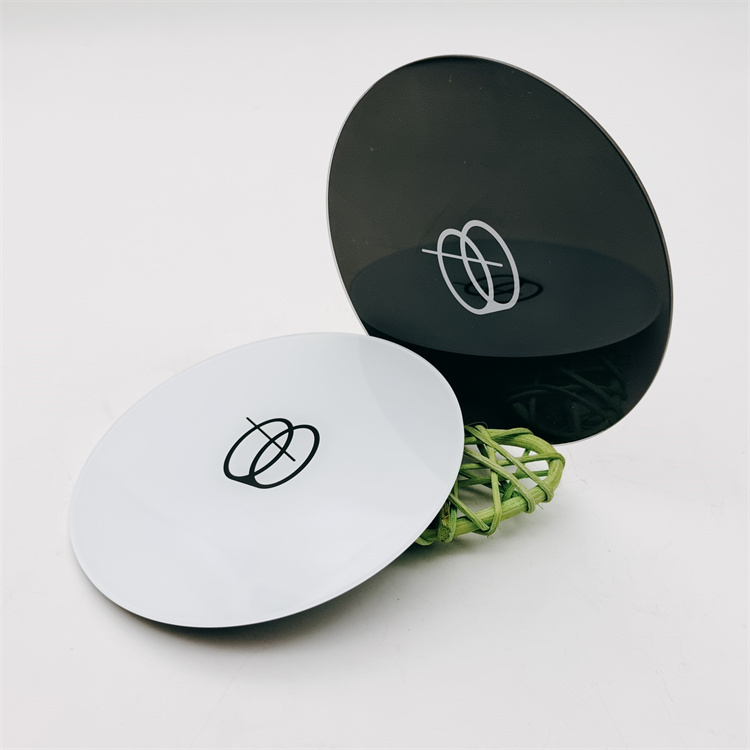
Black White Silk Screen Printing Toughened Glass Round Tempered Glass for Electric Appliance
A round tempered cover with black-and-white silk-screen printing for electric appliances. The print can hide internal wiring, define display windows, and carry brand marks while the tempered substrate resists impact and thermal cycling. Buyers typically specify glass thickness, print color codes, transparent window size, edge finish, and packaging before sampling. Best suited to appliance control panels, decorative covers, and consumer electronics where visual consistency matters as much as strength.
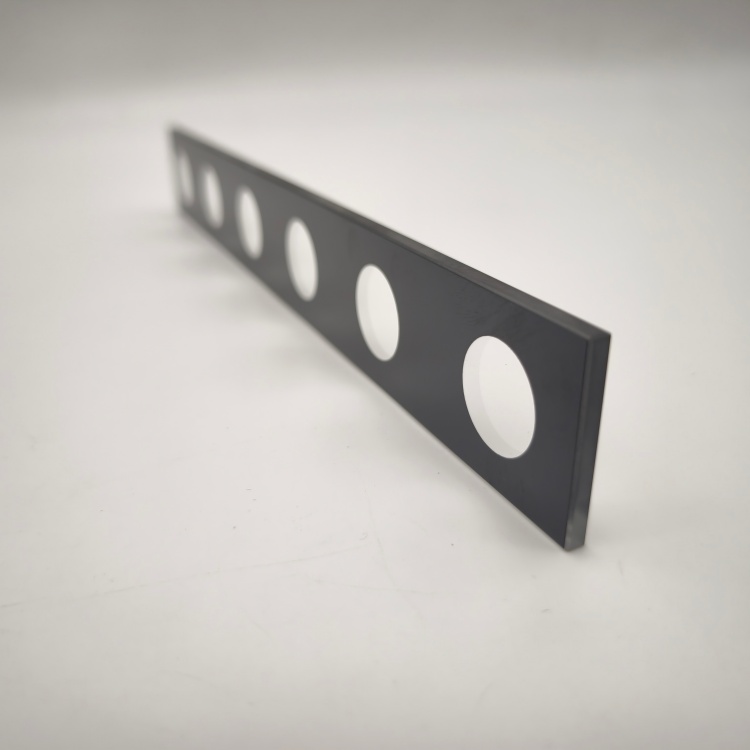
Black Printed Polished Smooth Matte Edge Linear Tempered Glass for LED Wall Washer Light
Linear wall-washer glass demands straightness, edge consistency, and a black print that remains uniform after tempering. A polished smooth matte edge reduces glare at the border and gives fixtures a clean architectural finish. For lighting brands, the critical verification points are print registration over long spans, edge-chip limits, and heat resistance near high-output LED arrays. Use this format for wall washers, linear lights, and signage bars where a precise black frame is part of the finished product.
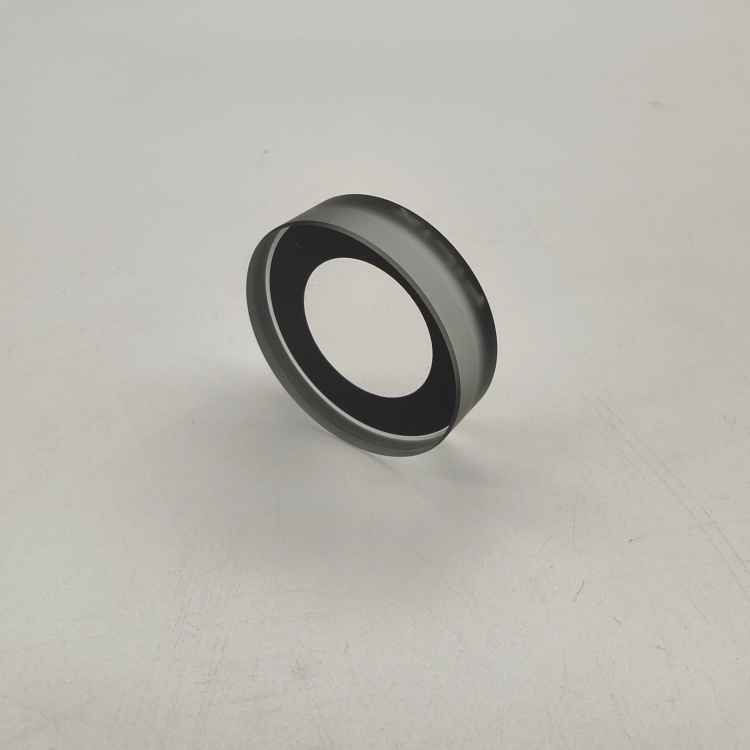
High Quality Small Diameter 10mm Thickness Round Tempered Glass with High Temperature Ceramic Printing
Small-diameter round glass with high-temperature ceramic printing is often used for compact lighting, sensor windows, and equipment details where ordinary inks may fade. Ceramic ink fuses into the glass surface during thermal processing, producing better abrasion and heat resistance. Buyers should ask for print adhesion, color tolerance, and flatness data on the production drawing, because small parts magnify edge and registration defects that would be less visible on large panels.

Both Sides Anti Reflective AR Coating 1mm 2mm 3mm 4mm Ultra Clear Tempered Glass
Double-sided AR coating on low-iron ultra-clear glass is a high-value choice for displays, medical monitors, industrial HMIs, and camera windows. The coating reduces surface reflection and increases useful light transmission, improving contrast without raising display brightness. The procurement question is not simply “AR or no AR” but the target reflectance, transmission curve, coating durability, and whether the coating stack is compatible with printing or touch bonding. Sample testing under the final lighting condition is essential.
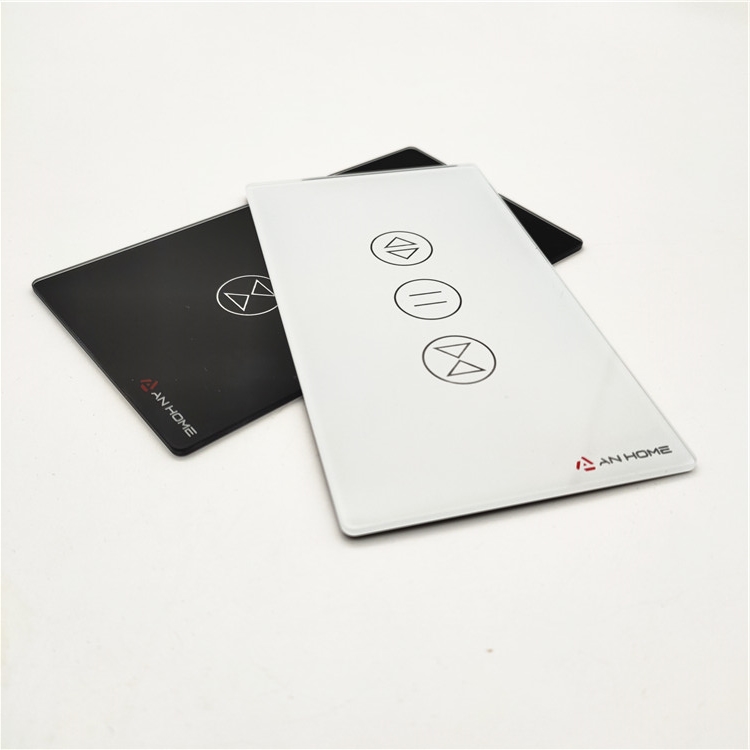
Home Smart WiFi Remote Control Touch Tempered Glass Screen-Printed Glass Switch Glass Panels Curtain Control Glass
Smart switch glass integrates decoration, touch-friendly surface performance, and electrical safety. The printed icons, backlit windows, and border colors must align with the touch sensor and housing, while the tempered panel must survive repeated cleaning and accidental impact. Buyers should lock the exact glass thickness, print opacity, surface gloss level, and touch-key registration. This product family is especially sensitive to color consistency across batches because multiple switch plates may be installed side by side.

Customized Industrial Lighting Solid Flat Ultra Clear Frosted Tempered Glass with Beveled Step Edge
Ultra-clear frosted tempered glass with a beveled step edge balances light diffusion with a premium mechanical fit. Frosting controls glare and softens LEDs, while the step edge can locate the glass in a metal fixture or create a shadow line. Critical specs include haze level, transmittance, edge geometry, and tolerances at the step. For industrial lighting, request samples illuminated under the production LED board; a haze value that looks correct on paper may still produce visible hot spots.
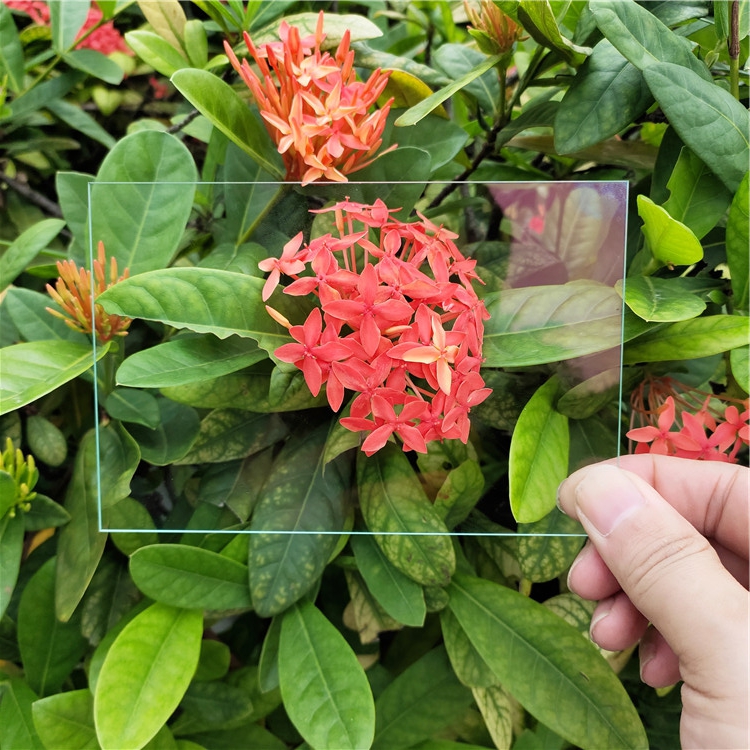
Factory Custom Optical Quality Nano Coating Tempered Anti Reflective AR Glass
Optical-quality nano-coated AR glass targets applications where reflection control affects performance, such as inspection equipment, optical windows, displays, and precision instruments. The phrase “nano coating” should be tied to measurable outcomes: reflectance at specified wavelengths, adhesion after abrasion testing, humidity resistance, and compatibility with cleaning agents. For E-E-A-T-driven sourcing, ask for the coating process route, sample spectra, and a production control plan, not just a claim on a brochure.
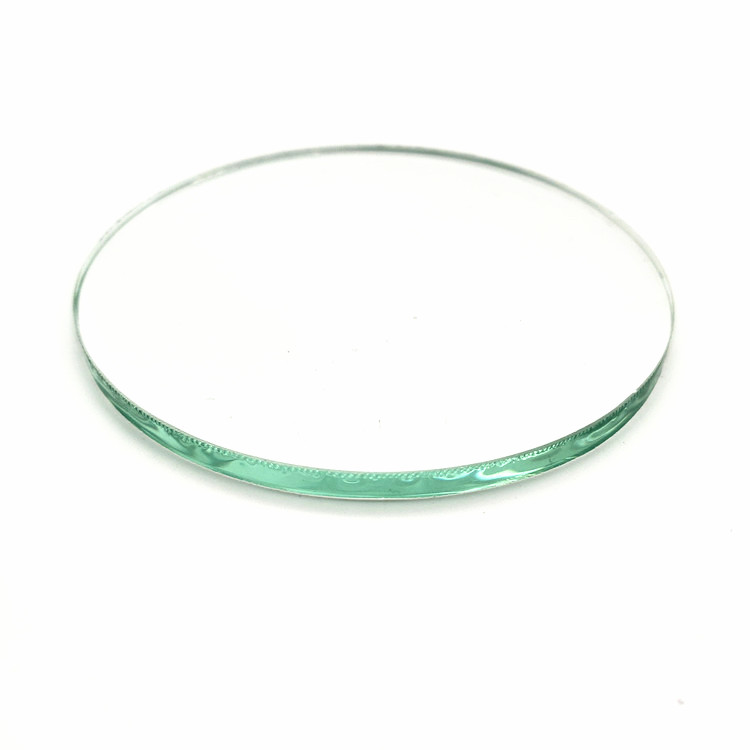
Customized Clear Flat Solid Tempered Glass Pieces 1mm-19mm for Industrial Lighting and Various Applications
This broad-purpose product family covers clear flat tempered glass from 1 mm to 19 mm for industrial lighting and custom equipment. Thickness choice should follow mechanical load, thermal exposure, edge condition, and fixing method—not simply the lowest price per square meter. A well-matched specification may use thinner low-iron glass for optical clarity, or thicker tempered glass for structural covers. Buyers should document flatness, edge-chip acceptance, hole-to-edge distance, and packaging in the purchase order.
What Buyers Should Look For Beyond a Low Piece Price
In commodity sourcing, claims sound similar. In engineered glass, measurable signals separate a capable manufacturer from a trading intermediary. The figures below reflect the type of operational transparency that serious wholesale buyers should request during supplier screening.
Experienced operators reduce handling defects on thin glass, printed panels, and optical coatings.
Cutting, CNC shaping, edging, drilling, tempering, printing, and coating equipment under one roof.
Production capacity suitable for repeat wholesale programs, not only one-off sample orders.
Fast engineering replies matter when a drawing needs manufacturability feedback before sampling.
Consistent communication is part of supply reliability, especially across time zones.
Repeat orders are a practical indicator of fit between specification, quality, and delivery.
What Top China Clear Tempered Glass Manufacturers & Wholesalers Must Prove
China remains the world’s most complete supply base for clear tempered glass, ultra-clear display covers, printed control panels, and optical coatings. But the buying decision has changed. Professional buyers now compare process capability, coating durability, inspection discipline, packaging engineering, and communication speed—not only the quoted price per square meter.
Material and Traceability
A reliable supplier should identify the substrate family, thickness range, low-iron content where relevant, and the route from raw sheet to finished part. For coated or printed glass, traceability should include coating batch, ink type, tempering route, and inspection result. This is essential when the final product is installed in appliances, displays, lighting fixtures, or electrical equipment where a cosmetic defect can trigger a line stop.
Process Capability, Not Just Capability Claims
Ask for the actual process route: CNC cutting, edge polishing, hole drilling, silk-screen or ceramic printing, tempering, AG processing, and AR/AF coating. Then ask how each step is inspected. Capability becomes credible when the supplier can explain tolerances for flatness, edge chipping, hole position, print registration, coating adhesion, and color consistency. A capable factory will welcome a drawing review before quoting.
Evidence Over Adjectives
Words such as “high quality,” “strong,” and “clear” are not specifications. Buyers should request measurable evidence: transmission values, haze range, reflectance targets, tempering parameters, sample photos under controlled light, packaging test photos, and a documented approval process. The strongest E-E-A-T signal in glass sourcing is not a longer brochure; it is a supplier that can translate a drawing into a controlled manufacturing plan and a repeatable acceptance standard.
Procurement Trends Reshaping China Clear Tempered Glass Wholesale
Wholesale buyers are moving away from generic “clear tempered glass” requests toward application-specific specifications. The change is driven by thinner devices, higher display brightness, more demanding outdoor installations, and the need to reduce assembly-line reject rates.
Low-Iron Clarity as a Baseline
For display covers, LED lighting, and premium appliance panels, ordinary clear glass can introduce a visible green edge tone. More buyers now specify low-iron ultra-clear substrates as a baseline rather than an upgrade. The procurement implication is clear: compare transmission and edge color, not only thickness and price. When printing light colors or white borders, low-iron glass often protects the final visual intent better than standard float glass.
Coating Stacks Specified as a System
AR, AG, and AF are increasingly combined in one cover glass. An outdoor touch kiosk may need AG to diffuse sunlight plus AF to resist fingerprints; a medical display may prioritize double-sided AR and easy-clean performance. Buyers should define the coating stack as a system with target reflectance, haze, adhesion, and cleaning resistance. A coating that performs well by itself may not survive printing, bonding, or the customer’s cleaning chemicals.
Tolerance Conversations Move to Process Capability
Drawings often show ideal tolerances, while production must work within a capable process window. Experienced buyers now ask for a process capability review before approving samples: can the supplier hold hole-to-edge distance, step-edge geometry, print registration, and flatness at volume? This reduces the risk of a sample passing while mass production drifts. The best time to solve tolerance conflicts is before tooling, printing screens, and coating batches are committed.
Documentation Becomes Part of the Product
Inspection reports, sample approval records, packaging specifications, and change-control notes are no longer administrative extras. They protect both buyer and supplier when a shipment is challenged. For regulated or high-value applications, buyers may also request material declarations, coating durability records, and batch traceability. Suppliers that treat documentation as a core deliverable usually have stronger process discipline than those that promise quality only through email reassurance.
Product Development Trends: What the Next Generation of Clear Tempered Glass Must Deliver
The next sourcing cycle will reward suppliers who can combine optical performance, mechanical strength, print durability, and production consistency. Clear tempered glass is becoming an engineered component rather than a cut-to-size commodity.
Thinner Glass, Stronger Surface Engineering
Electronic devices continue to push toward thinner cover glass, including 0.2–1.1 mm ranges, while demanding better impact and scratch performance. This increases the importance of edge quality, handling discipline, and chemical or thermal strengthening routes. Buyers should validate not only thickness but also edge-chip limits and breakage behavior after assembly. Thin glass can be technically feasible yet commercially risky if packaging and handling are not engineered together.
Ceramic Inks for Durability and Design
High-temperature ceramic printing is gaining attention where long-term abrasion, heat exposure, and color stability matter. It allows black borders, brand marks, and functional windows to become part of the glass surface rather than a fragile add-on. The buying team should specify Pantone references, opacity, window-edge definition, and post-tempering appearance. Print should be evaluated under the final product lighting, because color shifts can appear when backlighting, touch sensors, or dark housings are assembled.
Smart Surfaces for Touch and Glare
Touch panels, smart switches, and outdoor interfaces are driving demand for combined AR, AG, and AF performance. The goal is not a single optical metric but a balanced user experience: readable in bright light, resistant to fingerprints, easy to clean, and compatible with the touch module. Suppliers that can discuss coating compatibility with adhesives, printing, and cleaning agents add more value than suppliers that simply offer “AR coating” as a checkbox.
Inspection and Packaging Automation
As covers become thinner and prints become finer, manual inspection alone becomes less reliable. Automated optical inspection, standardized defect libraries, and edge-protected packaging are becoming competitive advantages. Buyers should ask how the supplier defines a cosmetic defect, who approves the limit sample, and how packing is validated for export transit. A low unit price loses its value quickly if breakage or rework appears during incoming inspection or assembly.
How to Verify a China Clear Tempered Glass Manufacturer Before You Place a PO
Use the checklist below as a practical filter when comparing clear tempered glass manufacturers and wholesalers. It is designed for buyers who need repeatable quality across multiple shipments, not merely a attractive first sample.
Process Capability Sheet
Request tolerances for cutting, CNC shaping, drilling, edge polishing, flatness, print registration, and coating thickness. The sheet should match the actual product you are buying, not a generic catalog page.
Equipment Ownership
Ask which processes are completed in-house. Tempering, printing, and coating are critical quality steps; subcontracting them increases lead time and can blur responsibility when a defect appears.
Coating and Print Durability
For AR, AG, AF, or ceramic-printed glass, request adhesion, abrasion, humidity, and cleaning test data. Also ask how the surface should be cleaned by the end user to avoid avoidable warranty claims.
Tempering Evidence
Tempered glass cannot be cut or drilled after processing. Confirm that holes and cut-outs are completed before tempering and that breakage patterns and stress checks are part of routine inspection.
Yield-Adjusted Landed Cost
Compare quoted price with expected yield. A lower-priced panel that creates edge chipping, coating scrap, or assembly rework can be more expensive than a slightly higher quote with stable quality and better packaging.
Supply Continuity
Check capacity, raw material planning, response speed, and change-control policy. For a wholesale program, the ability to repeat the same print color and coating performance six months later is as important as the first shipment.

Why Dongguan Jaswe Glass Co., Ltd. Is a Reliable Clear Tempered Glass Partner
Dongguan Jaswe Glass Co., Ltd. is based in Dongguan, Guangdong—the center of China’s electronics and manufacturing supply chain. The company processes and exports custom tempered glass, ultra-clear glass, display glass, touch screen glass, silk-screen printed glass, switch glass, AR/AG/AF coated glass, electrical equipment glass, and LED lighting glass. Its product scope aligns closely with the requirements of appliance brands, lighting manufacturers, touch-panel integrators, and industrial equipment buyers.
Most of the company’s 80+ operators have more than eight years of hands-on glass processing experience. That experience matters on tight-tolerance jobs such as ultra-thin 0.2 mm cover glass, multi-color printing with transparent display windows, beveled step edges, and optical coating stacks. With 26 glass processing machines—including a tempering furnace, edge polishing equipment, silk-screen printers, and automatic cutting lines—monthly output exceeds 200,000 pieces of processed glass. In-house cutting, CNC shaping, edge polishing, hole drilling, tempering, silk-screen and ceramic printing, AG processing, and AR/AF coating shorten lead time and reduce the quality gaps that can appear when glass moves between subcontractors.
The company serves buyers in America, Europe, and Asia, with an average response time of three hours or less and a 96.61% response rate. A 26% buyer reorder rate reflects repeat demand rather than one-time transactions. For overseas procurement teams, these operational signals matter because clear tempered glass is often only one component in a larger assembly; a late or inconsistent shipment can disrupt the entire production schedule. Jaswe Glass emphasizes scientific management, careful manufacture, high-quality service, and continuous improvement—principles that are especially relevant when a buyer needs both a first sample and a repeatable wholesale supply route.
Common Questions About Buying Clear Tempered Glass in China
These are the questions overseas buyers ask most often when comparing clear tempered glass manufacturers and wholesalers. Clear answers at the quotation stage reduce sampling cycles and prevent costly specification mismatches later.
What is clear tempered glass, and how is it different from ordinary clear glass?
Clear tempered glass begins as clear float or low-iron glass and is cut, edged, drilled, printed if required, and thermally tempered. Tempering increases mechanical strength and changes the breakage pattern so the glass fractures into smaller, less dangerous pieces. Because tempering occurs after all cutting and drilling, no additional machining is possible afterward. When sourcing from China, specify thickness, edge finish, flatness, print requirements, coating, and packing method. For display or lighting use, also clarify whether low-iron ultra-clear glass is required for better color neutrality.
How do I compare quotations from multiple China tempered glass manufacturers?
Compare yield-adjusted landed cost, not only piece price. Ask each supplier to quote the same drawing, glass grade, edge finish, printing colors, coating specification, inspection standard, and packaging. Then review expected yield, sampling cost, lead time, and replacement policy for defects. A quote that saves a few cents per piece but produces 3% breakage or rework at your assembly line is rarely the lowest-cost choice. Also confirm whether the supplier performs tempering, printing, and coating in-house or subcontracts critical steps.
What are typical MOQs and lead times for custom clear tempered glass?
Most custom glass items start around 100 to 500 pieces, depending on size, printing, coating, tooling, and material yield. Standard clear tempered pieces can sometimes be supplied in smaller sample quantities for evaluation. Lead time usually includes drawing review, sampling, material preparation, processing, inspection, and export packing. Coated or multi-color printed parts often need more time because color matching and coating durability checks are required. For a wholesale program, request a production schedule that separates sample approval from mass production.
Which coating should I choose: AR, AG, AF, or a combined stack?
AR anti-reflective coating reduces surface reflection and improves light transmission, which helps contrast on monitors, displays, and optical windows. AG anti-glare treatment diffuses reflected light so the screen stays readable under strong ambient or outdoor lighting. AF anti-fingerprint coating is an oleophobic layer that resists smudges on touch surfaces. They can be combined. For an outdoor touch kiosk, AG plus AF may be more useful than AR alone. For a medical or industrial monitor, double-sided AR may be the priority. Always test the final coating stack with the actual lighting, cleaning chemicals, and touch assembly.
Can Chinese suppliers produce ultra-thin tempered glass below 1 mm?
Yes, but the practical answer depends on the application, size, edge quality, and strength requirement. Ultra-thin glass in the 0.2–1 mm range is commonly used for electronic covers, touch panels, and display windows. Thin glass is less forgiving during handling, CNC processing, printing, and packing. Buyers should validate edge-chip limits, flatness, warpage control, and breakage risk during bonding or assembly. Ask for a sample made with the same process route as mass production, and review the packaging design before approving a thin-glass program.
How can I verify tempering strength and edge quality before mass production?
Request the production drawing with clear tempering, edge, hole, and tolerance requirements. Then ask for sample inspection records covering edge chips, flatness, hole position, and visual defects under controlled lighting. Tempering parameters should be appropriate for the thickness and glass type, and holes or cut-outs must be formed before tempering. For critical applications, discuss breakage-pattern checks, stress measurement where applicable, and packaging validation. A supplier that can explain these controls is usually more reliable than one that simply states that the glass is “strong.”
What drawings and files should I send for an accurate quote?
Send a DXF, DWG, PDF, or clearly dimensioned drawing showing outline size, corner radii, holes, cut-outs, step edges, bevels, thickness, tolerances, and critical datum points. For printed glass, include the artwork, Pantone colors, transparent window size, print side, and icon positions. For coated glass, specify AR, AG, or AF requirements, target transmission or reflectance, and whether one or both sides require treatment. Also state the application, annual quantity, sample quantity, and packaging expectation. The clearer the input, the faster the engineering review.
How should I plan packaging and shipping to reduce breakage?
Glass packaging should be engineered around the part, not treated as a generic carton choice. Thin glass, large panels, printed surfaces, and coated glass may require different interleaving, edge protection, corner reinforcement, moisture protection, and carton strength. Ask the supplier for packing photos and, for new projects, a packing validation plan. For export shipments, discuss pallet type, stack height, humidity exposure, and unloading conditions. Good packaging adds cost, but it is usually far less expensive than replacing a partial shipment or delaying an assembly line.
Have a Custom Glass Drawing? Get an Engineering Review.
Share your drawing, thickness, edge requirement, printing colors, coating target, application, and estimated annual quantity. The review should identify manufacturability risks, sampling needs, tolerance conflicts, and the most suitable process route before you commit to mass production. For clear tempered glass, ultra-clear display covers, AR/AG/AF coated glass, LED lighting glass, or switch panels, a short engineering conversation can save weeks of trial and error.