Top China Custom Cover Glass Factory & Supplier
Engineering-led tempered, printed and AR / AG / AF coated cover glass for displays, touch panels, LED fixtures, smart switches and industrial equipment — supported by 26 glass machines and 200,000+ pieces monthly capacity.
Eight Custom Cover Glass Products Buyers Evaluate First
These eight products represent recurring specification patterns in custom cover glass sourcing: ultra-thin adhesive-backed glass, low-iron ultra clear glass, small-format beveled panels, stepped LED windows, industrial display covers, printed screen protectors and smart switch panels. Use them to benchmark edge quality, print registration, hole integrity, flatness and coating options before sharing a drawing.
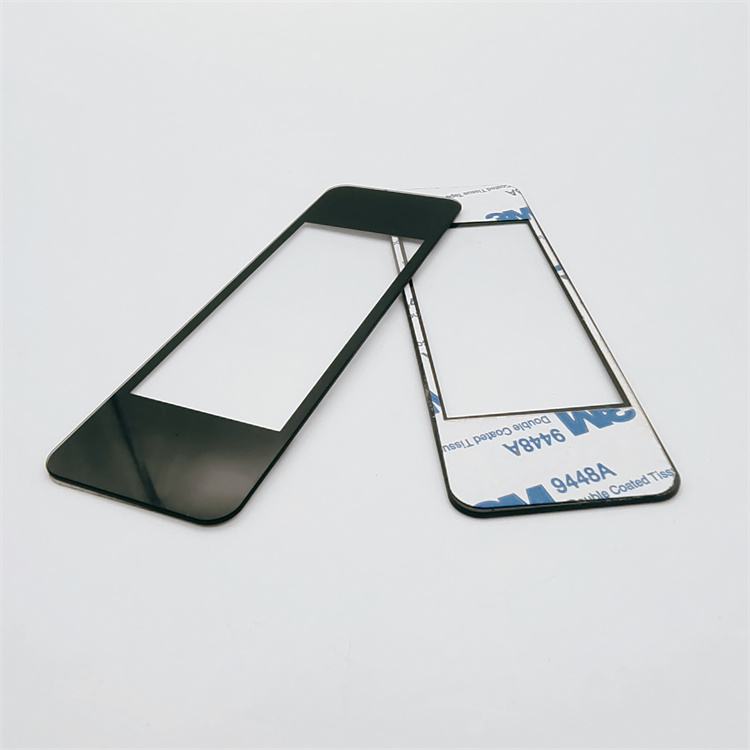
Ultra Thin 1mm Tempered Glass with 3M Tape for Screen Cover Glass
A practical reference for 1 mm screen covers that need stable flatness, clean edge polishing and controlled 3M tape lamination.
View product specifications
Small Size Ultra Thin 0.5mm 0.7mm 1mm Tempered Glass Panel With Adhesive Tape for Screen Protection
Compact 0.5 / 0.7 / 1 mm panels for electronics windows and protective covers where dimensional repeatability matters.
View product specifications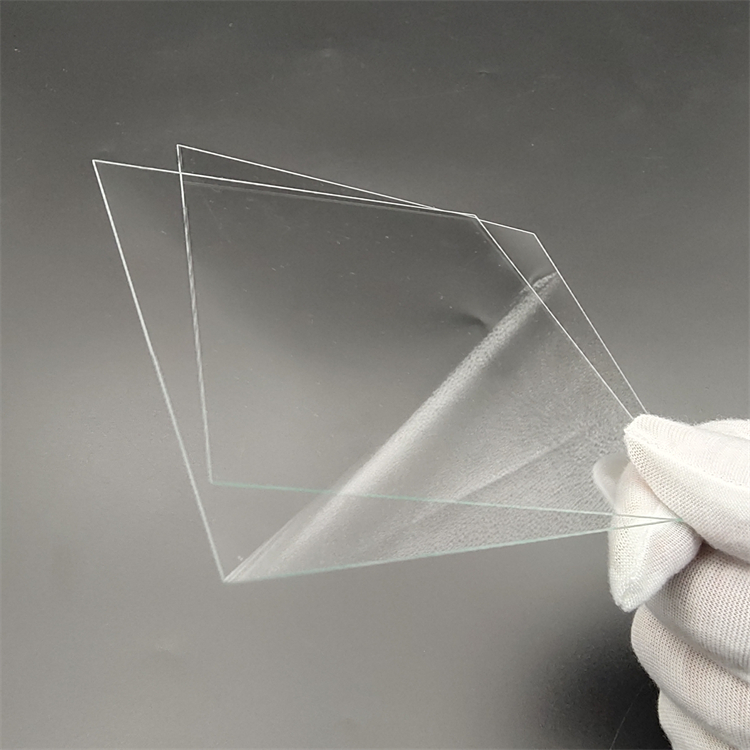
Customized Ultra Clear 0.5mm 0.7mm Thickness Ultra Thin Tempered Glass
Low-iron ultra clear glass for color-critical displays, touch windows and premium appliance panels where green tint is unacceptable.
View product specifications
Customized Small Size 3mm 4mm 5mm 6mm Beveled Edge Tempered Glass
3–6 mm small-size tempered panels with beveled edges for enclosures that require handling safety and a finished profile.
View product specifications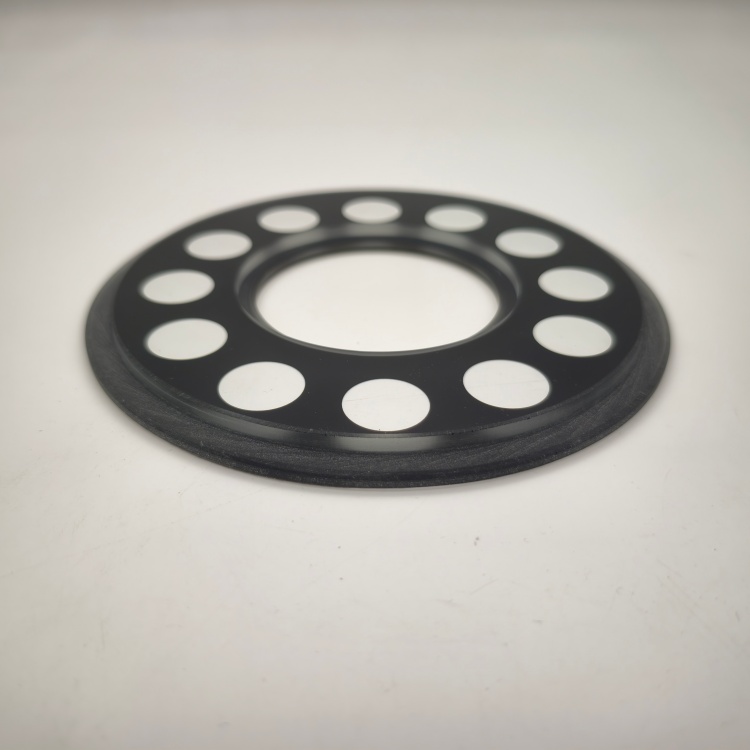
Factory Customized Round Hole Inner and Outer Double Step Edge Printed Tempered Glass for LED Lighting
Printed LED lighting cover with a stepped edge and round hole, designed to mask internal hardware while keeping the lit window clean.
View product specifications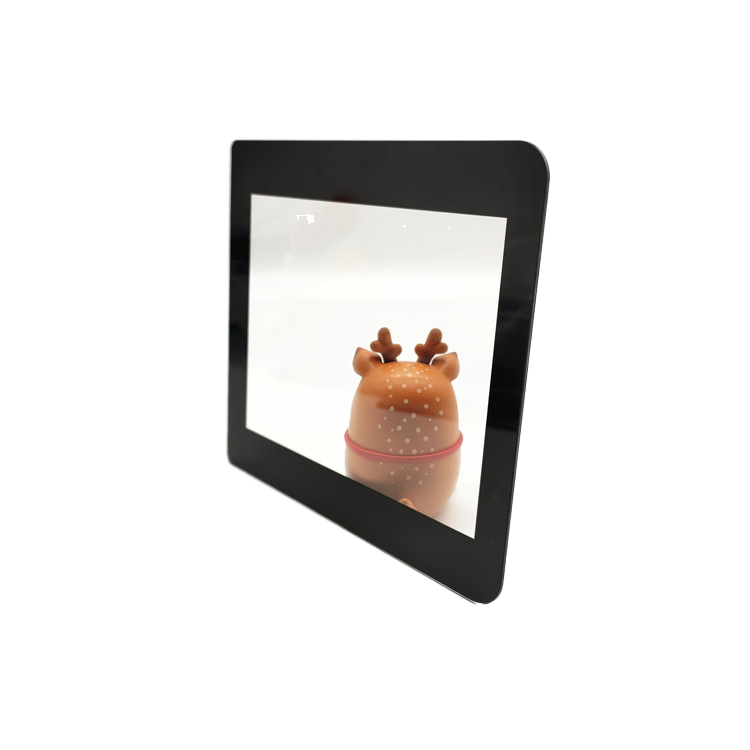
Industrial Use Electronic Glass 1mm/2mm/3mm/4mm Tempered Glass Display Screen Window Protection Cover
1–4 mm tempered display windows for HMI, instruments and electrical equipment, with optional printing and precision cut-outs.
View product specifications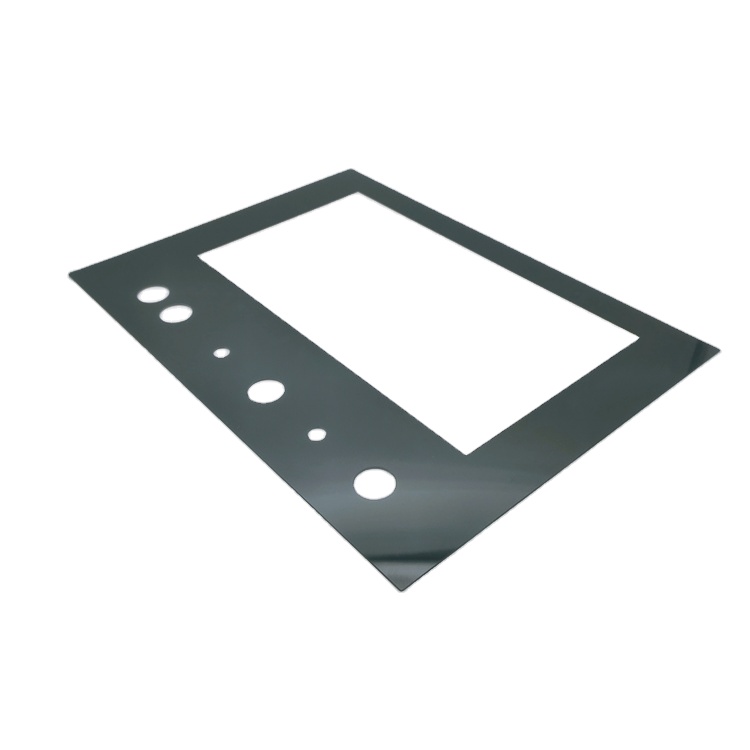
Customized Printed 0.5-6mm Thickness Flat Tempered Glass Screen Protector with Cut Holes
Printed flat tempered glass with cut holes for appliance, instrument and equipment panels; useful for checking opacity and window alignment.
View product specifications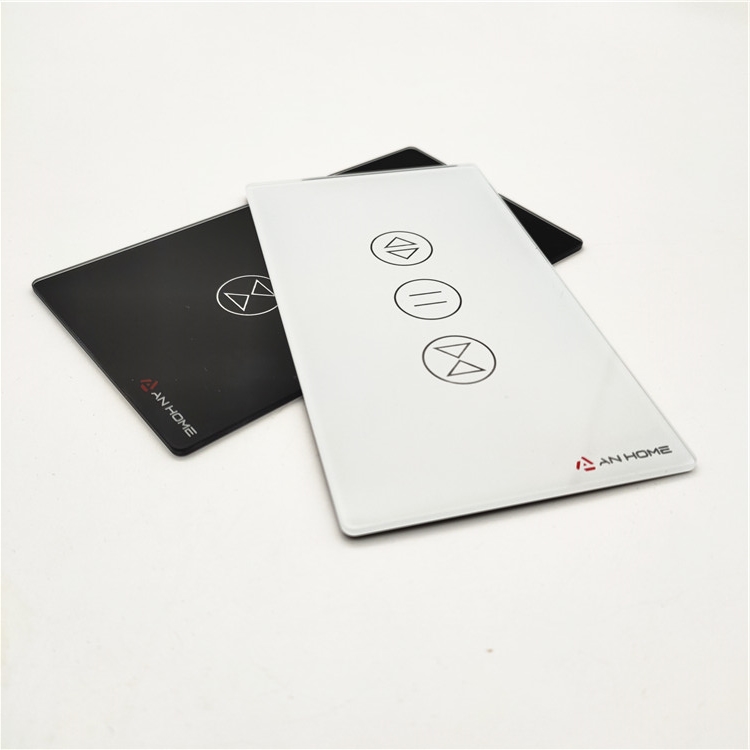
Home Smart WiFi Remote Control Touch Tempered Glass Screen-Printed Glass Switch Glass Panels Curtain Control Glass
Printed smart switch glass for WiFi touch controls and curtain panels, combining decorative glass with clear touch windows.
View product specificationsThese figures are most useful when tied to sourcing risk: capacity supports scale-up, machine count reveals process depth, response time affects engineering communication, and the reorder rate suggests whether earlier buyers found the output repeatable. The third-party trade profile also records a 96.61% response rate and six years of on-site verified status. Confirm current production loading during RFQ.
A Custom Cover Glass Supplier Is Part of Your Product Quality System
Cover glass is not simply a flat sheet placed on top of a product. It is a user-facing mechanical, optical and printed component. A 0.2 mm thickness variation can change fit; a chipped hole can stop assembly; a visible color shift can make a smart switch panel look mismatched beside an adjacent wall plate; inconsistent coating haze can turn a black display grey under retail lighting. That is why a credible custom cover glass quotation should be built around process capability, inspection criteria and change control — not only a piece price.
For overseas buyers, the most reliable China custom cover glass factory is usually not the one with the largest catalog. It is the one that can review a drawing, identify manufacturability risks, define the inspection method, and repeat the approved sample across production lots. Dongguan Jaswe Glass operates as a custom processor rather than a generic glass trader: cutting, CNC shaping, edge polishing, hole drilling, tempering, silk screen and ceramic printing, AG processing, and AR / AF coating are managed under one quality system. That matters when a cover glass part combines several processes — for example, ultra clear substrate, black border printing, a transparent touch window, AR coating and an adhesive backing.
Before comparing suppliers, prepare a complete RFQ data pack. A short description such as “1 mm tempered glass, printed black” is not enough for a repeatable quotation. The supplier needs to understand the visible area, the non-visible mask, the edge condition, the hole tolerance, the coating target and the application environment. When those details are missing, the buyer often pays for them later through sample revisions, sorting, or a second tooling cycle.
Our engineering rule is simple: if a specification cannot be measured or inspected, it should not be quoted as though it were guaranteed. Optical values, print colors, flatness and edge acceptance all need a agreed method before mass production.
The RFQ Data Pack That Prevents Expensive Guesswork
- 2D drawing in DXF, DWG or PDF; STEP file if a 3D model exists
- Glass thickness, substrate type and visible / window area
- Outline tolerance, flatness, warpage and acceptable edge-chip limit
- Edge type: flat, pencil, beveled, stepped, matte or polished
- Holes, notches, countersinks and step-edge geometry
- Printing: Pantone colors, ink side, opacity, icon detail and window mask
- Coating: AR single / double side, AG haze or gloss, AF, or a combined stack
- Adhesive: tape grade, thickness, release liner and application method
- Application environment: indoor, outdoor, cleaning chemicals, UV or heat
- Annual volume, pack size and destination for landed-cost calculation
Choose Cover Glass by the Problem It Must Solve
AR, AG, AF, ultra clear and printed tempered glass are not interchangeable upgrades. Each treatment solves a different user-experience or manufacturing problem. Treatments can be combined, but the dominant requirement should be defined first.
| Glass / Treatment | Problem It Solves | Typical Applications | Engineering Note | Example Product |
|---|---|---|---|---|
| Ultra Clear Low-Iron | Removes the green tint of standard float glass | Display windows, LED covers, premium appliance panels | Confirm edge color, print opacity and substrate batch consistency | 0.5 / 0.7 mm ultra clear glass |
| AR Anti-Reflective | Reduces surface reflection and improves contrast | Medical or industrial monitors, camera windows, sealed displays | Specify single- or double-sided coating and a reflectance target | 1 mm tempered cover glass |
| AG Anti-Glare | Diffuses harsh light from sunlight or overhead lighting | Outdoor kiosks, bright HMI rooms, industrial control panels | Select haze level by viewing distance and screen resolution | industrial display window |
| AF Anti-Fingerprint | Repels oil and sweat on touch surfaces | Smart switches, POS terminals, capacitive touch panels | Apply as a top layer; define cleaning and abrasion test method | smart switch glass panel |
| Printed Tempered | Hides circuitry and adds icons, borders or windows | Switch plates, appliance controls, instrument panels | Send Pantone codes, ink side and transparent window dimensions | printed glass with cut holes |
| Stepped / Beveled Tempered | Improves edge handling and accommodates housings | LED lighting, small enclosures, decorative panels | Confirm bevel width, step depth, polish quality and chip limit | stepped LED glass |
Final optical values depend on glass thickness, substrate, printing, adhesive and coating stack. Sample testing under the actual product lighting is recommended before mass production.
Starting Points for Common Cover Glass Programs
Use these configuration notes as a technical starting point. A factory review should still confirm the drawing, tolerance stack and acceptance criteria.
Display & Touch Interfaces
For a 0.7–1.0 mm capacitive touch cover, start with low-iron tempered glass, a printed black border, optional AR, and AF on the touch side. Test both appearance and touch feel after lamination.
See 1 mm cover glass →Industrial HMI Windows
For 2–4 mm equipment windows, use tempered glass with a printed border and CNC holes. AG is useful in bright control rooms; AR improves contrast in sealed enclosures.
See industrial display cover →LED Fixture Covers
For LED lighting, specify ceramic ink that survives heat, a clean lit window and a stepped edge if the cover sits into a housing. Check print opacity after tempering, not before.
See stepped LED glass →Smart Switches & Appliances
For smart switches and appliance panels, combine printed glass with precise touch windows and adhesive backing. AF helps maintain appearance in daily use, while the print masks circuitry.
See smart switch glass →Four Procurement Trends Reshaping Custom Cover Glass Supply
Buyers are moving away from price-only sourcing toward a risk-adjusted model. The strongest suppliers will be the ones that make their process visible and support engineering decisions before sampling.
Dual Qualification, One Process Standard
Buyers still concentrate volume, but they qualify a second glass processor before disruption. The winning supplier makes change control visible: same substrate, same ink, same coating stack and the same inspection method.
Total Landed Cost Replaces Piece Price
Freight, breakage, replacement, sorting and line stoppage usually cost more than the delta between quotes. Ask for first-pass yield, packaging validation and a clear deviation process.
Engineering Collaboration Before RFQ
More buyers send a drawing, application photo and failure history before asking for a price. A supplier that flags a fragile hole or impossible print window early is more valuable than one that quotes quickly and fails at sampling.
Traceability & Packaging Assurance
Overseas assembly lines cannot afford mixed lots or edge chips from transit. Batch records, interleaved packing, edge protection and photo confirmation before shipment are becoming standard requests.
Cover Glass Trends That Will Affect Your Next Drawing
The market is pushing toward thinner stacks, more integrated coatings and printed glass that functions as part of the user interface. These trends are useful only when the process capability keeps pace.
Ultra-Thin 0.2–1.0 mm Expansion
Thinner cover glass supports lighter displays, but handling, flatness, edge quality and coating uniformity become harder. Ask for sample data on warpage, chip limits and lamination performance.
Coating Convergence: AR + AG + AF
The market is moving from single-function treatments to combined optical stacks. Specify the dominant requirement first: maximum transmission, lowest glare, or the best touch feel and fingerprint resistance.
Printed Glass as an Interface
Hidden-until-lit icons, black border masks, smart-switch panels and appliance touch areas turn cover glass into a user interface, not only a protector. Print registration and ink durability become product-quality issues.
High-Brightness Display Durability
Mini / micro LED, outdoor HMI and high-brightness signage push for stable flatness, low warpage and predictable color. Validate the full glass + print + coating + adhesive stack, not just the raw glass.



Custom glass processing in Dongguan: cutting, CNC shaping, polishing, tempering, printing and coating.
Inside Dongguan Jaswe Glass: A Custom Processor, Not a Catalog Trader
Located in Dongguan, Guangdong, Dongguan Jaswe Glass Co., Ltd. sits inside one of China’s densest electronics and lighting supply chains. That location is practical rather than decorative: it shortens the feedback loop between design changes, sample parts, print colors and coating trials.
With 51–100 employees, including more than 80 skilled workers, 26 glass processing machines and monthly output above 200,000 pieces, the factory is set up for custom runs that sit between lab-scale sampling and large-volume commodity glass. Many operators have more than eight years of hands-on glass processing experience. That depth matters most on ultra-thin 0.2 mm parts, small 3–6 mm beveled panels, and multi-color printing with transparent display windows.
Core in-house capabilities include precision cutting, CNC shaping, edge polishing, hole drilling, tempering, silk screen and ceramic printing, AG anti-glare processing, and AR / AF coating. Main markets include America, Europe and Asia. Annual revenue is in the US$2.5M–US$5M range, and the company is recorded as on-site verified for six years on its third-party trade profile.
“Scientific management, careful manufacture, high quality service, striving for excellence.”
From Drawing to Production in Five Controlled Steps
A transparent process reduces the hidden cost of re-sampling, unclear approvals and packing damage. The objective is not just to make a sample that looks right, but to repeat it in mass production.
Drawing Review
DFM checks for thickness, edge, holes, print window, coating and tolerance stack.
Sampling & Approval
Physical samples for fit, color, optical performance, adhesive and surface finish.
Production Setup
Substrate, tooling, ink, coating batch and first-article inspection are confirmed.
In-Process Inspection
Checks at cutting, CNC, edge, hole, tempering, printing and coating stages.
Packing & Shipping
Interleaved, edge-protected export packing with photo confirmation and documents.
An 8-Point Factory Audit Checklist for Cover Glass Buyers
Use this checklist alongside sample testing and an on-site or video audit. It is not a substitute for measuring parts, but it helps separate a real custom processor from a trading office.
1. Substrate Verification
Confirm low-iron versus standard glass, thickness range and batch traceability. Ultra clear claims should be checked against the actual edge color and transmission requirement.
2. Cut & CNC Edge Quality
Inspect outline accuracy, corner radii, notch geometry and edge-chip limits. A good sample should be checked under the same lighting used for final inspection.
3. Hole & Step Integrity
Check micro-cracks, chipping, countersink depth and step-edge polish. Holes are common failure points, especially on ultra-thin glass and printed panels.
4. Tempering Evidence
Ask how tempering is verified and how breakage behaviour is controlled. Thickness, edge condition and hole design all affect the safe processing window.
5. Print Registration
Review Pantone matching, ink side, window alignment, opacity and fine icon detail. Print defects become visible quickly on black-mask smart switch and appliance panels.
6. Coating Uniformity
Check AR reflection color, AG haze consistency, AF touch feel and coating durability. Optical data should be tied to the actual substrate and coating stack.
7. Packing Control
Verify interleaving, edge protection, moisture protection and carton strength. Thin glass can arrive with hidden edge damage if packing is treated as an afterthought.
8. Change Control
Ask how substrate, ink, adhesive and coating changes are communicated. A supplier with strong communication prevents silent changes from becoming line failures.
Questions Overseas Buyers Ask Most
These answers cover the procurement details that usually decide whether a custom cover glass project moves smoothly from sample to repeat order.
What glass thicknesses can Dongguan Jaswe Glass process?
The current product range covers ultra-thin electronic-grade glass from 0.2 mm up to 19 mm flat tempered glass. The most requested thicknesses for display and touch covers are 0.5, 0.7, 1, 2, 3 and 4 mm. Not every thickness is equally suitable for every size, hole pattern or coating stack, so the drawing should be reviewed before sampling.
What is the minimum order quantity for custom cover glass?
Most custom items start at 100–500 pieces depending on size, printing, coating and adhesive. Standard clear tempered pieces can sometimes be supplied in smaller sample quantities for evaluation. The final MOQ should be confirmed after the drawing review because a small printed part and a large coated panel do not carry the same setup cost.
What is the difference between AR, AG and AF glass?
AR (anti-reflective) coating reduces surface reflection to improve contrast and light transmission. AG (anti-glare) treatment diffuses reflected light so a screen remains readable under strong ambient or outdoor light. AF (anti-fingerprint) is an oleophobic top layer that resists smudges on touch surfaces and makes cleaning easier. For many touch products, AR and AF are combined; for outdoor kiosks, AG and AF may be a better combination.
Can AR, AG, AF and printed glass be combined on one part?
Yes, depending on the coating stack, print side and application. A common example is printed black border glass with a transparent touch window, AR coating on the viewing side and AF on the touch side. The buyer should define which function is dominant, because coating order and surface treatment can affect optical results, adhesion and cost. Sample validation is recommended before production.
What files should I send for a quotation?
Send a DXF, DWG or PDF drawing, and a STEP file if available. Include thickness, outline tolerance, edge type, hole and step geometry, print colors with Pantone references, ink side, coating requirement, adhesive tape specification, application environment and estimated annual quantity. If a formal drawing is not ready, send a sketch, photos of the assembly and the failure history of the current part. That often helps our engineers identify risks earlier.
How can I make sure the printed color matches my product?
Approve a physical sample under the same lighting condition used in your product review. Specify Pantone codes, ink side, substrate type, print opacity and whether the window area must be completely clear. For multi-color panels, keep a signed or photographed golden sample. Color perception can shift with ultra clear versus standard glass, so the substrate should be fixed before final print approval.
How is quality controlled during production?
Inspection should happen at the stages that can create irreversible defects: cutting and CNC, edge polishing, hole drilling, tempering, silk screen or ceramic printing, and AR / AG / AF coating. The approved sample, acceptance criteria and packing method should be documented before mass production. For critical programs, request first-article approval, in-process photos and pre-shipment inspection records.
How do I start a custom cover glass project?
Send your drawing, application, thickness, edge type, printing colors, coating requirement and estimated annual quantity. Our engineers review manufacturability before samples are made. If you already have a target price or packaging requirement, include that as well so the quotation can be compared on a like-for-like basis. You can also email info@jasweglass.com with your RFQ data pack.
Send a Drawing, Get a Process Route Before Sampling
Share your drawing, thickness, edge type, print colors, coating requirement, application, annual volume and packaging expectation. Our team will review manufacturability and recommend a practical process route for custom cover glass. If you are comparing suppliers, include your acceptance criteria so each quotation can be compared on the same technical basis.
info@jasweglass.com