Custom Tempered Glass Products Built Around Real Applications
The eight products below cover the most common sourcing routes: clear protective glass, ultra-thin adhesive covers, printed instrument glass, optical AR coating, black decorative glass and anti-glare display protection. Every item can be customized by drawing, thickness, edge profile, printing, holes and surface treatment.
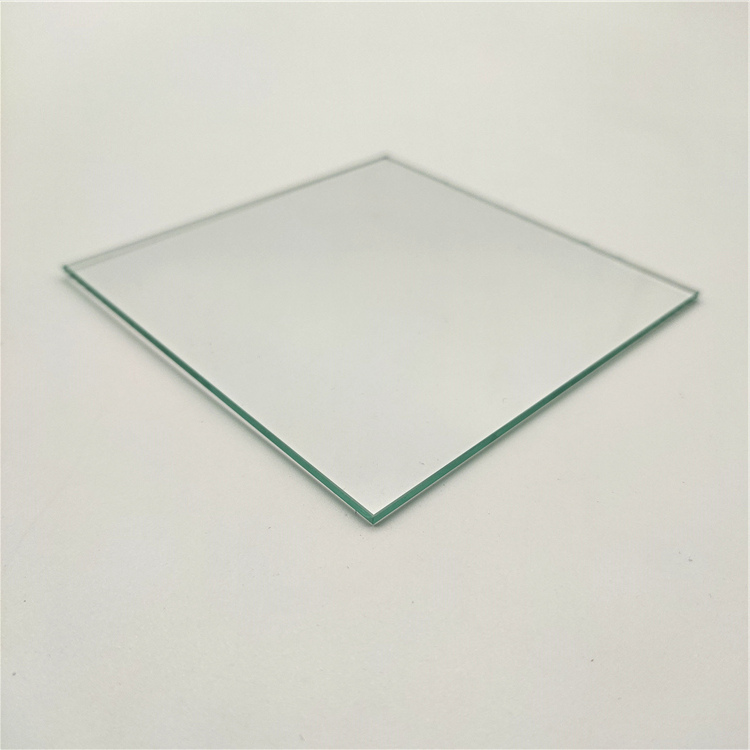
Fast Delivery Custom 1mm clear Glass Sheet
A practical choice for general-purpose protective windows, display guards and cost-sensitive covers where fast delivery and consistent flatness matter.
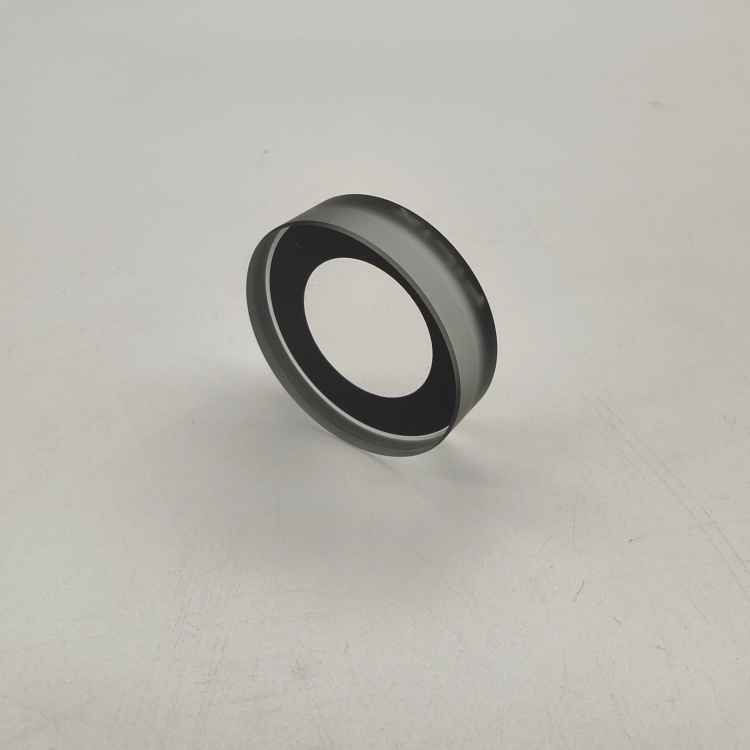
High Quality Small Diameter 10mm Thickness Round Tempered Glass with High Temperature Ceramic Printing
Designed for lighting, instruments and decorative equipment panels requiring a heavier glass section with durable high-temperature printing.
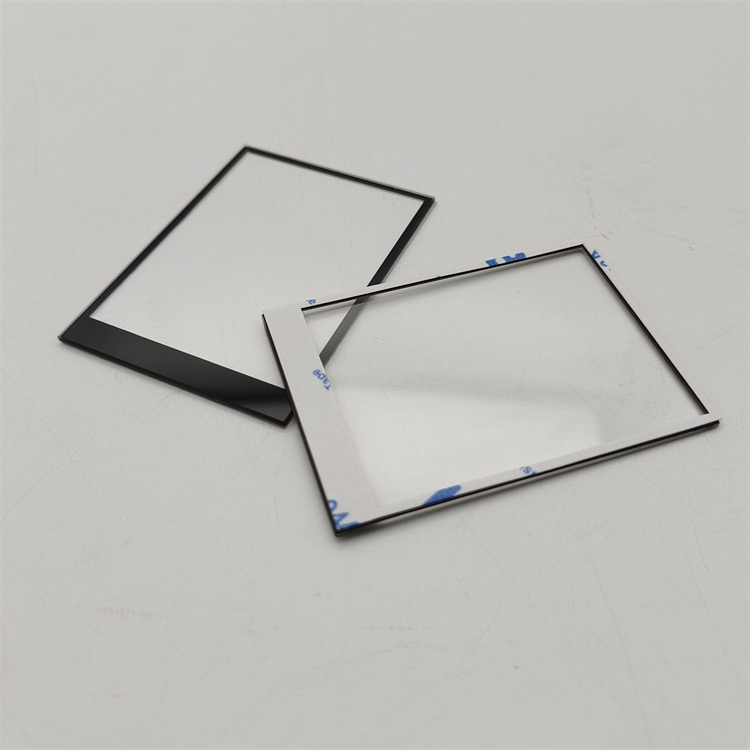
Small Size Ultra Thin 0.5mm 0.7mm 1mm Tempered Glass Panel With Adhesive Tape for Screen Protection
An assembly-ready ultra-thin cover for compact electronics, touch interfaces and protective windows where thickness and bonding consistency are critical.
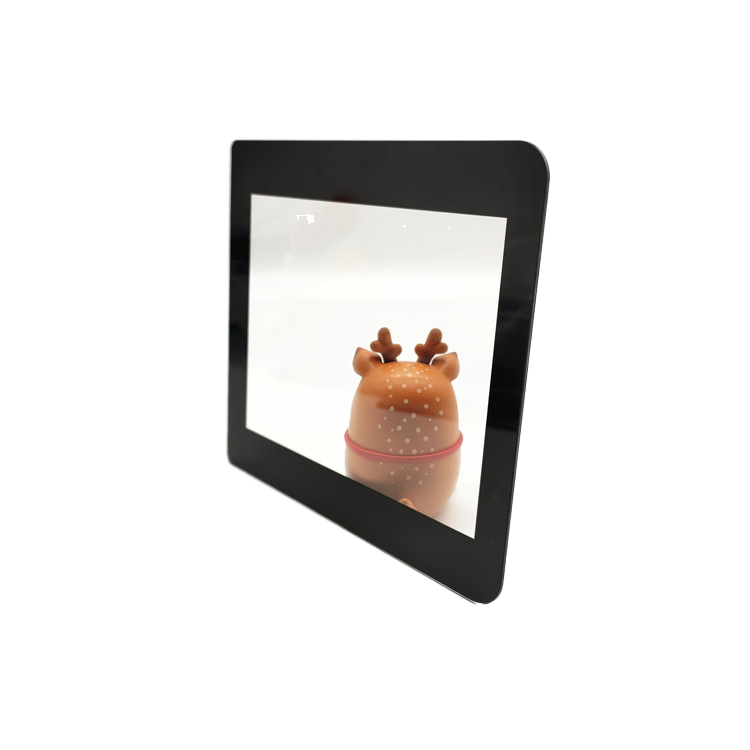
Industrial Use Electronic Glass 1mm/2mm/3mm/4mm Tempered Glass Display Screen Window Protection Cover
A protective cover glass for equipment displays, control interfaces and instrument windows where impact resistance and optical clarity must work together.
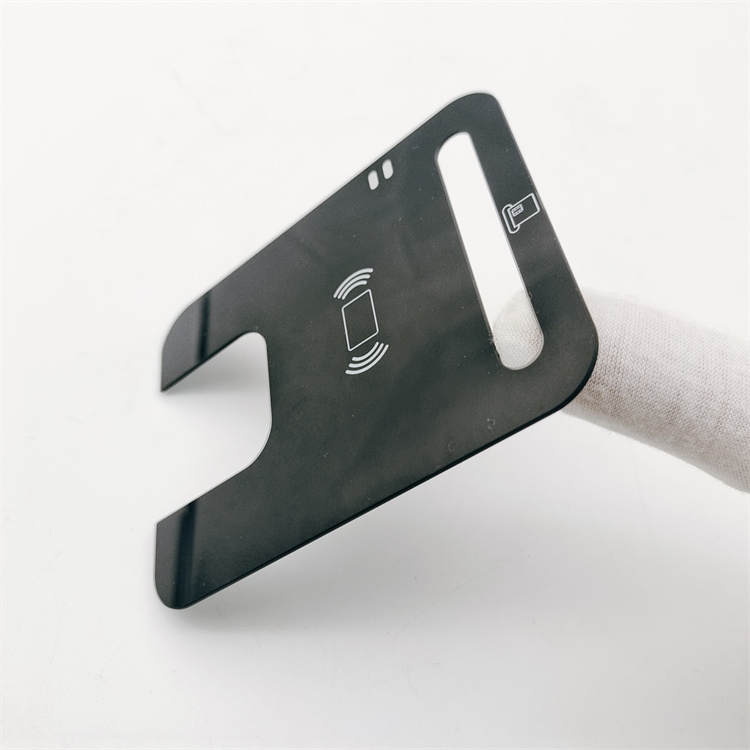
Custom Printed Tempered Glass Panel High Strength Decorative Cover with Hole for Card Reader Instrument
For POS terminals, card readers and control instruments needing print alignment, clean holes and a premium glass surface that resists daily handling.
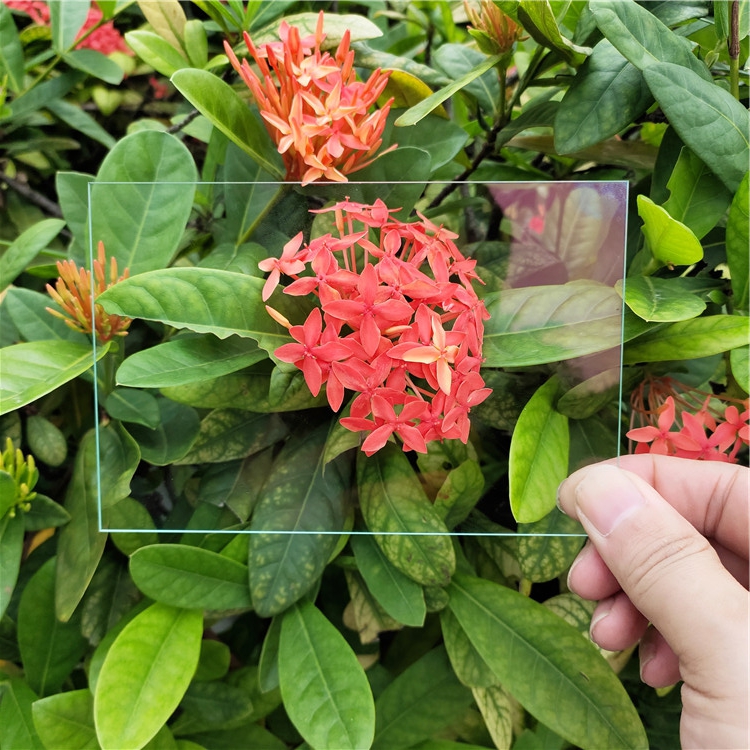
Factory Custom Optical Quality Nano Coating Tempered Anti Reflective AR Glass
An anti-reflective cover glass for high-contrast displays, camera windows and optical equipment where reflection control improves readability.
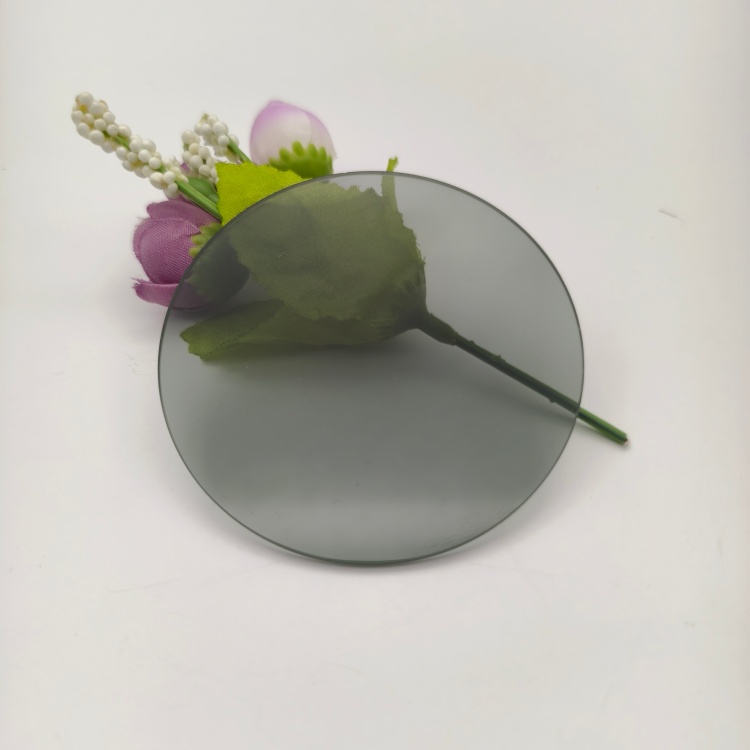
Factory Customized High Strength 2mm 3mm 4mm 5mm Tempered Black Glass Bulletproof & Decorative Flat Surface
For appliance panels, equipment fronts and decorative covers. For safety-critical impact or ballistic requirements, confirm the exact test standard before ordering.
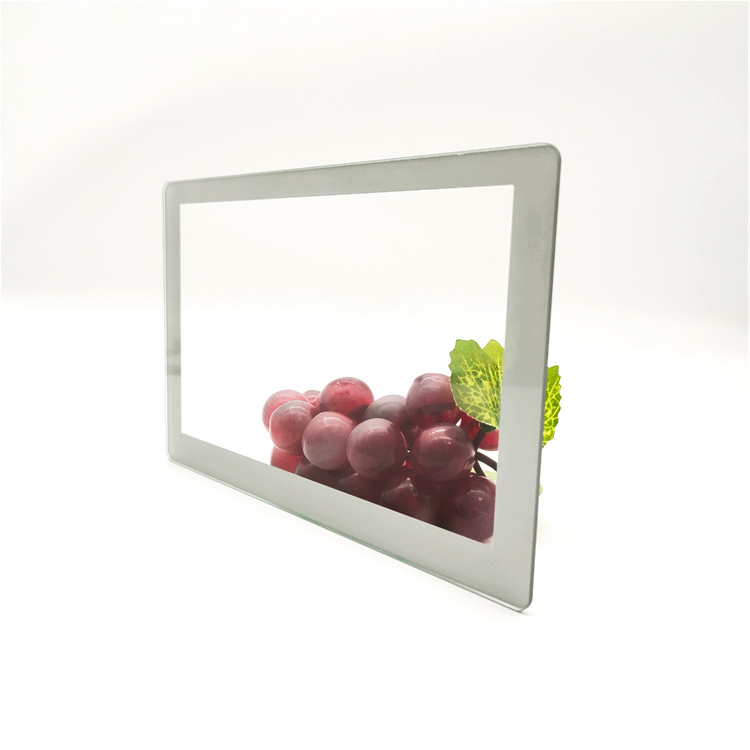
Customized High Strength Anti Glare Frosted Finish Tempered Glass LED/LCD Display Touch Panel for Monitor Screen Protector
An anti-glare solution for bright rooms, outdoor kiosks and industrial monitors where reflected light reduces display readability.
Why the Custom Tempered Glass Factory You Choose Matters More Than Ever
Custom tempered glass is no longer purchased by thickness and price alone. The real sourcing risk sits in optical performance, print alignment, edge quality, coating durability, packing protection and the supplier’s ability to repeat the same result across production batches.
A display cover, touch panel or appliance control window may look simple on a drawing, yet it combines several tightly linked processes: cutting, CNC shaping, edge polishing, hole drilling, tempering, silk screen or ceramic printing, and—when required—AR, AG or AF coating. When these steps are split between subcontractors, tolerance stack-ups and handling damage become harder to control. When they are managed under one roof with a documented inspection route, the buyer gains something more valuable than a lower quotation: predictable mass production.
This guide is structured as a buyer’s white paper for sourcing custom tempered glass from China. It explains the product portfolio, the procurement trends reshaping supplier selection, the product development trends affecting display and control glass, the technical differences between AR, AG, AF, ultra clear and printed glass, and the factory advantages that support E-E-A-T—experience, expertise, authoritativeness and trustworthiness—for overseas buyers.
The strongest supplier is not the one that can make one perfect sample. It is the one that can convert an approved sample into repeatable production with clear drawings, controlled processes, measurable inspection criteria and export-safe packaging.
Procurement Trends Reshaping Custom Tempered Glass Supply
Buyers in North America, Europe and Asia are becoming more specific in RFQs. They want optical data, process ownership, packaging standards and engineering feedback—not only a price per piece.
Dual-Sourcing With One Quality Standard
Buyers increasingly qualify a primary and a backup source, but both must follow the same drawing, approval sample, inspection report and packing specification. This reduces launch risk without creating two unrelated quality systems.
Optical Specifications in the RFQ
More projects now specify transmittance, haze, gloss, color difference and coating type at the quotation stage. For AR, AG and AF glass, optical requirements are becoming as important as dimensions and thickness.
Thin Glass With Assembly Functions
Ultra-thin 0.5 mm, 0.7 mm and 1 mm glass is increasingly supplied with adhesive tape, printed borders or protective film. The glass is no longer a loose component; it is part of an assembly-ready stack.
Supplier Consolidation
One factory handling cutting, CNC, tempering, printing and coating shortens lead time and removes invisible handover risks. Buyers can trace defects back to a specific process instead of managing several subcontractors.
Traceability and Change Control
Batch records, first-article approval, material thickness checks and packing photos are becoming standard expectations. If a coating, ink or glass source changes, the buyer should receive a documented notification and sample confirmation.
Total Landed Cost, Not Unit Price
Breakage, rework, delayed assembly and unclear communication often cost more than a small piece-price difference. Buyers now evaluate landed cost using yield, response speed, packaging quality and reorder reliability.
AR, AG, AF, Ultra Clear or Printed Glass: Which Cover Glass Fits Your Product?
A tempered glass cover can combine several treatments. For outdoor touch kiosks, AG plus AF is common. For high-contrast medical or industrial displays, AR plus AF is often preferred. The selection should follow the viewing environment and the user’s handling behavior.
| Glass Solution | Problem It Solves | Typical Applications | Buyer Specification Tip |
|---|---|---|---|
| Ultra Clear Tempered Glass | Removes the green tint of ordinary float glass and improves true-color appearance. | Display windows, LED lighting covers, appliance panels, premium control interfaces. | Specify low-iron glass and the required transmittance. Confirm whether the edge will show a color tint after printing. |
| AR Anti-Reflective Glass | Reduces surface reflection to improve contrast and perceived brightness. | Industrial monitors, medical displays, camera windows, optical equipment covers. | State single-sided or double-sided AR, target reflectance, transmittance and whether an AF top layer is required. |
| AG Anti-Glare Glass | Diffuses reflected light so screens remain readable under strong ambient light. | Outdoor kiosks, factory HMIs, vehicle displays, digital signage, touch monitors. | Choose haze by viewing distance and screen resolution. Too much haze can soften fine detail; too little may not control glare. |
| AF Anti-Fingerprint Glass | Creates an oleophobic surface that resists fingerprints and makes cleaning easier. | Capacitive touch panels, smart switches, POS terminals, interactive control screens. | Define the touch surface and durability expectation. AF is usually applied as a final layer over AR or AG. |
| Silk Screen / Ceramic Printed Glass | Hides wiring, creates display windows, adds icons, logos and borders. | Appliance panels, switch plates, instrument covers, card readers, LED fixtures. | Provide Pantone colors, transparent window size, print side and tolerance for registration. Ceramic ink is preferred for heat exposure. |
Final optical and color values depend on glass thickness, substrate, ink, coating stack and measurement method. Sample approval is recommended before mass production.
Inside the Factory: Eight Capabilities That Control Custom Glass Quality
Custom tempered glass quality is created at each process step, not inspected into the product at the end. The following in-house capabilities are the operational backbone for display covers, touch panels, lighting glass and printed control panels.
Precision Cutting
Automatic cutting converts large glass sheets into controlled blanks, reducing edge chipping and size variation before shaping.
CNC & Shaped Cutting
CNC processing supports rounds, slots, notches, stepped outlines and irregular shapes for modern electronic enclosures.
Edge Polishing
Pencil, flat, beveled, stepped and matte edges improve handling safety, appearance and assembly fit.
Hole Drilling
Holes and cut-outs for buttons, sensors, cameras, screws and connectors are drilled before tempering to protect strength.
Thermal Tempering
Tempering strengthens glass for impact resistance and safer breakage behavior in display and control applications.
Silk Screen & Ceramic Printing
Multi-color printing, display windows, icons and borders are aligned to the drawing for switch, appliance and instrument panels.
AR / AG / AF Coating
Optical coatings reduce reflection, diffuse glare or resist fingerprints, depending on the viewing and touch environment.
QC & Export Packing
Inspection at key stages plus interleaved, edge-protected export packing helps protect appearance and function during transit.
Product Development Trends in Tempered Glass Covers and Panels
The next generation of custom tempered glass is being shaped by thinner devices, brighter displays, touch-first interfaces and stricter industrial reliability requirements.
Thinner Cover Glass With Structural Function
Electronic grade glass from 0.2 mm to 1 mm is increasingly used in compact displays, touch modules and protective windows. Adhesive backing, printed borders and protective film turn the glass into a ready-to-assemble part.
Application-Specific Coating Stacks
AR, AG and AF are no longer isolated upgrades. Products increasingly combine coatings—such as AR plus AF for contrast and fingerprint control, or AG plus AF for outdoor touch displays.
Printed Glass Replacing Plastic Panels
Smart switches, appliance interfaces and instrument fronts are moving toward printed tempered glass for scratch resistance, premium appearance and stable color. Multi-color printing and transparent windows are key design tools.
Large and Miniature Formats in Parallel
Buyers need both compact sensor windows and larger display covers. Flexible CNC cutting, drilling and edge finishing allow a single factory to support small-format precision and larger industrial formats.
Industrial Durability and Cleanability
Factory automation, medical equipment and outdoor terminals require covers that resist cleaning, glare and repeated touch. The glass surface must be visually stable and easy to maintain.
Faster Sampling for Lower Launch Volumes
Product teams want customization without waiting for huge minimums. A practical MOQ range of 100–500 pieces for many custom items supports pilot builds, market tests and faster design iteration.



A Verified Custom Tempered Glass Factory & Supplier in Dongguan, China
Dongguan Jaswe Glass Co., Ltd. is a glass processing company located in Dongguan, Guangdong, China—one of the world’s most connected electronics and appliance manufacturing regions. The company processes custom tempered glass, ultra clear glass, silk screen printed glass, switch glass, display cover glass, LED lighting glass and AR / AG / AF coated glass for buyers in America, Europe and Asia.
The factory advantage is not only the product list. It is the combination of 80+ skilled workers, 26 glass processing machines, an estimated 51–100 employees and monthly output exceeding 200,000 pieces of processed glass. Most operators have years of hands-on experience in cutting, edging, drilling, printing, tempering and coating—experience that becomes visible when tolerances tighten on ultra-thin glass or multi-color printed windows.
“Scientific management, careful manufacture, high quality service, striving for excellence.”
From Drawing to Delivery: Six Controlled Steps
Clear engineering communication is especially important for custom tempered glass because drawings, printing files, coating requirements and packing specs all influence the final result.
Send the RFQ Package
Provide a DXF, DWG or PDF drawing with thickness, outline, holes, edge type, printing colors, coating requirement, application and estimated annual volume.
Engineering Review
The factory checks manufacturability, minimum hole-to-edge distance, tolerances, print registration, optical stack and packing risk before quoting.
Sample Approval
Physical samples allow the buyer to verify fit, ink color, window clarity, edge appearance, haze, gloss or AR performance before production.
Mass Production
Cutting, CNC shaping, edging, drilling, printing, tempering and coating follow an approved process route with checks at critical stages.
Inspection & Documentation
Batch inspection covers dimensions, appearance, print alignment, coating condition and packing. Required reports can be reviewed before shipment.
Export Packing & Dispatch
Interleaved, edge-protected and moisture-conscious packing helps protect glass surfaces and corners during international transport.
Where Custom Tempered Glass Delivers the Highest Value
Different applications demand different balances of strength, optical performance, print durability and touch feel. This is why a custom tempered glass supplier must be selected for process depth, not only product photos.

Touch & Display Electronics
Cover glass for LCD, TFT and capacitive touch modules where clarity, surface flatness and clean edges affect final assembly.
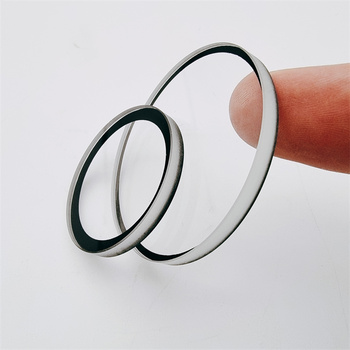
LED Lighting Fixtures
Clear and printed glass covers for downlights, panels, linear lights and wall washers, including ceramic borders and drilled holes.
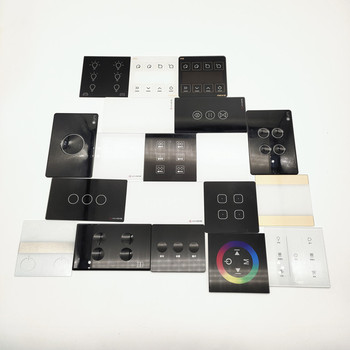
Smart Home & Switches
Printed glass control plates for smart switches and wall panels, with icons, touch windows and premium surface finishes.
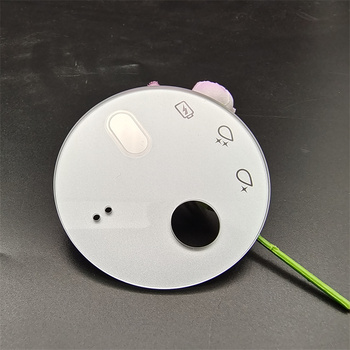
Home Appliances
Control panel glass for kitchen and household devices where scratch resistance, color stability and clean appearance matter.

Industrial Instruments
HMI covers, meter windows and electrical equipment glass with printed masks, cut-outs and optional AR or AG treatment.
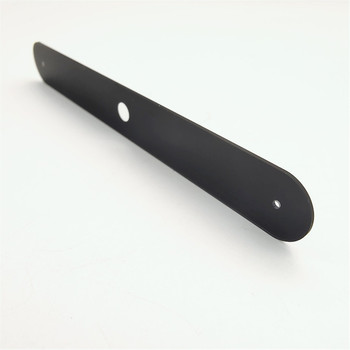
Security & Camera Devices
Printed lens covers and protective windows with precision holes for cameras, sensors and access-control equipment.
Custom Tempered Glass Purchasing FAQ
These are the questions overseas buyers ask most often during supplier evaluation, sampling and production planning.
What glass thickness can a custom tempered glass factory process?
What is the minimum order quantity for custom tempered glass?
What is the difference between AR, AG and AF glass?
Which processes are completed in-house?
What is the production capacity and response speed?
How do I start a custom tempered glass project?
Start With a Drawing, Not a Guess
Share your specification with a custom tempered glass factory that can evaluate thickness, edge quality, printing, tempering and AR / AG / AF coating as one production system. The faster the engineering review, the fewer surprises in sampling and mass production.
Typical RFQ details: drawing, application, annual volume, glass thickness, print colors, coating target and packing requirement.
Custom tempered glass covers · ultra clear glass · AR / AG / AF coated glass · silk screen printed glass · display and touch panel covers · LED lighting glass · Dongguan, China