Polished Glass Manufacturing Built for Specification-Led Buyers
Polished glass becomes valuable only when the drawing, edge geometry, print window, coating stack and packing method all survive the journey from a CAD file to a repeat production order.
Dongguan Jaswe Glass Co., Ltd. is a custom glass processing partner based in Dongguan, Guangdong, China, at the center of the global electronics supply chain. The company processes tempered glass, ultra-clear display glass, touch screen cover glass, silk screen printed glass, switch glass, anti-reflective glass, anti-glare glass, anti-fingerprint glass, electrical equipment glass and LED lighting glass. This is not a catalogue-only trading model: cutting, CNC shaping, edge polishing, hole drilling, tempering, silk screen and ceramic printing, AG processing and AR / AF coating are kept under one quality system so buyers can reduce the quality gaps that appear when glass moves between subcontractors.
For procurement teams, the most useful information gain is not a generic claim about “high quality.” It is the ability to predict what will happen during sampling, mass production, assembly and field use. Jaswe supports that prediction with 80+ workers, 26 glass processing machines, monthly output above 200,000 pieces, 51–100 employees, annual revenue in the US$2.5M–US$5M range, and export experience across America, Europe and Asia. Most operators have more than eight years of hands-on glass processing experience, which matters on tight-tolerance jobs such as 0.2 mm ultra-thin cover glass, multi-color printed control panels, beveled step edges and optical coating stacks.
The practical advantage for buyers: one supplier can review manufacturability, produce samples, control printing and coating, and pack edge-protected glass for export — shortening the loop between design intent and repeatable supply.

Factory tour: cutting, edging, drilling, tempering, printing and optical coating under one roof in Dongguan, China.
Eight Polished Glass Products for Fast Sampling and Repeat Production
These eight product routes cover the specifications global buyers most often request: ultra-clear lighting glass, black tempered glass, drilled panels, thin clear sheets, printed screen protectors, 3M tape options, ultra-thin 0.5 mm / 0.7 mm glass and small-diameter ceramic-printed round glass.
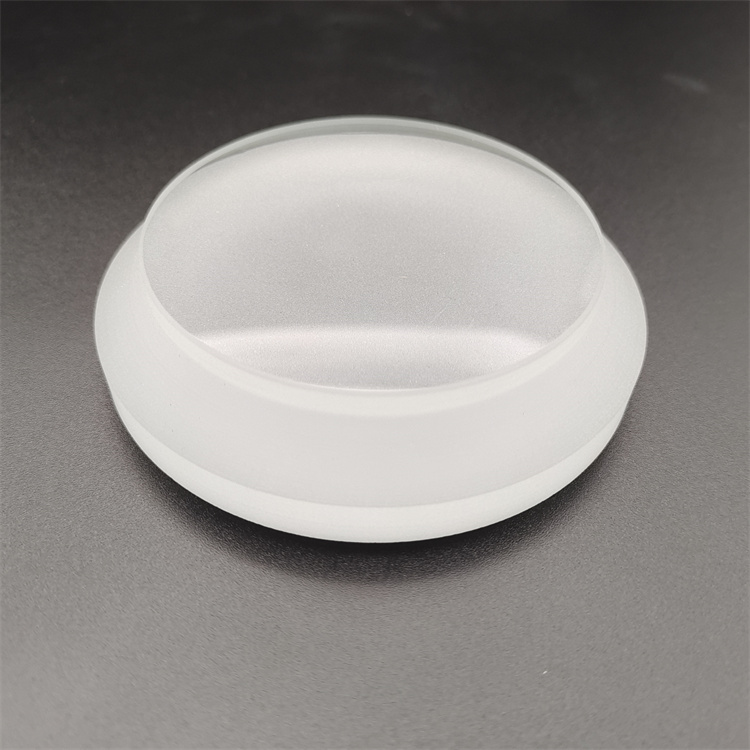
Customized Industrial Lighting Solid Flat Ultra Clear Frosted Tempered Glass with Beveled Step Edge
A lighting-grade cover that combines ultra-clear low-iron glass, controlled frosted diffusion and a beveled step edge. Recommended for architectural downlights, linear fixtures and premium luminaires where the edge finish is visible.
- Ultra-clear
- Frosted
- Beveled step edge
- Tempered
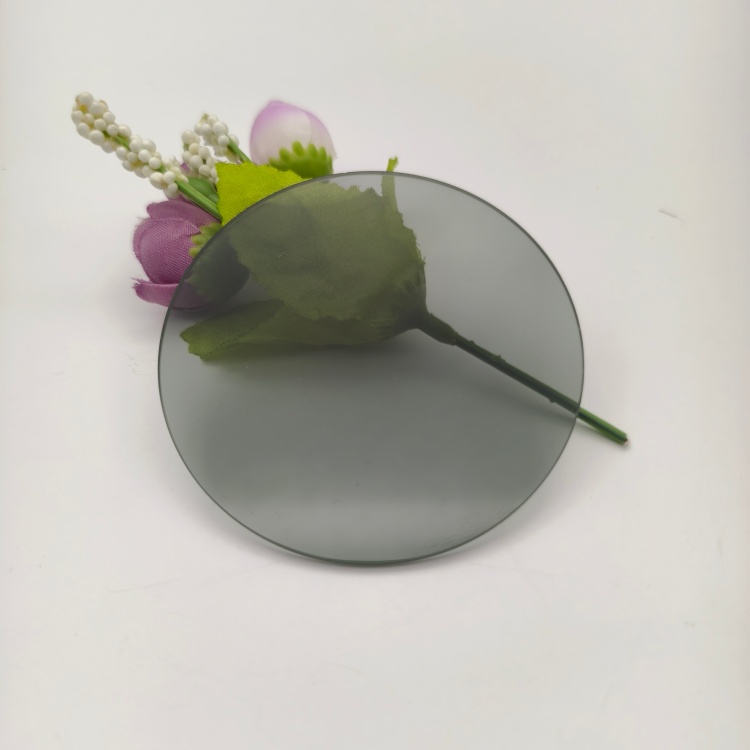
Factory Customized High Strength 2mm 3mm 4mm 5mm Tempered Black Glass Bulletproof & Decorative Flat Surface
A high-strength black tempered glass for decorative covers and reinforced flat surfaces. The dark finish hides internal components while the tempering schedule supports impact resistance for appliance and equipment applications.
- 2–5 mm
- Black tempered
- High strength
- Flat surface
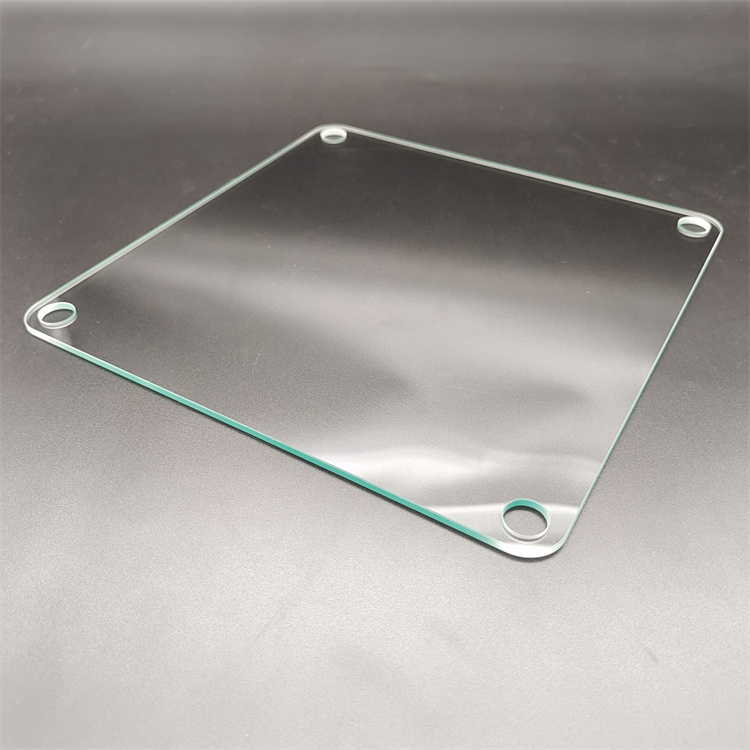
Factory Sale Customized Shape Decorative Glass Cover Hole Drilling Glass Panel Soda-lime Tempered Glass Sheet With Holes
A soda-lime tempered glass panel with CNC-drilled holes and custom outline. Suited to decorative covers, control windows and assemblies that need mechanical fasteners, sensors or cable pass-throughs without secondary drilling.
- Soda-lime
- Drilled holes
- Custom shape
- Tempered
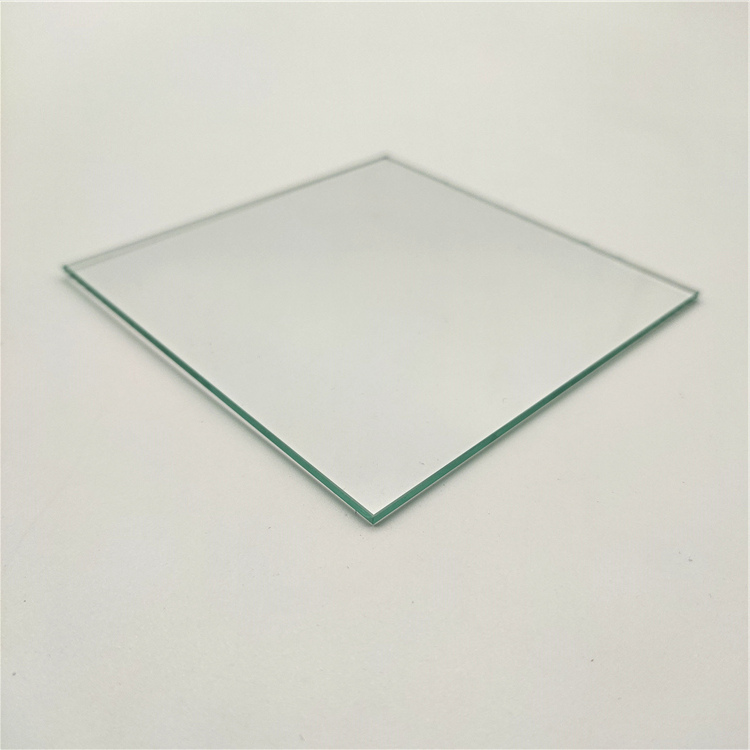
Fast Delivery Custom 1mm Clear Glass Sheet
A practical route for prototype and small-batch programs that need thin clear glass quickly. Useful for evaluation, fit checks and early production runs before a fully customized print or coating stack is released.
- 1 mm
- Clear glass
- Fast delivery
- Sample friendly
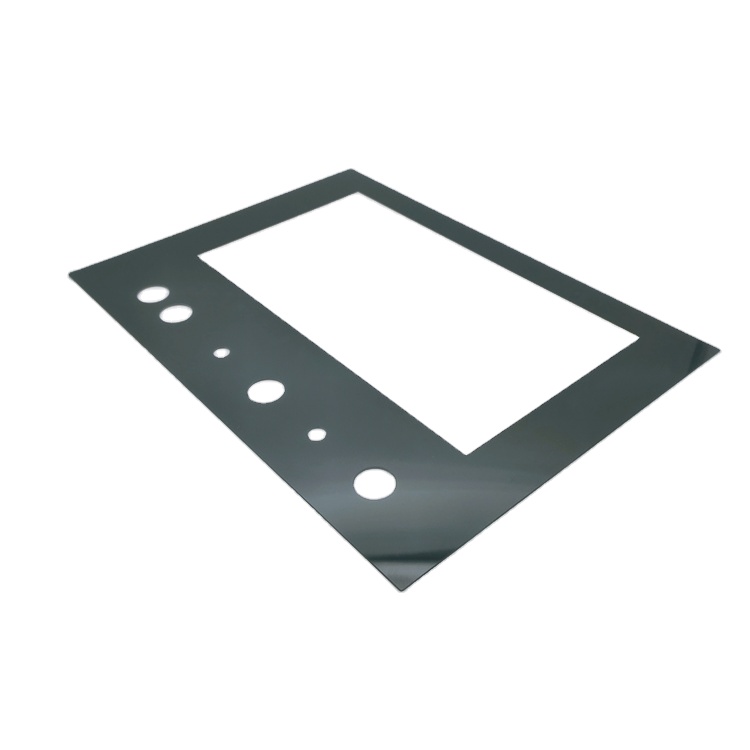
Customized Printed 0.5-6mm Thickness Flat Tempered Glass Screen Protector with Cut Holes
Digitally specified print, cut holes and flat tempered glass from 0.5 to 6 mm. Used for display windows, touch surfaces and equipment covers where masking, logos and apertures must align in one part.
- 0.5–6 mm
- Printed
- Cut holes
- Flat tempered
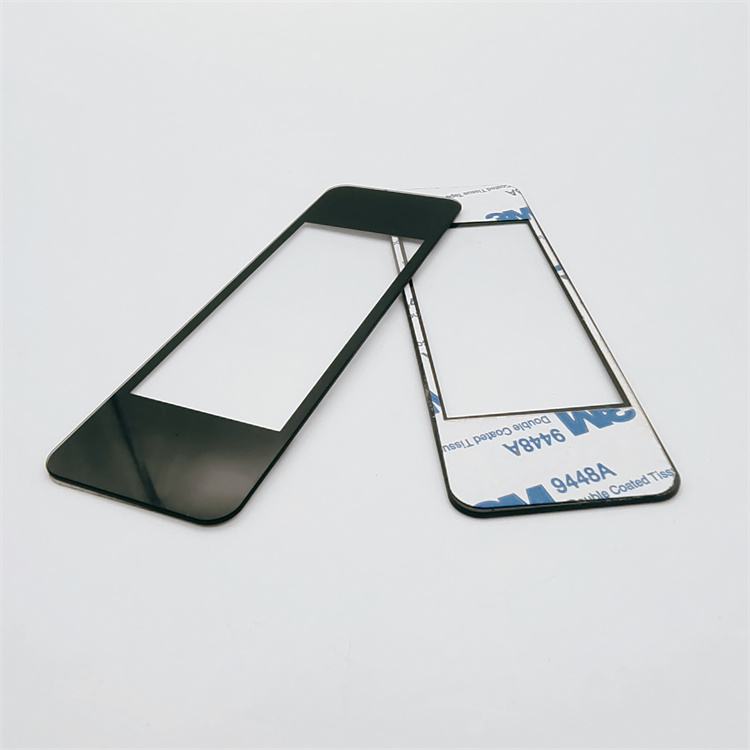
Ultra Thin 1mm Tempered Glass with 3M Tape for Screen Cover Glass
Combines a thin tempered glass substrate with 3M adhesive for simplified assembly. Suitable for screen cover and control-panel builds where bond-line control, cleanliness and edge quality matter.
- 1 mm
- 3M tape
- Tempered
- Screen cover

Customized Ultra Clear 0.5mm 0.7mm Thickness Ultra Thin Tempered Glass
Ultra-thin, low-iron glass for products where optical clarity and weight matter. Good for compact displays, sensor windows, GUIs and premium appliance interfaces needing a clean glass look.
- 0.5–0.7 mm
- Ultra-clear
- Ultra-thin
- Tempered
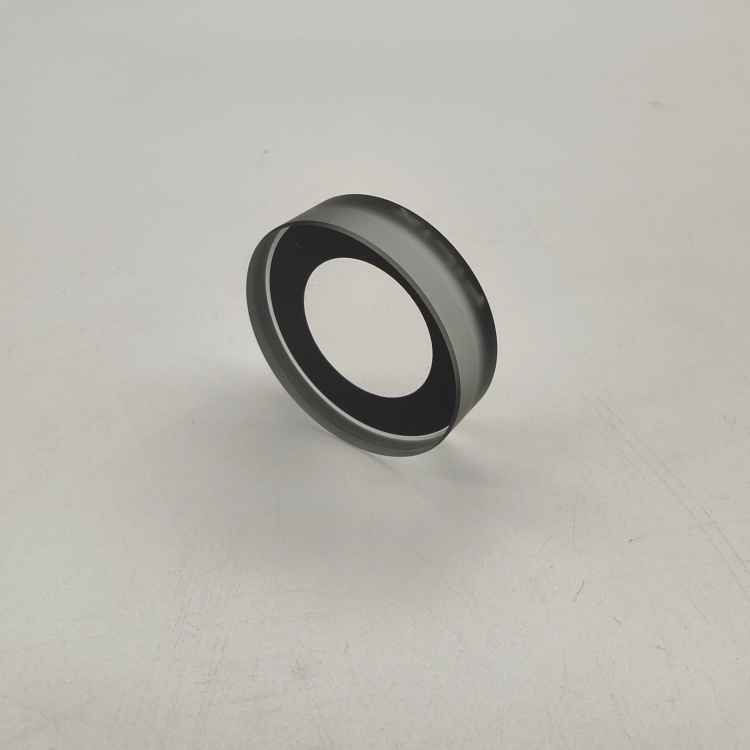
High Quality Small Diameter 10mm Thickness Round Tempered Glass with High Temperature Ceramic Printing
A thicker round glass component with high-temperature ceramic print for durable marking. Use where an opaque border, icon or alignment mark must survive heat, cleaning and assembly.
- 10 mm
- Round
- Ceramic print
- Durable
Company Advantages That Reduce Procurement Risk
Polished glass sourcing is a chain of small technical decisions. The supplier’s value is in catching those decisions early, then repeating them consistently.
Full-Process Control
Cutting, CNC shaping, edge polishing, hole drilling, tempering, silk screen printing, ceramic printing, AG processing and AR / AF coating are coordinated in-house to reduce handling defects.
Fast Engineering Review
Send DXF, DWG or PDF drawings and receive manufacturability feedback on thickness, edge type, hole spacing, print colors, coating requirements and estimated annual volume.
Inspection at Every Gate
Inspection at cutting, edging, drilling, tempering, printing and coating stages helps catch chips, print misalignment, optical defects and dimensional drift before packing.
Production Scale
With 26 glass processing machines and more than 80 workers, monthly output exceeds 200,000 pieces. That matters when a sample is approved and the buyer needs a predictable ramp.
Verified Responsiveness
Average response time is within three hours, the buyer response rate is 96.61%, and the reorder rate is 26% — useful evidence that repeat buyers are able to keep projects moving.
Export-Ready Packing
Interleaved, edge-protected packing is designed for long-distance transit, reducing breakage and enabling cleaner receiving inspection before components reach the assembly line.
Product Development Trends Shaping Polished Glass in 2025–2030
Buyers are no longer choosing glass only by thickness and price. They are specifying optical performance, edge aesthetics, integrated printing and assembly-ready surfaces.
Thinner Glass, Stronger Process Control
Ultra-thin 0.5 mm and 0.7 mm tempered glass is moving from prototype use into regular production for compact displays and touch interfaces. Yield depends on handling, edge quality and process discipline, not only the raw substrate.
Coating Stacks Instead of Single Coatings
AR reduces reflection, AG diffuses glare, and AF resists fingerprints. More products now combine two or three treatments on one cover glass, so buyers should define the viewing environment and cleaning method before selecting the stack.
Printed Interfaces as a Single Part
Silk screen and ceramic printing increasingly integrate icons, masking, display windows and brand marks directly into the glass cover. This reduces assembly steps and helps control light leakage in switches and instruments.
Edge Geometry as a Design Language
Beveled step edges, polished matte edges and smooth rounded outlines are becoming visible design features in LED lighting and premium appliance panels. Edge quality must be specified early, because it affects tooling and handling cost.
Low-Iron Glass for Better Color Accuracy
Ultra-clear low-iron glass removes the green tint visible in standard float glass. As displays and lighting fixtures become more color-critical, low-iron substrates are replacing ordinary clear glass in visible cover applications.
Assembly-Ready Glass
3M tape, printed alignment marks, countersunk holes and clean edges help shift glass from a loose component to an assembly-ready part. The goal is fewer line operations and more predictable final fit.
What Sourcing Teams Should Prepare For
Procurement is shifting from short-term price comparison toward verified capability, supply continuity and evidence-based quality.
Supplier Consolidation
Buyers are reducing the number of approved glass processors and giving more volume to suppliers who can cover cutting, printing, coating and packing under one quality system.
Evidence-Based Quality
Reviews, trade history, response rate, reorder rate and supplier assessment data are being used alongside purchase price to judge whether a supplier can repeat performance.
Faster Sample Loops
CAD review, sample production and optical approval are increasingly compressed. Suppliers who can flag manufacturability issues before sampling reduce engineering time and freight costs.
Total Applied Cost
Breakage rate, print yield, coating rework, assembly fit and packing quality can matter more than a few cents of unit price. Buyers are comparing the landed, installed cost of each cover glass.
AR, AG, AF, Ultra Clear or Polished Tempered Glass? A Practical Decision Matrix
Use this matrix during design review. Treatments can be combined, for example AG + AF for outdoor touch kiosks or AR + AF for high-resolution touch displays.
| Glass Option | Problem It Solves | Best Applications | Engineering Note |
|---|---|---|---|
| Ultra Clear Low-Iron | Removes the green tint of standard float glass and improves color neutrality. | Display covers, LED lighting glass, premium appliance panels | Pair with white or light printing to avoid a greenish edge tone. |
| AR Anti-Reflective | Cuts surface reflection and increases brightness and contrast. | Medical monitors, industrial displays, camera windows | Specify single- or double-sided coating; double-sided usually gives the largest optical gain. |
| AG Anti-Glare | Diffuses reflected light so screens stay readable under strong ambient light. | Outdoor kiosks, vehicle HMIs, industrial controls, digital signage | Choose haze level by viewing distance; finer haze suits high-resolution screens. |
| AF Anti-Fingerprint | Repels oil and sweat to keep touch surfaces cleaner and easier to wipe. | Touch panels, smart switches, POS terminals, control panels | Apply as the final layer over AR or AG for touch-intensive products. |
| Printed Tempered Glass | Hides wiring, adds logos, icons, borders and display windows. | Switch plates, appliance controls, instrument windows | Send Pantone codes, window size and print-side orientation with the drawing. |
| Polished / Beveled Edge Glass | Improves handling safety and gives a visible premium edge finish. | Lighting covers, furniture electronics, visible control panels | Define pencil, flat, beveled, stepped or matte edge before tooling is released. |
From RFQ to Mass Production: Five Controlled Steps
A transparent workflow for overseas buyers who need predictable quality, clear communication and fewer surprises between sample approval and shipment.
Send Requirements
Drawing, thickness, edge type, holes, printing, coating target and annual volume.
Engineering Review
Manufacturability check, tolerance discussion and process route recommendation.
Sampling
Physical sample for fit, color, edge appearance and optical performance approval.
Mass Production
Batch processing with inspection gates at cutting, printing, coating and tempering.
Packing & Shipping
Interleaved, edge-protected export packing to support safe receiving inspection.
Quality, Capacity and Communication Data
Third-party trade data and repeat-buyer behaviour provide useful context for buyers evaluating a new glass processing partner.
Manufacturing is supported by 26 glass processing machines, including tempering, edge polishing, silk screen printing, cutting and coating capabilities. With more than 80 workers, the factory covers custom processing from raw sheet to finished cover glass. Use verification links to review ratings, assessment, trade capacity, transaction level, trade history and credit index before releasing a production order.
Questions Overseas Buyers Ask Before Releasing a PO
These are the specification, sampling and supplier questions that most often determine whether a custom polished glass project moves forward.
What glass thickness can Jaswe Glass process?
Our current product range covers ultra-thin electronic grade glass from 0.2 mm up to 19 mm flat tempered glass. The most requested thicknesses for display and touch covers are 0.5, 0.7, 1, 2, 3 and 4 mm. Lighting, switch and instrument projects often use 1 mm to 10 mm depending on strength, print and edge requirements.
What is the minimum order quantity for custom glass?
Most custom items start at 100 to 500 pieces, depending on size, printing and coating. Standard clear tempered pieces can be supplied in smaller sample quantities for evaluation. For complex printed or AR / AG / AF coated products, the sample route is the fastest way to confirm fit and appearance before mass production.
What is the difference between AR, AG and AF glass?
AR anti-reflective coating reduces surface reflection to increase transmittance and contrast. AG anti-glare treatment diffuses reflected light so screens stay readable under strong ambient or outdoor light. AF anti-fingerprint coating is an oleophobic layer that resists smudges on touch surfaces. All three can be combined on one cover glass depending on the application.
Which processes are completed in-house?
Cutting, CNC and special-shaped cutting, edge polishing, hole drilling, tempering, silk screen printing, ceramic printing, AG processing, and AR / AF coating are coordinated in-house. This reduces handling losses and makes it easier to control the final dimensional and optical result.
What is the production capacity?
With 26 glass processing machines and more than 80 workers, monthly output exceeds 200,000 pieces of processed glass. Capacity is most useful when paired with an engineering review and a clear tolerance stack, because those inputs determine yield, packing method and production scheduling.
How do I start a custom glass project?
Send your drawing in DXF, DWG or PDF format, together with thickness, edge type, printing colors, coating requirement, application and estimated annual quantity. Our engineers review manufacturability before samples are made, then recommend a process route for sampling and mass production.
Have a Drawing, Tolerance Stack or Optical Target? Get an Engineering Review.
Share the drawing, thickness, edge finish, print colors, coating requirement and estimated annual volume. Jaswe will review manufacturability before sampling and help you choose a practical process route for polished tempered glass, display cover glass, LED lighting glass or control-panel glass.
info@jasweglass.com