Top Trusted Tempered Glass Sheet Manufacturers & Wholesaler
Custom tempered, ultra-clear, silk-screen printed, AR / AG / AF coated glass sheets for displays, touch panels, LED lighting, appliances and control equipment — from Dongguan Jaswe Glass Co., Ltd.
Inquire NowCustom Tempered Glass Sheets for Demanding Industrial Applications
Eight production-ready product directions from the Jaswe Glass range — each can be customized by drawing, thickness, edge profile, hole position, printing, coating and packing requirement.



What Trusted Tempered Glass Sheet Supply Really Means
Buyers searching for a tempered glass sheet manufacturer are usually solving a more complex problem than a simple glass purchase. They need a supplier who can control flatness, edge quality, hole position, print color, coating performance and export packing while keeping engineering communication clear. A sheet that looks acceptable in a photo can still fail at assembly if the bevel is inconsistent, the printed window is misaligned or the coating does not match the final viewing environment.
That is why serious procurement teams compare process integration and repeatability, not only unit price. The most reliable sources are manufacturers that can connect drawing review, CNC shaping, tempering, printing, optical coating and quality inspection under one quality system. Dongguan Jaswe Glass Co., Ltd. is structured around that model: 26 glass processing machines, more than 80 skilled workers and monthly output above 200,000 pieces, with cutting, CNC, edge polishing, drilling, tempering, silk-screen printing, ceramic printing, AG treatment and AR / AF coating handled in-house.
For display covers, LED lighting, appliance panels, industrial instruments and smart switch glass, the right supplier should shorten the distance between an engineering drawing and a stable production part. That is the practical meaning of a trusted tempered glass sheet wholesaler in today’s component supply chain.
Recommended Tempered Glass Solutions by Application
Use this application-led selection guide to match glass construction to the real use environment — before requesting samples.
Display & HMI Protection
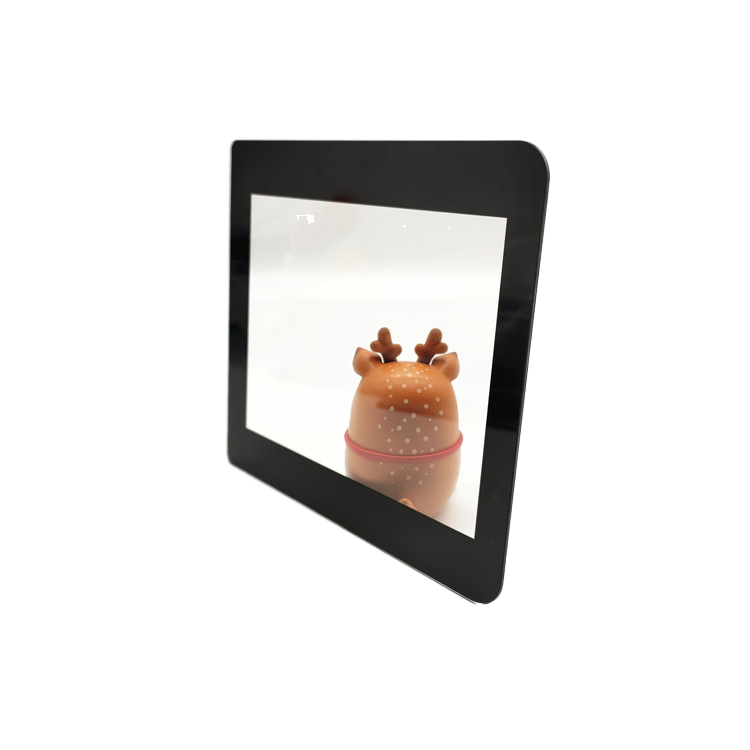
For industrial display windows and equipment HMIs, 1 mm, 2 mm, 3 mm and 4 mm electronic glass is a practical starting point. Specify low-iron substrate when color neutrality matters, and define AR or AG treatment only after the viewing environment, light source and touch requirement are known.
View display cover glassLED Lighting Covers
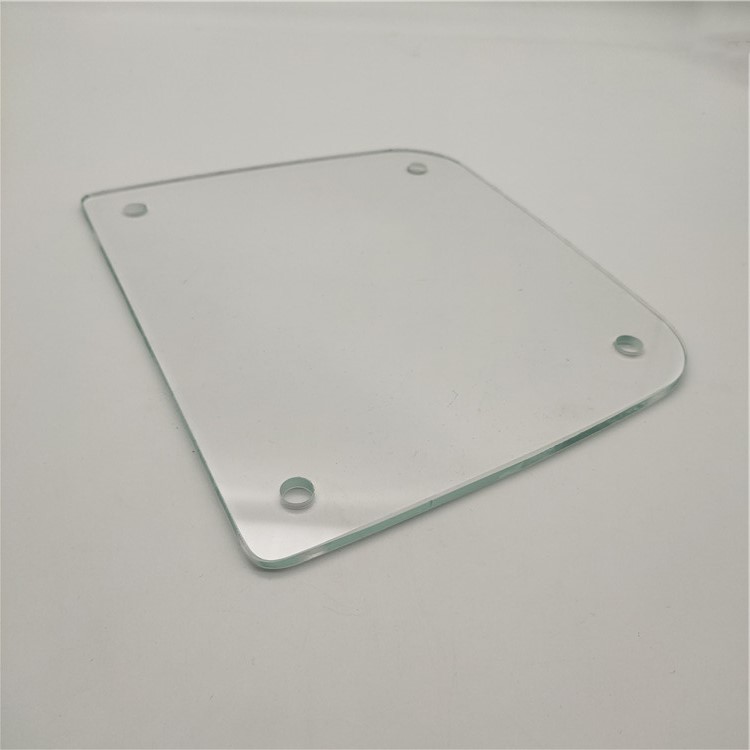
Ultra-clear tempered glass with CNC cut holes suits LED fixtures that need fasteners, cable exits, sensor openings or mounting features. Frosted diffusion, black borders and ceramic printing can be combined to control light appearance and hide internal components.
View LED cover glassSmart Switch & Touch Panels
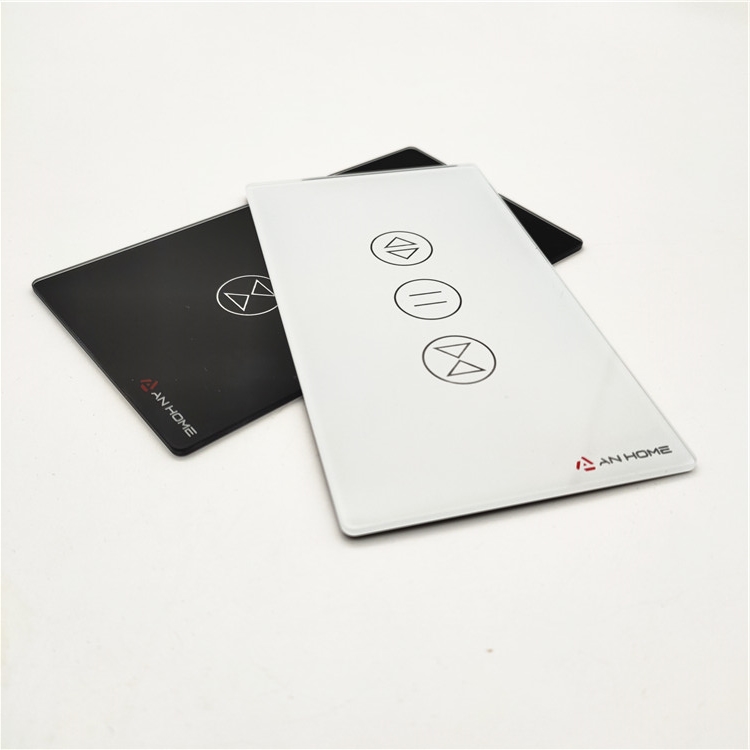
Silk-screen printed glass switch panels require precise touch-key windows, durable inks and consistent edge finishing. For smart home controls, a clean decorative surface must still support reliable touch response, easy cleaning and stable assembly with the housing.
View smart switch glassAppliance Control Glass
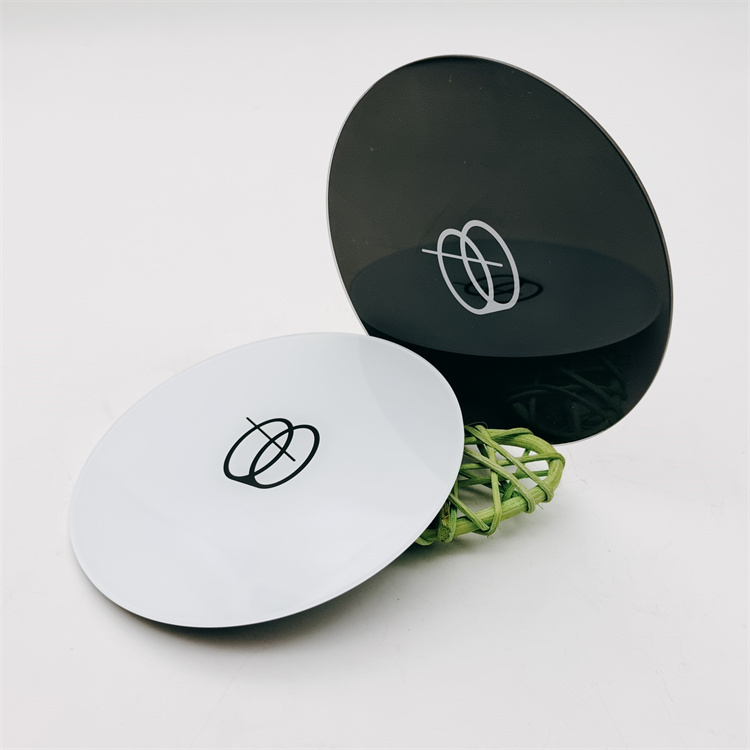
Round tempered glass with black-and-white silk-screen printing is well suited to electric appliance control surfaces. Icons, borders, transparent windows and touch zones can share one glass component, reducing assembly steps and improving visual consistency across product families.
View appliance glassInstrument & Card Reader Covers
Printed tempered glass with drilled holes can conceal fasteners, protect a display and frame an opening for a card reader or sensor. High-strength decorative covers are appropriate where the glass is exposed to frequent public use and must resist scratching and impact.
View printed cover glassSmall Beveled Glass Parts
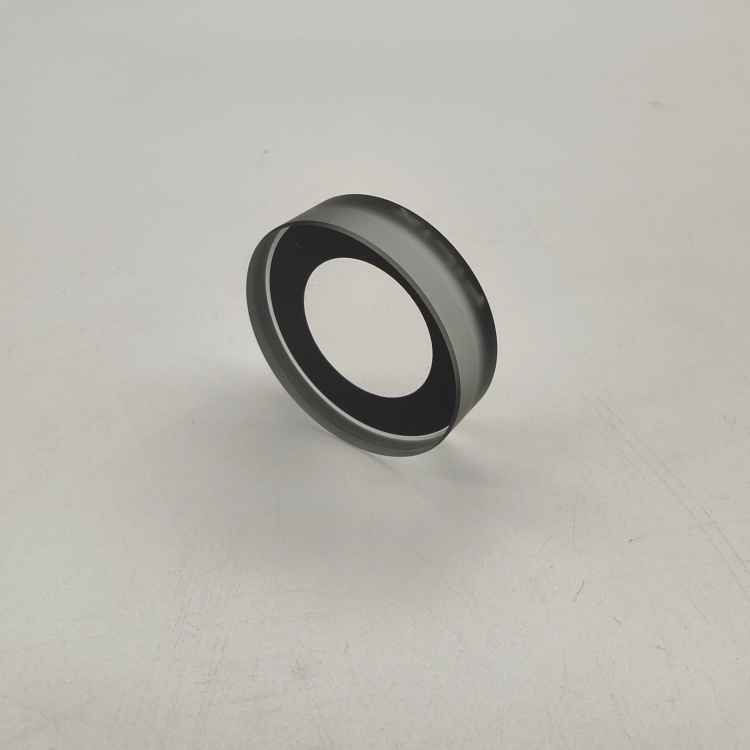
Small 3 mm to 6 mm tempered sheets with beveled edges improve handling safety and perceived quality in compact equipment. The bevel profile should be specified with tolerances, because edge geometry affects both appearance and fit inside a frame.
View beveled glass partsCompare AR, AG, AF, Ultra Clear and Printed Tempered Glass
The most common specification error is selecting an optical coating before defining the viewing environment. Use this matrix during design review, then confirm with physical samples under the actual light source and viewing distance.
| Glass Type | Problem It Solves | Typical Applications | Engineering Note |
|---|---|---|---|
| Ultra Clear / Low-Iron | Reduces the green edge tint of standard float glass and supports color-neutral transmission. | Display windows, LED lighting covers, premium appliance panels. | Pair with white or light-color printing to avoid a greenish edge tone; confirm substrate grade before sampling. |
| AR Anti-Reflective | Lowers surface reflection and improves contrast and light transmission. | Medical monitors, industrial HMI, camera windows, high-transmission displays. | Single-sided and double-sided coatings behave differently; double-sided coating gives the largest contrast gain in many display stacks. |
| AG Anti-Glare | Diffuses reflected glare so screens remain readable under sunlight or strong factory lighting. | Outdoor kiosks, vehicle displays, factory HMIs, digital signage. | Match haze level to pixel density and viewing distance; too much haze can soften fine text and reduce perceived sharpness. |
| AF Anti-Fingerprint | Repels oil and sweat to keep touch surfaces cleaner and easier to wipe. | Capacitive touch panels, smart switches, POS terminals, public interfaces. | Apply as a top layer over AR or AG on touch products; define cleaning and abrasion expectations in the RFQ. |
| Silk-Screen / Ceramic Printed | Hides wiring, adds logos, icons, borders and transparent display windows. | Switch plates, appliance controls, instrument panels, card reader covers. | Send Pantone references, transparent window dimensions and print tolerances with the drawing. |
| Frosted / Diffused | Softens light and creates a decorative surface with controlled diffusion. | LED lighting covers, appliance glass, decorative tempered panels. | Frost level affects light transmission; request transmission data or a physical sample when fixture efficiency matters. |
Final optical and print performance depends on glass thickness, substrate, ink stack, coating design and the housing structure. Sample testing is recommended before mass production.
Tempered Glass Sheet Trends Shaping the Next Procurement Cycle
Glass is becoming a functional interface, not only a protective panel. The changes below are already visible in display, lighting, appliance and smart-home programs.
Thinner yet tougher
Electronic-grade glass continues to move toward thinner constructions for slim displays and compact switch modules. The differentiator is not only thickness, but handling quality, flatness and edge reliability at 0.2 mm to 1.1 mm.
Coating stacks become standard
AR, AG and AF treatments are increasingly combined on one cover glass. Buyers now ask for optical performance, fingerprint resistance and durable cleaning behavior as a system rather than a single coating add-on.
Print durability and color control
High-temperature ceramic printing is moving beyond simple borders. Small icons, transparent windows, multi-color graphics and appliance-grade appearance all demand tighter ink control and consistent firing.
Hidden-function glass
Touch zones, sensor holes, display windows and decorative surfaces are converging. The next generation of glass panels must look clean while integrating multiple mechanical and optical functions into one part.
How Buyers Will Source Tempered Glass More Strategically
Procurement teams are moving away from quote-only sourcing. The focus is shifting to supplier integration, qualified evidence and total risk across the product life cycle.
Supplier consolidation
Buyers increasingly prefer one supplier that can cut, CNC-shape, edge, drill, temper, print and coat rather than managing several subcontractors. Fewer handoffs reduce damage risk and quality disputes.
Evidence-based qualification
Response rate, reorder rate, trade history and supplier assessment are becoming part of the sourcing scorecard. Verified performance data helps buyers separate trading claims from repeatable manufacturing capability.
Right-sized MOQs and faster sampling
Custom glass programs are being planned with pragmatic MOQs and early samples for fit, print and optical approval. Buyers want to validate assembly compatibility before committing to volume, especially for new smart-home and display products.
Total landed cost and packing
A lower piece price can disappear when breakage, rework and delayed assembly are included. Procurement is paying more attention to edge protection, interleaving, carton design and the supplier’s ability to sustain packing quality.
Why Global Buyers Shortlist Jaswe Glass
Dongguan Jaswe Glass Co., Ltd. serves display, touch, LED lighting, appliance and electrical equipment programs with an integrated glass processing model in Dongguan, Guangdong, China.



Engineering depth in the world’s electronics manufacturing hub
Located in Shipai Town, Dongguan, Jaswe Glass is positioned inside one of China’s densest electronics and appliance supply chains. That location supports fast communication with product designers, mold makers and assembly teams who need custom glass samples, revised drawings and production feedback in the same development cycle.
The company states an operating profile of 51–100 employees, annual revenue between US$2.5 million and US$5 million, and main markets in America, Europe and Asia. Its quality statement — “Scientific management, careful manufacture, high quality service, striving for excellence” — reflects a practical focus on disciplined production rather than catalog expansion alone.
For buyers, the advantage is not a single machine or a single coating. It is the ability to keep engineering, printing, tempering, coating and export packing aligned around one drawing and one quality expectation.
CNC & Precision Cutting
Automatic cutting plus CNC shaping for rounds, notches, slots and irregular outlines.
Edge Polishing & Beveling
Pencil, flat, beveled, stepped and matte edges for safe handling and clean appearance.
Hole Drilling
Holes and countersinks for buttons, sensors, cameras, knobs and mounting screws.
Thermal Tempering
Furnace strengthening for impact resistance and safer breakage behavior.
Silk Screen & Ceramic Printing
Multi-color logos, icons, borders and display windows with color matching.
AG Anti-Glare Processing
Diffused matte surface that keeps screens readable under strong ambient light.
AR Anti-Reflective Coating
Optical coating that lowers reflection and raises light transmission for brighter displays.
AF Anti-Fingerprint Coating
Oleophobic top layer for touch surfaces — smoother glide, fewer smudges, easier cleaning.
Verifiable Quality Signals, Not Just Supplier Claims
A trustworthy tempered glass sheet source should make performance visible through process controls, trade records and communication history.
Incoming & in-process inspection
Checks are applied at cutting, edging, drilling, tempering, printing and coating stages before packing.
Print & coating verification
Printed windows, icons, borders and optical coatings are reviewed against approved samples and drawing requirements.
Edge, hole & flatness control
Edge profile, hole position and flatness are critical for assembly fit, especially on thin display and switch glass.
Export packing & traceability
Interleaved, edge-protected packing is designed for international transit and clear batch identification.
Frequently Asked Questions from Tempered Glass Buyers
Practical answers for procurement teams preparing an RFQ, comparing suppliers or planning a custom glass program.
What information should I include in a tempered glass sheet RFQ?
What glass thicknesses can be processed?
What is the minimum order quantity for custom tempered glass?
What is the difference between AR, AG and AF glass?
Which processes are completed in-house?
What is the production capacity and response capability?
How is quality controlled from raw sheet to packed glass?
How do I start a custom tempered glass project?
Have a Drawing Ready? Get an Engineering Review Before You Buy.
Share your tempered glass sheet requirements — thickness, outline, holes, edge profile, printing, AR / AG / AF coating and estimated volume — and receive practical process feedback from a glass manufacturing team with integrated in-house capability.
Inquire Now