HMI & control panels
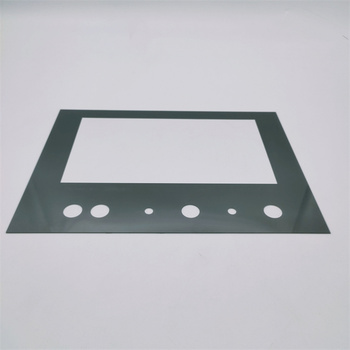
CNC-Drilled Printed Cover Glass for HMI Panels
1–6 mm · Holes, countersinks · Black mask printing
MOQ: 200 pcsInquire

Drilled tempered glass for industrial equipment panels is a safety-critical cover component. The hole pattern, edge distance, tempering sequence and coating stack must be engineered together, not selected from a catalog after the panel design is fixed.
Yes, but the holes must be drilled before tempering. Once glass is thermally tempered, any later drilling, countersinking, slotting or edge grinding can release surface stress and cause immediate or delayed breakage. For industrial equipment panels, the reliable process sequence is cutting, CNC hole drilling, edge polishing, silk screen printing when required, coating preparation, and then tempering. Dongguan Jaswe Glass Co., Ltd. controls these steps in-house so that hole geometry and edge quality are reviewed before strengthening.
These options match the most common purchase intents from industrial equipment manufacturers, HMI integrators, instrument brands and outdoor enclosure suppliers.
1–6 mm · Holes, countersinks · Black mask printing
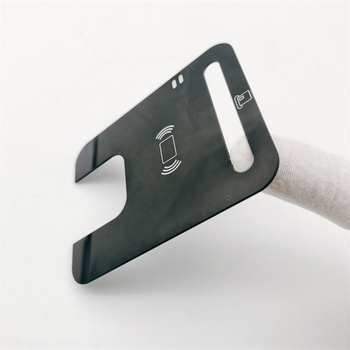
0.7–4 mm · Display windows · Drilled holes
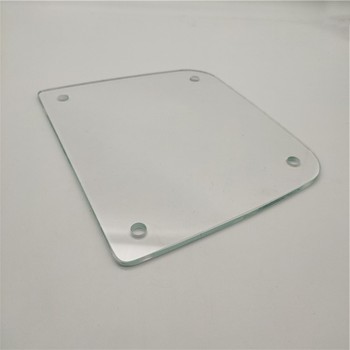
0.5–6 mm · Low-iron glass · CNC holes
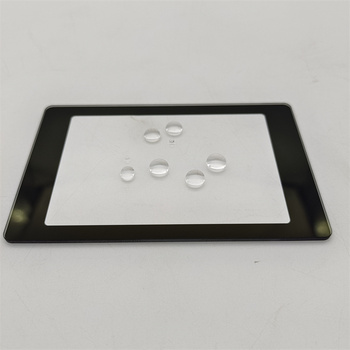
Anti-reflective · Anti-glare · Anti-fingerprint
No matching product on this page. Send your drawing and our engineers will recommend a suitable drilled tempered glass specification.
Industrial equipment panels often combine display windows, buttons, sensors, LED indicators, cable pass-throughs and grounding points. Each opening changes stress distribution, so the design review should begin with the hole schedule rather than the final cosmetic print.
| Application Intent | Recommended Glass | Typical Thickness | Hole / Edge Design Notes | Surface Treatment |
|---|---|---|---|---|
| HMI and control panels | Tempered float glass, ultra clear or clear | 1–4 mm | Round holes for buttons and sensors; countersinks for flush screws; maintain safe edge distance. | Silk screen printing, black border, antiglare on request |
| Instrument windows | Printed tempered glass | 0.7–3 mm | Transparent display window plus small drilled holes; avoid sharp internal corners. | Black or colored mask, AR coating optional |
| Outdoor equipment displays | Tempered glass with AG/AF or AR/AF | 2–6 mm | Use larger corner radii and conservative hole margins for thermal and impact stress. | AG anti-glare plus AF anti-fingerprint; AR for high contrast |
| LED and sensor panels | Ultra clear low-iron tempered glass | 0.5–4 mm | Clean, polished hole edges for optical clarity; verify burr-free exits. | Clear, frosted, printed border or selective coating |
| High-impact industrial enclosures | Thicker thermally tempered glass | 4–6 mm or higher | Use generous edge margins; avoid clusters of holes; specify safe breakage behavior. | Printing, anti-glare, hydrophobic or oleophobic top layer |
Final tolerances depend on glass thickness, panel size, hole diameter, printing and coating. Always approve a physical sample before mass production, especially for sealed enclosures, outdoor equipment and touch interfaces.
Hole diameter, spacing, countersink depth and edge distance are checked against the thickness and panel size before sampling.
CNC shaping supports rounds, notches, slots, cut-outs and irregular outlines for industrial enclosure designs.
Drilled panels are strengthened after all holes and edge work are complete, preserving the intended safety performance.
Printing and optical coatings are sequenced so that holes remain clean and functional after surface treatment.
Procurement teams are moving from price-only sourcing toward total landed cost, supply resilience and documented process control. Industrial panel glass is increasingly purchased as an engineered component rather than a commodity sheet.
Industrial equipment brands increasingly need multiple panel variants in one shipment. Suppliers must manage drawings, printing colors and hole patterns without requiring very large minimum order quantities.
Buyers expect DXF, PDF and drawing markups to be reviewed quickly. Clear manufacturability feedback reduces the back-and-forth between engineering and purchasing teams.
Critical equipment panels often require batch traceability, packing photos, dimensional inspection and coating verification before shipment.
Overseas buyers increasingly qualify a main supplier and a backup route for custom drilled glass to reduce shipment delays and process bottlenecks.
Breakage, rework and packing quality often matter more than a small unit-price difference. Export-safe packing and consistent hole quality reduce hidden costs.
AR, AG and AF requirements are becoming standard for outdoor and touch equipment. Suppliers must discuss coating stacks, transmittance goals, haze and durability at the quotation stage.
The next generation of industrial equipment panels is thinner, more integrated and more demanding on optical performance. The glass is no longer just a protective window; it is part of the user interface and the equipment’s visual identity.
Panels increasingly combine display windows, button openings, LED light pipes, sensor apertures, camera windows and mounting holes on one piece of glass. This raises the importance of CNC programming, drill tool selection and stress analysis around closely spaced features. Good suppliers review the drawing before quoting, because a design that works in 2 mm clear glass may need different margins in 4 mm tempered glass.
Portable instruments, compact sensors and handheld industrial devices require thin glass with high strength. Ultra-thin electronic grade glass from 0.2 mm to 1 mm is increasingly requested, but drilling and edge finishing must be tightly controlled to avoid micro-cracks that become failures after strengthening.
Outdoor equipment may need AG to diffuse sunlight while the touch area benefits from AF anti-fingerprint performance. Indoor high-resolution displays may prioritize AR anti-reflective coating to improve contrast and transmittance. Buyers are moving from single-treatment requests to stack specifications that define transmittance, reflection, haze and abrasion expectations.
Silk screen and ceramic printing remain essential for industrial design. Black borders, logos, icons, warning marks and transparent display windows can be printed in registration with drilled holes. The trend is toward tighter print-to-hole alignment so that gaskets, seals and fasteners fit cleanly without cosmetic gaps.
Glass panels with drilled holes are more sensitive to point loading during transit. Export packing must protect edges, separate panels and prevent movement. Batch labels, inspection records and packing photos are becoming part of the purchasing requirement for global equipment manufacturers.
Dongguan Jaswe Glass Co., Ltd. is located in Dongguan, the world manufacturing center of China’s electronics supply chain. The company focuses on designing, manufacturing and selling tempered glass, displayer glass, touch screen glass, silk screen printing glass, switch glass, anti-reflective glass, anti-glare glass, anti-fingerprinting glass, electric equipment glass and LED lighting glass.
For drilled tempered glass used in industrial equipment panels, the advantage is process coverage. Dongguan Jaswe Glass Co., Ltd. handles cutting, special-shaped cutting, glass edge polishing, hole drilling, CNC, tempering, silk screen printing, AG processing and AR / AF coating. Keeping these steps coordinated under one quality system reduces the risk of holes being drilled after tempering or coatings being applied without considering the final panel function.
The company follows the quality policy “scientific management, careful manufacture, high quality service, striving for excellence” and has established a comprehensive quality management system. More than 80 workers support production, most with over 8 years of hands-on glass processing experience. The factory operates 26 glass machines, including glass tempering furnaces, glass edge polishing machines, silk screen printing machines and automatic glass cutting machines. Monthly output is above 200,000 pieces.
Dongguan Jaswe Glass Co., Ltd. serves customers in America, Europe and Asia. The supplier profile records a 96.61% response rate, response time of ≤3 hours, total annual revenue of US$2.5 million to US$5 million, 51–100 employees and a 26% buyer reorder rate. For global procurement teams, these indicators support a more reliable evaluation than a quotation alone.
“Scientific management, careful manufacture, high quality service, striving for excellence.”
A transparent workflow for overseas buyers who need predictable quality, clear communication and documented approval before mass production.
Drawing, thickness, hole schedule, edge type, printing, coating and estimated annual volume.
Manufacturability check for hole size, edge distance, tempering risk and coating compatibility.
Physical samples for fit, color, optical performance and assembly trial approval.
Batch production with in-process inspection at cutting, drilling, polishing, printing and tempering stages.
Interleaved, edge-protected export packing designed for long-distance transit.
Use these checks to compare quotations on a like-for-like basis. They are the same questions experienced buyers ask during supplier qualification and annual reviews.
Confirm that drilling, countersinking and edge polishing occur before tempering. Ask how the supplier handles rework or design changes.
Ask for the practical tolerance range on hole diameter, position, countersink depth and edge-chip limits, then verify with a sample.
Cutting, CNC, drilling, polishing, tempering, printing and coating in one factory reduces hand-off risk and shortens lead time.
A response time under 3 hours and a high response rate are meaningful when drawings require quick engineering feedback.
A 26% reorder rate indicates that a meaningful share of buyers return for additional production runs after sampling.
Ask for packing method, carton strength, interleaving material, inspection records and photos before shipment.
Share your thickness, hole schedule, printing colors, coating requirement and estimated annual volume. Our glass engineers will recommend a manufacturable process route before sampling.
info@jasweglass.com

