8 Display Glass Products for Hat Yai Wholesalers to Evaluate with AG Treatment
These custom glass formats can be quoted with an anti-glare surface, anti-fingerprint topcoat or AR/AG combination, subject to engineering review. The links below preserve the original product pages; final treatment depends on thickness, print design, viewing distance and the buyer’s local light-test result.

Small Size Ultra Thin 0.5mm 0.7mm 1mm Tempered Glass Panel With Adhesive Tape for Screen Protection
Ultra-thin cover glass for compact display windows and touch-facing panels; AG and AF treatments can be assessed.
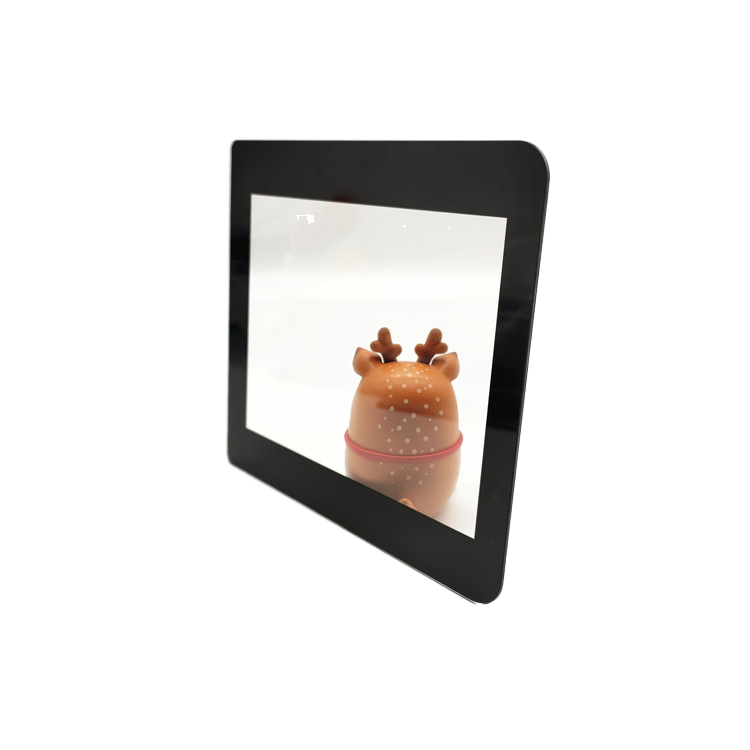
Industrial Use Electronic Glass 1mm/2mm/3mm/4mm Tempered Glass Display Screen Window Protection Cover
Rugged display windows for factory automation and outdoor cabinets; specify AG for strong overhead lighting.

Custom Extra White 0.5mm 1mm 1.5mm 2mm Low Iron Tempered Glass Chemical Strengthened
Low-iron base helps preserve true colour; suitable for AG or AR stacks on premium retail displays.
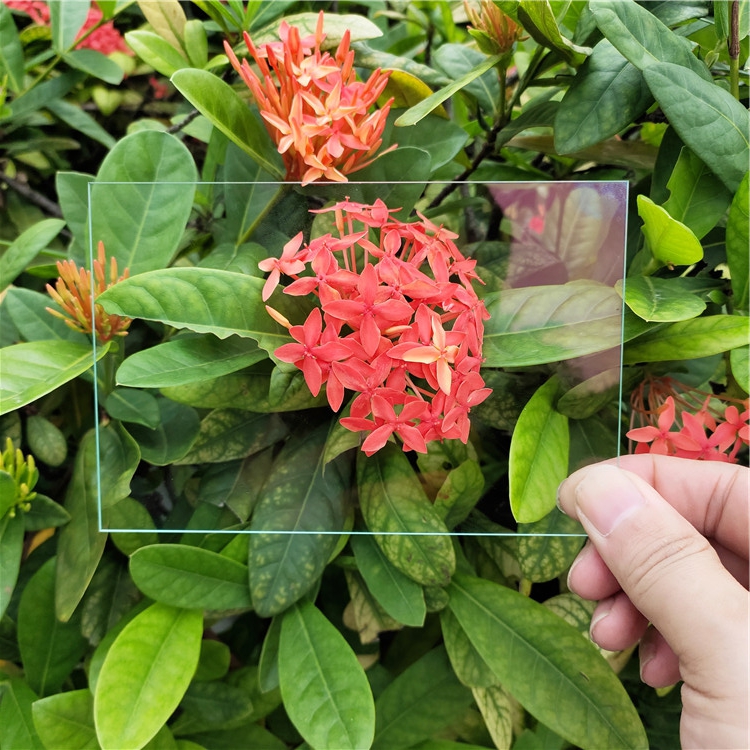
Factory Custom Optical Quality Nano Coating Tempered Anti Reflective AR Glass
Optical-grade substrate for high-contrast displays; compare AR, AG and combined AG/AR options.
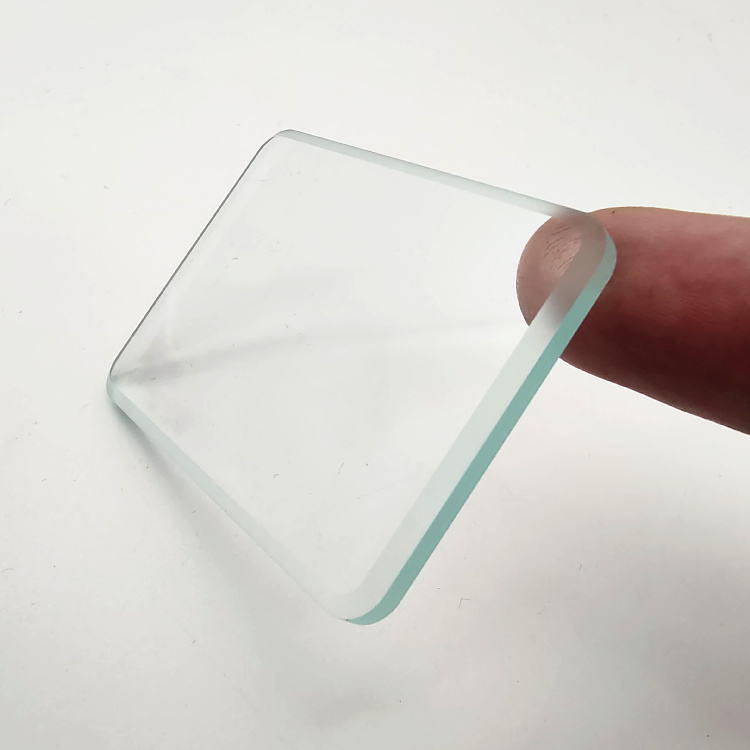
Custom Small Dimensions Tempered Beveled Edge Glass for Sale
Small-format cover glass with premium edge finish for retail devices and hospitality interfaces.

Custom Printed Tempered Glass Panel High Strength Decorative Cover with Hole for Card Reader Instrument
Printed front glass for card readers and POS terminals; AG helps reduce glare from shop lighting.
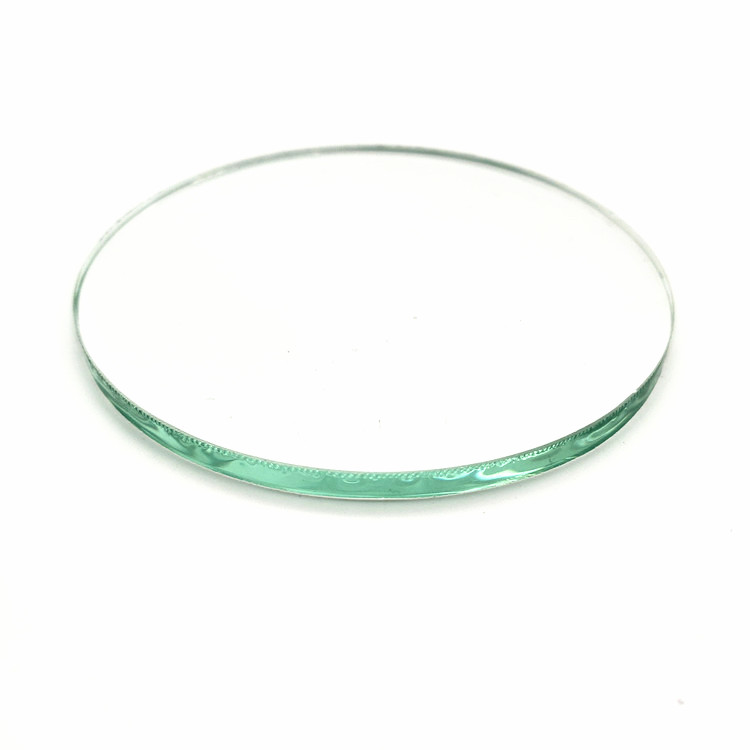
Customized Clear Flat Solid Tempered Glass Pieces 1mm-19mm for Industrial Lighting and Various Applications
Clear tempered glass for lighting, signage and equipment windows; AG can be evaluated for display use.
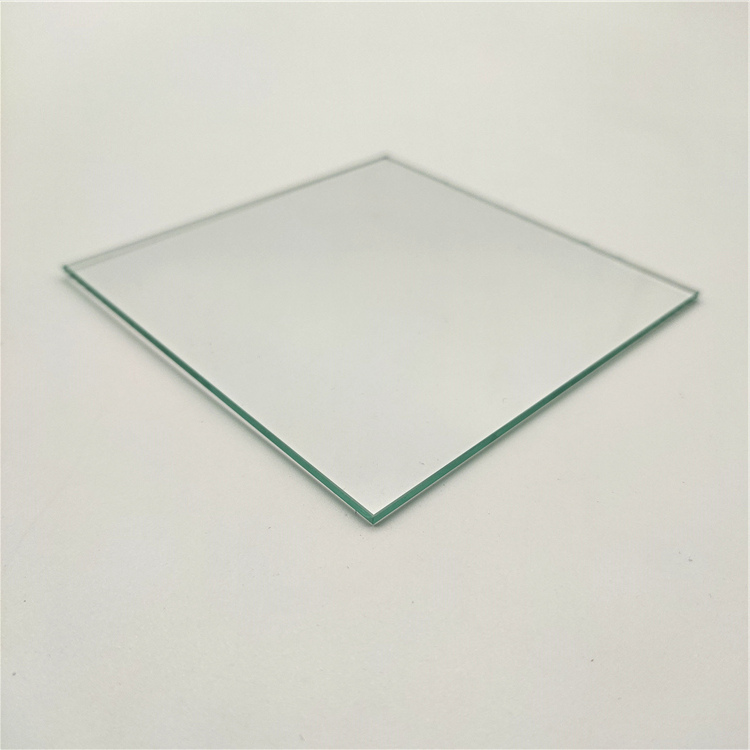
Fast Delivery Custom 1mm clear Glass Sheet
Practical sheet format for pilot runs; use early samples to compare haze, gloss and fingerprint performance.
For any item above, the product URL remains the specification reference. AG treatment is a separate process decision: the same outline, print and thickness can behave differently after surface treatment, so a physical sample under Hat Yai lighting conditions is always recommended before mass production.
What AG Coated Glass Actually Changes on a Display Panel
Anti-glare glass does more than give a screen a matte appearance. It changes how ambient light leaves the front surface, which influences perceived contrast, touch feel, cleaning routine and the viewer’s ability to read information under difficult lighting.
Glare diffusion, not image blur
A properly specified AG surface scatters reflected light so bright windows, ceiling lamps and tropical sun do not form a hard mirror image on the display. The underlying image remains sharp when haze is matched to viewing distance and pixel density.
Measurable haze and gloss
Buyers should not accept “matte” as a complete specification. Request test data for haze, gloss at the agreed angle and luminous transmittance. For high-resolution indoor panels, low haze is often more important than maximum diffusion.
Coating stack compatibility
AG, AR and AF are not interchangeable. AG diffuses glare, AR reduces reflection by interference, and AF resists fingerprints. The best Hat Yai solution may combine AG with AF for touch surfaces or use AR where maximum transmission is the priority.
For technical buyers, the real question is not “do we need AG glass?” but “what AG surface matches the luminance of this installation?” A hotel lobby sign at 3 metres viewing distance, a payment terminal at 40 cm, and a factory HMI viewed from an angle all need different balances of clarity, diffusion and cleanability. That is why a sample test is more valuable than a generic coating claim.
Why Hat Yai Buyers Specify AG Glass for Outdoor and Semi-Outdoor Displays
Hat Yai is an inland commercial centre in Songkhla Province, but its market conditions are distinctly tropical: intense equatorial light, frequent rain, high humidity and a steady flow of wholesale demand from southern Thailand and the Malaysia–Thailand border trade.
High ambient luminance
Retail streets, transport areas, food courts and tourism zones often place screens under bright canopies or direct daylight. AG glass reduces hard reflections that can wash out text, pricing and wayfinding information.
Humidity and cleaning cycles
Frequent rain, condensation and daily wiping make surface durability important. A well-bonded AG layer combined with an AF topcoat can simplify cleaning and reduce the smudged appearance of touch interfaces.
Wholesale and cross-border distribution
Hat Yai’s wholesale network consolidates mixed orders for resellers across Songkhla and the border zone. Exporters and wholesalers therefore need flexible MOQs, stable grading and packaging that survives multi-leg transport.
The practical implication is simple: do not choose AG glass by looking only at a black-screen photograph. Test it under the light source that will actually hit the product in Hat Yai — a bright shop ceiling, a shaded walkway, a rain-reflective street or a vehicle windscreen. The correct surface should reduce glare without making small text, QR codes or high-resolution images look soft.
Where AG Coated Display Glass Fits in Hat Yai Projects
Hat Yai’s mix of tourism, retail, healthcare, logistics, education and industrial activity gives wholesalers several realistic resale channels for AG-treated cover glass.
Outdoor digital signage
Street-facing LED/LCD panels, mall directory boards and tourism wayfinding screens need glare control under bright sky and canopy lighting. Medium-haze AG with tempered 2–4 mm low-iron glass is a common starting point.
Retail POS and kiosks
Payment terminals, self-order kiosks and card readers sit under spotlights and are touched repeatedly. AG+AF glass can improve readability while reducing visible fingerprints between cleaning cycles.
Hotel and hospital wayfinding
Hospitality and healthcare displays must remain legible for guests and patients at different angles. Low-haze AG helps avoid harsh reflections without degrading small characters on directory panels.
EV charging and parking terminals
Outdoor payment and charging interfaces face direct sun, rain and road reflections. Glass thickness, edge polishing and AG/AF compatibility should be reviewed together with the enclosure design.
Industrial HMI
Rubber, seafood, food-processing and logistics equipment often uses control displays under strong factory lighting. AG glass reduces operator glare while tempered glass adds impact resistance.
Smart-home and building control
Printed switch glass and smart control panels in modern hotels, condos and offices benefit from an AG surface that remains easy to clean and does not show every fingertip.
How to Match AG Coated Glass to a Hat Yai Display Requirement
Use this starting matrix for quotation discussions. Final values must be confirmed by sample tests, because the same AG treatment can look different when the glass thickness, print colour, backlight brightness or installation angle changes.
| Application context | Recommended AG approach | Base glass direction | Coating stack to discuss | Buyer check |
|---|---|---|---|---|
| Outdoor signage 24/7 | Medium-haze AG for strong daylight; avoid excessive diffusion that softens small type | 2–4 mm tempered low-iron or extra-clear | AG + AF; AR optional for contrast-critical panels | Gloss/haze report, edge polish, UV and rain exposure plan |
| Retail POS / kiosk | Low-haze AG, or AR if the enclosure already controls glare | 0.5–2 mm ultra-clear or chemically strengthened thin glass | AG + AF for touch; AR + AF for high-transmission displays | Touch friction, fingerprint visibility, print-window clarity |
| Industrial HMI | AG with optional AR if the screen sits behind a sealed window | 1–3 mm tempered glass | AG, AR/AG combination, AF easy-clean topcoat | Cleaning chemical compatibility, impact resistance, edge chips |
| Hotel / hospital wayfinding | Low-haze AG to protect legibility at close viewing distance | 2–3 mm low-iron tempered glass | AG + AF; avoid over-matte finishes on high-resolution panels | Character clarity, colour shift, glare under lobby lighting |
| Smart switch / printed panel | AG with colour-matched printing and transparent touch windows | 0.5–2 mm tempered or chemically strengthened | AG + AF + silk-screen/ceramic print | Pantone match, window edge definition, backlight bleed |
Technical note: buyers commonly ask for “AG glass” without defining the optical target. A clearer RFQ includes viewing distance, screen brightness, ambient light source, touch or non-touch use, glass thickness, print colour, edge requirement, annual quantity and the acceptable haze/gloss range. That single change shortens sample cycles and reduces disputes.
Localised Trends Shaping AG Glass Demand in the Hat Yai Market
Hat Yai buyers are becoming more technical. The market is moving away from generic “anti-glare glass” enquiries toward application-based requests with specific haze, print and packaging requirements.
Sample-first sourcing
Wholesalers increasingly ask for physical samples before committing to volume. They compare the sample under local shop lighting, test cleaning, check print alignment and verify that the AG surface does not blur the display’s smallest text.
Mixed-SKU consolidation
Hat Yai distributors often combine signage glass, switch panels and small touch windows in one replenishment plan. Exporters that can manage multiple sizes, print colours and coating stacks in one quality system have an advantage.
Design for tropical maintenance
Buyers pay more attention to moisture-resistant packing, easy-clean coatings and stable printing. A display that looks correct in a showroom but becomes difficult to clean in a humid service environment creates after-sales cost.
Another shift is the comparison of landed cost rather than unit price alone. A Hat Yai wholesaler may route shipments through Laem Chabang or via the southern border corridor; broken edges, moisture marks or rework caused by poor packing can erase the benefit of a lower per-piece quotation. The stronger supplier conversation therefore includes packaging, inspection photos, replenishment lead time and documentation for repeat orders.
Why Hat Yai Wholesalers Can Work Directly with Dongguan Jaswe Glass
Dongguan Jaswe Glass Co., Ltd. is a custom glass processing company in Dongguan, Guangdong, China, supplying tempered glass, ultra-clear glass, display cover glass, touch screen glass, printed switch glass, AR/AG/AF coated glass and LED lighting glass to buyers in America, Europe and Asia.



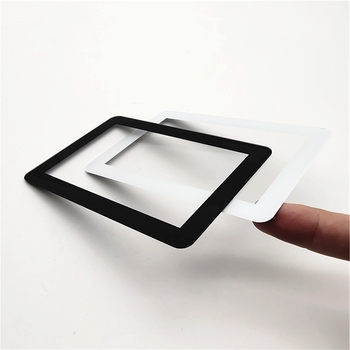
Keeping critical processes in-house matters for AG projects. Cutting, CNC shaping, edge polishing, hole drilling, tempering, silk-screen and ceramic printing, AG processing and AR/AF coating are handled under one quality system. That reduces the quality gaps that appear when a glass cover moves between separate subcontractors — especially on ultra-thin 0.2–1 mm parts, colour-matched printed panels and small touch windows.
With 26 glass processing machines and more than 80 skilled workers, monthly output exceeds 200,000 pieces. The supplier profile records an average response time of ≤3 hours, a 96.61% response rate and a 26% buyer reorder rate — practical signals for a Hat Yai wholesaler that needs reliable communication rather than a one-off quotation.
For AG coated glass specifically, the advantage is engineering feedback. A buyer can send a drawing with a target appearance, and the team can discuss whether the part should remain clear, use low-iron substrate, add a printed mask, combine AG with AF, or switch to an AR-first approach for better transmission. That review happens before sampling, which protects both the buyer and the production schedule.
A Practical Qualification Path for AG Glass Exporters & Wholesalers in Hat Yai
Use a repeatable process instead of comparing photos. The goal is to confirm optical performance, mechanical fit, print quality and export packing before the first volume order.
Define the optical target
State viewing distance, light source, display brightness and whether the surface will be touched. Ask for an AG recommendation rather than a single generic finish.
Test a matched sample
View the sample under local Hat Yai lighting. Check readability, colour shift, fingerprint visibility and cleaning behaviour on the actual print or coating stack.
Validate fit and durability
Review thickness, edge profile, hole positions, tolerance and tempering. Confirm that the AG surface is compatible with the housing and assembly method.
Lock packaging and supply
Agree on moisture protection, interleaving, edge protection, carton marking, sample approval and replenishment lead time before mass production.
- Ask for haze, gloss and transmittance data with the measurement angle stated.
- Confirm whether AG is applied to one side or both sides.
- Request a printed sample if logos, borders or touch windows are involved.
- Check edge polishing and chip risk before tempering.
- Review packing for humidity and multi-leg transport to southern Thailand.
- Confirm MOQ by thickness, size and coating rather than by product family alone.
- Agree on approval criteria for colour, gloss and print registration.
- Keep a signed golden sample for repeat order reference.
Questions Hat Yai Buyers Ask About AG Coated Display Glass
These are the practical questions that come up when a wholesaler, integrator or brand owner evaluates AG glass for southern Thailand projects.
What is the difference between AG, AR and AF coated glass?
Which AG level should I choose for outdoor signage in Hat Yai?
Can the product pages above be supplied with AG treatment?
What MOQ applies to wholesale orders from Hat Yai?
How do you protect AG glass during shipping to Thailand?
How long does sampling and production take?
Can you print borders, logos and touch windows on AG glass?
How can I verify AG coating quality before mass production?
Request a Hat Yai-Ready AG Glass Sample Pack
Send your drawing, display size, thickness, print colours, target haze and expected annual volume. The engineering team can review the most suitable tempered, low-iron, printed or optical glass format and recommend an AG, AR or AF stack for the actual viewing condition.