China Best Doorbell Glass Factories & Exporter in Guadalajara
Custom tempered, silk-printed, AR / AG / AF coated doorbell cover glass for video doorbells, smart intercoms and access-control panels — engineered in Dongguan for Guadalajara importers, security integrators and OEM brands.
8 Custom Glass Products for Doorbell & Smart-Entry Programs
Every item below can be adapted for Guadalajara doorbell brands, security distributors and architectural hardware importers: thickness, outline, camera window, IR aperture, microphone hole, edge profile, printing and coating are specified to your drawing.
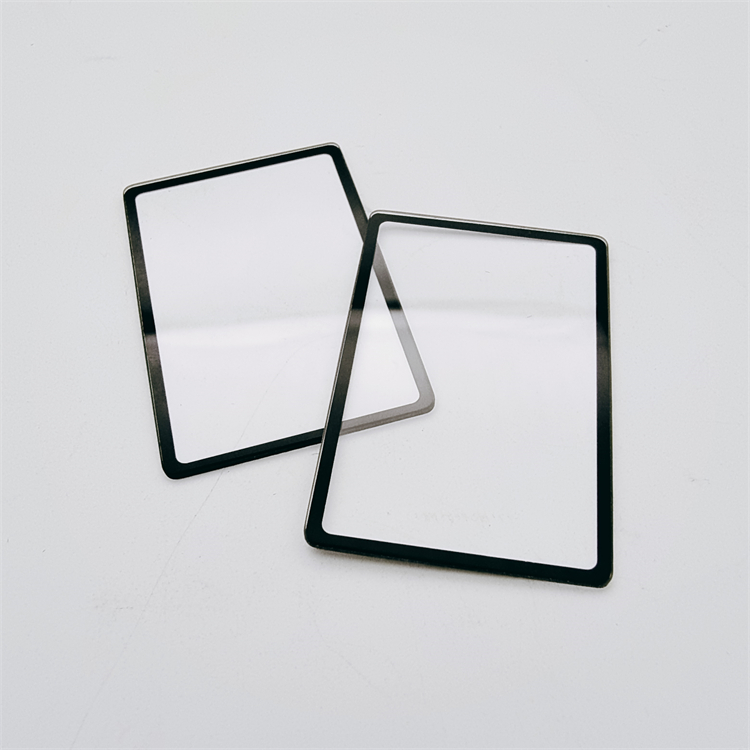
0.5mm 0.7mm 1mm 2mm 3mm Good Price OEM Wholesale Custom Premium Silk Screen Printing Tempered Glass Display Screen Industrial
Printed display glass with transparent windows for icons, LED indicators and camera openings.
View product specifications
Customized Industrial Lighting Solid Flat Ultra Clear Frosted Tempered Glass with Beveled Step Edge
Frosted and ultra-clear glass for diffused illumination, decorative fascia and light-diffusing entry modules.
View product specifications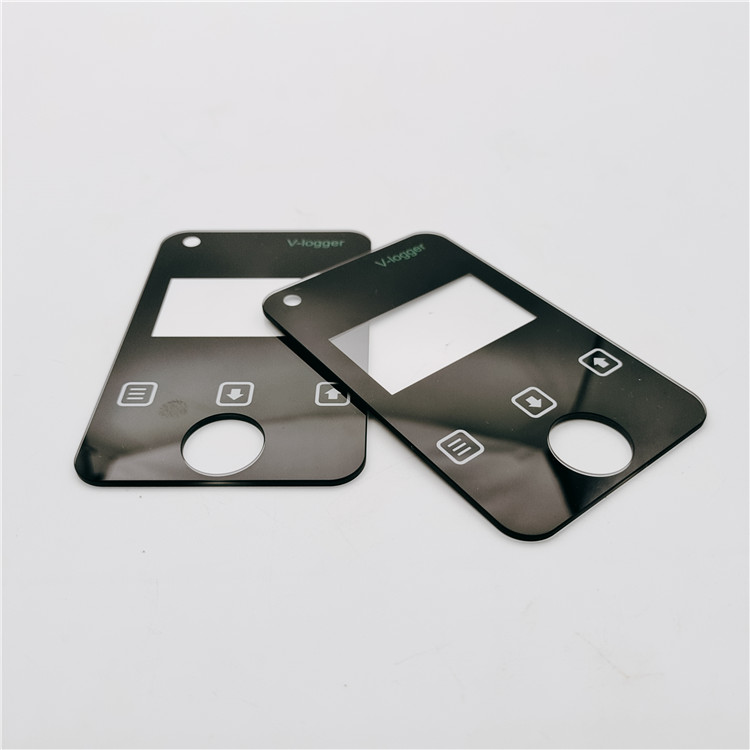
Customized Cut 1mm 2mm 3mm 4mm Instrument Printed Tempered Glass With Holes
Hole-drilled instrument glass for microphone ports, sensors, screws and button openings.
View product specifications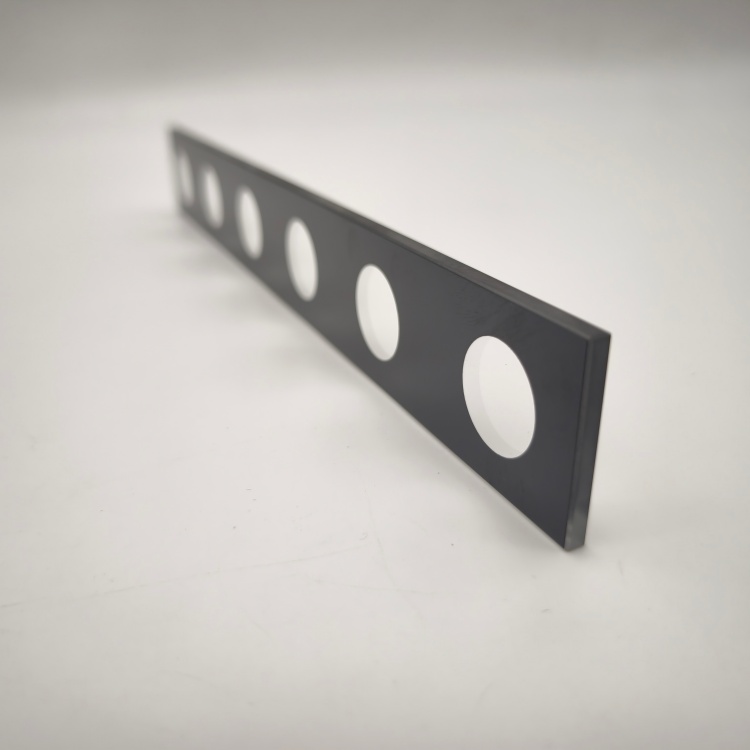
Black Printed Polished Smooth Matte Edge Linear Tempered Glass for LED Wall Washer Light
Narrow black-printed glass for linear indicators, side lighting and slim doorbell bars.
View product specifications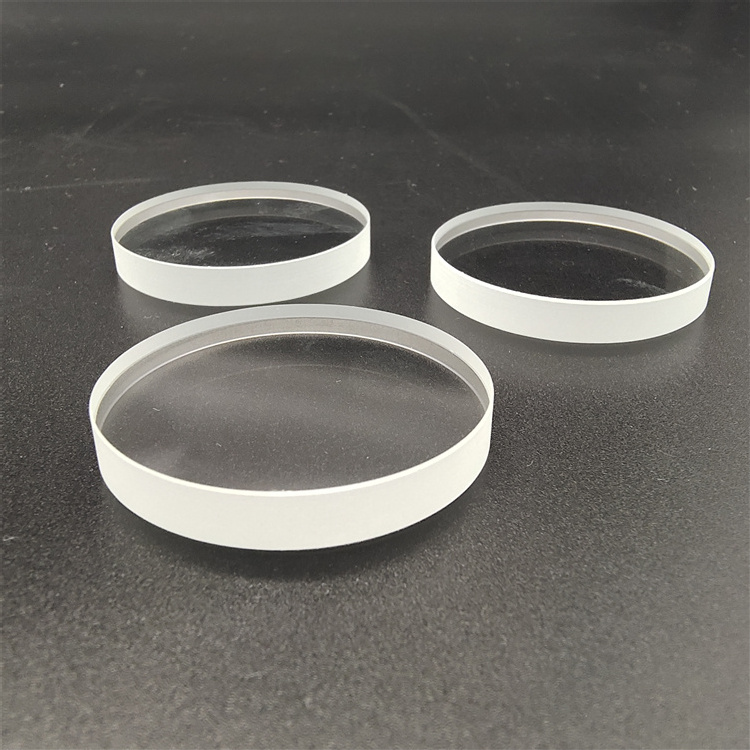
Full Tempered 30mm Diameter 3mm 4mm 5mm 6mm 8mm Thickness Ultra Clear Round Tempered Glass
Round ultra-clear cover glass for camera lenses, circular buttons and LED apertures.
View product specifications
Customized Small Size 3mm 4mm 5mm 6mm Beveled Edge Tempered Glass
Compact beveled-edge parts for button rings, fascia details and narrow entry hardware.
View product specifications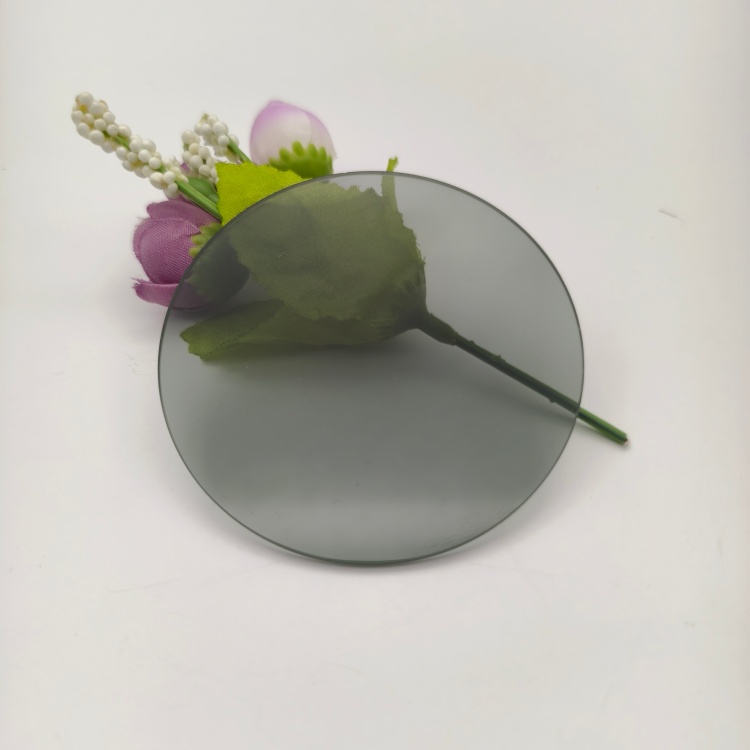
Factory Customized High Strength 2mm 3mm 4mm 5mm Tempered Black Glass Bulletproof & Decorative Flat Surface
High-strength black glass for faceplates requiring a deep, opaque and premium branded finish.
View product specifications
Both Sides Anti Reflective AR Coating 1mm 2mm 3mm 4mm Ultra Clear Tempered Glass
Double-sided AR glass for camera windows where glare and reflection reduce video clarity.
View product specificationsFactory Capacity Behind Guadalajara Doorbell Glass Programs
Original production data from Dongguan Jaswe Glass Co., Ltd. — a custom glass processor with cutting, CNC, edging, drilling, tempering, silk-screen printing, AG processing and AR / AF coating under one roof.
Guadalajara Doorbell Glass: What the Component Must Solve Before Price
A video doorbell faceplate is not a simple sheet of clear glass. It is a dimensional optical stack that combines a protective cover, a camera window, an IR illumination window, a microphone opening, a touch-key area, LED indicators, hidden circuitry, adhesive and an edge profile. In Guadalajara, the product also has to look correct on stone, stucco and metal entry systems, remain readable under strong daylight, resist fingerprints from couriers and residents, and survive routine cleaning during the rainy season.
The most common failure mode is not tempering. It is print-to-window alignment. A camera window that is 0.3 mm off, an IR aperture with a rough edge, or a black print that reflects light differently from the adjacent glass can make a finished doorbell look like a prototype. For OEM buyers in Jalisco, the useful question is not “What is the cheapest doorbell glass?” but “Which supplier can hold the same print, coating and hole position across repeat batches?”
Guadalajara sits at high altitude and receives intense daylight. West-facing doors often show strong reflections during late afternoon, while matte or textured entry walls can increase visible smudges on glossy glass. This is why AR, AG and AF treatments matter. AR reduces surface reflection and improves camera-window clarity. AG diffuses glare so the fascia remains comfortable to view. AF adds an oleophobic top layer that makes fingerprints easier to clean. They can be combined, but the correct stack depends on camera angle, LED brightness, viewing distance, cleaning method and the visual language of the doorbell brand.
Dongguan Jaswe Glass supports Guadalajara buyers at the specification stage: 0.2 mm to 19 mm flat tempered glass capability, common doorbell thicknesses from 0.5 mm, 0.7 mm, 1 mm, 2 mm, 3 mm and 4 mm, CNC cutting for special outlines, holes for sensors and microphones, edge polishing, tempering, silk-screen and ceramic printing, AG processing and AR / AF coating. The value is not only the process list; it is the ability to review the drawing, flag tolerance risks and keep the same process route from sample to production.
Localization checklist for Guadalajara
- Define camera, IR and LED windows with clear CAD dimensions — do not rely on a rendered image.
- Specify print side, ink opacity and color standard so black borders do not look brown under sunlight.
- Use AR glass where video clarity is the primary selling point; use AG + AF where glare and fingerprints are the daily complaint.
- Add a microphone or sensor hole only after checking the internal gasket and moisture path.
- Choose edge finish for safe handling: polished, beveled, stepped or matte edge depending on housing design.
- Plan export packing for mixed SKUs, because many Guadalajara importers combine doorbell glass with switch, lighting and display glass orders.
Doorbell Glass Specification Recommendations
Start with the user experience, then select thickness and coating. These are practical starting points for Guadalajara OEM, security and architectural hardware teams; final approval should always be based on physical samples.
High-clarity camera window
Use ultra-clear 1 mm to 2 mm tempered glass with double-sided AR when the doorbell camera must deliver clean video against bright exterior light. Pair the optical window with black printed masking to hide adhesive and PCB edges.
AR glass optionAnti-glare exterior fascia
Specify AG + AF for doors facing courtyards, streets or reflective lobbies. The diffused surface reduces glare and makes fingerprints from visitors and delivery staff easier to remove without aggressive cleaning.
Black faceplate optionPrinted smart touch panel
For touch keypads and illuminated icons, use silk-screen printed tempered glass with transparent key windows, controlled ink opacity and an AF top layer. This is the most direct route for branded smart doorbell and intercom interfaces.
Printed glass optionRound camera or button detail
Use 30 mm ultra-clear round tempered glass for camera lenses and circular LED apertures, or small beveled-edge glass for button rings. Round formats reduce edge stress and create a clean industrial design language.
Round glass option| Doorbell function | Recommended glass direction | Why it matters in Guadalajara | Review point before sampling |
|---|---|---|---|
| Camera window | Ultra-clear 1–2 mm with AR coating | Strong daylight and reflective entry walls can wash out video contrast | Window size, coating side, camera field of view, print overlap |
| Black branded fascia | 2–4 mm black printed or black tempered glass | Premium appearance must remain consistent under high UV exposure | Ink opacity, print side, color standard, edge appearance |
| Touch keypad | 0.5–2 mm printed tempered glass with AF | Frequent finger contact and outdoor dust make smudges more visible | Touch sensitivity, adhesive compatibility, icon window clarity |
| IR / LED aperture | Clear or ultra-clear window; CNC hole if required | Infrared and LED performance must not be reduced by dark printing | Hole diameter, light diffusion, gasket clearance |
| Microphone / sensor port | Instrument glass with drilled holes | Clean audio and sensor response depend on precise openings | Hole position tolerance, edge chip control, assembly stack |
| Round lens cover | 30 mm ultra-clear round tempered glass | Compact camera modules need a clean circular edge and high transmission | Diameter, thickness, edge polish, lens alignment |
Final optical values and mechanical performance depend on glass thickness, substrate, ink, adhesive and coating stack. Always approve physical samples before mass production.
Localized Doorbell Glass Scenarios in Guadalajara
Jalisco buyers rarely purchase “glass” in isolation. They purchase a finished entry experience for residential communities, apartment towers, commercial offices and hospitality projects.
Gated communities in Zapopan
Black printed tempered faceplates with a clear camera window, IR window and hidden screw areas. The visual goal is a clean entry panel that still looks premium after daily courier and visitor use.
Apartment towers in Providencia
Slim 0.5–2 mm cover glass with printed icons, AF coating and adhesive backing for compact video intercom modules where depth and assembly clearance are tight.
Commercial entries near Avenida Vallarta
AR + AG optical glass for offices and retail entries exposed to street glare, vehicle reflections and heavy foot traffic. Readability and camera clarity matter more than decorative print.
Hospitality entries in Tlaquepaque
Frosted or ultra-clear glass with beveled-step edges for boutique hotels and restaurants that want a softer light diffuser, a refined edge and easy-clean surfaces.
Guadalajara Market Trends Shaping Doorbell Glass Demand
These trends are visible in the way local security integrators, importers and OEM brands ask for quotations and samples.
Security integration is moving up the value chain
Doorbell glass is increasingly part of a broader access-control and video-intercom package. Integrators want one supplier who understands printed windows, camera optics, holes and repeatable fit.
Black glass and hidden-display aesthetics
Premium doorbells are shifting toward deep black fascias, hidden LEDs and subtle icon windows. This increases the importance of ink opacity, color matching and print edge sharpness.
Nearshoring favors custom, repeatable supply
Mexico’s electronics and security supply chains are growing. Buyers want factory-direct engineering, stable lead times and the ability to combine glass SKUs from one process-controlled source.
Documentation matters as much as price
Importers often route shipments through Manzanillo and inland logistics. Clear drawings, batch labels, packing lists, bilingual specifications and export-safe interleaving reduce risk for Guadalajara warehouses.

Why Guadalajara Buyers Shortlist a Dongguan Custom Glass Factory
Dongguan Jaswe Glass Co., Ltd. is a glass processing company in Dongguan, China — not a generic trading intermediary. The company processes custom tempered glass, ultra-clear glass, silk-screen printed glass, switch glass, LED lighting glass, display cover glass and AR / AG / AF coated glass for electronics, appliances, lighting and industrial equipment. For a Guadalajara doorbell program, this means the glass faceplate, camera window, printed icons, sensor holes and edge treatment can be reviewed as one manufacturing process.
The original company profile records 51–100 employees, annual revenue of US$2.5M–US$5M, main markets in America, Europe and Asia, and a supplier status that includes on-site verification for six years. Its 26 glass processing machines and 200,000+ pieces monthly output support repeat production, while an average response time of ≤3 hours and a 96.61% response rate reduce the communication friction that overseas buyers often experience with fragmented supply chains.
Quality Controls Built for Repeat Doorbell Glass Orders
For custom printed and coated glass, quality is not a final inspection alone. It is the control of cutting, edge stress, printing alignment, coating appearance and packing at each handoff.
In-process QC
Inspection at cutting, edging, drilling, tempering, printing and coating stages — before export packing, not only after finishing.
Fast engineering replies
Average response within 3 hours and a 96.61% response rate; drawings are reviewed for manufacturability before sampling.
Repeat-order consistency
A 26% buyer reorder rate reflects repeat business from lighting, electronics and appliance brands across three continents.
Export-safe packing
Interleaved, edge-protected packing supports mixed SKU shipments and reduces breakage risk on the route to Guadalajara.
From Drawing to Delivery: A Clear Doorbell Glass Workflow
Designed for overseas buyers who need predictable samples, clear communication and repeatable production.
Send requirements
Share DXF, DWG or PDF drawings plus thickness, edge type, print colors, clear-window dimensions, holes, coating and estimated annual volume.
Engineering review
Jaswe engineers check manufacturability, tolerance stack, print alignment, tempering constraints and the best process route.
Sampling & approval
Physical samples are reviewed for fit, color, optical appearance, adhesive compatibility, edge finish and packing.
Production & export packing
Batch production with in-process inspection, then interleaved and edge-protected packing for the Guadalajara route.
Guadalajara Doorbell Glass Buyer FAQ
Practical answers for importers, OEM brands, security distributors and architectural hardware teams sourcing from China.
Can you supply custom doorbell glass to Guadalajara, Mexico?
Yes. Dongguan Jaswe Glass supplies custom processed glass from Dongguan, China to buyers in America, Europe and Asia. For Guadalajara customers, the most practical route is to confirm the drawing, sample approval and packing instructions before arranging shipment through Manzanillo or air freight. Mixed orders can combine doorbell glass, display cover glass, switch glass and LED lighting glass in one production plan.
What thickness should we use for a video doorbell faceplate?
Common thicknesses for doorbell and display covers are 0.5 mm, 0.7 mm, 1 mm, 2 mm, 3 mm and 4 mm. A 2 mm to 3 mm tempered glass is often used when the fascia needs more rigidity and a premium feel; 0.5 mm to 1 mm may suit slim modules with a protective housing or adhesive backing. The final choice should be reviewed against assembly clearance, drop risk, housing support and touch sensitivity.
How should we design the camera window and IR window?
Use a CAD drawing to define the transparent camera window, IR aperture, LED indicator and any microphone hole. The silk-screen print should account for ink opacity, print side and edge sharpness. For outdoor video doorbells, a double-sided AR coating may be considered for the camera cover, while the surrounding fascia can use black print to hide adhesive and circuitry. Always test with the actual camera module and LED brightness.
Which coating is better for Guadalajara sun: AR, AG or AF?
AR anti-reflective coating reduces surface reflection and improves transmission and contrast. AG anti-glare treatment diffuses reflected light so the surface is easier to view under strong daylight. AF anti-fingerprint coating is an oleophobic top layer that helps with smudges on touch surfaces. Many outdoor doorbell programs use AG + AF or AR + AF depending on whether glare, camera clarity or fingerprint control is the main issue. Physical samples are recommended because the best stack depends on viewing angle and lighting.
Can you match Pantone colors and hide the internal PCB?
Yes. Silk-screen and ceramic printing can apply logos, icons, borders, transparent display windows and colored masks. Black printed glass is widely used to hide adhesive and internal circuitry while creating a premium faceplate. Buyers should provide Pantone references, print-side requirements and the transparent window dimensions so the print can be reviewed before sampling.
What is the minimum order quantity for custom doorbell glass?
Most custom items start at 100 to 500 pieces depending on size, printing, coating and hole drilling. Standard clear tempered pieces may be supplied in smaller sample quantities for evaluation. For Guadalajara distributors combining multiple doorbell models, a mixed first order can be discussed during the engineering review.
Can you produce small beveled, round or hole-drilled doorbell parts?
Yes. The factory supports CNC cutting, edge polishing, beveled edges, drilled holes, tempering, silk-screen printing and coating. This covers round camera windows, small button rings, printed keypad windows, instrument-style covers with microphone holes, and black decorative faceplates.
What information do we need to send for a quotation?
Send a DXF, DWG or PDF drawing with glass thickness, outline dimensions, edge type, hole positions, print colors, clear-window sizes, coating requirement, application, estimated annual quantity and target delivery schedule. Email info@jasweglass.com or use the inquiry button on this page. The engineering team can review manufacturability before samples are made.
Have a Doorbell Glass Drawing Ready?
Share your camera-window dimensions, print layout, coating requirement and estimated annual volume. Jaswe Glass will review the manufacturability and recommend a practical process route for your Guadalajara program.
Inquire Now