
Customized Small Size 3mm 4mm 5mm 6mm Beveled Edge Tempered Glass
Beveled edge grinding · 3–6 mm · small-format covers
Grind + Temper
Send an Inquiry
Eight product lines, all ground in-house
Every line below is machined to your drawing — outline, edge profile, holes, printing colours and surface coating are specified by you. Canadian buyers usually begin with a 100–500 piece trial run before committing to annual volume.
Beveled edge grinding · 3–6 mm · small-format covers
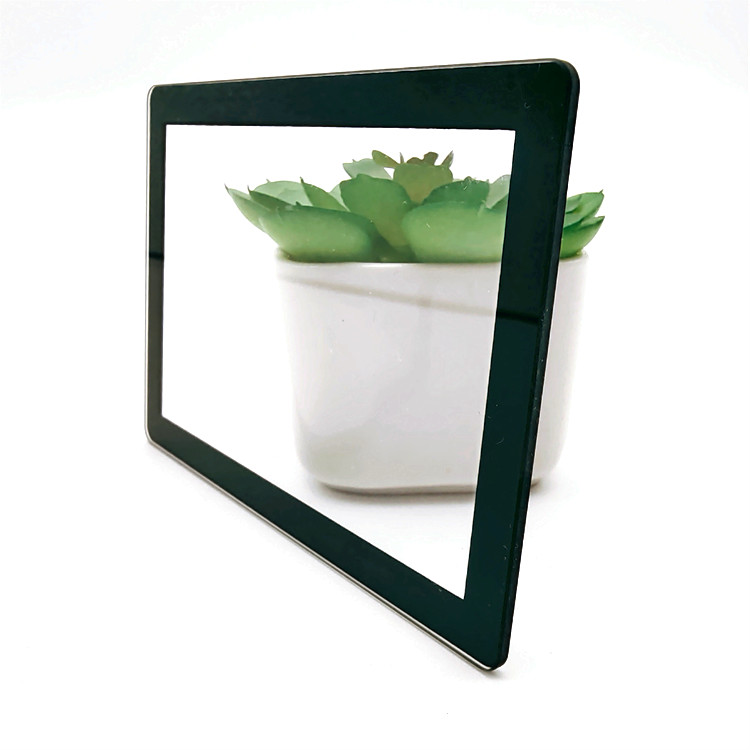
High strength · bulletproof protection · printed mask
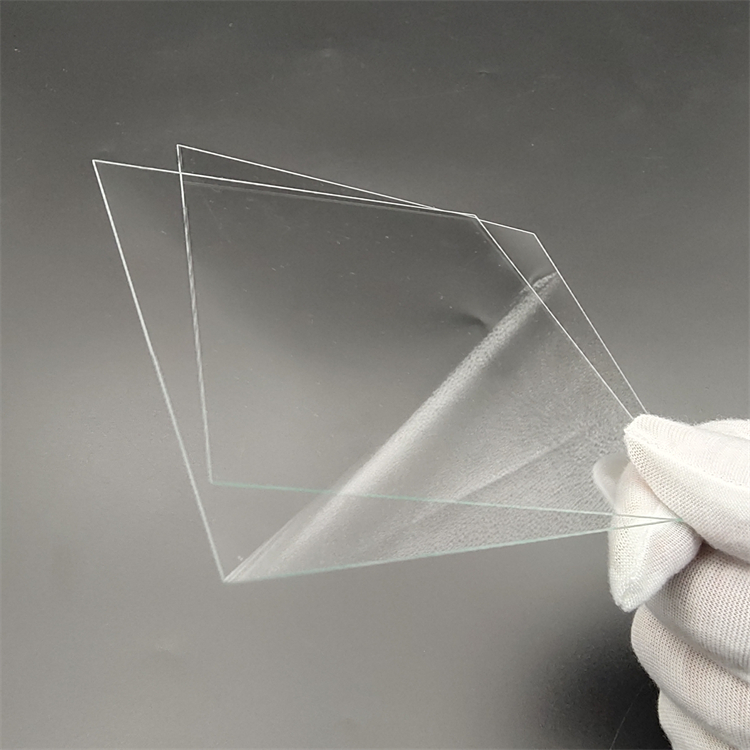
Low-iron substrate · ultra-thin · optical clarity

Double-sided AR · glare control · high transmittance
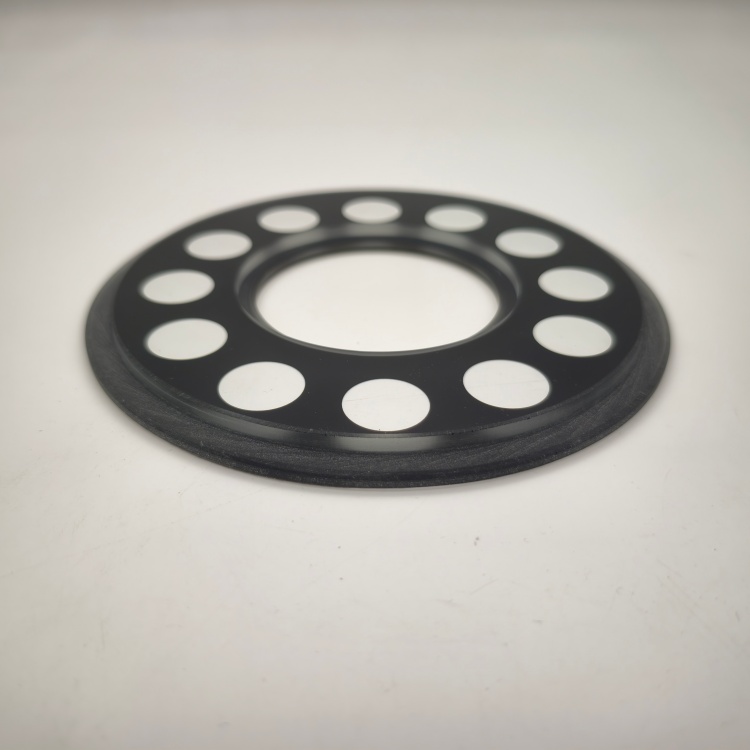
Stepped edge · CNC holes · ceramic print
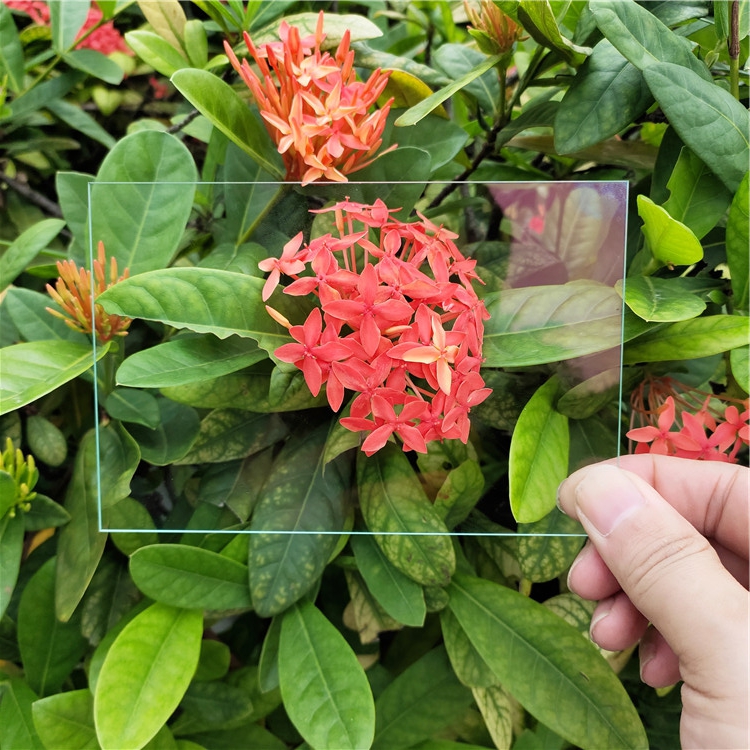
Nano coating stack · optical grade · tempered
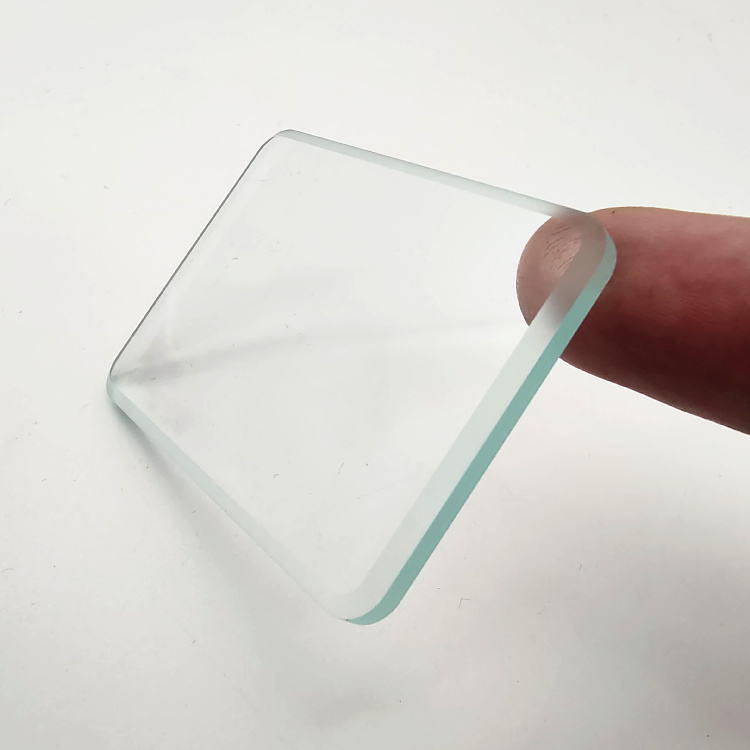
Small dimensions · beveled grind · batch friendly
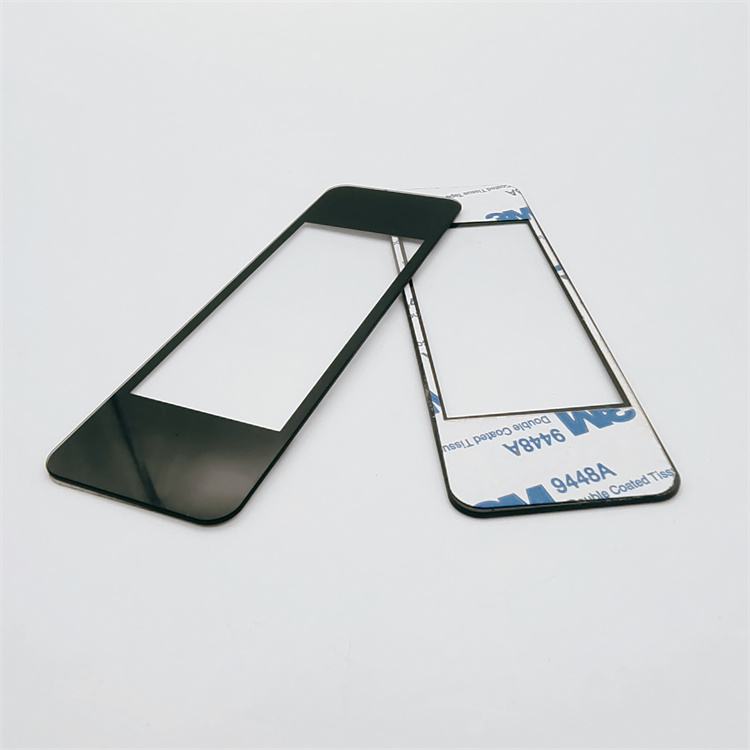
1 mm · 3M adhesive backing · ready to bond
Read this before you request quotes
In Canada, most companies searching for a glass grinding supplier are not looking for a commodity sheet trader. They are looking for a partner who can take a raw float or low-iron sheet, cut it to an irregular outline, grind the edge to a controlled profile, drill and countersink the holes, then send it through tempering and coating without losing dimensional accuracy along the way.
Edge grinding is the step that decides whether a cover glass survives installation and field use. A polished, chamfered edge removes the micro-cracks left by mechanical cutting; those micro-cracks are exactly where a tempered panel will crack when it is clamped into a bezel, dropped a few centimetres onto a bench, or thermally cycled between a heated indoor display and a −30 °C loading dock in Winnipeg.
This is also where wholesale pricing gets misunderstood. Two suppliers can quote the same glass thickness and appear to be 30% apart, when in reality one quote covers flat polished edges, a 0.2 mm bevel and 100% edge inspection, and the other covers an as-cut edge with no finishing. For a Canadian OEM comparing landed cost, the second number only looks cheaper until the first container of panels arrives with chipped corners.
Dongguan Jaswe Glass Co., Ltd. is a processing factory rather than a trading desk: cutting, CNC shaping, edge grinding, hole drilling, tempering, silk-screen and ceramic printing, AG etching and AR / AF vacuum coating all happen under one roof. That matters to Canadian buyers because the tolerance chain is not broken by subcontracted steps — and because a single quality record follows the order from raw sheet to export carton.
Localised application scenarios
Canada is not a single climate or a single market. A panel specified for a Vancouver showroom has very different requirements from one bolted to a haul truck in northern Alberta.
Low-angle winter sun and summer glare both wash out outdoor screens. An AG-etched surface with a tuned haze level scatters reflected light so menu text stays readable, while AR coating lifts transmission so the panel can be driven at lower brightness — useful when the enclosure is sealed and heat cannot escape.
Printed glass control panels for thermostats, zoning controllers and heat-recovery ventilators. We print bilingual EN / FR icon sets and window masks on the reverse of the glass, so icons are protected from cleaning agents commonly used in Canadian commercial buildings.
Canada’s push toward electrified transport has created a large cohort of curbside and fleet-depot chargers. Their displays face blowing snow, road salt mist and UV exposure, so we recommend 3–4 mm tempered AR glass with an AF top layer that lets operators wipe screens with a gloved hand.
Ultra-clear low-iron cover glass for analysers, imaging consoles and point-of-care devices clustered around the Toronto–Waterloo and Montreal life-science corridors. Consistent colour rendering matters when a clinician is reading a diagnostic image on a display that has a tinted cover.
Round, square and linear glass covers for downlights, wall washers and office pendants. Stepped-edge and drilled-hole versions are ground to seat cleanly into die-cast housings, and black ceramic borders resist fading in fixtures that run hot for hours.
Cab-mounted HMI covers for equipment working in Prairie fields, BC forests and northern mines. Here the priority shifts from optical performance to impact resistance: thicker tempered glass, full edge polish and a wider printed mask to hide the gasket line after years of vibration.
2025 market intelligence
These are the shifts our Canadian customers have been acting on over the last eighteen months — and each one changes how a specification should be written.
Freight volatility and port congestion have pushed Canadian OEMs away from single-supplier dependence. Instead of adding a second sheet-glass trader, purchasing teams are qualifying a second processor — a supplier who can grind, temper and coat in one facility. The practical implication is that your first-order documentation needs to be portable: a clean drawing package, a printed colour reference and an agreed inspection standard can move between suppliers far faster than a product can be re-engineered.
Experienced Canadian importers now compare an all-in number: FOB price, freight to Vancouver or Toronto, customs brokerage, applicable duties, GST/HST and inland haulage. On small display panels the freight and duty component can exceed the glass itself, which is why consolidated shipments, denser cartons and DDP terms are increasingly requested at the quotation stage rather than after the PO is issued.
Temperature cycling between a heated retail interior and a −25 °C exterior wall reveals problems that warm-market specifications never expose: adhesive creep behind 3M tape, differential expansion between coated and uncoated faces, and condensation forming on the inside of a sealed enclosure. Specifiers are now asking for wider edge margins, thicker adhesive and matte edge finishes to reduce stress concentration.
Canadian brand owners increasingly need RoHS and REACH statements, SVHC declarations and, for consumer-facing products, information about the chemistry used in anti-fingerprint top layers. Suppliers who can answer those questions in writing — rather than forwarding a generic certificate — shorten the qualification cycle considerably.
Panels that were 7 inches five years ago are frequently 15 to 32 inches today, particularly in self-service kiosks, transit information screens and industrial control rooms. Larger panels amplify flatness and twist errors, so edge grinding has to be paired with a controlled stress-relief and tempering route — a small warp on a 300 mm panel becomes a visible gap on a 700 mm one.
In-house processing
Twenty-six processing machines and more than eighty operators let us move from a raw sheet to a finished, inspected panel without handing the job to a subcontractor.
Automatic cutting plus CNC machining for rounds, notches, slots and irregular outlines, down to 0.2 mm material.
Flat, pencil, beveled, stepped and matte edges — the profile is drawn and approved before production.
Button, sensor, camera and fastener holes positioned on the drawing, with stepped and counterbored options.
Furnace tempering raises edge and surface strength and gives safer, granular breakage on failure.
Multi-colour logos, icons, borders and transparent windows with Pantone colour matching on the reverse face.
Diffused matte surface tuned by haze level so the screen stays legible under strong ambient light.
Single- or double-sided optical coating that lowers surface reflection and lifts transmission.
Oleophobic top layer applied over AR or AG so touch surfaces wipe clean and glide smoothly.
Specification matrix
Treatments combine. A Canadian outdoor kiosk frequently runs AG + AF, while an indoor medical monitor usually runs double-sided AR on low-iron glass.
| Glass Type | What It Solves | Typical Canadian Use | Specification Tip |
|---|---|---|---|
| Ultra Clear (Low-Iron) | Removes the green tint of standard float glass so colour stays true | Medical displays, premium appliance panels, high-end LED fixtures | Pair with white or light printing — standard float will read green against white ink |
| AR Anti-Reflective | Cuts surface reflection and raises transmission for higher contrast | Diagnostic monitors, transit information screens, camera windows | Double-sided coating gives the largest gain; single-sided suits rear-projection style assemblies |
| AG Anti-Glare | Diffuses reflected light so screens stay readable in bright ambient conditions | Drive-thru boards, outdoor kiosks, equipment cabs, digital signage | Match haze to viewing distance — finer haze for close high-resolution reading |
| AF Anti-Fingerprint | Repels oil and sweat on touch surfaces | Capacitive touch panels, smart switches, POS terminals | Always specify as the final top layer, applied after AR or AG |
| Printed Tempered | Hides wiring and gaskets, carries logos, icons and transparent windows | Switch plates, appliance controls, instrument windows | Send Pantone references, window dimensions and whether print sits on face 2 or face 3 |
Final optical values depend on substrate, thickness and coating stack. Sample evaluation before mass production is strongly recommended for Canadian outdoor installations.
Company advantages
Dongguan Jaswe Glass Co., Ltd. sits inside the Pearl River Delta electronics supply chain — the same corridor that supplies the components used in Canadian display, appliance and lighting assemblies.
Most of our eighty-plus operators have spent more than eight years handling glass by hand and by machine. That depth is what carries a job like a 0.2 mm cover glass or a multi-colour print with a transparent window, where a small handling error becomes a visible defect on the customer’s assembly line. In practice it also shortens sampling: our engineers review manufacturability before a tool is touched, so a drawing that cannot be produced is flagged early rather than after the third sample round.
Buyers in Toronto or Vancouver cannot wait three days for a technical answer because of the time difference. Our recorded average response time sits under three hours, with a 96.61% buyer response rate and a 26% repeat order rate across customers in lighting, electronics and appliance assembly. Quality is managed with a documented inspection step at cutting, edging, tempering, printing and coating — each station signs off before the panel moves on, and export packing is checked against the shipping route.
FAQ
Most custom items start at 100 to 500 pieces, depending on panel size, printing complexity and whether a coating step is involved. Standard clear tempered pieces can sometimes be supplied in smaller evaluation quantities. For a first Canadian order we usually recommend building the trial around the smallest workable panel size, so the sample budget goes into validating the edge profile and optical stack rather than into glass area.
Our current range runs from ultra-thin electronic grade glass at 0.2 mm up to 19 mm flat tempered glass. The most frequently requested thicknesses for display and touch covers are 0.5, 0.7, 1, 2, 3 and 4 mm. Below roughly 1 mm, grinding and tempering behave very differently from standard 3 mm work, so thickness should be discussed together with panel size and support conditions rather than chosen in isolation.
Sampling is typically the longest variable step and depends on whether a new print screen or coating run is required. Mass production is scheduled once the sample is approved. Ocean freight to Vancouver runs shorter than to Montreal via the St. Lawrence, and Toronto shipments are commonly routed through either coast depending on sailing schedules. Because of this, we quote lead time from confirmed sample and confirmed artwork, not from the enquiry date — that keeps both sides working from the same baseline.
FOB and FCA are the most common starting points, and DDP to a Canadian delivery address can be arranged for smaller volumes where the importer prefers a single landed price. For larger orders, many buyers keep the freight and customs brokerage in-house so they can control routing. Whatever the term, ask for the duty classification and brokerage assumption in writing — an all-in quotation that silently excludes duties is the most common source of landed-cost surprises.
Panels are interleaved, edge-protected and packed in export-grade cartons, with ISPM-15 treated timber where a crate is used. For cold-route shipments we add a moisture barrier because condensation forming inside a container during freeze-thaw cycles is a real risk on Canadian rail legs. If your panel carries an AF or AR coating, mention it explicitly so the interleaving material is selected accordingly.
Yes. Silk-screen and ceramic printing support multi-colour artwork with Pantone matching, and bilingual EN / FR layouts are routine for Canadian appliance, HVAC and consumer electronics programmes. Please supply the artwork as vector files with the transparent window dimensions marked separately from the printed area, since the window edge is a glass feature while the print edge is a screen feature.
We can supply material and process documentation covering substrate origin, coating type, RoHS and REACH statements, and dimensional inspection reports against the approved drawing. We do not issue CSA or cUL certifications for finished appliances — that testing belongs to the equipment manufacturer — but we can supply the glass-level data those certification bodies typically request. If your programme needs a specific declaration format, send the template with the enquiry and it will be filled in during quotation.
Send a drawing as DXF, DWG or PDF along with thickness, edge profile, hole positions, printing colours, coating requirement, application and estimated annual quantity. Our engineers review manufacturability and reply with a process route, tolerance feedback and a quotation. If the design is not yet final, send the application description and target size instead — a manufacturability review early in the design cycle is far cheaper than correcting a drawing after a tool has been made.
DXF, DWG, STEP or PDF — with the edge profile, hole positions, printing colours and coating stack marked. Our engineers reply with a process route, tolerance feedback and a landed-cost estimate for your Canadian delivery point.