OEM/ODM Spotlight Glass Exporters & Wholesalers Serving the Edmonton Market
Custom tempered, ultra-clear, printed, AR / AG / AF coated and adhesive-backed glass for architectural lighting, LED fixtures, smart switches, displays, appliances and instrumentation — engineered in Dongguan, China for Edmonton OEMs, brand owners and wholesale buyers.
Contact UsEight Spotlight and Display Glass Products for Edmonton OEM/ODM Programs
The product families below cover the most common starting points for Edmonton lighting, electrical, appliance, display and control-panel projects. Every item can be customized by drawing, thickness, edge, printing, coating, adhesive and packaging.
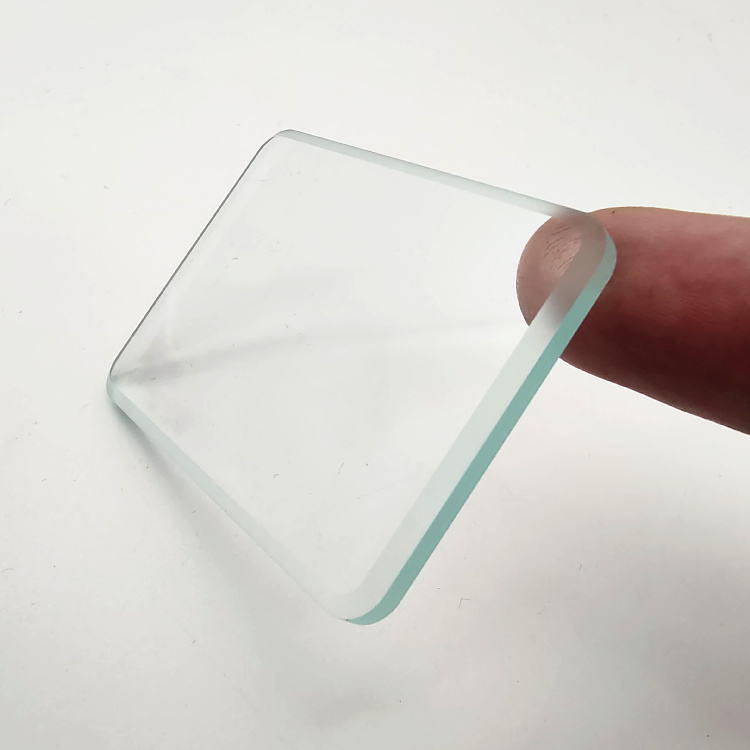
Custom Small Dimensions Tempered Beveled Edge Glass for Sale
Small-format tempered glass with a beveled edge for accent lights, wall sconces, decorative luminaires and premium bezels. The edge profile gives a finished look while preserving safe handling.

Small Size Ultra Thin 0.5mm 0.7mm 1mm Tempered Glass Panel With Adhesive Tape for Screen Protection
Adhesive-backed ultra-thin glass for compact display windows, sensor apertures and lighting controls where assembly height and weight matter.
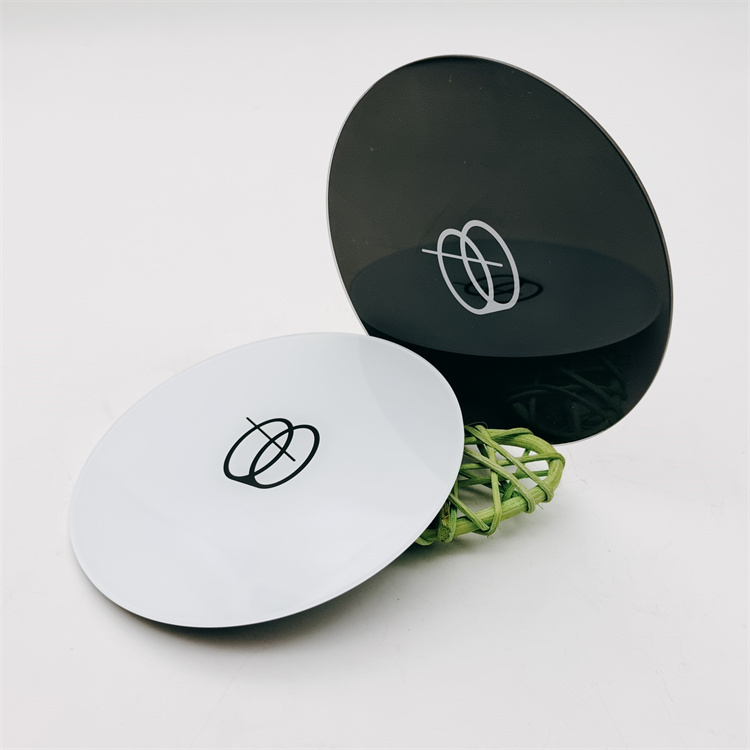
Black White Silk Screen Printing Toughened Glass Round Tempered Glass for Electric Appliance
Round printed glass for appliance controls, smart-home interfaces and lighting control plates. Multi-color printing can integrate icons, light windows and hidden-until-lit graphics.

Both Sides Anti Reflective AR Coating 1mm 2mm 3mm 4mm Ultra Clear Tempered Glass
Double-sided AR-coated ultra-clear glass for control-room monitors, instrument windows, display covers and high-contrast signage in bright viewing conditions.
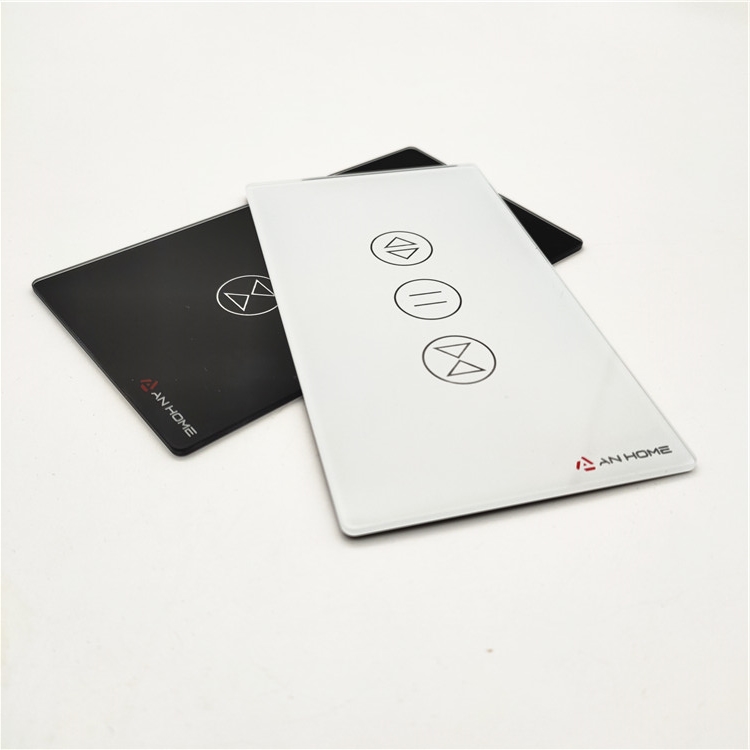
Home Smart WiFi Remote Control Touch Tempered Glass Screen-Printed Glass Switch Glass Panels Curtain Control Glass
Printed touch-switch glass for smart-home, hospitality and commercial automation. Suitable for residential retrofits where appearance and touch reliability matter.
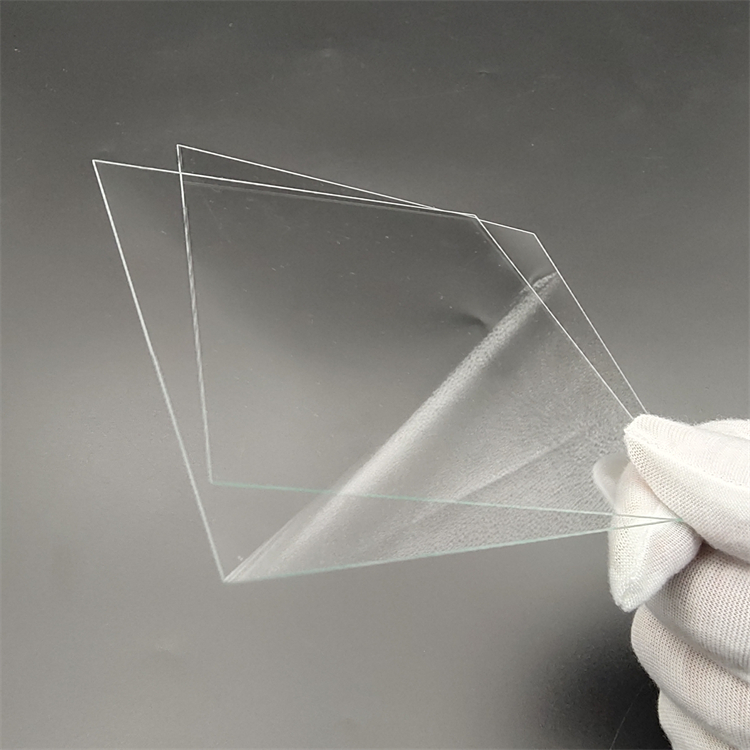
Customized Ultra Clear 0.5mm 0.7mm Thickness Ultra Thin Tempered Glass
Thin low-iron glass for compact lens covers, sensor windows and display protection. Low-iron composition reduces green tint for white lighting and color-critical displays.
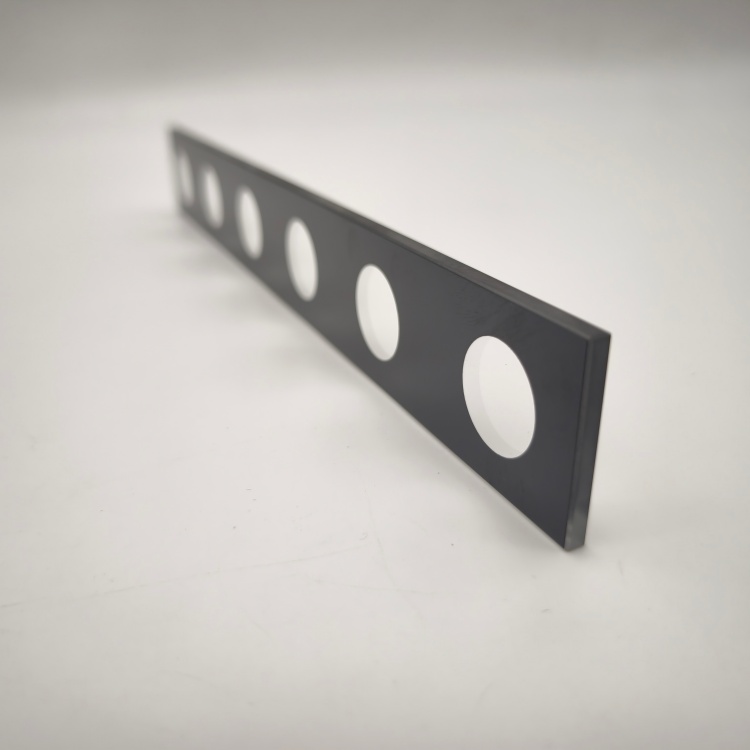
Black Printed Polished Smooth Matte Edge Linear Tempered Glass for LED Wall Washer Light
Linear printed glass for LED wall washers, facade lighting and linear architectural fixtures. Matte edges and black printing help control light spill and deliver a clean fixture appearance.
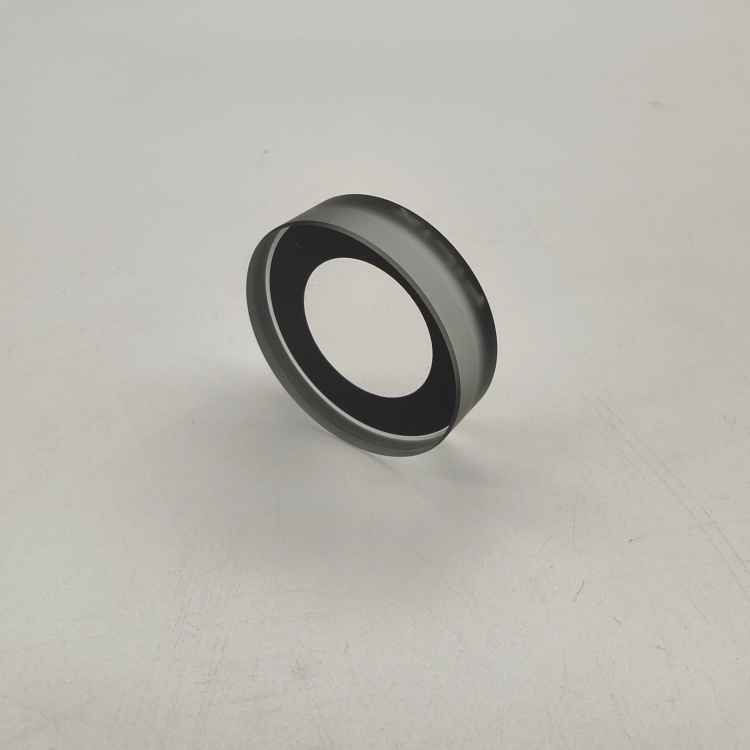
High Quality Small Diameter 10mm Thickness Round Tempered Glass with High Temperature Ceramic Printing
Small-diameter round glass with ceramic printing that withstands high temperatures, suited to high-power spotlights, downlights and compact fixtures with elevated thermal loads.
What “Spotlight Glass” Means for Edmonton OEM and Wholesale Buyers
Edmonton buyers rarely need a single catalogue item. They need a manufacturable glass specification that fits the fixture, the control panel, the installation environment and the shipment plan.
Edmonton’s lighting and electrical ecosystem spans architecture, commercial interiors, industrial facilities, transit, retail, hospitality and residential renovation. In that environment, spotlight glass is not a commodity. It may be a circular lens on a high-output spotlight, a linear printed cover on an LED wall washer, a display window on a lighting controller, or a touch panel on a smart switch. For an OEM, the glass is part of the optical stack, the safety envelope, the user interface and the brand finish at the same time.
Successful sourcing starts with a drawing and a clear application brief. An OEM/ODM glass exporter should be able to read the drawing, challenge unrealistic tolerances, recommend tempering or coating, confirm print colors, and propose packing that can survive ocean and rail freight to Alberta. A wholesaler should be able to consolidate multiple SKUs without losing traceability. The eight product families above are practical starting points, but they are not limits; custom outlines, holes, notches, stepped edges, monitor windows and multi-layer coatings can all be developed from a specification.
Edmonton buyers often compare local distributors with overseas manufacturers. Local stock is valuable for emergency replacement or small repair quantities. Direct manufacturing is often stronger for custom sizes, repeat OEM programs, printed graphics, functional coatings and mixed container loads. This page is written from the manufacturer side, and the distinction matters: Dongguan Jaswe Glass Co., Ltd. is a processing factory in China, not an Edmonton warehouse. The advantage is engineering depth and customization; the trade-off is that freight, customs and planning buffers must be included in the landed-cost calculation.
Specification checklist for Edmonton enquiries
- Application, fixture model and final installation environment.
- Drawing in DXF, DWG or PDF with dimensions and tolerances.
- Glass substrate: clear, ultra-clear low-iron or tinted.
- Thickness, tempering requirement and strength expectation.
- Edge type: pencil, flat, beveled, stepped or matte.
- Holes, notches, countersinks and camera or sensor windows.
- Printing colors, Pantone references and transparent windows.
- AR, AG or AF coating requirement and testing expectation.
- Sample quantity, annual volume and replenishment plan.
- Packaging, labeling, destination and required delivery window.
Where Spotlight Glass Is Used Across Edmonton and Northern Alberta
Cold winters, long summer daylight and low winter sun create a distinctive optical and durability brief. The right glass solution depends on whether the priority is light output, glare control, touch response, printed branding, impact safety or assembly efficiency.
Architectural and Facade Lighting
Downtown Edmonton, the Ice District, Whyte Avenue and mixed-use developments use linear and custom-shaped glass covers to control light spill and create a clean fixture appearance. Low-iron glass, polished or beveled edges and printed borders are common specifications for premium architectural luminaires.
Warehouse and Logistics Lighting
Distribution centres near Edmonton International Airport, rail yards and industrial parks use high-bay, panel and wall-washer fixtures. Glass covers need to tolerate heat from high-output LEDs, dust and maintenance handling. Thicker tempered glass and ceramic-printed glass are practical options for demanding fixtures.
Smart Homes and Commercial Controls
Edmonton’s retrofit market uses WiFi curtain-control glass, touch switch panels and printed switch plates. AF coating helps with fingerprints, AR coating improves readability, and print design can hide wiring while creating backlit icons and status windows.
Industrial Instrumentation and Energy HMI
Northern Alberta’s energy, utilities and manufacturing operations use control panels in heated buildings and outdoor enclosures. Glass covers protect displays from scratches and cleaning, while printed masking hides internal components. Sealing and condensation strategy should be confirmed with the enclosure designer.
Retail, Transit and Wayfinding Displays
Long summer daylight and low winter sun produce glare on kiosks, signage and wayfinding screens. AG treatment diffuses glare, AR treatment increases contrast, and AF treatment reduces fingerprints at public touch points. The correct combination depends on viewing distance, brightness and cleaning routines.
Appliance and Electrical Equipment Panels
Kitchen, laundry, HVAC and electrical equipment panels need printed graphics, display windows and safe edges. Adhesive-backed ultra-thin glass can simplify assembly for compact products, while tempered printed glass provides a durable front surface for larger control panels.
Trends Reshaping Spotlight Glass Demand in Edmonton
Procurement decisions are moving toward verifiable performance, design flexibility and lower total cost — not simply the lowest piece price.
LED Retrofit and Optical Control
As older fixtures are replaced with efficient LED systems, glass covers become part of the optical design. Buyers increasingly specify ultra-clear glass, controlled transmission, printed borders and edge treatments that reduce light leakage.
Touch-First Smart Buildings
Smart switches, curtain controls and display interfaces are becoming standard in residential and commercial renovation. This raises demand for anti-fingerprint surfaces, anti-reflective viewing windows and precisely printed capacitive touch graphics.
Cold-Climate Documentation
Edmonton buyers increasingly ask for batch traceability, coating records, inspection reports and packaging validation. A supplier that can explain process controls is easier to qualify than one that only quotes a price per piece.
Landed-Cost and Mixed-SKU Planning
Wholesale buyers are consolidating printed switch glass, lighting covers and display windows into mixed shipments to reduce freight and brokerage friction. Suppliers must support labeling, carton marks and traceable packing lists for Edmonton receiving teams.
AR, AG, AF, Ultra Clear, Printed and Tempered Glass: Which Option Fits?
This matrix is a practical starting point for Edmonton project discussions. Final optical and durability values depend on thickness, substrate, printing, coating stack and the installation environment.
| Glass or processing | Problem it solves | Typical Edmonton use | Specification note |
|---|---|---|---|
| Clear tempered glass | Improves impact resistance and safer breakage behaviour | Lighting covers, appliance panels, protective windows | Define thickness, edge type, hole locations and tempering requirement |
| Ultra-clear low-iron glass | Reduces green tint and improves color fidelity | White LED lighting, premium displays, architectural fixtures | Specify tint expectation and pair with color-matched printing |
| AR anti-reflective coating | Lowers surface reflection and improves contrast | Control-room monitors, instrument windows, display covers | Choose single- or double-sided coating and validate with the actual display |
| AG anti-glare treatment | Diffuses glare from sunlight and overhead lighting | Outdoor kiosks, transit displays, industrial HMIs | Specify gloss or haze level by viewing distance and screen resolution |
| AF anti-fingerprint coating | Repels oil and sweat and makes touch surfaces easier to clean | Touch switch panels, POS terminals, public kiosks | Confirm cleaning compatibility and abrasion expectations |
| Silk-screen printing | Adds logos, icons, borders, masking and transparent windows | Switch plates, appliance controls, lighting control panels | Provide Pantone references, window dimensions and print-side drawing |
| Ceramic printing | Provides durable graphics for higher-temperature applications | High-power spotlights, downlights, compact fixtures | Confirm firing process, color expectation and thermal load |
| Ultra-thin adhesive-backed glass | Saves assembly space and simplifies bonding | Compact displays, control windows, sensor covers | Review adhesive type, bubble control, surface preparation and service temperature |
Important: This table does not replace sample testing. For Edmonton projects, test glass and coating samples under the intended lighting, cleaning, touch and temperature conditions before mass production.
OEM, ODM and Wholesale Supply: How the Edmonton Model Works
Edmonton buyers can source build-to-print OEM glass, co-developed ODM glass or wholesale production programs. The difference is how much design responsibility sits with the buyer versus the manufacturer.
Build-to-Print Production
You provide the drawing, material, thickness, edge, printing and coating specification. The factory reviews manufacturability, produces samples, confirms inspection criteria and runs production to the approved standard. This is the most direct model for established fixture and control-panel OEMs.
Co-Development Support
Your team brings the application, appearance target and performance requirement. The manufacturer helps translate that into a practical glass stack, recommends tempering or coating, reviews print layout and proposes packing. This is useful when a design is still evolving or when an existing glass part is being localized.
Multi-SKU and Mixed Programs
Distributors and brand owners can combine several product families into a production plan and ship with coordinated carton marks, labels and packing lists. The goal is predictable replenishment for Edmonton customers without carrying an oversized local inventory.
For Edmonton delivery, the practical supply chain usually runs by ocean to Vancouver or Prince Rupert and then by rail or truck into Alberta, with air freight reserved for samples or urgent qualification needs. Buyers should plan for customs documentation, HS classification, brokerage, last-mile delivery and winter freight variability. The MOQ for custom items commonly begins around 100 to 500 pieces depending on size, printing and coating, while clearer tempered pieces may be supported in smaller sample quantities for evaluation. Direct export means there is no Edmonton warehouse stock; the advantage is that glass can be built to your drawing rather than limited to a local catalogue.
A Glass Processing Partner Built for Edmonton-Specific Requirements
Dongguan Jaswe Glass Co., Ltd. combines in-house processing with export experience for North American OEMs, brand owners and wholesale buyers. Our role is to turn a drawing and an application brief into a repeatable glass part.

Our factory is located in Dongguan, Guangdong, China, in the center of the electronics and lighting supply chain. We process tempered glass, ultra-clear glass, silk-screen printed glass, switch glass, AR / AG / AF coated glass, LED lighting glass, appliance glass and electrical equipment glass. With 26 glass processing machines and more than 80 workers, monthly output exceeds 200,000 pieces of processed glass.
Most of our operators have over eight years of hands-on glass processing experience. That experience matters on demanding jobs such as ultra-thin 0.2 mm cover glass, multi-color printing with transparent display windows, high-temperature ceramic printing and optical coating stacks where small handling errors become visible defects.
“Scientific management, careful manufacture, high quality service, striving for excellence.”
We support OEM/ODM buyers with drawing review, sampling, in-process inspection, export packing and production documentation. Our team communicates in English and responds to technical enquiries with process recommendations rather than a simple price sheet. The company serves buyers in America, Europe and Asia, and our trade performance includes a 96.61% response rate, an average response time within three hours and a 26% buyer reorder rate.
Precision Cutting and CNC
Automatic cutting plus CNC shaping for rounds, notches, slots, camera windows and irregular outlines.
Edge Polishing
Pencil, flat, beveled, stepped and matte edges for safe handling, clean appearance and design intent.
Hole Drilling
Holes and countersinks for buttons, sensors, cameras, knobs, fasteners and wiring pass-through.
Thermal Tempering
Tempering furnace strengthening for impact resistance and safer breakage behaviour in finished products.
Silk Screen and Ceramic Printing
Multi-color logos, icons, borders, display windows and color matching for appliance and lighting panels.
AG Anti-Glare Processing
Diffused matte surfaces that keep displays readable under strong ambient or outdoor light.
AR Anti-Reflective Coating
Optical coating that lowers reflection and raises light transmission for brighter, clearer displays.
AF Anti-Fingerprint Coating
Oleophobic top layer for touch surfaces with smoother glide, fewer smudges and easier cleaning.
Questions Edmonton Buyers Ask Most
These answers are written for OEM procurement, engineering and wholesale teams who need to compare a local distributor with a direct manufacturer.
What does “spotlight glass” mean for an Edmonton procurement project?
In this context, spotlight glass refers to the glass cover, lens, diffuser, bezel, display window or control-panel plate used on a lighting fixture or electrical device. It is not one universal material. The correct specification depends on the fixture’s optical target, heat load, installation location, cleaning method, touch requirement and shipping plan. Edmonton projects should also consider long summer daylight, low winter sun, condensation and winter handling before choosing AR, AG, AF or printed glass.
Can Dongguan Jaswe Glass supply OEM and ODM glass to Edmonton, Alberta?
Yes. We are a China-based glass processing manufacturer serving North American OEMs, brand owners and wholesale buyers. Send your drawing, target quantity, application, coating or printing requirement, and desired delivery window. Our engineers review manufacturability and propose a process route before sampling. We do not operate an Edmonton warehouse, so freight, customs and local delivery should be planned with your logistics partner.
What glass thicknesses are available?
Our current range covers ultra-thin electronic-grade glass from 0.2 mm up to 19 mm flat tempered glass. The most requested thicknesses for display and touch covers are 0.5, 0.7, 1, 2, 3 and 4 mm. Not every thickness is available with every size, print or coating combination, so confirm the final stack during engineering review.
How do I choose AR, AG or AF glass for Edmonton lighting and displays?
AR coating reduces surface reflection and improves contrast, which is useful for control-room monitors, instrument windows and display covers. AG treatment diffuses glare from sunlight or overhead lighting and is often selected for outdoor kiosks, transit displays and industrial HMIs. AF coating resists fingerprints on touch surfaces. The treatments can be combined; for example, an outdoor touch kiosk may use AG plus AF, while a high-contrast indoor display may use AR plus AF.
What is the minimum order quantity and sample process?
Most custom items start at 100 to 500 pieces depending on size, printing and coating. Standard clear tempered pieces can sometimes be supplied in smaller sample quantities for evaluation. The sample process usually begins with a drawing review, followed by a physical sample for fit, color, edge and optical approval. Tooling, special printing and coating requirements can affect the final MOQ.
How is glass packed for long-distance export to Edmonton?
Packing must address rail and truck vibration, humidity changes, winter condensation and careful unloading. Typical protection includes interleaving, edge protection, corner guards, foam, moisture-control materials and export cartons or crates. For wholesale or multi-SKU orders, carton marks, labels and packing lists should match your Edmonton receiving process. Packaging can be customized, but the final design should be confirmed against the glass size, weight and transport mode.
What documentation can be provided for an OEM glass order?
Documentation can include approved drawings, dimensions, thickness, edge type, printing colors, coating requirements, inspection records, packing lists and commercial invoices. Test reports can be discussed where applicable. Buyers should specify the exact documentation required for their Edmonton quality system before production, rather than assuming a standard certificate covers every application.
Do you have an Edmonton warehouse or local showroom?
No. We are a direct manufacturer in Dongguan, China, and do not operate an Edmonton warehouse or showroom. Buyers who require same-day local pickup or emergency shelf stock may need a local distributor. Buyers who need custom dimensions, printed glass, optical coatings, adhesive-backed glass or repeat OEM production can work with us directly and plan freight into Alberta.
How do I start a custom spotlight glass project for Edmonton?
Prepare a drawing in DXF, DWG or PDF, then add thickness, glass type, edge requirement, holes, printing colors, coating requirement, application, estimated annual volume, packaging preference and destination. If the design is not final, describe the fixture or control panel and the target performance. Our engineers will review manufacturability, recommend a practical process route and discuss sampling before mass production.
Need a practical quotation for an Edmonton OEM or Wholesale Glass Program?
Share your drawing, application, thickness, printing or coating requirement, target quantity and Edmonton delivery window. Our team will review the specification and recommend a manufacturable glass solution.
Contact Us