LCD Cover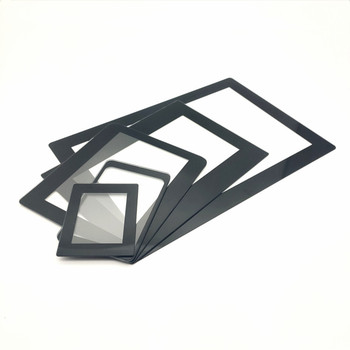
0.7–2.0 mm Polished Edge Tempered Glass for LCD Modules
Flat panel · Polished edge · Custom outline
MOQ: 100 pcsInquire



These four constructions cover most LCD modules, capacitive touch panels, industrial HMI windows and instrument displays. Thickness, outline, hole positions, edge profile, print color and coating stack can be customized to your drawing.
Flat panel · Polished edge · Custom outline
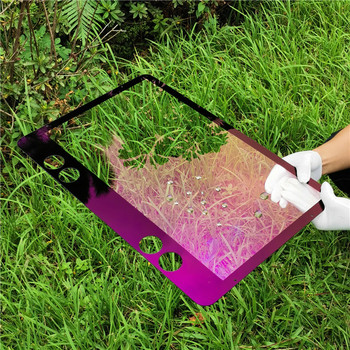
Low reflection · High transmittance · Tempered
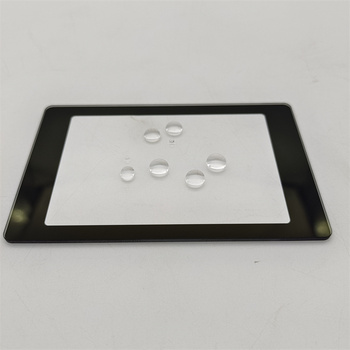
Ceramic print · Drill holes · Polished edge

Low-iron · AF optional · Smooth touch surface
No matching product on this page. Browse the full catalog for more options.
Edge polish is not only a cosmetic requirement. On thin display module covers, a controlled edge radius and a smooth polished surface help reduce chip initiation points, improve handling safety during assembly and create a more premium visible edge.
| Buyer Priority | Recommended Construction | Critical Specification | Why It Matters |
|---|---|---|---|
| Outdoor readable display | 2–3 mm ultra clear tempered glass + AG + AF | Haze level, gloss level, edge radius and coating durability | AG diffuses reflected light so the display remains readable in sunlight; AF makes cleaning easier. |
| High-contrast HMI / instrument window | 1.1–2 mm tempered glass + AR + AF | Reflectance, transmittance, printed window tolerance | AR reduces surface reflection and improves contrast; polished edges provide safe handling in assembly. |
| Capacitive touch module | 0.5–1.1 mm ultra clear tempered glass + AF | Flatness, edge polish, surface scratch control, cleanliness | A smooth touch surface and clean edges support optical bonding and reduce cosmetic rejects. |
| Printed appliance / control panel | 1.5–3 mm tempered glass + ceramic print | Print registration, color match, transparent window size | Printed borders hide the black matrix and wiring while polished edges improve appearance. |
| Large format display cover | 2–4 mm ultra clear tempered glass | Flatness, bow, edge chip limit and packing method | Larger covers need consistent flatness and edge strength to survive handling and lamination. |
Final optical values and mechanical performance depend on glass thickness, substrate, edge profile and coating stack. Sample evaluation is recommended before mass production.
Buyers increasingly use AI-assisted research before contacting suppliers. They arrive with more specific questions about edge quality, coating stacks, MOQ, traceability and total landed cost — not only unit price.
Procurement teams prefer a supplier that controls cutting, CNC shaping, edge polishing, hole drilling, tempering, printing and coating in-house. Fewer handoffs mean fewer cosmetic defects and faster corrective action.
Response rate, response time, reorder rate and third-party supplier assessment are now part of the first screening round. A supplier with documented communication and repeat orders reduces sourcing risk.
Many display module projects begin with 100–500 pieces for fit, optical and reliability testing. Flexible MOQs help buyers validate polished edge quality and coating performance before scaling.
Buyers request dimensional reports, edge inspection criteria, print color standards and coating sample records. Clear first-article documentation reduces disputes when production moves to mass volume.
Standalone AR, AG or AF is no longer enough for many products. Combined AR + AF or AG + AF cover glass is increasingly specified for touch displays, outdoor kiosks and industrial controls.
Polished edges can look perfect at the factory and still be damaged in transit. Interleaved, edge-protected export packaging and drop-tested cartons are becoming standard purchasing requirements.
Buyers want material certificates, RoHS and REACH documentation where applicable, batch identification and inspection records. Traceability helps brands respond quickly to quality questions.
Breakage rate, rework, line stoppage and replacement shipments can outweigh a low quotation. Reliable edge quality and consistent optical coating reduce the real total cost of ownership.
The next wave of display module design is driven by thinner form factors, brighter screens, larger touch surfaces and stronger expectations for edge feel and reliability.
As cover glass moves toward 0.2–1.1 mm, edge quality becomes more critical. Controlled polishing reduces micro-crack initiation and supports safer handling during OCA bonding and module assembly.
Edge chip limits, radius consistency and surface roughness are moving from informal visual checks toward documented inspection criteria and sample standards for high-volume programs.
AR + AF and AG + AF combinations are becoming common. Buyers want readability, glare control and smudge resistance without sacrificing transmittance or touch feel.
Ceramic inks are used for black borders, icons, indicator windows and color accents. Tight print registration helps hide the black matrix and reduce assembly tolerance problems.
CNC shaping allows larger covers, rounded corners, notches and sensor windows. Edge polishing and flatness control must be maintained across the full outline.
Cover glass used with OCA or OCR must be flat, clean and optically consistent. Polished edges help minimize particle generation and damage during lamination.
AF coatings are being tuned for smoother glide, easier cleaning and longer durability under repeated wiping. Anti-glare surfaces also need consistent haze for touch and stylus use.
Reducing breakage, improving yield, controlling water use and optimizing furnace loading all support lower waste. Buyers increasingly ask for practical sustainability evidence, not vague claims.
Dongguan Jaswe Glass Co., Ltd. is located in Dongguan, the world’s manufacturing center for electronics, displays, appliances and control equipment. We focus on designing, manufacturing and selling tempered glass, displayer glass, touch screen glass, silk screen printing glass, switch glass, anti-reflective glass, anti-glare glass, anti-fingerprinting glass, electric equipment glass and LED lighting glass.
For polished edge tempered glass for display module covers, the advantage of a processor with full in-house capability is simple: the same team controls cutting, special-shaped cutting, edge polishing, hole drilling, CNC machining, tempering, silk screen printing, AG processing and AR / AF coating. There is no gap between subcontractors, and no uncertainty about which process caused a defect.
“Scientific management, careful manufacture, high quality service, striving for excellence.”
The company has more than 80 workers, most with over 8 years of hands-on experience, and 26 glass machines including a glass tempering furnace, glass edge polishing machines, silk screen printing machines and automatic glass cutting equipment. Monthly output is above 200,000 pieces, supported by a comprehensive quality management system and in-process inspection before packing. Customers in America, Europe and Asia rely on this combination of process depth and clear communication.
A practical workflow for international buyers who need clear engineering feedback, sample approval and batch-to-batch consistency.
Share your drawing, thickness, edge profile, print colors, coating stack and estimated annual volume.
We review manufacturability, edge radius, hole positions, coating compatibility and packing method.
Samples are checked for fit, edge quality, color, transmittance and overall appearance before approval.
Cutting, CNC, polishing, tempering, printing and coating are inspected at each critical stage.
Interleaved, edge-protected packing is designed for safe transport to your assembly line.
From consumer touch modules to harsh-environment industrial controls, the right edge and coating combination depends on installation, cleaning method and viewing conditions.
Cover lenses for LCD, TFT and capacitive touch modules.
Meter windows and HMI covers for electrical equipment.
Display windows, icons and borders printed on tempered glass.
AR coated covers for medical, industrial and measurement displays.
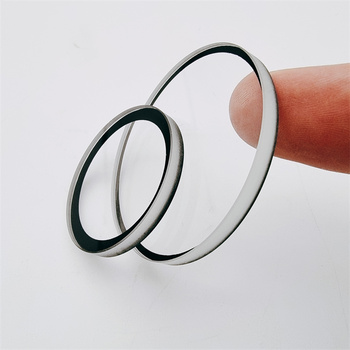
Low-iron glass for accurate color and bright display output.

AG + AF options for glare control, cleaning and touch durability.
Share your display module drawing and let our team recommend the right thickness, edge profile, tempering condition and AR / AG / AF coating stack.
info@jasweglass.com

